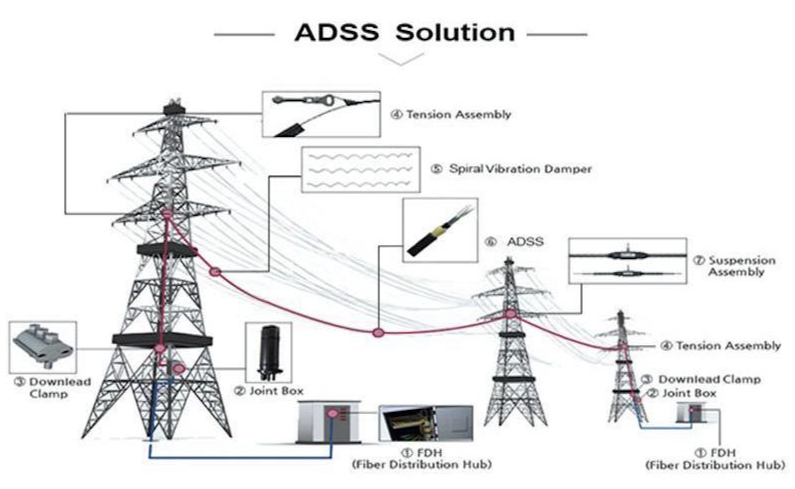
كابل هوائي ذاتي الدعم مصنوع بالكامل من مواد عازلة (ADSS) is a fully non-metallic optical fiber cable engineered for self-supporting aerial installation on utility poles and high-voltage transmission towers. Unlike traditional cables that require a separate messenger wire, ADSS integrates high-strength aramid yarn as the primary tensile member, enabling direct stringing between structures while remaining completely immune to electromagnetic interference and lightning-induced currents.
The cable is designed for live-line installation on energized power lines without service interruption — a decisive advantage for utility communication upgrades, smart-grid projects, and rural broadband expansion. With a typical design life of 30 years and compliance with IEEE 1222 and IEC 60794 series standards, ADSS delivers reliable long-term performance under wind, ice, UV, and temperature extremes from –40 °C to +70 °C.

Because ADSS contains no metallic components, it requires no grounding and can be installed directly in the supply space of live lines without electrical hazard — making it the preferred choice for utilities seeking rapid deployment and long-term reliability.

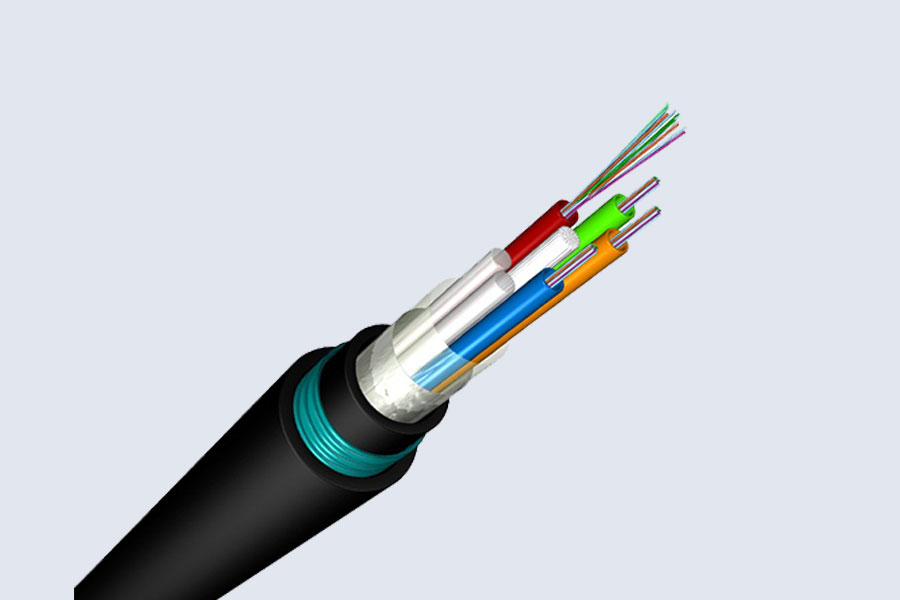
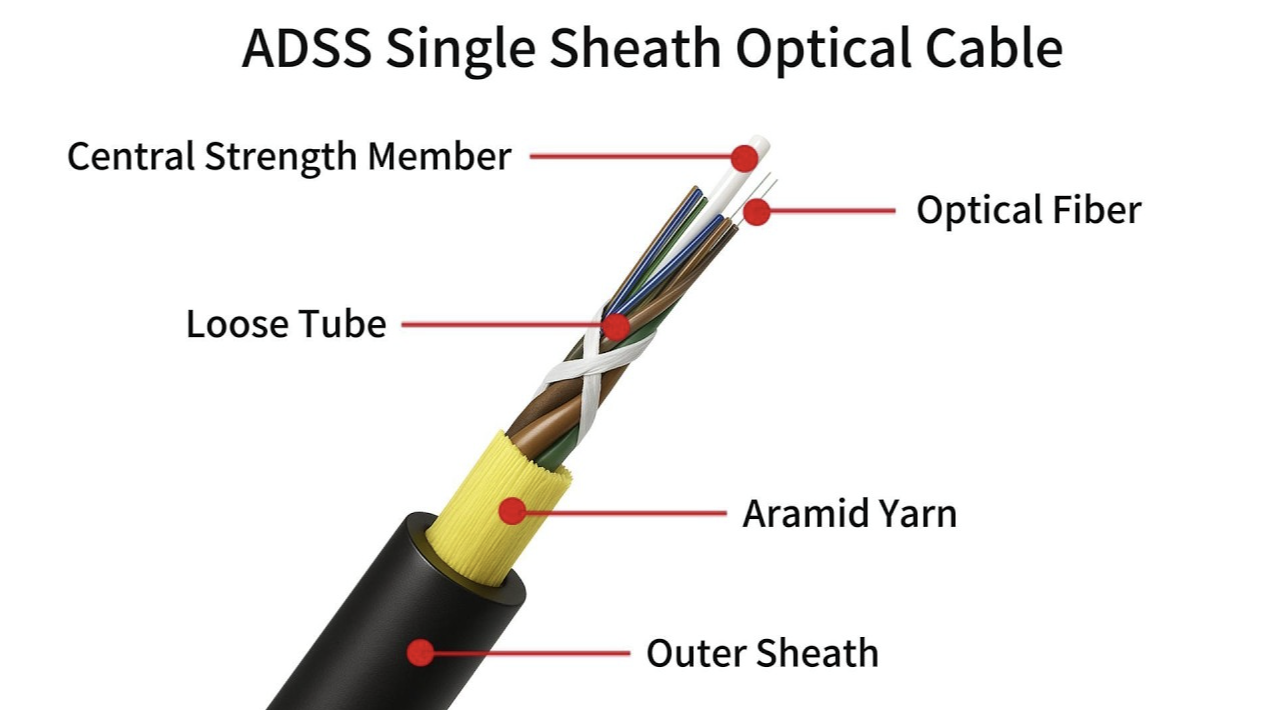
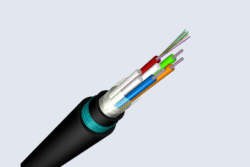
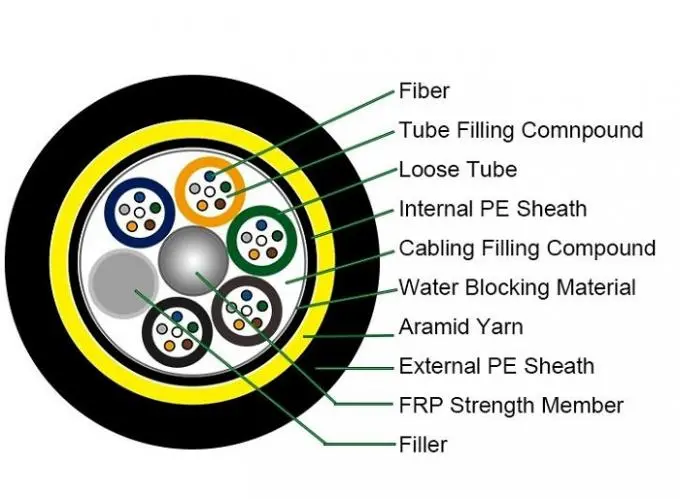
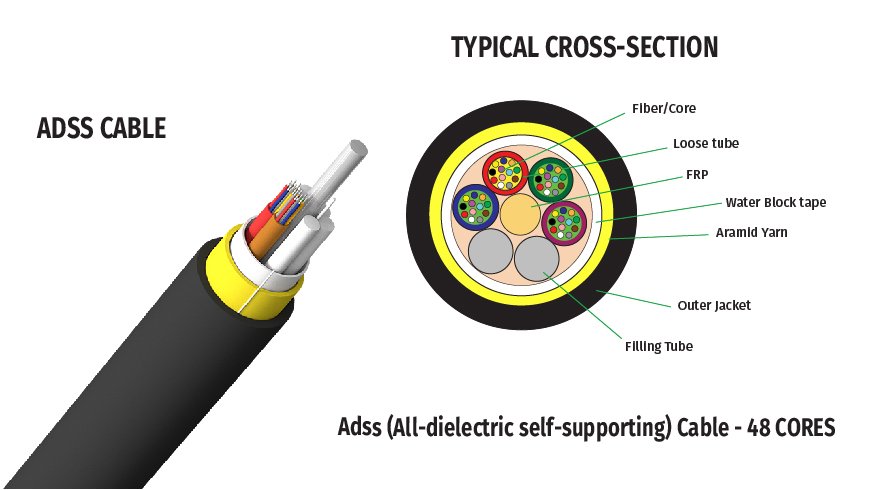
Typical ADSS cross-section showing loose tubes, aramid yarn strength members, and all-dielectric construction.
What Is ADSS Cable and Why Is It Chosen for Power Line Corridors?
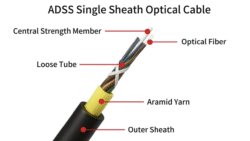
ADSS cable contains no metallic components. Optical fibers sit in gel-filled or dry loose tubes around a central FRP strength member. Layers of water-blocked aramid (Kevlar-type) yarns provide the tensile load path. An outer PE or AT polyethylene jacket protects against UV, moisture and electrical tracking. Typical fiber counts range from 12 to 288 (up to 864 in specialized designs). Operating temperature is –40 °C to +70 °C. Attenuation for G.652.D single-mode fiber remains ≤0.35 dB/km at 1310 nm and ≤0.22 dB/km at 1550 nm under full mechanical load.
Because the cable is entirely dielectric, it can be installed while the power line remains energized. This eliminates the outage cost and scheduling constraints associated with OPGW replacement of the existing ground wire. Typical installed cost is 60–80 % of an OPGW retrofit on the same route. Design life is 25–30 years when span, sag, ice/wind loading and electric-field exposure are correctly engineered.
Cable Construction
- Optical fibers (G.652D / G.657A single-mode or multimode) housed in gel-filled or dry-blocked PBT loose tubes
- Non-metallic FRP (Fiber Reinforced Plastic) central strength member
- SZ-stranded cable core with water-blocking yarns or tapes
- Optional thin PE inner sheath
- High-modulus aramid yarn strength layer (quantity and pitch engineered per span and load)
- Outer sheath: standard PE for lines ≤ 110 kV or anti-tracking (AT) compound for lines ≥ 110 kV (up to 220 kV and beyond with field analysis)
This all-dielectric structure eliminates the need for grounding or bonding and significantly reduces tower loading compared with metallic alternatives such as OPGW.
Primary Applications of ADSS Fiber Optic Cable
ADSS excels across a wide range of high-voltage environments:
- Long-span aerial deployments on transmission and distribution lines (typical spans 50–1000 m, up to 1500 m in specialized designs)
- Smart-grid communications, SCADA systems, and utility private networks
- Fiber-to-the-home (FTTH) and middle-mile backbone extensions along power corridors
- Renewable energy projects, rural electrification, and grid modernization initiatives
- Environments requiring complete immunity to electromagnetic interference (EMI)
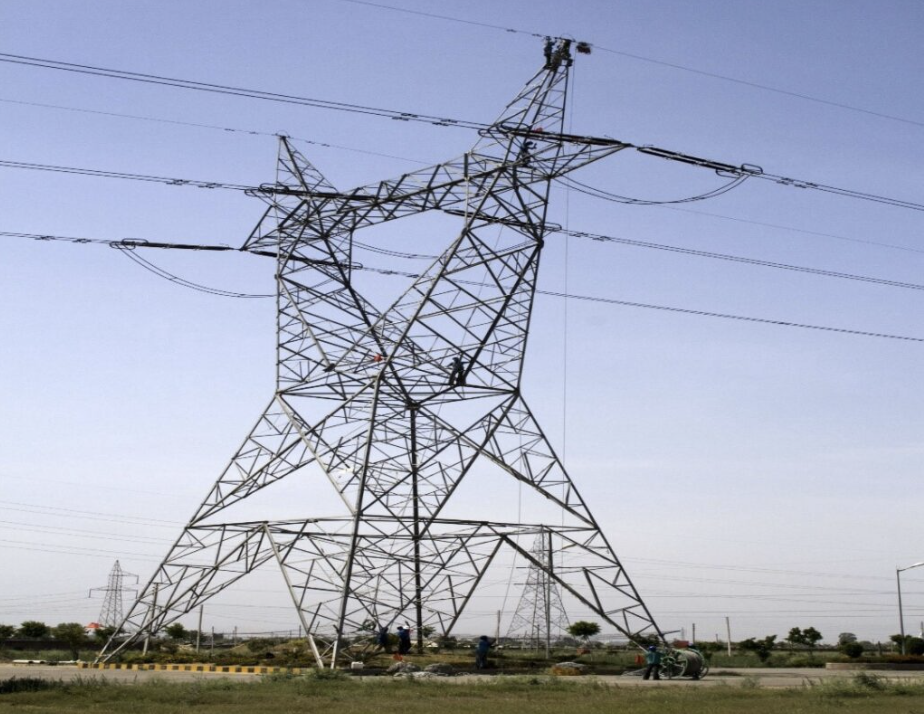
Its lightweight profile and non-conductive nature make it ideal for retrofitting existing lines where adding metallic cables would increase loading or require extensive grounding work.
Comparison of aerial optical cable types
| المعلمة | ADSS | OPGW | Figure-8 |
|---|
| Metallic content | None | Aluminum-clad steel / alloy | Steel messenger |
| Primary function | Communication only | Shield + communication | Communication only |
| Installation outage | Not required | Required | Not required |
| Typical weight | 80–250 kg/km | 400–700 kg/km | 150–350 kg/km |
| Max practical span | 100–1 500 m (custom to 2 600 m) | 1 000–3 000 m | 50–200 m |
| Voltage environment | ≤500 kV (AT jacket) | Unlimited (metallic) | Distribution only |
| Lightning / fault current | None | Carries full current | None |
| Dry-band arcing risk | Present above ~12 kV space potential | None | منخفض |
| Relative installed cost (retrofit) | Lowest | Highest | متوسط |
Data compiled from IEC 60794-4-20, IEEE 1222-2019/2025 corrigendum, and manufacturer datasheets (Corning, Prysmian, Hengtong, Sterlite, AFL).
Key Advantages of ADSS Aerial Cable
- Self-Supporting & Easy Installation — No messenger wire or extra hardware needed; utilizes existing poles and towers, significantly reducing installation time, labor, and overall project cost.
- Fully Dielectric & EMI Immune — Zero metallic components eliminate grounding requirements and provide complete immunity to electromagnetic interference, ensuring stable optical performance near high-voltage conductors.
- Live-Line Installation Capability — Can be installed safely on energized lines, minimizing service interruptions during deployment.
- High Mechanical Strength & Durability — Reinforced with high-modulus aramid yarn for excellent tensile performance, bullet resistance, and outstanding resistance to wind, ice, UV radiation, and extreme temperatures.
- Lightweight & Low Tower Loading — Small diameter and low weight reduce mechanical stress on support structures compared with traditional metallic or lashed cables.
- Long-Span Performance — Engineered for spans from 50 m to over 1000 m depending on fiber count and environmental conditions.
- Excellent Optical Performance — Optimized for single-mode transmission at 1310 nm and 1550 nm with low attenuation and high bandwidth.

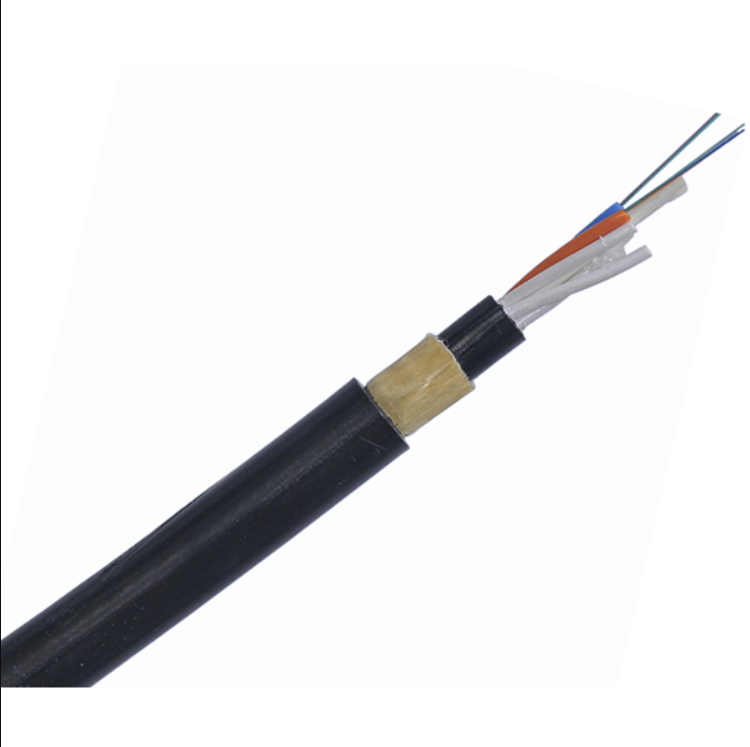
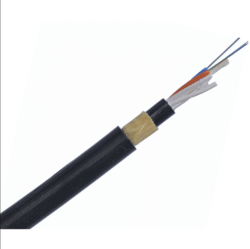
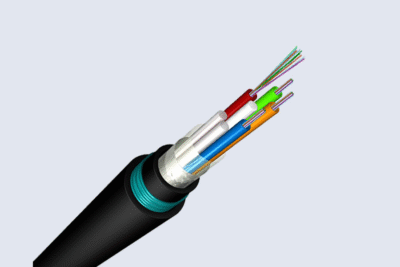
ADSS cable construction — aramid yarn strength members, loose tubes, and UV-resistant outer jacket designed for long-term aerial exposure.
Construction and Design Features
ADSS cables typically feature a loose-tube design with:
- Multiple colored loose tubes containing optical fibers (commonly 2–144 fibers)
- Water-blocking gel or dry water-blocking materials
- Central strength member (FRP) and peripheral high-strength aramid yarn
- UV-stabilized polyethylene (PE) outer jacket; AT (anti-tracking) jacket available for high electric field environments
The all-dielectric structure ensures the cable remains lightweight while delivering the mechanical robustness required for long-term aerial service in harsh climates.
Typical Technical Parameters
| المعلمة | Typical Range |
|---|
| Fiber Count | 2 – 288 cores |
| القطر الخارجي | 10 – 18 mm (depends on design) |
| Cable Weight | 90 – 280 kg/km |
| Max Working Tension (MAT) | 1.5 – 20+ kN |
| Break Strength (UTS) | 10 – 120 kN |
| Suitable Span (NESC) | 50 – 1000 m+ |
| درجة حرارة التشغيل | –40 °C to +70 °C |
| المعايير | IEEE 1222, IEC 60794-1 / 60794-4-20 |
Exact values are engineered per project (span, wind/ice loading, voltage class, fiber type). Custom designs available upon request.
Technical Performance Highlights
- Fiber Compatibility: Standard single-mode (G.652D, G.655) and bend-insensitive fibers (G.657)
- Attenuation: Typically ≤ 0.35 dB/km @ 1310 nm and ≤ 0.21 dB/km @ 1550 nm
- Temperature Range: -40°C to +70°C (operational)
- Span Capability: 100–1500 m (design-dependent)
- Crush & Tensile Resistance: High crush resistance and tensile strength tailored to span and environmental loading
معايير التصنيع وضمان الجودة
RLB ADSS cables are designed and tested in full compliance with IEEE 1222 and relevant IEC 60794 series standards. This ensures verified mechanical, electrical (tracking resistance), and optical performance, with a typical service life of 30+ years under demanding aerial conditions.
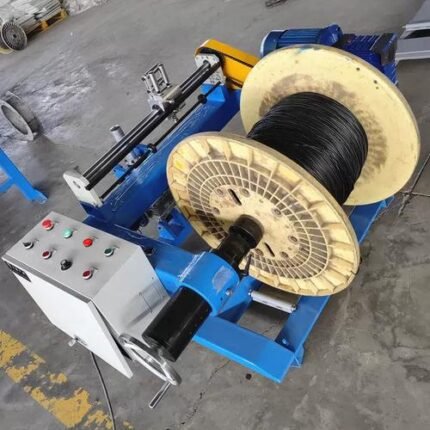
Cables are supplied on heavy-duty wooden or steel-wooden drums for safe handling and deployment.
ADSS vs OPGW: Choosing the Right Aerial Fiber Solution
While both ADSS and OPGW are used on power lines, they serve different primary functions:
- ADSS — Dedicated communication cable; all-dielectric, lightweight, lower cost, ideal for retrofitting existing lines and live-line installation.
- OPGW — Dual-function (ground wire + communication); contains metallic elements for lightning protection and fault current carrying; typically used on new transmission line construction.
Many utilities deploy both: OPGW on transmission lines and ADSS on distribution or for additional capacity on existing corridors.
Quality & Customization Commitment
As a technology-driven manufacturer focused on long-term cooperation, we engineer every ADSS cable to the specific mechanical, electrical and environmental conditions of your route. Fiber type, core count, span rating, sheath type (PE/AT), and packaging are fully customizable. All cables undergo 100 % OTDR testing and mechanical verification to ensure consistent optical and tensile performance over the full 30-year design life.
استفسر الآن to discuss ADSS configurations, span calculations, technical specifications, or complete aerial fiber solutions tailored to your transmission or distribution project. Our team delivers professional consultation, customized designs, and reliable long-term partnership.
All Dielectric Self-Supporting Aerial Cable (ADSS) - Non-Metallic Aerial Fiber-Reliable Cable
Professional ADSS fiber optic cable – all-dielectric self-supporting aerial cable for high-voltage power lines. Live-line install, up to 1000m+ spans, PE/AT sheath, G.652D fiber. Custom solutions. Inquiry Now for reliable quality & technical support.
رمز تعريف SKU للمنتج.:
ADSS cable
العلامة التجارية للمنتج:
شركة آر إل بي للآلات
عملة المنتج:
دولار أمريكي
سعر المنتج:
اتصل بنا للحصول على عرض سعر
المنتج متوفر في المخزون:
في الأوراق المالية








المراجعات
لا توجد مراجعات بعد.