آلات ومعدات الكابلات, خطوط البثق, الأدلة الفنية والمعرفة

What is a CCV Line in Cable Manufacturing?

What is a CCV Line in Cable Manufacturing

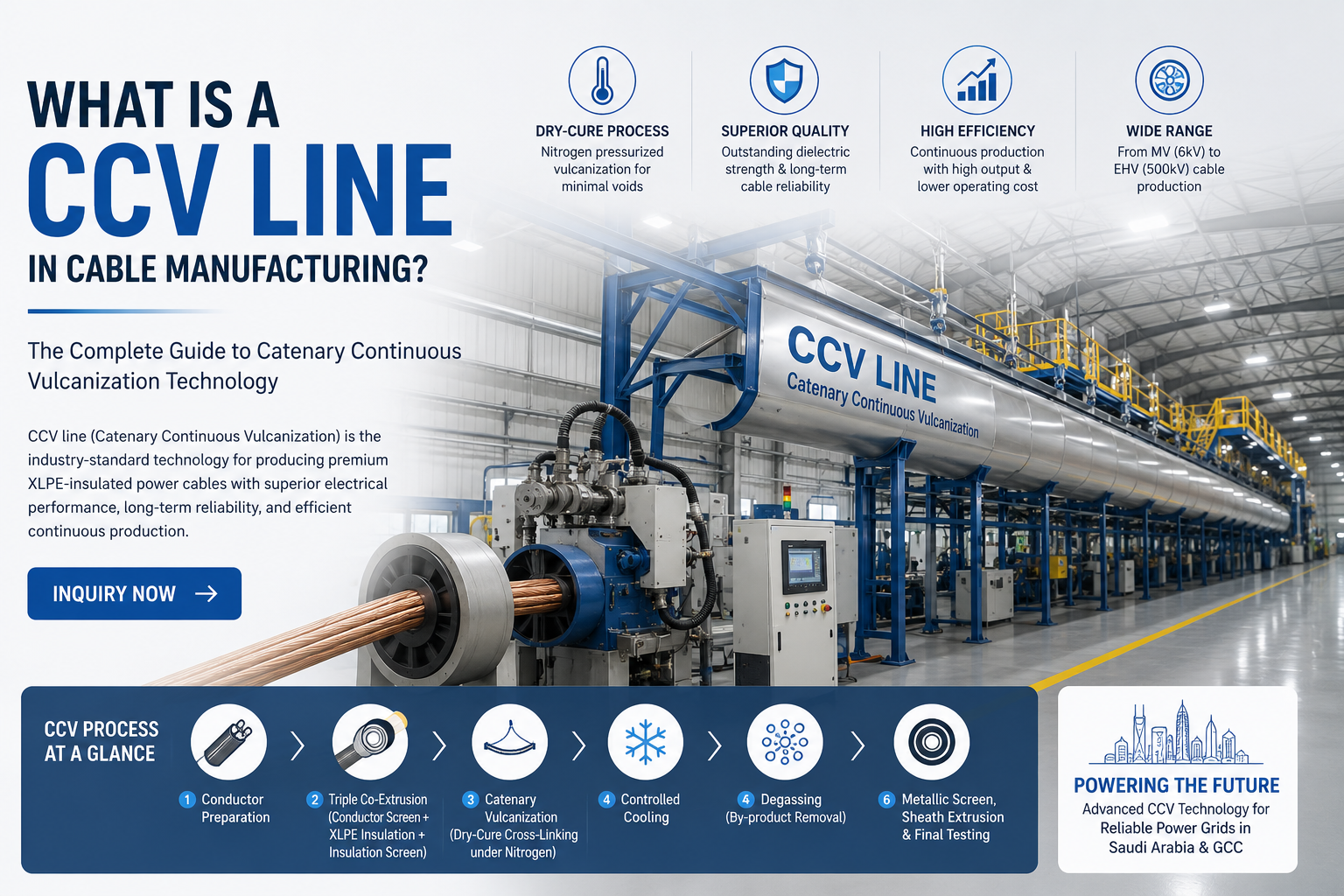
In the cable manufacturing industry, producing reliable power cables capable of withstanding high voltages, extreme temperatures, and long service lives requires precision engineering at every stage. One of the most important technologies enabling this is the CCV line — short for Catenary Continuous Vulcanization.

As experienced suppliers of advanced cable manufacturing equipment to clients across the Middle East, we have seen firsthand how CCV technology has transformed the production of XLPE (cross-linked polyethylene) insulated cables. Whether for underground transmission, grid modernization projects under Saudi Vision 2030, or large-scale infrastructure developments, CCV lines deliver the consistent quality and efficiency that modern utilities and EPC contractors demand.

This guide provides a detailed, technical explanation of what a CCV line is, how it works, its advantages over alternative methods, and why it has become the preferred solution for high-performance cable production worldwide — with particular relevance to the growing cable industry in Saudi Arabia and the GCC.

What Exactly is a CCV Line?

A CCV line (Catenary Continuous Vulcanization line) is a complete, continuous production system used primarily for the insulation and cross-linking of XLPE power cables. The term “catenary” refers to the natural curve formed by a suspended cable under its own weight — the same mathematical curve used in the design of the long vulcanization tube.

Unlike older batch processes or steam-cure methods, a modern CCV line performs dry-cure vulcanization under pressurized nitrogen. This creates a controlled environment that minimizes moisture and micro-voids — critical factors for the electrical performance and longevity of medium-voltage (MV 6–35 kV), high-voltage (HV up to 132 kV), and extra-high-voltage (EHV) cables.

CCV technology now accounts for approximately 90% of global HV/EHV XLPE cable production because it combines high output, excellent geometric quality (concentricity and roundness), and superior dielectric properties in a cost-effective, continuous process.

How Does the CCV Process Work? Step-by-Step Technical Overview

A typical CCV line integrates several precision stages into one continuous flow:

  1. Conductor Preparation High-quality copper or aluminum conductors (compacted round or Milliken segmental for HV/EHV) are paid off and pre-heated. Proper conductor surface preparation is essential for excellent adhesion of the semi-conductive screens.
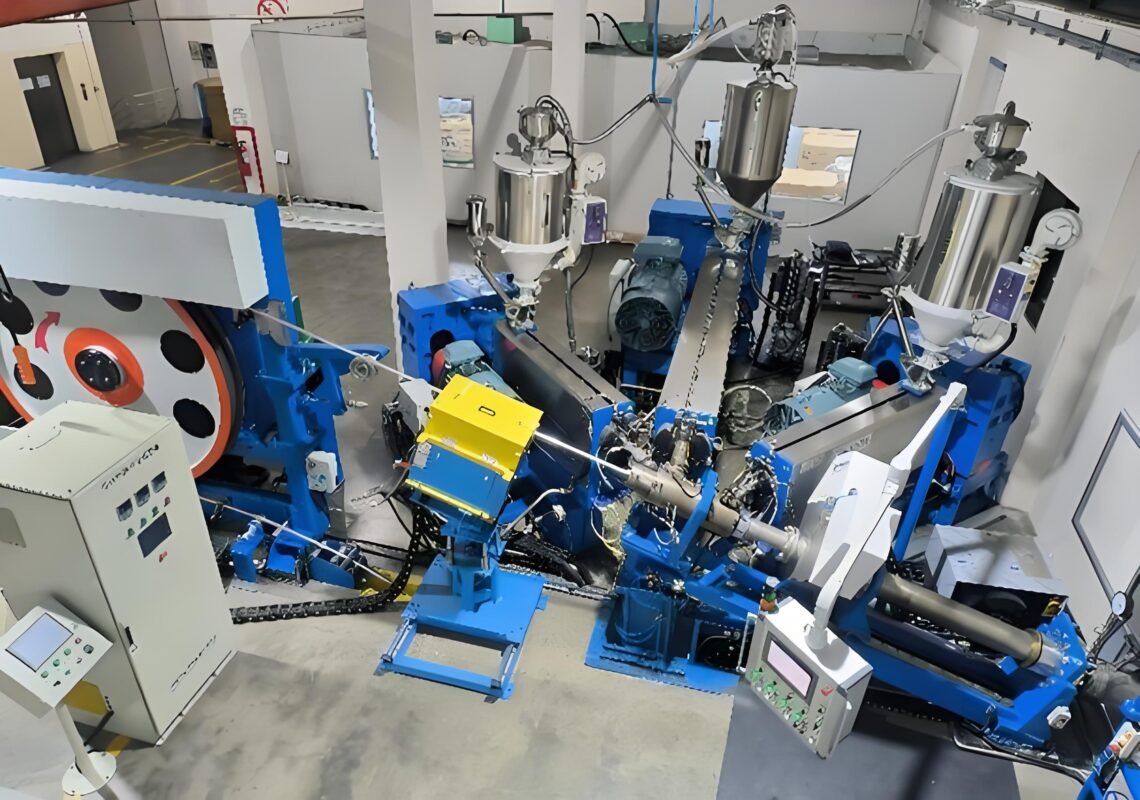
  2. Triple-Layer Co-Extrusion (The Heart of Quality) Using a sophisticated triple cross-head extruder, three layers are applied simultaneously in a single operation:
    • Inner semi-conductive conductor screen
    • XLPE insulation layer (peroxide-containing compound)
    • Outer semi-conductive insulation screen
    Simultaneous extrusion eliminates interfaces and ensures homogeneous insulation — a key requirement for high-voltage performance.
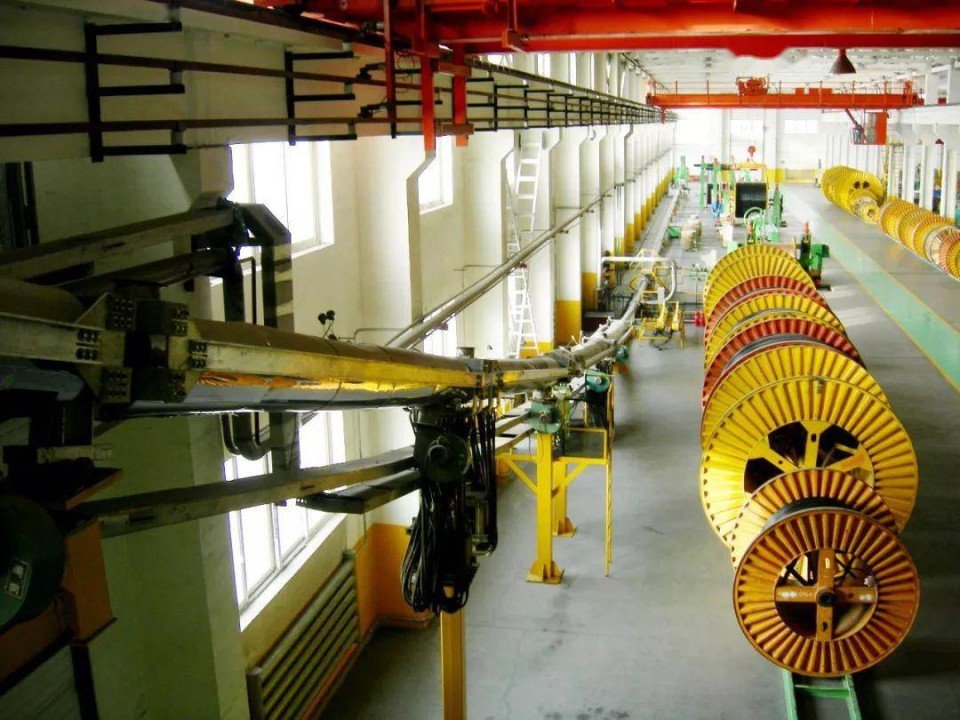
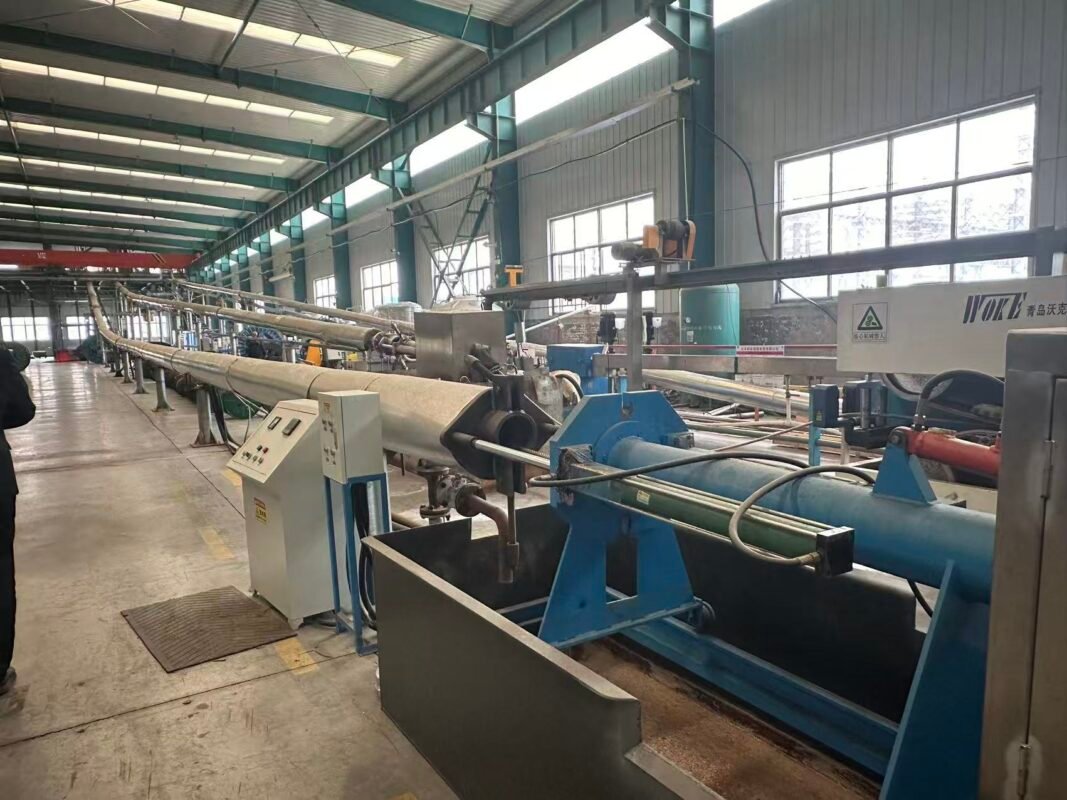
  1. Catenary Vulcanization Tube (Dry-Cure Cross-Linking) The freshly extruded cable core enters a long, curved catenary tube (often 100–200+ meters depending on voltage class). Inside the sealed tube:
    • Pressurized nitrogen (typically 10–15 bar) prevents oxidation and provides uniform pressure.
    • Precisely controlled heating zones (using electric heaters or other methods) raise the temperature to decompose the peroxide curing agent (commonly dicumyl peroxide – DCP).
    • The cross-linking reaction creates a three-dimensional molecular network in the polyethylene, transforming it into thermoset XLPE with outstanding thermal, mechanical, and electrical properties.
  2. Controlled Cooling After cross-linking, the cable passes through cooling sections (water or air) to solidify the insulation without introducing stress or voids.
  3. Degassing By-products from the peroxide reaction (such as methane) are removed in a controlled degassing process, which can take several days depending on insulation thickness. Proper degassing is vital for long-term dielectric stability.
  4. Subsequent Processes The insulated core then proceeds to metallic screening (copper tape/wire or aluminum sheath), outer sheathing (PE, PVC, or special compounds), and final testing/packaging.

The entire process runs continuously at optimized line speeds, with modern systems incorporating intelligent sag control, rotation techniques, and advanced automation to maintain perfect geometry even on thick-walled HV cables.

Key Advantages of CCV Lines – Data-Driven Benefits

Modern CCV technology offers measurable improvements that directly impact cable quality, production economics, and end-user reliability:

  • Superior Dielectric Performance: Dry-cure nitrogen process significantly reduces micro-voids and moisture compared to steam curing, resulting in higher breakdown strength and lower partial discharge — essential for 66 kV, 110 kV, 132 kV, and above.
  • Excellent Geometric Quality: Advanced catenary design with sag control and optional cable rotation delivers outstanding concentricity and roundness, reducing insulation material overuse and improving electrical stress distribution.
  • Higher Production Efficiency: Continuous operation minimizes downtime. Recent innovations have achieved over 25% increases in line speed while maintaining or improving quality.
  • Versatility: One CCV line can often handle a wide range of MV to EHV cables (6 kV to 500 kV class) with quick product changes.
  • فعالية التكلفة: Lower installation and operating costs compared to vertical (VCV) lines for most applications, while delivering equivalent or better quality for long cable lengths.
  • Long-Term Cable Reliability: XLPE cables produced on advanced CCV lines exhibit excellent thermal stability (up to 90°C continuous, 250°C short-circuit) and resistance to environmental stresses — critical in the extreme climates of Saudi Arabia and the GCC.

CCV vs VCV: Understanding the Industry Choice

While both CCV (Catenary) and VCV (Vertical Continuous Vulcanization) use nitrogen dry-cure technology, CCV lines dominate the market for practical and economic reasons:

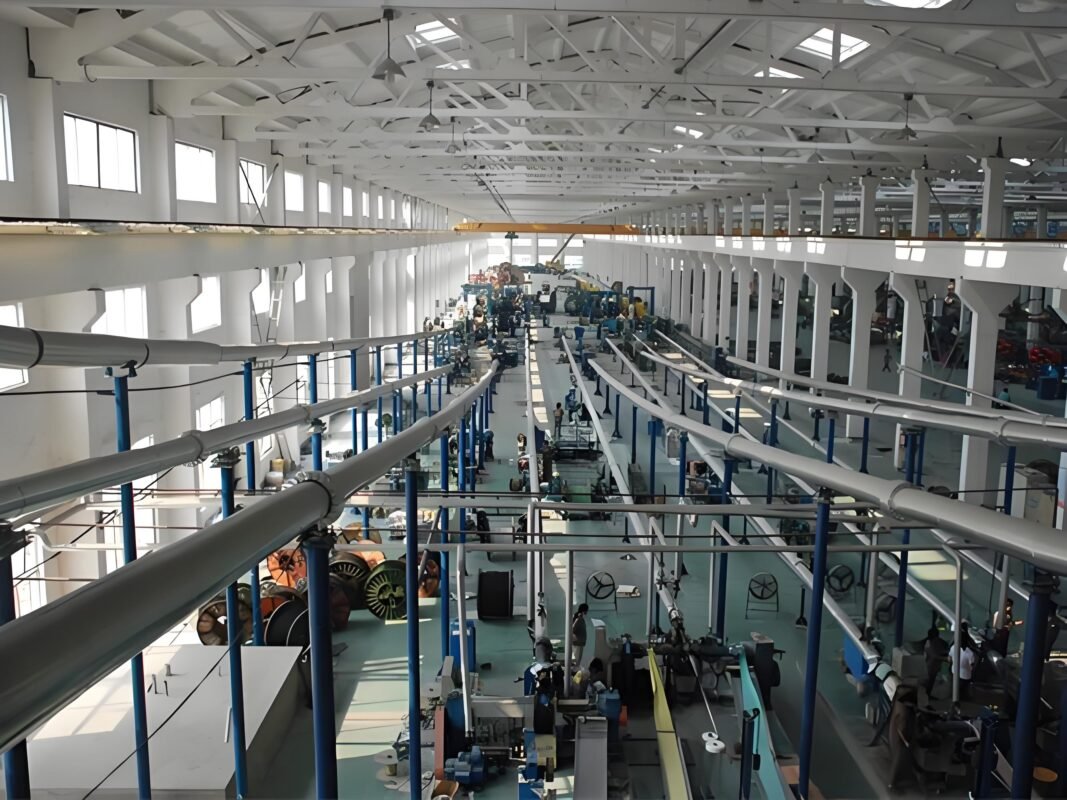
  • CCV: Horizontal/curved tube, more compact factory footprint, lower capital investment, easier to scale for long production lengths, and accounts for the vast majority of new HV/EHV installations.
  • VCV: Vertical tower (often 100+ meters tall), excellent for the thickest EHV cables where gravity sag must be completely eliminated, but higher cost and space requirements.

For most manufacturers in Saudi Arabia and the region, a well-engineered CCV line provides the optimal balance of quality, flexibility, output, and return on investment.

CCV Lines and the Saudi Arabia & GCC Cable Industry

Saudi Arabia’s ambitious Vision 2030 program, together with massive investments in power generation, transmission, renewables, data centers, and industrial cities (NEOM, Red Sea projects, etc.), is driving strong demand for high-quality local cable production.

Leading regional manufacturers have already invested in state-of-the-art CCV technology to produce MV and HV XLPE cables that meet stringent international standards (IEC, IEEE, SASO) and the specific requirements of Saudi Electric Company and other utilities.

Advanced CCV lines enable:

  • Reduced dependence on imported cables
  • Faster project delivery for EPC contractors
  • Consistent quality suited to high ambient temperatures and heavy load cycles
  • Support for localization and technology transfer goals

As a technology-driven supplier with deep experience in the Middle East cable sector, we understand these unique requirements and offer customized CCV configurations, full turnkey solutions, automation upgrades, and comprehensive technical support tailored to your facility and production goals.

Why Partner with Experienced CCV Solution Providers?

Investing in a CCV line is a long-term strategic decision. Key considerations include:

  • Precise triple-extrusion capability
  • Intelligent process control and Industry 4.0 integration
  • Proven sag control and geometry optimization systems
  • Energy-efficient heating and nitrogen management
  • Full lifecycle support — from layout design and installation to operator training and spare parts

We specialize in delivering reliable, high-performance cable manufacturing solutions with a focus on quality, customization, and long-term partnership. Whether you are planning a new greenfield CCV line, upgrading an existing vulcanization system, or seeking technical consultation, our team provides practical, data-backed recommendations.

Conclusion: CCV Technology – The Foundation of Reliable Power Cable Production

The CCV line represents one of the most important advancements in modern cable manufacturing. By combining continuous triple co-extrusion with precise dry-cure catenary vulcanization, it enables the production of XLPE power cables that meet the highest standards of electrical performance, durability, and safety.

For cable manufacturers and project developers in Saudi Arabia and across the GCC, investing in advanced CCV technology is not just about capacity — it is about delivering the reliable, long-life cables that critical infrastructure demands.

Ready to explore CCV line solutions for your facility?

Contact our technical team today. Within 48 hours we will provide a detailed technical proposal, capacity analysis, layout recommendations, and ROI considerations tailored to your specific voltage range, production targets, and site requirements in the Kingdom or wider GCC region.

استفسر الآن — Partner with experienced cable equipment specialists to build a reliable, high-performance production capability that supports your long-term success.

اترك تعليقاً

لن يتم نشر عنوان بريدك الإلكتروني. الحقول الإلزامية مشار إليها بـ *