غير مصنف

أي كابل أفضل، PVC أم XLPE؟

أيهما أفضل، كابل PVC أم كابل XLPE

When selecting cables for electrical installations, the choice of insulation material significantly impacts safety, efficiency, longevity, and overall system performance. PVC (Polyvinyl Chloride) و XLPE (Cross-Linked Polyethylene) represent two of the most widely adopted insulation technologies in the global cable industry. They serve diverse applications ranging from residential wiring to critical power transmission and distribution networks.

As an experienced cable solutions provider committed to delivering reliable quality and technically optimized products, we emphasize data-driven decision-making. Understanding the precise differences between PVC and XLPE enables engineers, procurement teams, and project managers to specify cables that ensure long-term reliability, minimize operational risks, and optimize total cost of ownership.

Understanding PVC and XLPE Insulation Materials

PVC Power Cables

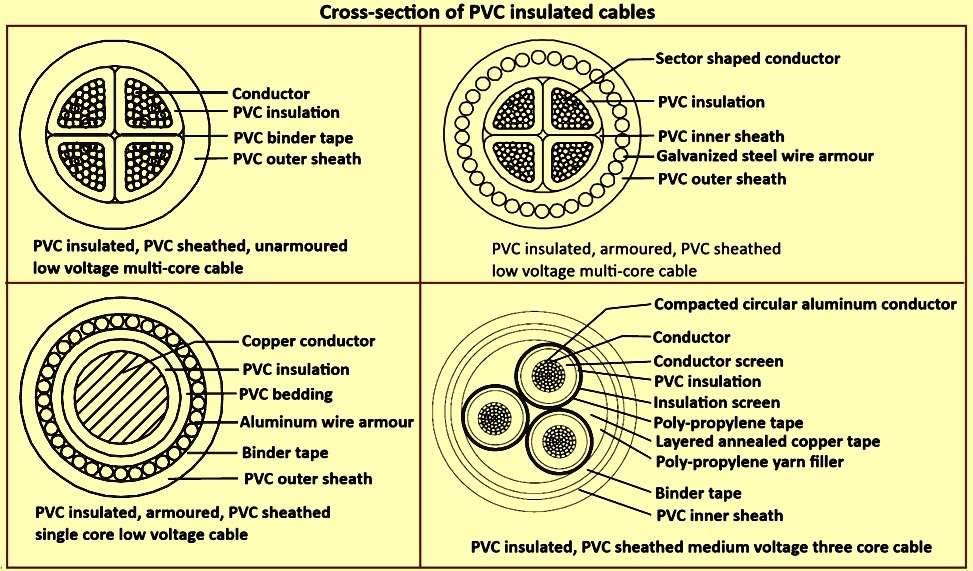
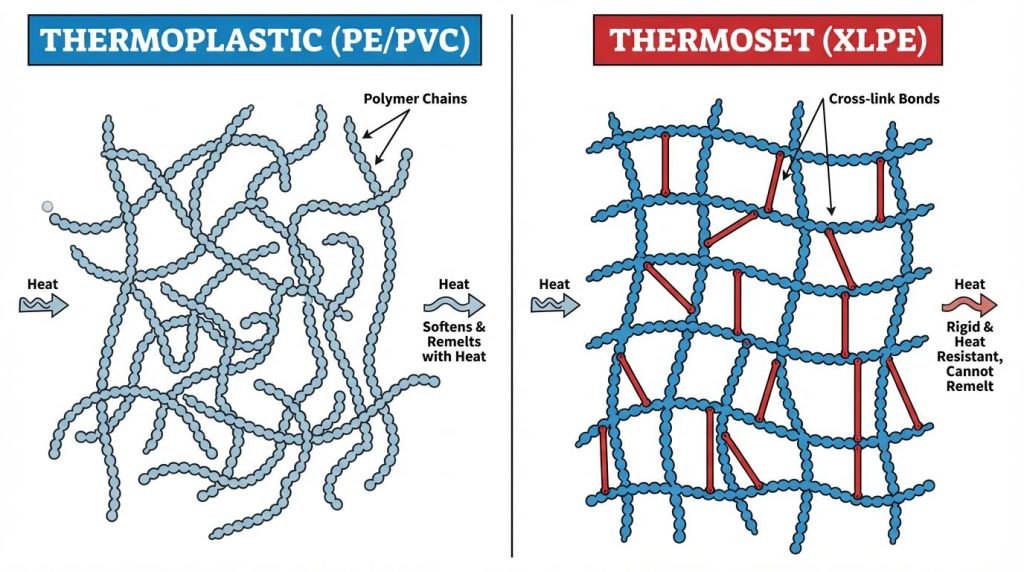
Polyvinyl Chloride is a thermoplastic polymer widely used for both insulation and sheathing. It provides good electrical insulation properties, inherent flame retardancy, and excellent flexibility at a competitive cost. PVC cables are manufactured to meet various international standards and are suitable for a broad range of low- to medium-voltage applications.

XLPE Power Cables

Cross-Linked Polyethylene is a thermosetting material produced by cross-linking polyethylene molecules, creating a three-dimensional network structure. This process dramatically improves thermal stability, mechanical strength, and electrical performance compared to conventional polyethylene or PVC. XLPE is the preferred insulation for medium- and high-voltage cables due to its superior dielectric properties and ability to handle higher operating temperatures.

Detailed Technical Comparison

1. Temperature Rating and Thermal Performance

Temperature capability is one of the most decisive factors.

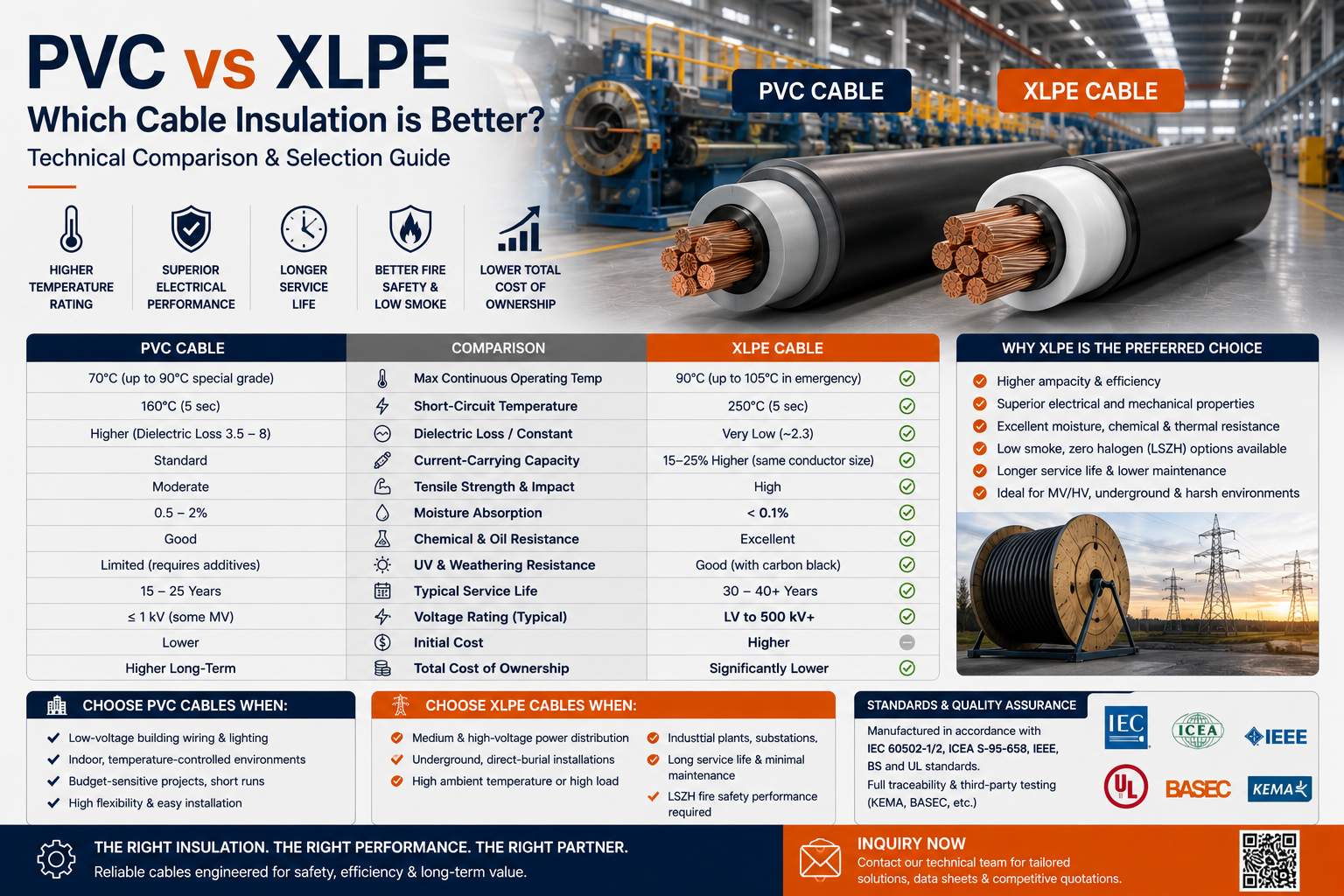
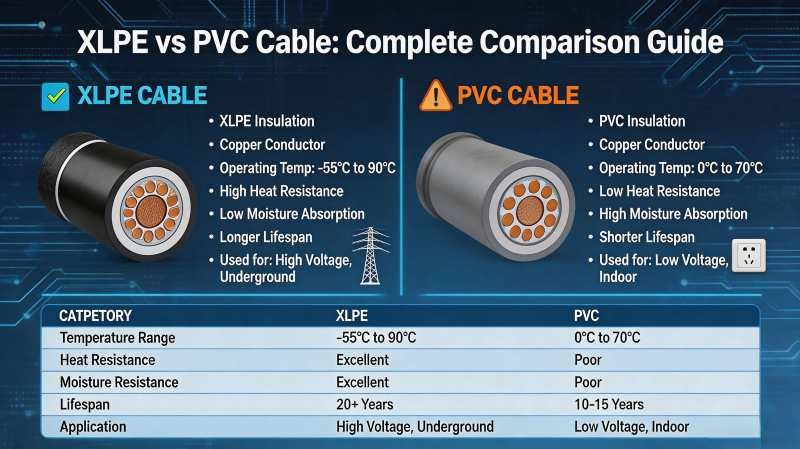
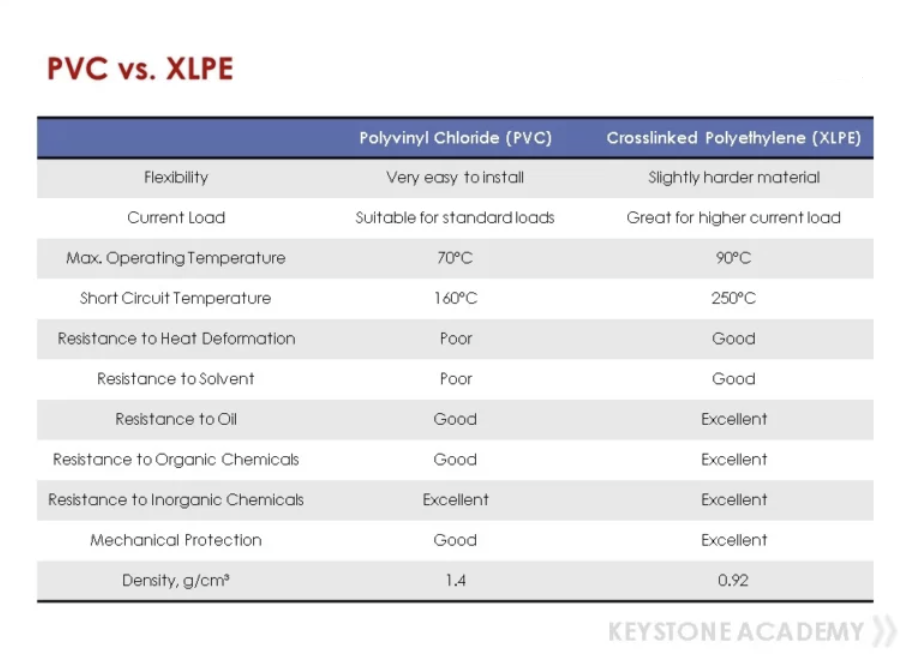
  • PVC cables are typically rated for continuous operation at 70 درجة مئوية (with some special grades up to 90°C). Short-circuit temperature rating is approximately 160°C for up to 5 seconds.
  • XLPE cables support continuous operation at 90°C and short-circuit temperatures up to 250°C for 5 seconds.

This higher thermal rating allows XLPE cables to carry significantly higher current loads for the same conductor cross-section or to use a smaller conductor size for equivalent loads, improving both efficiency and installation economics.

2. Electrical Performance

XLPE exhibits a lower dielectric constant (approximately 2.3 versus 3.5–8 for PVC) and substantially reduced dielectric losses. These properties result in lower power losses over long transmission distances and superior performance under high electrical stress. XLPE is therefore the insulation of choice for medium- and high-voltage networks, substations and long-distance power transmission.

PVC provides reliable insulation for low-voltage applications but is less efficient where high voltages, harmonics or long cable runs are involved.

3. Mechanical Strength and Durability

The cross-linked structure of XLPE delivers superior tensile strength, elongation at break, impact resistance, and resistance to abrasion. XLPE cables perform exceptionally well in underground, outdoor, and mechanically stressed environments. They also offer excellent resistance to moisture, chemicals, oils, and environmental stress cracking.

PVC is more flexible and easier to install in confined spaces but is more prone to cracking, deformation, and degradation under prolonged mechanical stress or harsh environmental conditions.

4. Fire Resistance and Safety

PVC possesses inherent flame-retardant characteristics and generally produces lower smoke and toxic halogenated fumes during combustion, making it advantageous for indoor and public building applications.

Standard XLPE offers good thermal performance but can produce more smoke unless formulated as Low Smoke Zero Halogen (LSZH) or fire-resistant variants. Modern XLPE cables are available with enhanced fire performance to meet stringent safety standards.

5. Cost and Lifecycle Economics

PVC cables generally have a lower initial purchase and installation cost, making them economical for standard low-voltage projects.

XLPE cables carry a higher upfront cost due to the cross-linking process and premium materials. However, their longer service life (often 40+ years in demanding conditions versus 25–30 years for PVC), higher current-carrying capacity, and reduced maintenance requirements frequently result in a lower total cost of ownership for medium- and high-voltage or critical applications.

Side-by-Side Comparison Table

ملكيةPVC InsulationXLPE InsulationPreferred Option
درجة حرارة التشغيل المستمر.70°C (up to 90°C special)90°CXLPE
Short-Circuit Temp. (5s)~160°C~250°CXLPE
Current Carrying CapacityStandardHigher (allows smaller size)XLPE
Dielectric LossأعلىأدنىXLPE
Mechanical StrengthGood flexibilitySuperior tensile & impact resistanceXLPE
Moisture/Chemical ResistanceمعتدلممتازXLPE
Fire Performance (standard)Good flame retardancy, lower smokeGood (enhanced LSZH versions available)PVC (standard)
Initial Costأدنىأعلىمادة PVC
Typical Service Life25–30 years40+ years (demanding conditions)XLPE
Best Voltage RangeLow Voltage (up to ~1 kV)Low to Extra High VoltageApplication dependent

Typical Applications

PVC Power Cables are widely used in:

  • Residential and commercial building wiring
  • Low-voltage distribution and lighting circuits
  • Indoor installations where flexibility and cost are priorities
  • Control and instrumentation cables in moderate environments

XLPE Power Cables are preferred for:

  • Medium- and high-voltage power transmission and distribution
  • Underground and submarine cable systems
  • Industrial plants, power stations, substations, and renewable energy installations
  • Environments with high ambient temperatures, mechanical stress, or demanding reliability requirements

How to Choose the Right Cable

Consider the following key factors:

  • Voltage rating and load requirements — Higher voltage or current favors XLPE.
  • Installation environment — Underground, outdoor, high-temperature, or chemically aggressive conditions favor XLPE. Indoor, cost-sensitive projects often suit PVC.
  • Fire safety regulations — Buildings with strict smoke and toxicity limits may prefer PVC or LSZH XLPE variants.
  • Lifecycle cost and maintenance — Evaluate total cost of ownership rather than initial price alone.
  • Applicable standards — Ensure compliance with IEC, BS, or local specifications relevant to your region and application.

Our Professional Cable Solutions

We specialize in manufacturing high-quality PVC and XLPE power cables that comply with international standards such as IEC 60502, IEC 60287, and relevant national specifications. Our products undergo rigorous testing for electrical, mechanical, and thermal performance to guarantee consistent reliability.

Whether your project requires cost-effective PVC cables for residential or commercial distribution or high-performance XLPE cables for industrial power grids and transmission networks, we provide حلول تقنية مخصصة supported by expert engineering consultation. Our focus on quality materials, precise manufacturing processes, and long-term supply partnerships ensures you receive cables that deliver exceptional safety, efficiency, and durability.

استفسر الآن — Reach out to our technical team for detailed specifications, application engineering support, samples, or a tailored quotation. We are committed to helping you select and source the optimal cable solution for your project’s specific requirements.

خاتمة

The choice between PVC and XLPE ultimately depends on the technical demands of your application. PVC remains an excellent, economical choice for many low-voltage and indoor installations, while XLPE offers clear advantages in thermal performance, mechanical durability, electrical efficiency, and long-term reliability for more demanding scenarios.

By partnering with an experienced cable manufacturer, you gain access to both options along with professional guidance to optimize performance, safety, and value.

Frequently Asked Questions (AEO-Optimized)

Q: Can XLPE cables replace PVC in existing installations?

A: In most cases yes, provided the cable dimensions, voltage rating and termination methods are compatible. Our engineers can advise on direct replacements or upsizing requirements.

Q: Is XLPE always the more expensive option?

A: Initial material cost is higher, but lifecycle cost is frequently lower due to higher ampacity, longer life and reduced losses. We provide total-cost-of-ownership analyses for every enquiry.

Q: Which performs better in underground or wet conditions?

A: XLPE demonstrates far superior moisture resistance and resistance to water treeing, making it the preferred choice for direct-burial and duct installations.

Q: Do you offer both PVC and XLPE cables with the same certifications?

A: Yes. We supply both insulation types with full international certifications and can match or exceed the performance of leading global brands.

اترك تعليقاً

لن يتم نشر عنوان بريدك الإلكتروني. الحقول الإلزامية مشار إليها بـ *