Non classé

Qu'est-ce que le câble de garde à fibre optique (OPGW) ?

Fil de garde à fibre optique (OPGW)

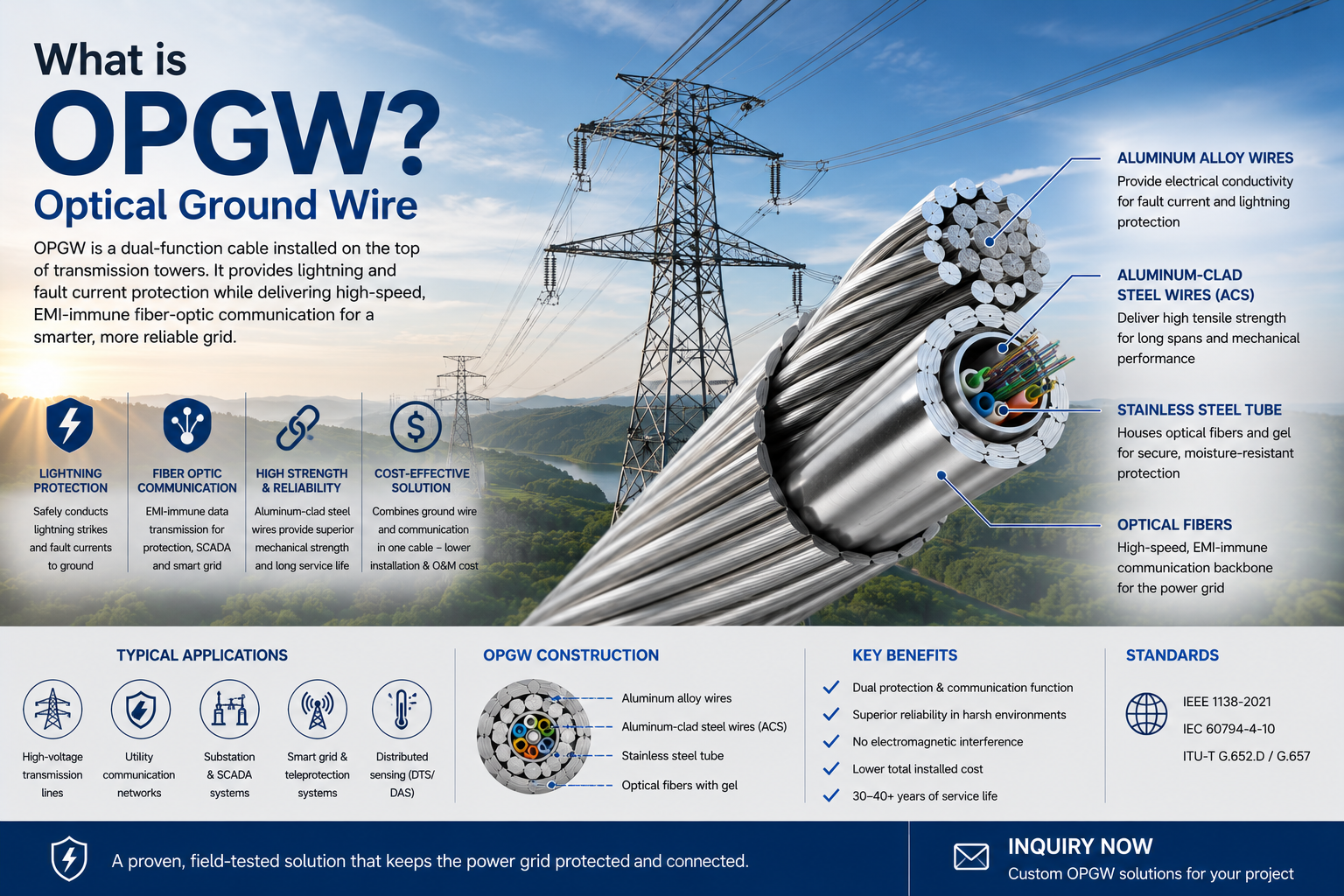
Optical Ground Wire (OPGW), also known as Optical Fiber Composite Overhead Ground Wire, is a dual-function metallic cable engineered for high-voltage and extra-high-voltage overhead transmission lines. It simultaneously serves as a conventional overhead ground (shield/static/earth) wire and a high-capacity fiber-optic communication medium.

Installed at the top of transmission towers, OPGW intercepts lightning strikes, safely conducts fault currents to ground, and provides a secure, EMI-immune optical pathway for real-time grid protection, SCADA, teleprotection, and utility or third-party data transmission.

Unlike traditional ACSR shield wires or separate fiber solutions, OPGW integrates both functions into a single robust conductor, reducing right-of-way requirements, installation costs, and long-term maintenance while delivering decades of reliable service.

Structure and Construction of OPGW Cable

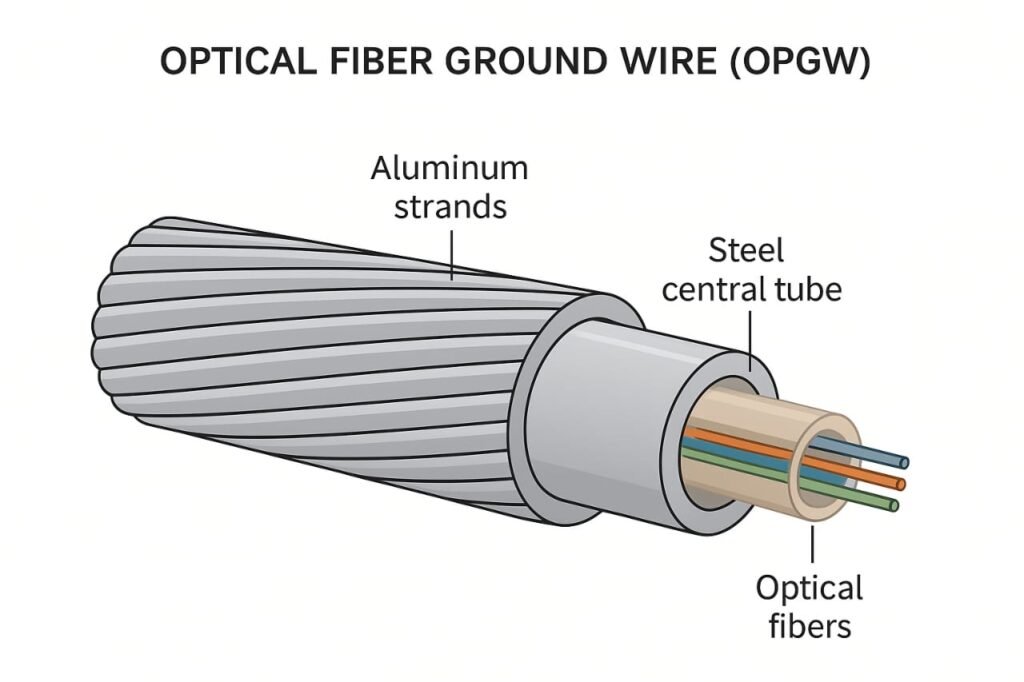
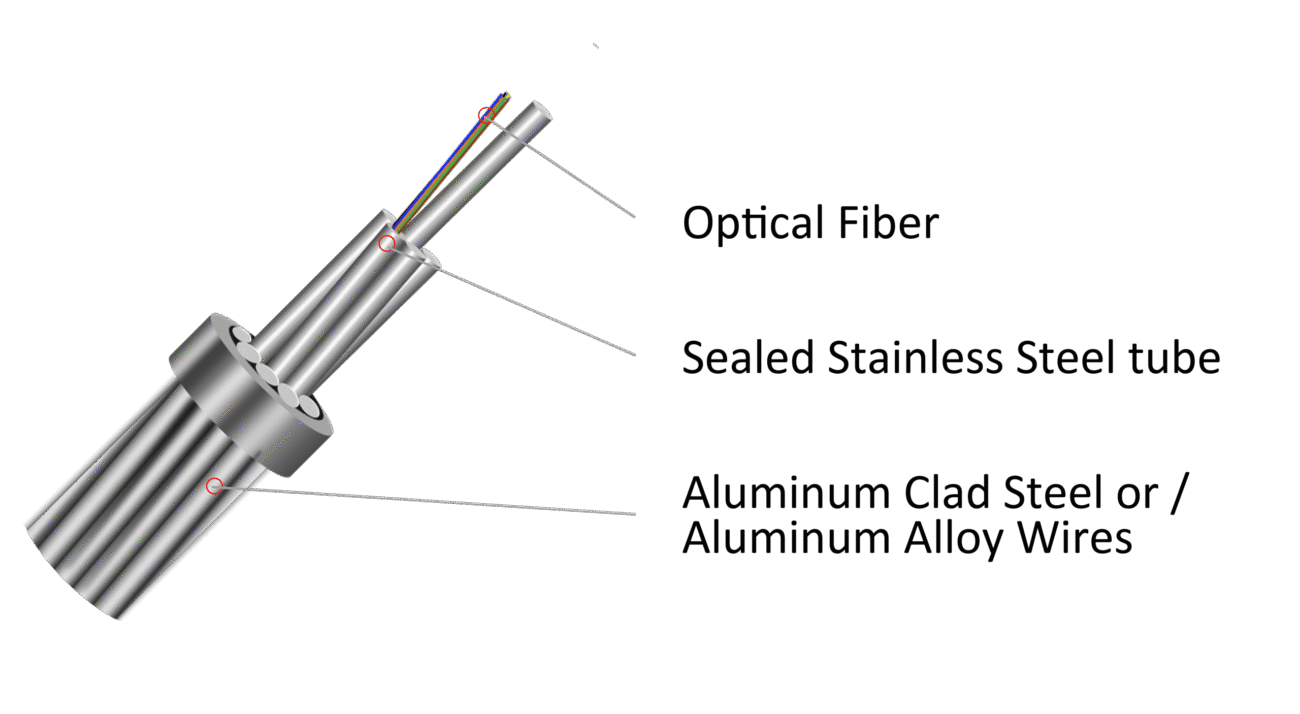
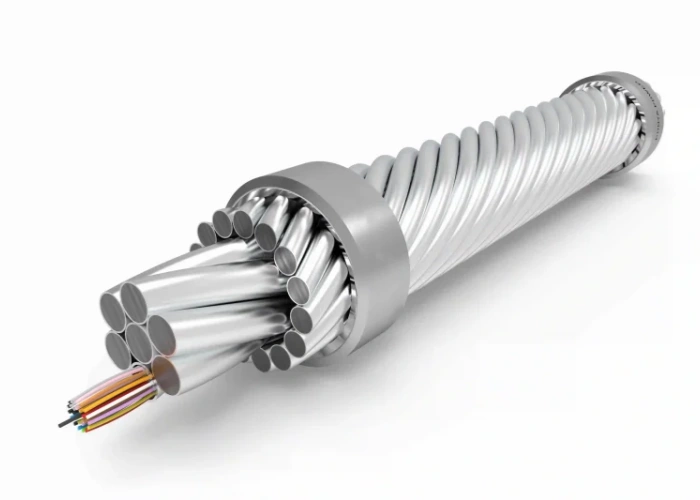
OPGW is a fully metallic armored cable whose outer appearance closely resembles ACSR shield wire. Its core architecture consists of three primary functional layers:

  1. Optical Unit (Core) Optical fibers (typically single-mode G.652.D or G.657) are housed inside one or more hermetically sealed stainless-steel tubes, aluminum tubes, or aluminum-clad stainless-steel tubes. The tubes are filled with water-blocking gel to cushion the fibers, prevent moisture ingress, and relieve mechanical strain. Excess fiber length is provided so that tensile loads on the cable do not stress the glass.
  2. Protective Metallic Tube / Thermal Barrier The laser-welded or seamless metal tube acts as a mechanical shield and thermal barrier. During a lightning strike or short-circuit event, heat is largely absorbed by the outer armor before it can reach the fibers.
  3. Outer Armor Layers One or more concentric layers of aluminum-clad steel (ACS) wires and/or aluminum-alloy (AA) wires are stranded around the optical unit. ACS wires supply high tensile strength for long spans and ice/wind loading; aluminum-alloy wires provide the bulk of electrical conductivity required for fault-current and lightning performance.

Fiber counts commonly range from 12 to 144 (higher counts up to 216–432 are available in multi-tube designs). Overall diameter, weight, and electrical/mechanical parameters are engineered to match or closely approximate the existing shield wire so that tower loading remains within design limits.

How OPGW Works in Transmission Systems

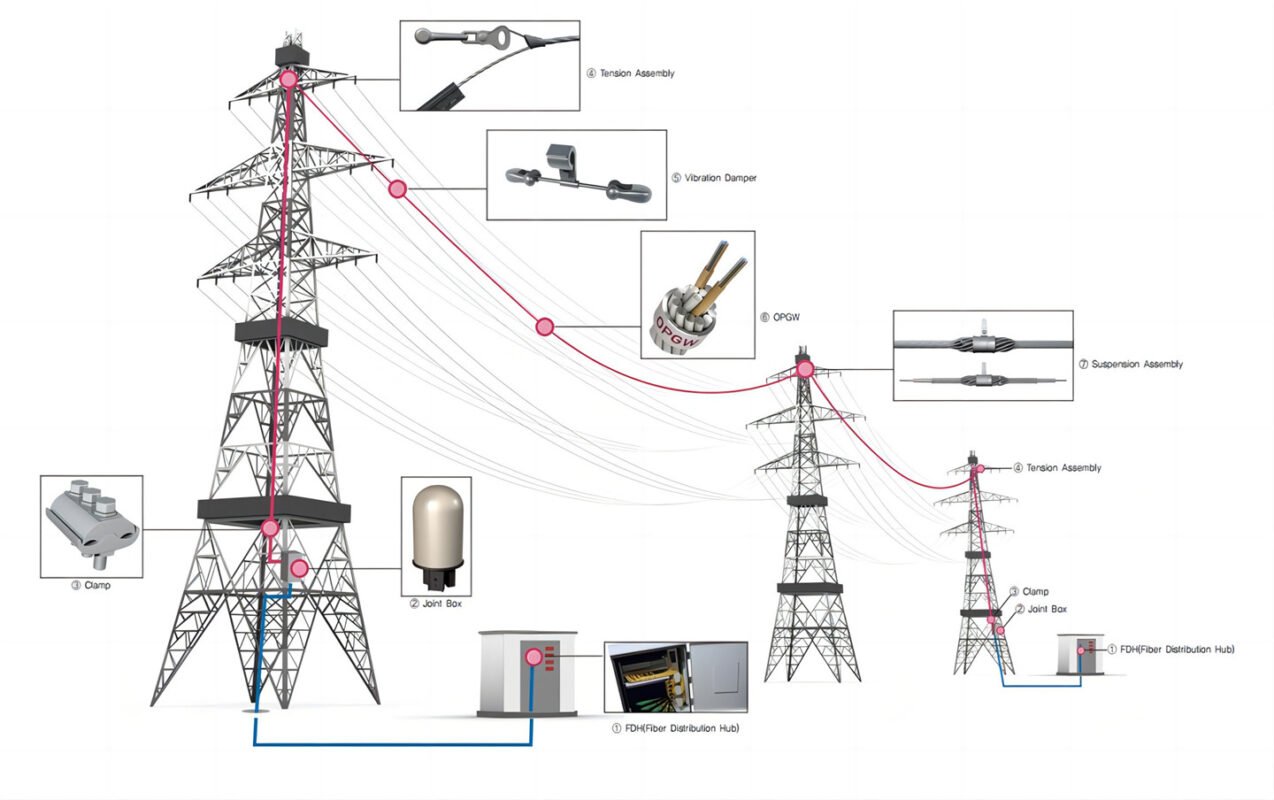
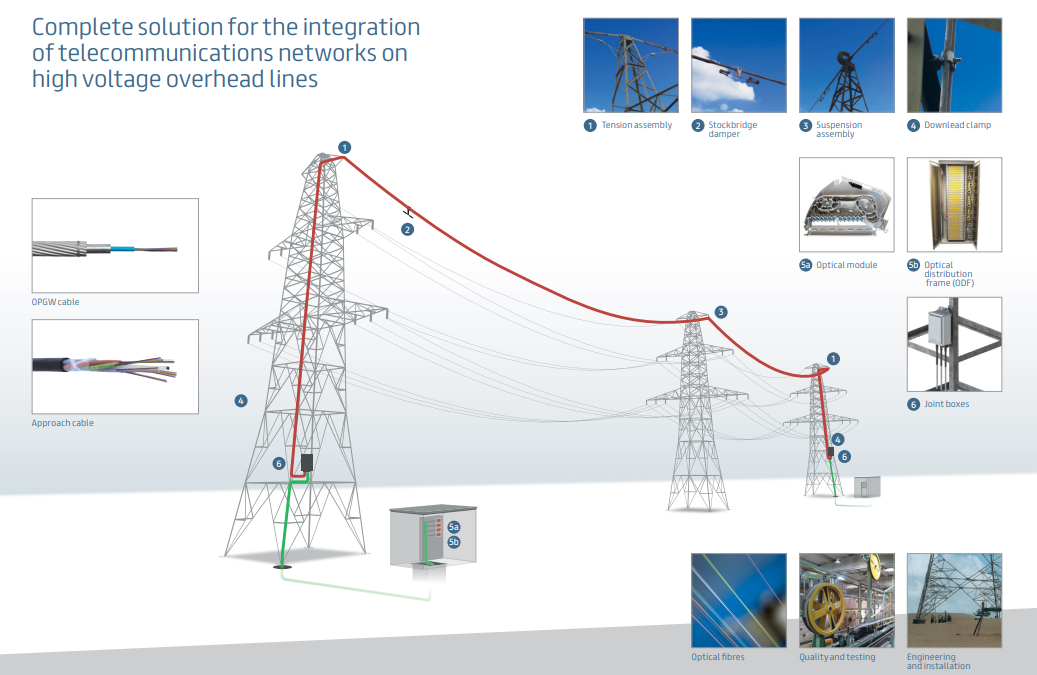
When installed at the highest point of the tower:

  • The conductive outer armor intercepts direct lightning strokes and diverts the energy safely to ground through the tower structure.
  • During phase-to-ground or phase-to-phase faults, OPGW carries the short-circuit current without damaging the internal fibers, provided the short-circuit capacity (I²t rating) has been correctly specified.
  • Optical signals travel through the protected fibers, completely immune to electromagnetic interference, power-line induction, and crosstalk. Typical attenuation is ≤0.22 dB/km at 1550 nm, enabling long-distance, high-bandwidth transmission.

This dual performance is why OPGW is the preferred solution for new high-voltage lines and for retrofitting existing shield wires.

Main Types of OPGW Construction

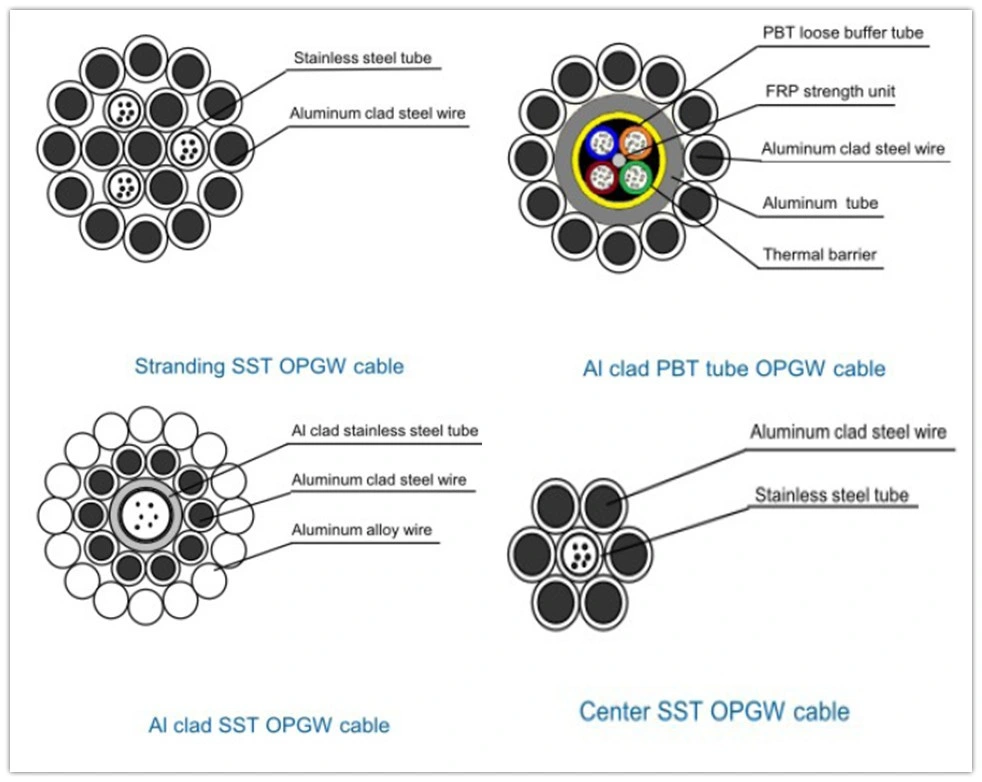
Design TypeOptical Unit ConfigurationTypical Fiber CountPrincipaux avantagesPreferred Applications
Central Loose TubeSingle stainless-steel or Al-clad tube at centerUp to 48–72Compact diameter, excellent crush resistance, easy splicingMedium-voltage lines, retrofit projects
Stranded / Layer-StrandedMultiple stainless-steel tubes stranded with ACS/AA wires72–144+Higher fiber capacity, superior mechanical strengthNew 220–500 kV+ lines, high lightning areas
Aluminum Extruded / AlumaCoreFibers in buffer tubes inside thick aluminum pipeHigh countsSuperior conductivity & short-circuit capacityHigh-fault-current corridors
Spiral-Space / Slot TypeFibers in spiral grooves or slotted coreVariableLow fiber strain, good bending performanceSpecial long-span or harsh environments

Manufacturers select the exact combination of ACS and AA wires according to required ultimate tensile strength (UTS), short-circuit current rating (kA), and lightning withstand (coulomb).

Key Technical Standards and Performance Criteria

OPGW must comply with internationally recognized standards, primarily:

  • IEEE 1138-2021 – Testing and performance of OPGW for electric utility power lines
  • IEC 60794-4-10 – Family specification for optical ground wires along electrical power lines
  • Supporting fiber standards: ITU-T G.652.D / G.657

Critical design parameters that must be calculated for every project include:

  • Short-circuit capacity (I²t)
  • Rated tensile strength (RTS) and everyday stress (EDS)
  • DC resistance at 20 °C
  • Maximum operating temperature under fault
  • Sag-tension performance under wind and ice loading
  • Minimum bending radius

Proper specification of these values is essential; under-rating short-circuit capacity can result in fiber coating damage during a fault event.

Typical technical parameter table (representative 48-fiber designs):

Design TypeDiameter (mm)Poids (kg/km)RBS (kN)I²t (kA²·s)Résistance CC (Ω/km)Max Fiber Count
Central SST single layer11.6–12.3340–42050–6548–800.25–0.4048–72
Al-clad SST12.0–14.5380–52060–9080–1200.20–0.3572–96
Multi-layer stranded14.0–16.5480–65080–120100–1600.18–0.3096–144
Extruded Al tube11.8–13.5350–48055–8570–1100.22–0.3848–96

Advantages of OPGW Technology

  • True dual functionality – One cable replaces both a conventional ground wire and a separate communication path.
  • Superior reliability – Metallic construction withstands extreme mechanical loads, corrosion, and temperature extremes; typical service life exceeds 30–40 years.
  • EMI immunity – Optical fibers are completely immune to electromagnetic interference, making them ideal for critical protection and SCADA circuits.
  • Cost efficiency – Lower total installed cost compared with separate ground wire + underground or ADSS fiber routes; no additional right-of-way needed.
  • Smart-grid readiness – Supports high-bandwidth real-time data for differential protection, PMUs, distributed temperature sensing, and third-party dark-fiber leasing.
  • Minimal additional tower loading – Weight and diameter are engineered to match existing shield-wire designs.

Applications typiques

  • New construction of 66 kV to 1200 kV transmission lines
  • Retrofit / replacement of conventional shield wires on energized lines (using live-line techniques)
  • Backbone communication for utility SCADA, teleprotection, and substation automation
  • Distributed temperature and strain sensing for condition monitoring
  • Dark-fiber leasing to telecom operators or data centers
  • Integration into smart-grid and digital-substation architectures

OPGW vs. ADSS and Traditional Ground Wire

  • Traditional ACSR shield wire provides only lightning and fault protection — no communication capability.
  • ADSS (All-Dielectric Self-Supporting) is a non-metallic fiber cable installed below the phase conductors; it cannot serve as a ground wire and requires separate hardware and sometimes additional structural reinforcement.
  • OPGW uniquely combines both functions at the optimal tower location (highest point), offering the highest reliability for critical utility communication circuits.

Selection and Customization Guidelines

Successful OPGW projects begin with accurate system data:

  • Maximum fault current (kA) and duration (s)
  • Line voltage and span lengths
  • Climatic conditions (ice, wind, temperature extremes)
  • Required fiber count and fiber type
  • Existing shield-wire diameter/weight (for retrofit)

Reputable manufacturers then engineer the precise ACS/AA ratio, tube design, and overall cross-section to meet both mechanical and electrical requirements while minimizing tower loading. Factory testing typically includes DC resistance, tensile strength, water penetration, and optical attenuation on every drum.

Conclusion

Optical Ground Wire (OPGW) is the proven, field-validated solution that modern power utilities rely on to protect critical transmission assets while simultaneously building a high-reliability communication backbone. Its combination of lightning protection, fault-current carrying capability, and EMI-immune optical performance makes it indispensable for today’s smart grids and tomorrow’s digital substations.

As a long-term partner specializing in high-performance OPGW solutions, we design and manufacture fully customized cables that meet exact project specifications for tensile strength, short-circuit capacity, and fiber count — delivering reliable quality and technical excellence for decades of service.

Ready to specify the optimal OPGW for your next transmission project?

Demande d'informations for detailed technical datasheets, short-circuit calculations, and customized quotations.

Laisser un commentaire

Votre adresse e-mail ne sera pas publiée. Les champs obligatoires sont indiqués avec *