Non classé

Qu'est-ce qu'une machine à commettre tubulaire ?

Qu'est-ce qu'une câbleuse tubulaire - doingcable

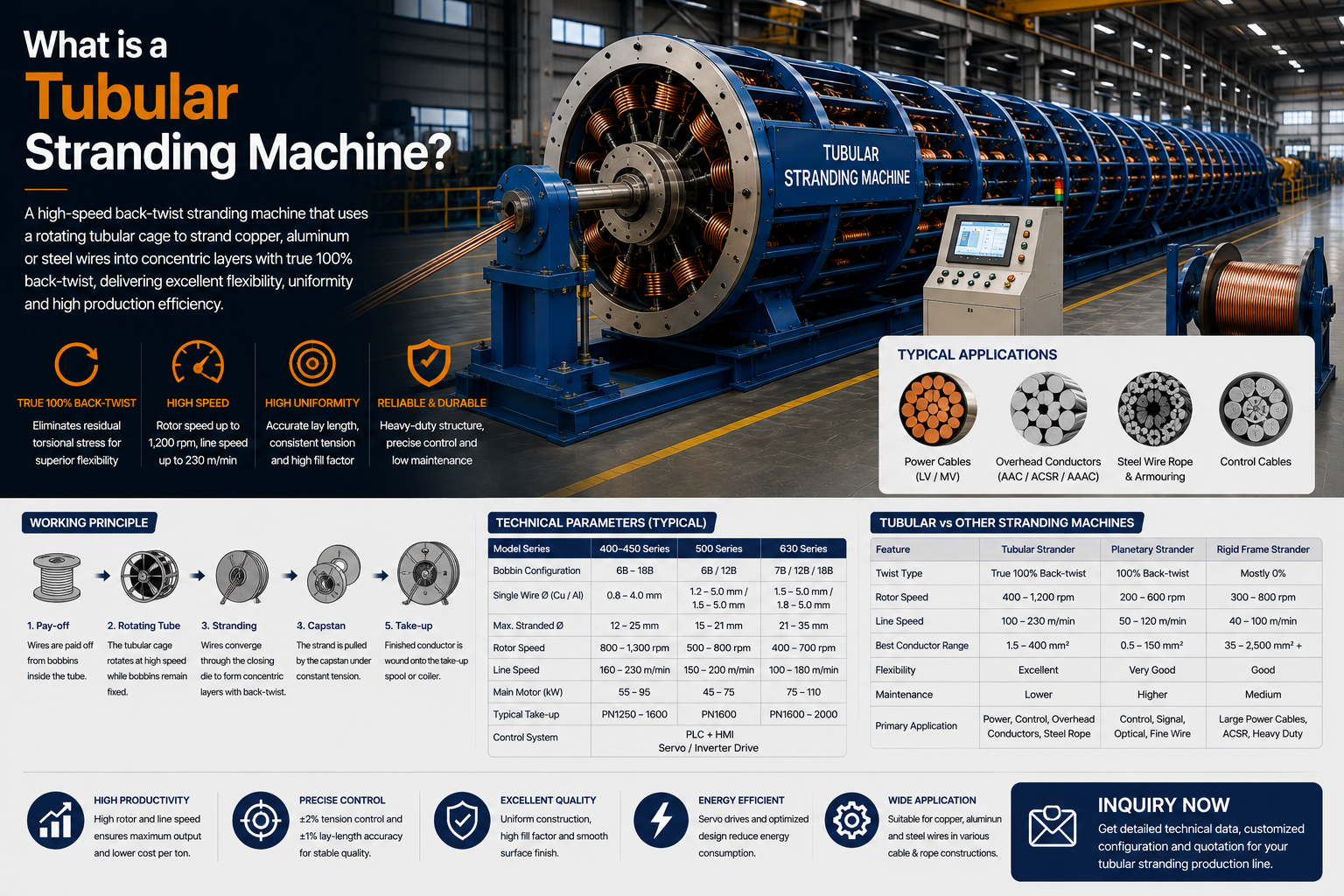
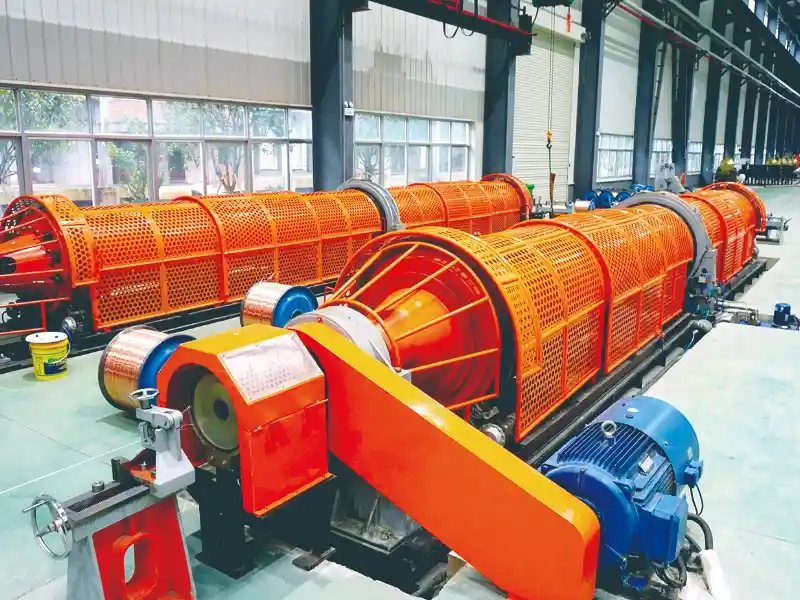
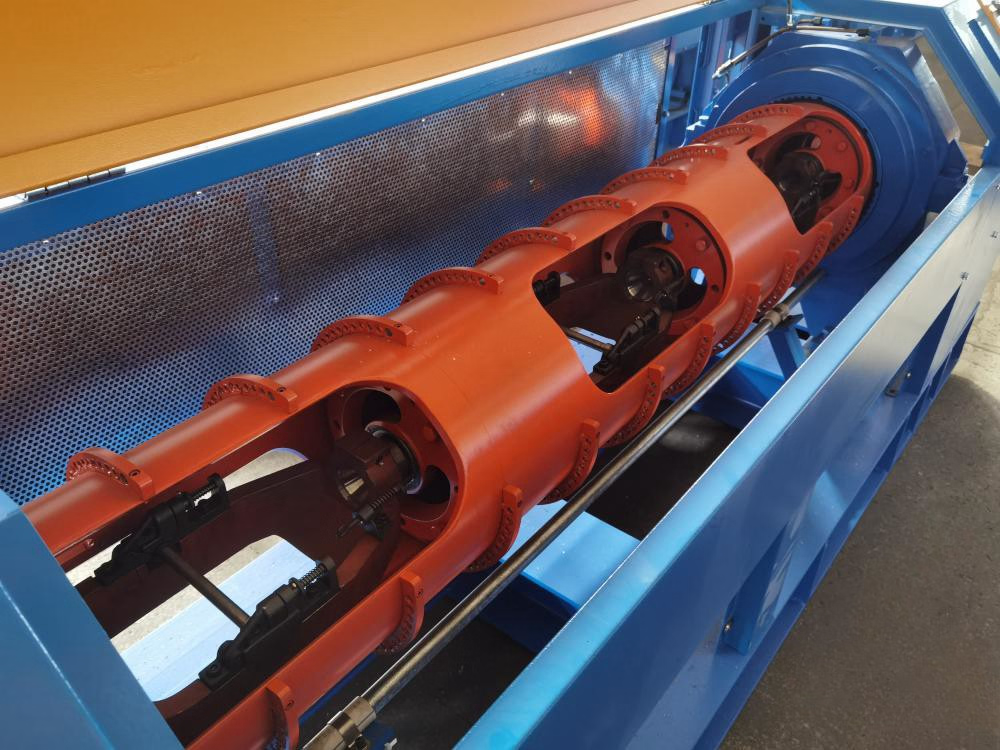
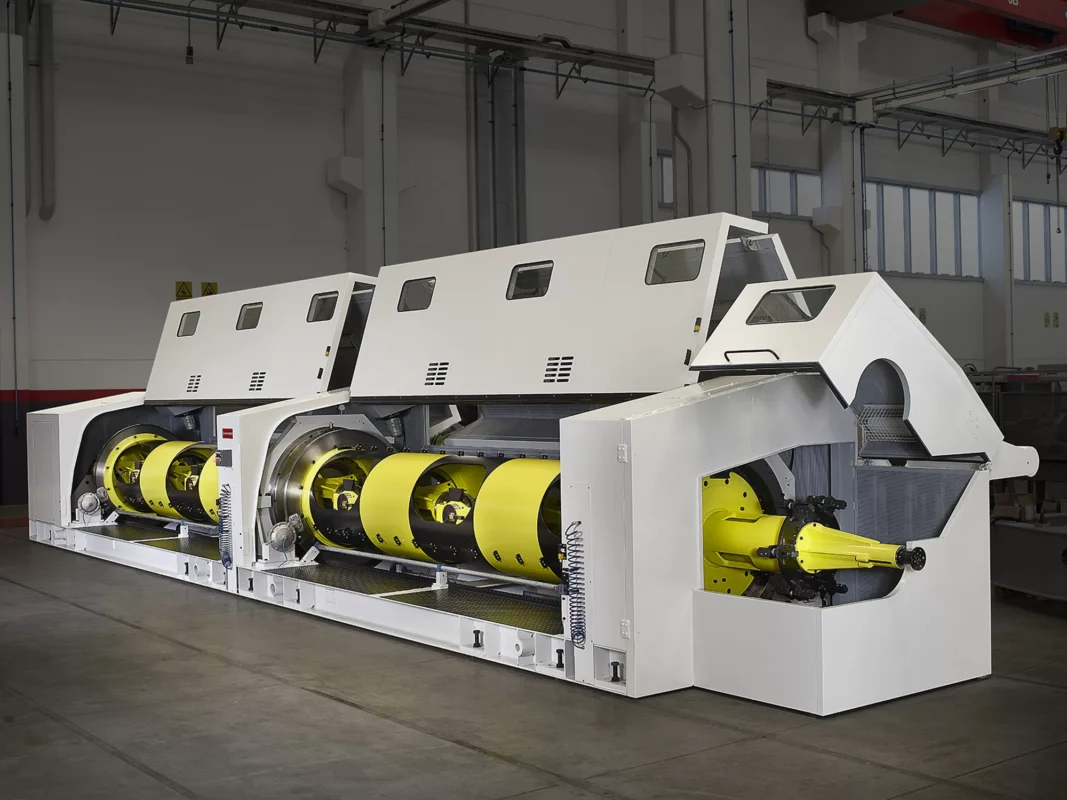
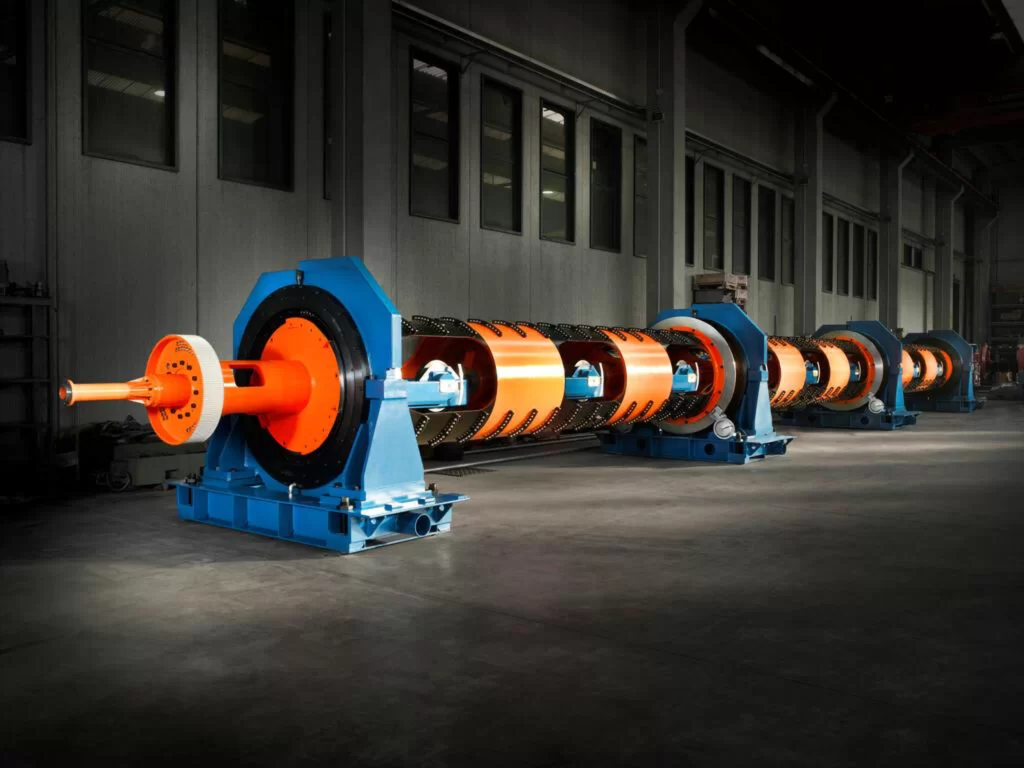
A Machine à câbler tubulaire (also called tubular strander or pipe-type stranding machine) is high-speed rotating-tube equipment that produces concentric stranded conductors with true 100% back-twist. It combines multiple copper, aluminum or steel wires into a uniform helical structure with controlled lay length, high fill factor and minimal residual torsional stress.

Modern units reach rotor speeds of 400–1,200 rpm and line speeds of 100–230 m/min while holding tension variance within ±2% and lay-length accuracy better than ±1%. This performance directly supports IEC 60228 Class 2 conductors and the dimensional/electrical requirements of IEC 60502 power cables.

How Does a Tubular Stranding Machine Work?

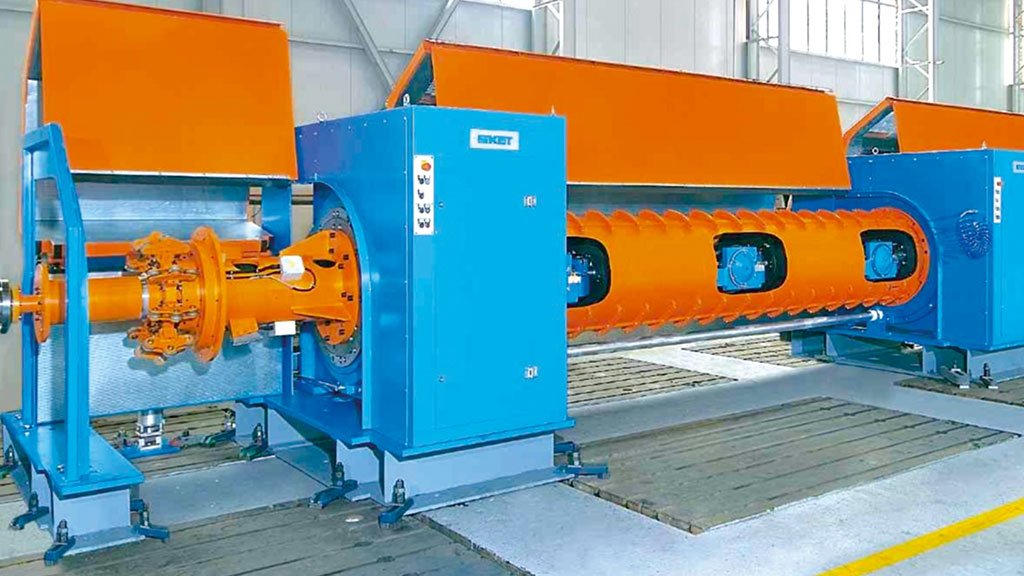
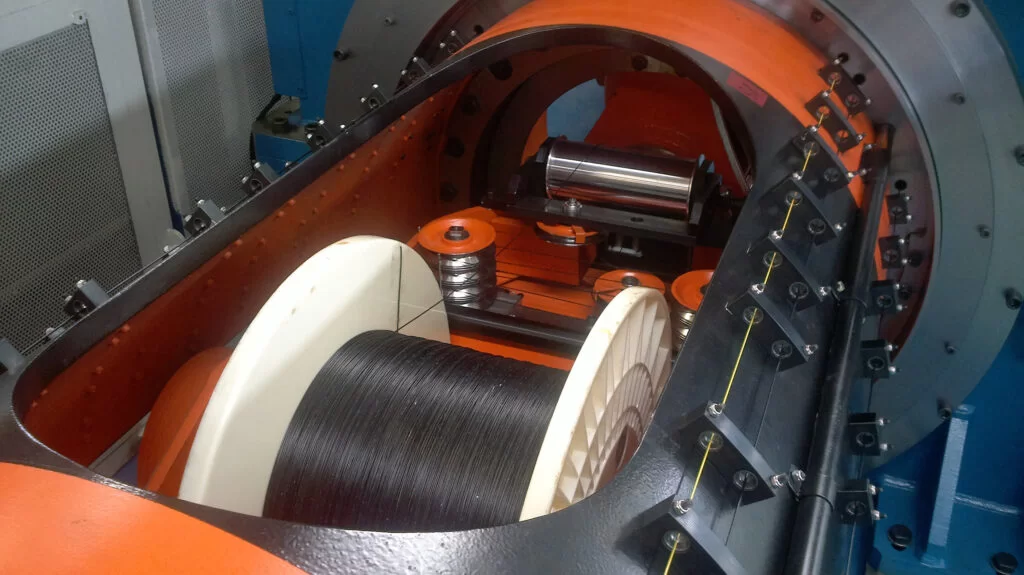
The machine consists of a seamless steel rotating tube (cage), internal bobbin cradles, central pay-off, closing die, dual- or single-wheel capstan and take-up unit.

  1. Individual wires are paid off from bobbins mounted inside the rotating tubular cage.
  2. The cage rotates at high speed while the bobbins maintain fixed orientation (true 100% back-twist).
  3. Wires converge through a closing die around a central core (or around each other).
  4. The formed strand is pulled by the capstan and wound onto the take-up reel under constant tension.

This design eliminates the torsional stress that remains in non-back-twist machines, producing conductors with superior flexibility, roundness and long-term fatigue resistance.

Key Technical Parameters of Modern Tubular Stranders

Série de modèlesBobbin ConfigSingle Wire Ø (Cu / Al)Max Stranded ØVitesse du rotor (tr/min)Vitesse de ligne (m/min)Main Motor (kW)Typical Take-up
400–450 series6B–18B0,8–4,0 mm12–25 mm800–1,300160–23055–95PN1250–1600
500 series6B / 12B1.2–5.0 / 1.5–5.0 mm15–21 mm500–800150–20045–75PN1600
630 series7B / 12B / 18B1.5–5.0 / 1.8–5.0 mm21–35 mm400–700100–18075–110PN1600–2000

Tubular vs Planetary vs Rigid Frame Stranding Machines

ParamètreTubular StranderPlanetary StranderRigid Frame Strander
Typical rotor speed400–1,200 rpm200–600 rpm300–800 rpm
Line speed100–230 m/min50–120 m/min40–100 m/min
Back-twistTrue 100%100%Usually 0%
Best conductor range1.5–400 mm² (Cu/Al), steel ropeFine to medium, optical, controlLarge power, ACSR, 61–91 wire
Noise & vibrationLow (heavy bearings + oil cooling)MediumMedium-high
Compaction & fill factorExcellentVery highHaut
Maintenance intensityLower (centralized lubrication)Higher (planetary gears)Medium
Primary applicationHigh-volume power & control cablesFlexible & precision conductorsHeavy overhead & large cross-section

Principales applications dans la fabrication de câbles

  • Low-, medium- and high-voltage power cable conductors (IEC 60228 Class 2)
  • Overhead conductors: AAC, AAAC, ACSR, steel-cored aluminum
  • Steel wire strands for armouring, OPGW and guy wires
  • Control and signalling cables
  • Galvanized or stainless steel ropes for elevators and cranes

The tubular design is especially effective for 7-, 12- and 19-wire constructions that require consistent geometry for subsequent insulation or armouring processes.

Selection Logic and Critical Engineering Considerations

Engineers and procurement teams should evaluate four primary factors:

  1. Wire diameter range and bobbin capacity – Match the cage size (PN400–PN800) and number of bobbins to the conductor cross-section and production volume.
  2. Lay-length accuracy and tension control – Demand servo or hysteresis brake systems that maintain ±1–2% tension variance. Magnetic-particle or fill-factor-controlled brakes are preferred for copper and aluminum.
  3. Back-twist requirement – True 100% back-twist is mandatory when residual torsional stress must be minimized (most power and overhead applications).
  4. Line integration – Confirm compatibility with existing pay-off, capstan, take-up and optional taping or compacting heads.

Failure modes most frequently observed in poorly specified machines include bird-caging, uneven lay, excessive residual twist and premature wire breakage. These are largely eliminated by proper tension management, dynamic balancing of the tube and real-time wire-break detection systems.

Standards Compliance and Quality Metrics

Finished conductors must meet:

  • IEC 60228 (conductor classification and resistance)
  • IEC 60502 (power cable dimensional and electrical requirements)
  • ASTM B8 / equivalent national standards for overhead conductors

Key measurable outputs from a correctly configured tubular strander:

  • Lay-length tolerance ≤ ±1%
  • Conductor roundness and fill factor supporting subsequent XLPE extrusion without voids
  • DC resistance within IEC 60228 limits
  • Minimal residual torque (verified by free-end rotation tests)

Operational Best Practices and Failure Prevention

  • Maintain centralized oil lubrication and temperature monitoring on the main bearings.
  • Perform dynamic balancing of the tubular cage after any major maintenance.
  • Use wire-break sensors along the full length of the tube and before the closing die.
  • Schedule regular tension-system calibration; uncalibrated brakes are the most common cause of scrap.
  • For continuous 24/7 operation, specify regenerative drives and optional sound-proofing packages to reduce operator fatigue and noise levels.

Summary of Technical Advantages

A modern tubular stranding machine provides high rotor and line speeds, true 100% back-twist, excellent geometric consistency and lower long-term maintenance intensity compared with planetary or rigid-frame alternatives for the majority of copper, aluminum and steel conductor applications in the 1.5–400 mm² range. When correctly specified and integrated, it delivers the dimensional stability required for reliable power, overhead and control cable production under current IEC and industry standards.

For detailed technical specifications, custom configurations or a production-line quotation based on your conductor range and volume targets,

Demande d'informations.

Laisser un commentaire

Votre adresse e-mail ne sera pas publiée. Les champs obligatoires sont indiqués avec *