
Non classé

What is Copper Tape used for?

What is Copper Tape used for-doingcable2

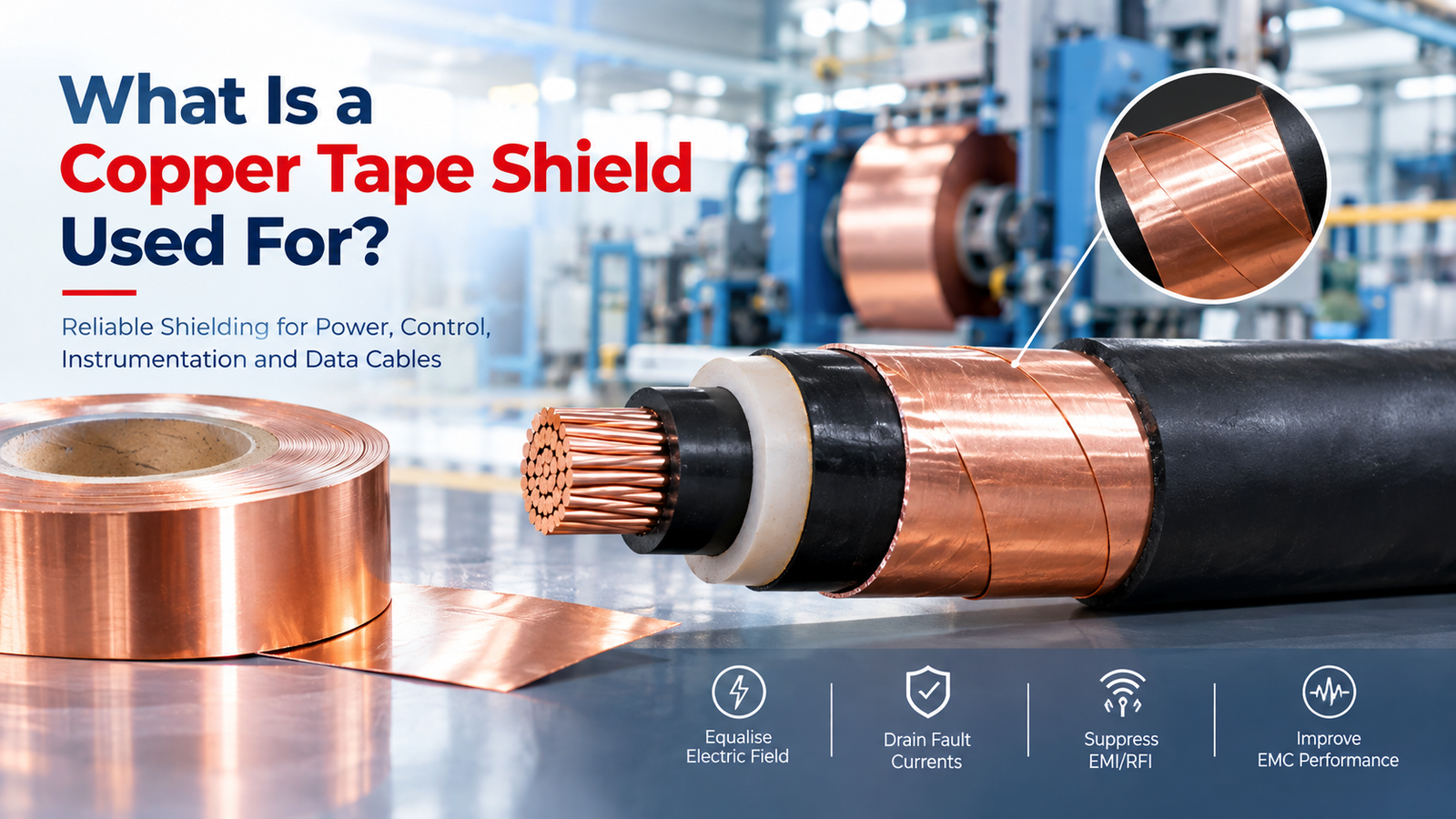
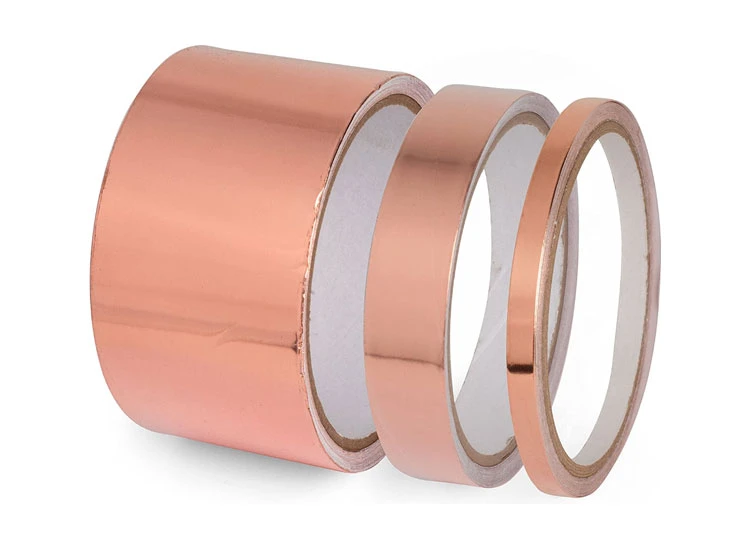
Copper tape is a precision-slit, soft-annealed electrolytic tough pitch (ETP) copper foil used as a metallic screen in power, control, instrumentation, and data cables. It provides near-100 % conductive coverage to equalise the electric field, drain capacitive and fault currents, suppress EMI/RFI, and improve overall electromagnetic compatibility.

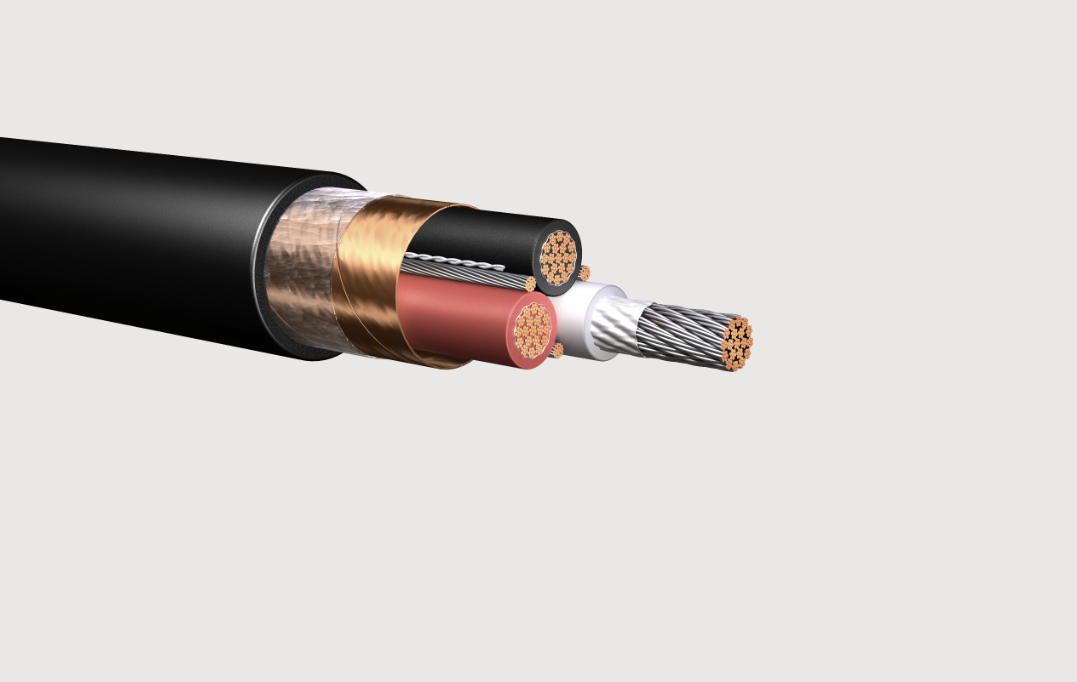
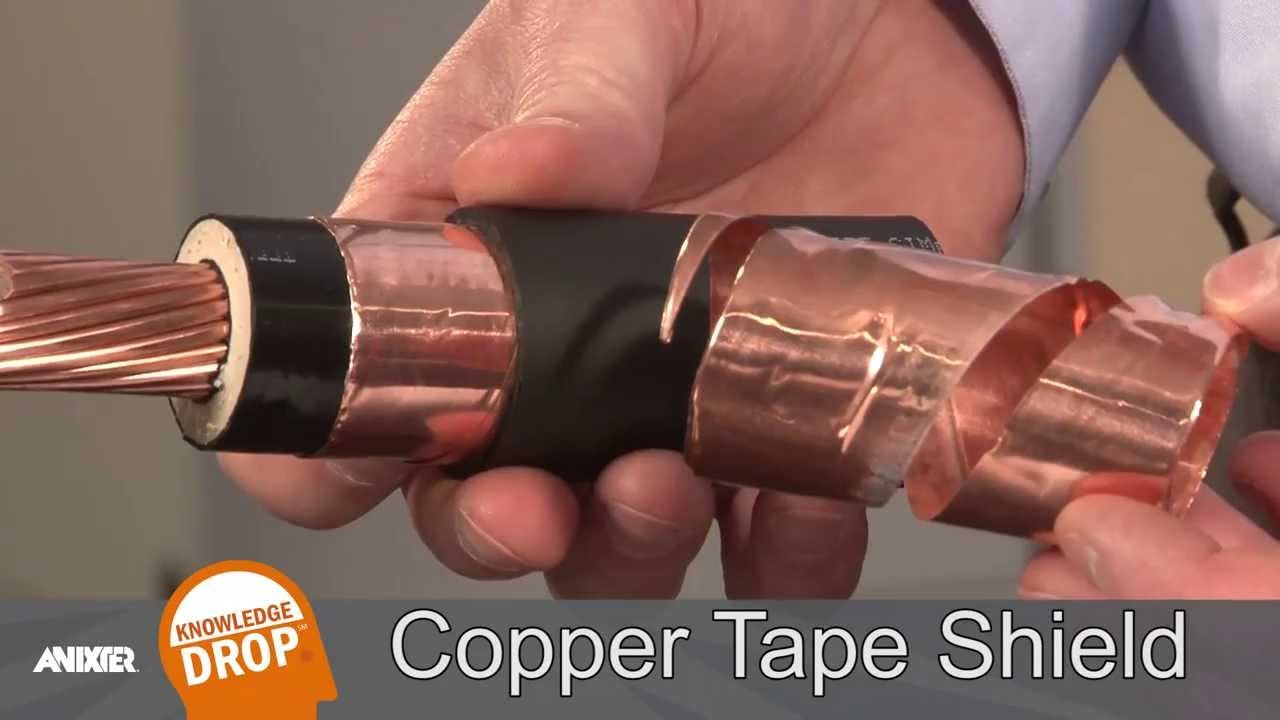
In medium-voltage XLPE cables rated 6–35 kV, the tape is helically applied over the extruded semi-conducting insulation screen. In control and instrumentation cables it is applied over the core assembly (or individual pairs) to reduce crosstalk and external interference. Typical commercial grades are ≥99.9 % pure copper with conductivity of 98–100 % IACS in the soft (O) temper.

What is a Copper Tape Shield? MV-105 Cable Technical Guide Article

What Is the Primary Function of Copper Tape in Cable Construction?

Copper tape forms a continuous low-resistance metallic barrier that confines the electric field within the insulation, provides a path for charging and short-circuit currents, and attenuates high-frequency interference. In MV cables the helical wrap with controlled overlap creates a Faraday-cage effect that prevents partial discharge by eliminating field concentrations at the insulation surface.

Standard practice uses 0.08–0.15 mm thick soft copper tape applied with 15–25 % overlap. This construction meets the requirements of IEC 60502 series (where national standards define the exact screen cross-section) and common Chinese practice under GB/T 12706 (minimum average overlap 15 % of tape width, single-core thickness ≥0.12 mm, multi-core average ≥0.10 mm).

How Does Copper Tape Compare with Copper Wire Screen?

ParamètreCopper Tape ScreenCopper Wire Screen
CoverageNear 100 %80–95 % (braid density dependent)
High-frequency EMIExcellentModéré
Low-frequency / fault currentModerate (limited by thin cross-section)High (customisable 16–50 mm²)
FlexibilityGood for fixed installationBetter for frequent bending
Typical thickness / size0.05–0.15 mm (5–6 mil common)0.5–1.5 mm wires or braid
CoûtLowerPlus haut
Preferred applicationFixed MV power, instrumentation, dataHigh-fault systems, mobile or flexible cables

Copper tape is preferred when uniform field control and high-frequency shielding are critical and expected earth-fault current is limited (resistance-grounded or compensated networks). Copper wire screen is specified when short-circuit withstand must exceed approximately 4–6 kA for 1 s.

Paramètres techniques typiques

ParamètreTypical RangeNotes
MatérielSoft annealed ETP copper (C11000 / T2)≥99.9 % Cu
Conductivité≥98–100 % IACSMeasured at 20 °C
Thickness0.05–0.15 mm (0.08–0.12 mm common)Up to 0.20 mm for higher fault rating
Width10–100 mm (custom)Selected by cable diameter and overlap
TempérerSoft (O)Fully annealed for formability
Overlap15–25 % (min. average 15 %)Ensures continuity after bending
Application methodHelical or longitudinalHelical preferred for MV field control
SurfaceClean, free of oxide, oil, and edge burrsCritical for low contact resistance

Tapes are supplied on paper or plastic cores (Ø150–500 mm) in lengths suitable for high-speed taping lines.

Main Application Areas

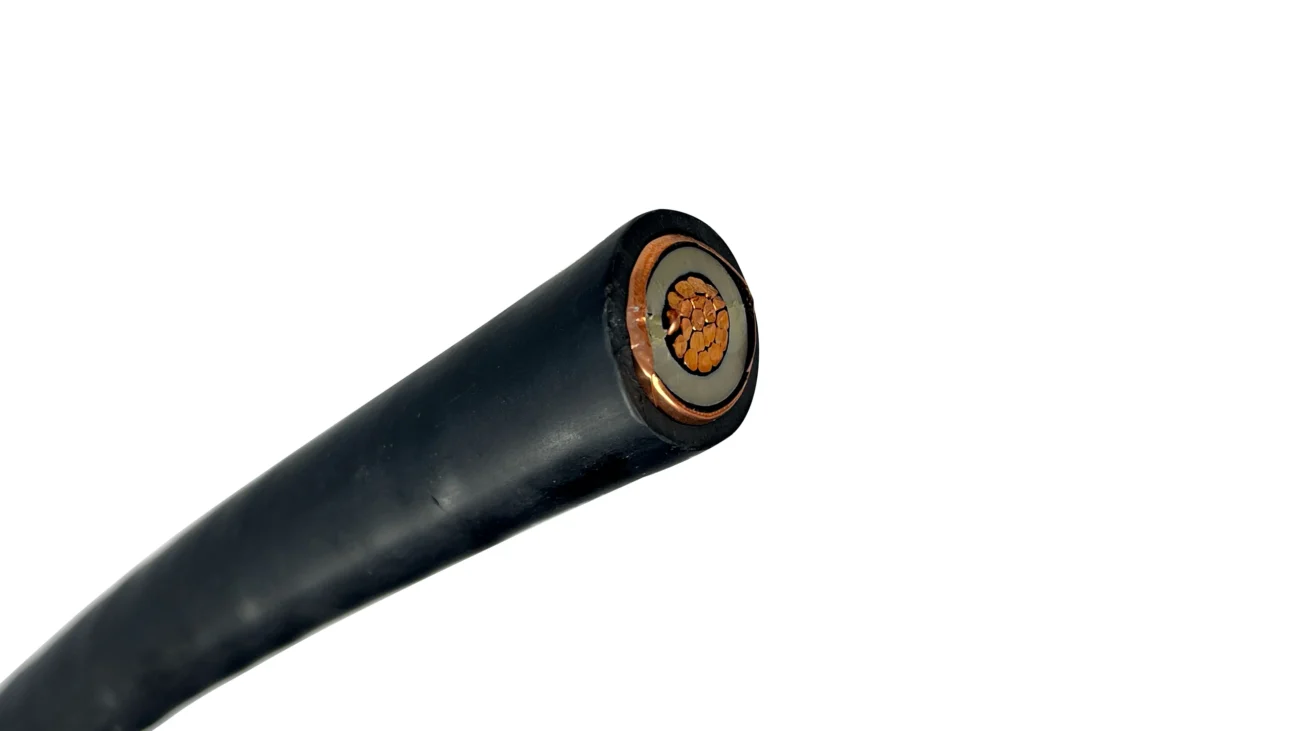
  • Medium-voltage XLPE power cables (6/10 kV to 18/30 kV) — helical copper tape screen over insulation screen for radial field control and charging-current drainage.
  • Control and instrumentation cables (300/500 V to 0.6/1 kV) — collective or individual screening to reduce EMI and crosstalk in process plants and automation systems.
  • Coaxial and data cables — outer conductor or supplemental screen for high-frequency signal integrity.
  • Special cables (VFD, marine, mining) — combined with drain wires or used in multi-layer constructions.

In resistively grounded industrial networks, standard 0.10–0.12 mm copper tape commonly provides approximately 4 kA / 1 s fault withstand. Higher fault levels require thicker tape, double-layer tape, or a hybrid tape-plus-wire design.

Standards and Compliance Reference

  • IEC 60502-1 and IEC 60502-2: metal screen construction (tapes, wires or combination); exact cross-section defined by national practice.
  • GB/T 12706: copper tape average overlap ≥15 % of width; thickness ≥0.12 mm (single-core) / ≥0.10 mm (multi-core).
  • ICEA / UL / CSA practices for North American MV-105 constructions: typically 5 mil (0.127 mm) copper tape with minimum 25 % overlap.
  • Shielding performance evaluated by transfer impedance and shielding attenuation (IEC 62153 series methods).

Proper grounding of the screen at terminations is mandatory; poor terminations are a frequent cause of elevated contact resistance and thermal damage under fault conditions.

Selection and Process Considerations

Select thickness and width according to required short-circuit rating, cable diameter, and production line speed. Soft temper is essential; hard tape can cut into the semi-conducting screen or wrinkle during wrapping. Edge quality must be free of burrs to avoid stress points that initiate partial discharge. Tension and overlap are controlled on the taping head (typically 10–25 % overlap) to maintain electrical continuity after subsequent bending and installation.

Longitudinal application is used for high-speed lines where uniform coverage and productivity are prioritised; helical application remains the standard for MV field-control screens.

Failure Modes and Prevention

Common issues include increased contact resistance caused by oxide growth at overlaps, tape cracking from excessive hardness or over-tension, and local field intensification from edge burrs or insufficient overlap. Prevention measures are: use fully annealed material, maintain clean surfaces, control overlap and tension, and specify point-welded joints rather than soldered or adhesive joints in critical MV constructions. After installation, screen continuity and resistance should be verified.

Key Points

  • Copper tape delivers near-100 % coverage and superior high-frequency shielding compared with braid.
  • Typical thickness 0.08–0.15 mm soft annealed ETP copper, 15–25 % helical overlap for MV cables.
  • Preferred for fixed installations where field uniformity and EMI control dominate; wire screen preferred for high fault-current capacity.
  • Complies with IEC 60502 and GB/T 12706 practices when correctly dimensioned and applied.
  • Reliable long-term performance depends on material purity, temper, edge quality, and controlled application.

For custom widths, thicknesses, conductivity grades, or technical support on screen design and production-line compatibility, contact our engineering team.

Laisser un commentaire

Votre adresse e-mail ne sera pas publiée. Les champs obligatoires sont indiqués avec *