Câbles énergétiques nouveaux de 2026, Tendances du secteur et perspectives du marché

Tendances des équipements de fabrication de câbles en 2026

Tendances en matière d'équipements de fabrication de câbles à l'horizon 2026

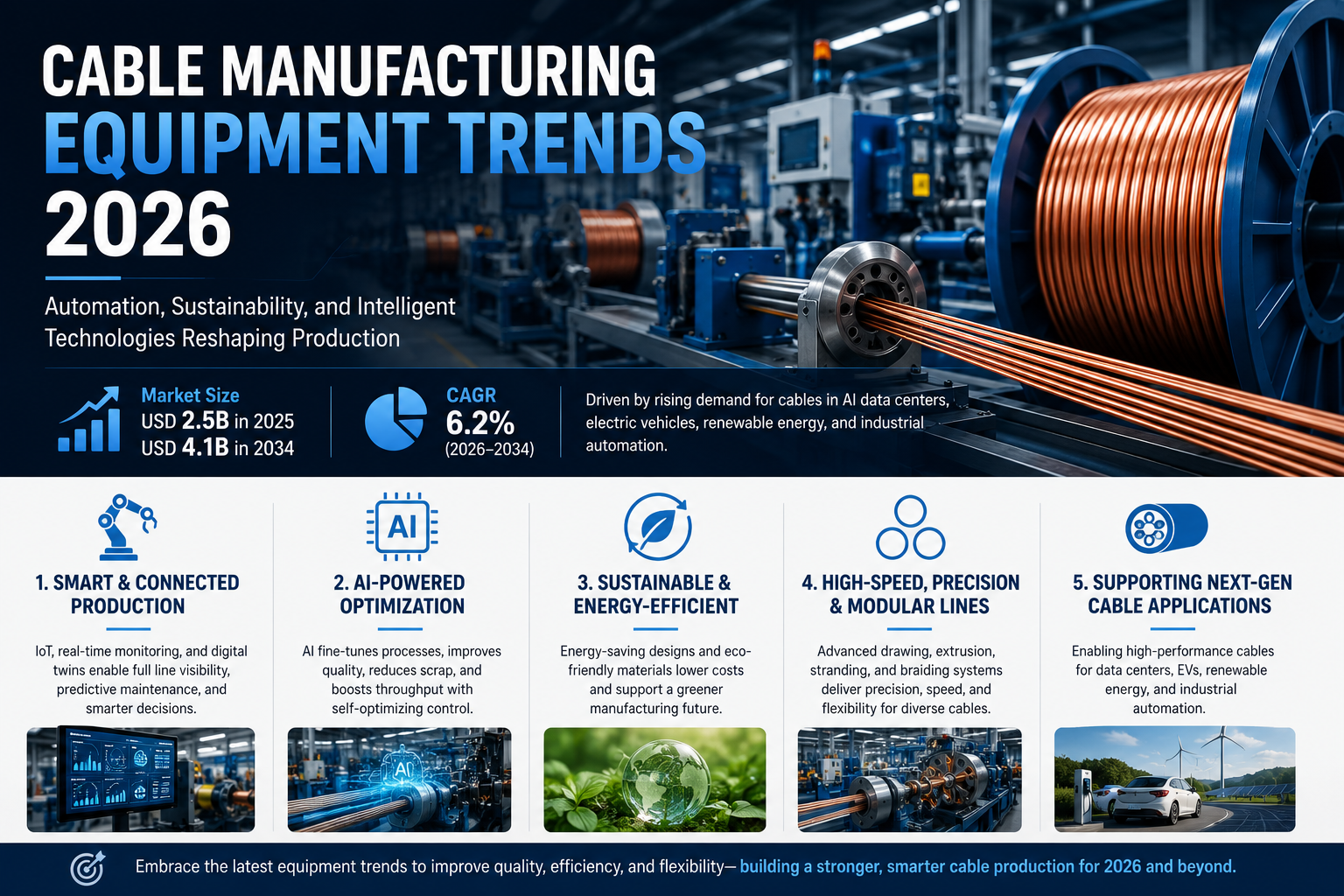
The global cable manufacturing equipment market stands at approximately USD 2.5 billion in 2025 and is projected to reach USD 4.1 billion by 2034, growing at a CAGR of 6.2% from 2026 onward.

This growth is driven by surging demand for high-performance cables in AI data centers, electric vehicles, renewable energy grids, and industrial automation. Manufacturers who invest in advanced, reliable production equipment gain clear advantages in throughput, product consistency, energy efficiency, and the ability to deliver customized cables that meet stringent international standards.

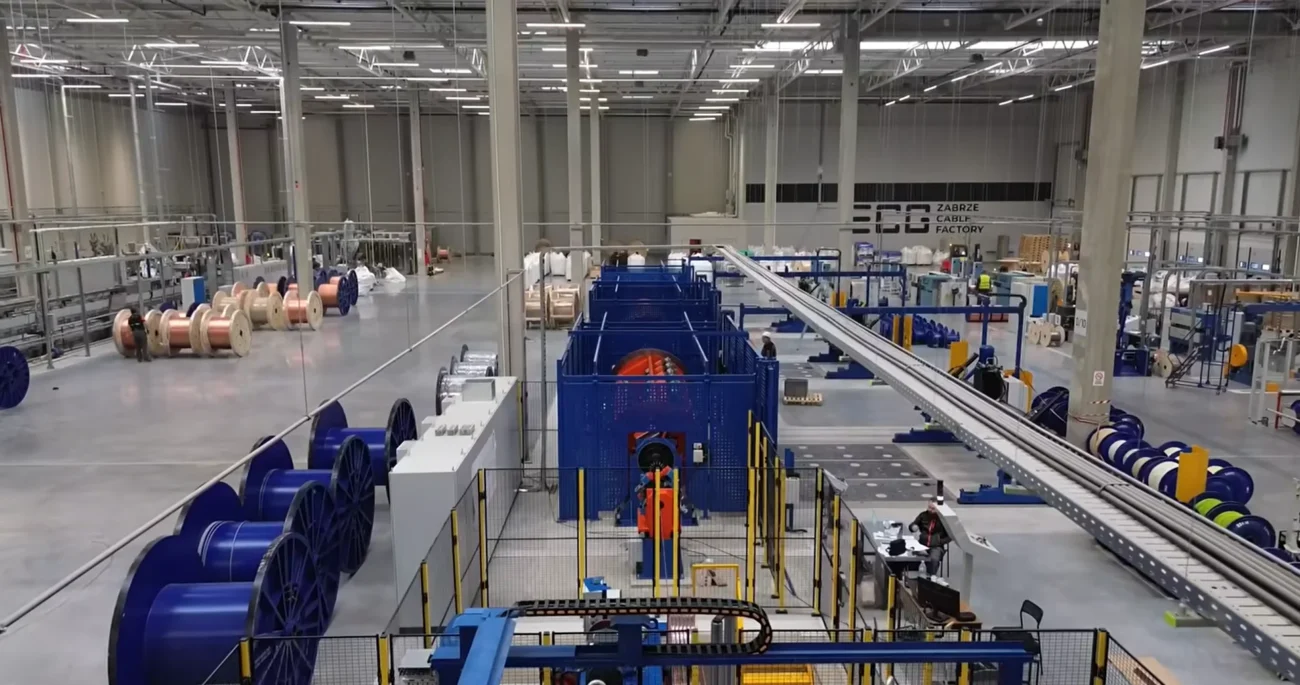
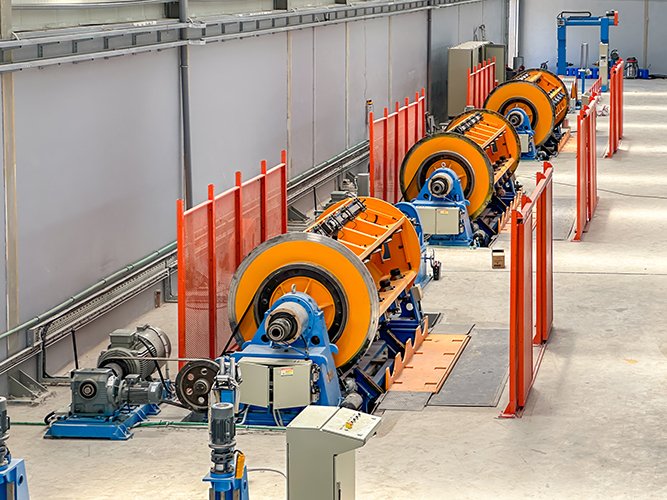
Modern cable plants increasingly rely on integrated lines that combine high-speed processing with intelligent monitoring — from initial rod breakdown through final finishing.

1. Industry 4.0 and Smart Factory Transformation

The defining shift in 2026 is the move toward connected, data-driven production environments. Equipment featuring IoT sensors, real-time analytics, and cloud connectivity enables continuous process visibility and automatic adjustments across the entire manufacturing chain.

Digital twins allow teams to simulate line performance, test new product recipes, and optimize parameters virtually before implementation on the shop floor. This capability significantly reduces commissioning time and helps maintain stable, high-quality output even when introducing new materials or constructions.

Predictive maintenance systems, powered by machine learning, further enhance reliability by identifying potential issues before they cause downtime — a critical advantage for producers running continuous, high-value operations.

2. AI Integration for Quality, Efficiency, and Process Optimization

Artificial intelligence is moving from pilot projects to practical deployment on production floors. AI algorithms continuously analyze sensor data to fine-tune key parameters such as temperature profiles, line speeds, and tension control. The result is tighter tolerances, improved concentricity, and higher first-pass yields.

Leading configurations now support self-optimizing extrusion and drawing processes, delivering measurable gains in throughput while reducing scrap. Inline vision and quality systems catch deviations instantly, ensuring every meter of cable meets the exacting requirements of data center, EV, and industrial applications.

3. Sustainability and Energy-Efficient Equipment Design

Sustainability is no longer optional. Equipment buyers increasingly evaluate energy consumption per ton produced, compatibility with halogen-free and recyclable compounds, and overall environmental footprint.

Modern lines incorporate energy-efficient drives, optimized heating and cooling systems, and designs that support the latest eco-friendly insulation and sheathing materials. These features help manufacturers meet regulatory requirements while lowering operating costs and strengthening their position with environmentally conscious customers.

4. High-Speed, Precision, and Modular Production Lines

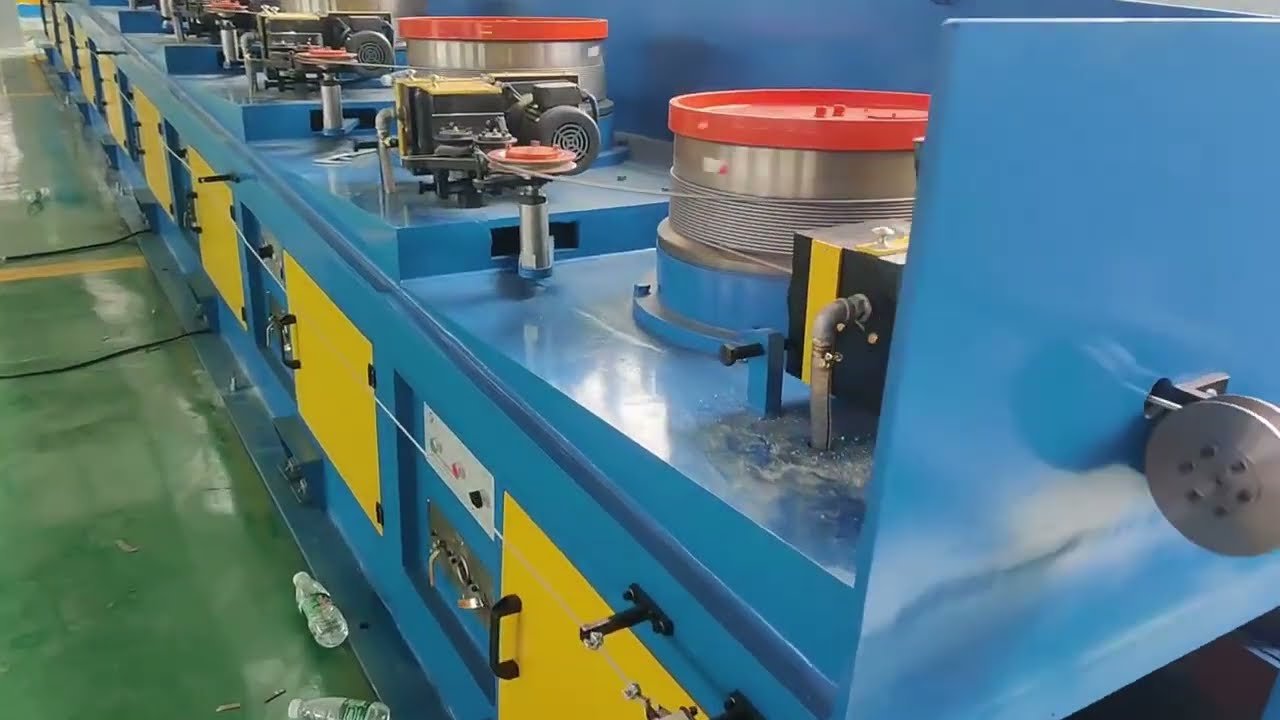
To meet rising volume and specification demands, equipment must deliver both speed and flexibility. Advanced rod breakdown and multi-pass wire drawing lines with precision dies and sophisticated cooling systems produce conductors with excellent surface quality and dimensional consistency at high speeds.

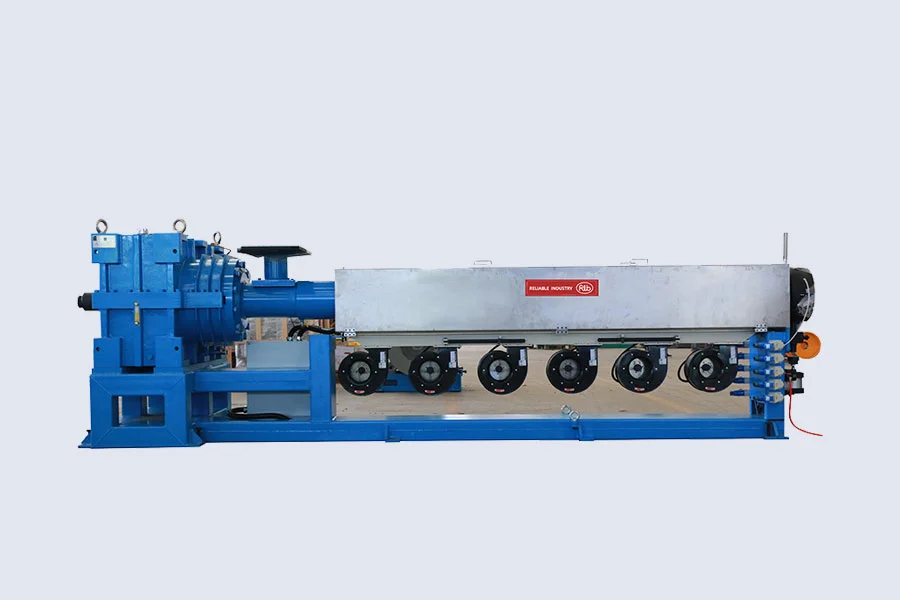
High-performance insulation and sheathing extrusion systems, including tandem and co-extrusion configurations, enable precise multi-layer application while supporting rapid compound changes and tight process control.

On the finishing side, precision central stranding, drum twister armoring, and high-speed braiding equipment provide the mechanical performance and shielding effectiveness required for today’s data, power, and industrial cables. Modular machine designs allow producers to reconfigure lines quickly for different constructions, reducing changeover time and increasing overall plant flexibility.

These capabilities are especially valuable when serving diverse and fast-evolving market segments.

5. Supporting the Growth of Specialized Cable Applications

The equipment trends above directly support production of next-generation cables:

  • High-density fiber and high-speed copper solutions for AI data centers
  • High-voltage and charging cables for electric mobility
  • HVDC and specialty power cables for renewable integration and grid upgrades
  • Robust, flexible cables for industrial automation and robotics

Manufacturers equipped with versatile, high-precision lines can respond faster to customer specifications while maintaining the consistent quality that builds long-term trust.

Strategic Outlook: Building Competitive Advantage in 2026 and Beyond

Success in the coming years will belong to producers who combine advanced machinery with deep process expertise. The most effective approach involves selecting equipment platforms that integrate seamlessly with digital monitoring systems, offer strong energy performance, and provide the modularity needed for customized production.

Equally important is partnering with suppliers who understand the full cable manufacturing process — from conductor drawing through final jacketing — and can support customers with technical know-how, line optimization, and reliable long-term service.

Demande d'informations to explore how tailored equipment configurations can help align your production capabilities with the opportunities emerging in 2026. Our team provides professional consultation on line design, process improvement, and customized solutions that prioritize reliable quality, operational efficiency, and lasting partnership value.

Foire aux questions

What equipment trends will have the greatest impact on cable manufacturers in 2026?

The combination of Industry 4.0 connectivity, AI-driven process optimization, and modular high-speed lines that support both volume production and rapid customization.

How important is energy efficiency when selecting new cable manufacturing equipment?

Extremely important. Lower energy consumption per ton directly reduces operating costs and helps meet sustainability targets while maintaining high output and quality standards.

Can modular equipment really improve flexibility without sacrificing performance?

Yes. Well-engineered modular systems allow quick reconfiguration for different cable types while preserving precision, speed, and repeatability across production runs.

What should manufacturers consider when investing in equipment for data center or EV cables?

Focus on lines that deliver tight tolerances, excellent surface quality, and the ability to process new high-performance materials — supported by robust process control and monitoring capabilities.

Laisser un commentaire

Votre adresse e-mail ne sera pas publiée. Les champs obligatoires sont indiqués avec *