Non classé

What is Aluminum Material Continuous Extrusion Machine?

What is Aluminum Material Continuous Extrusion Machine-doingcable

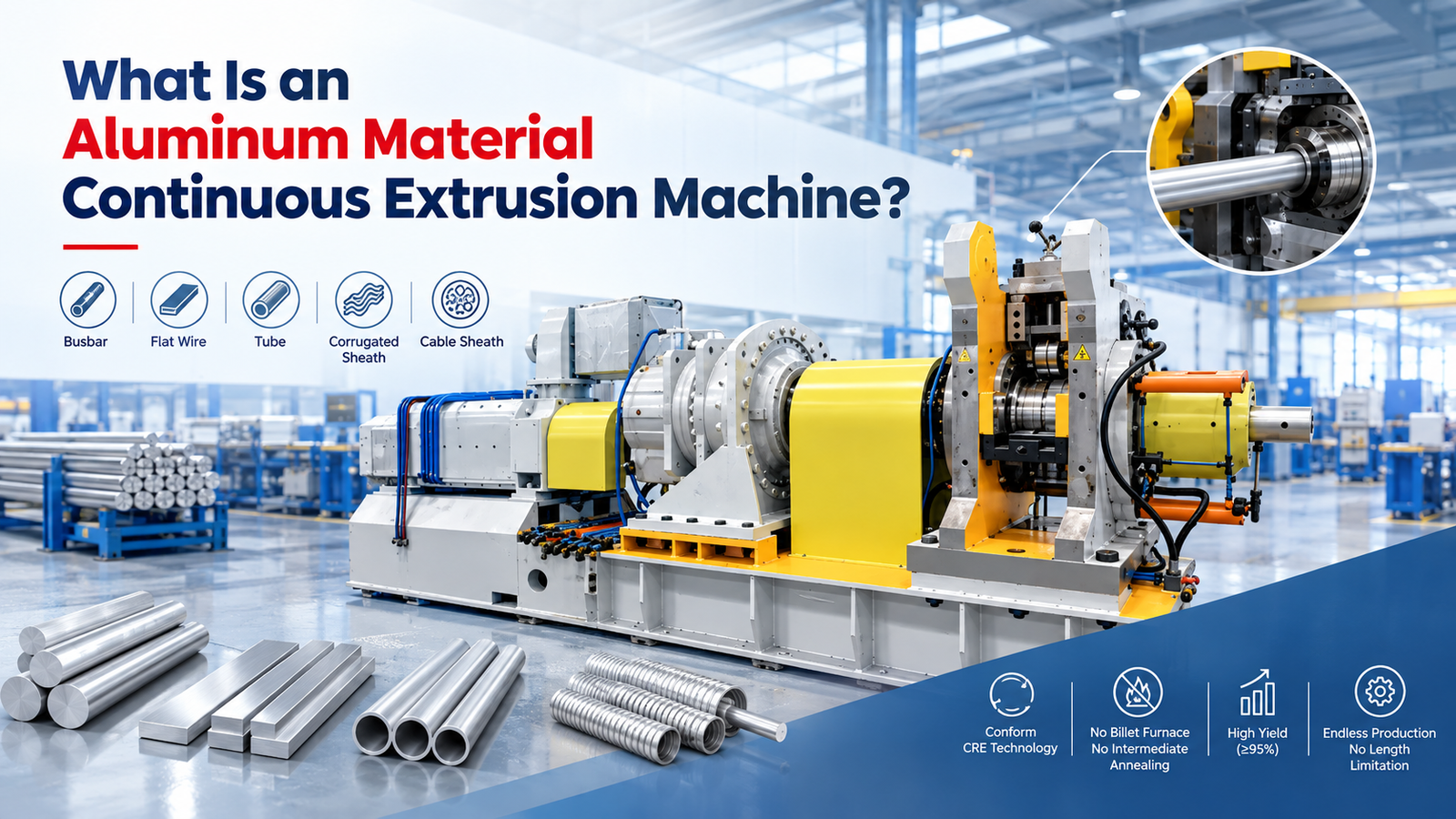
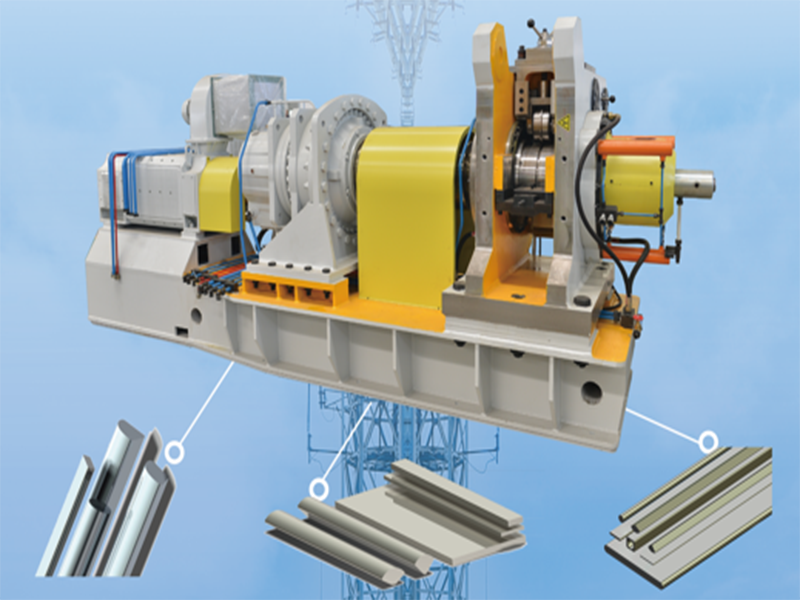
An Machine d'extrusion continue de matériaux en aluminium is a Conform (Continuous Rotary Extrusion) system that converts aluminum rod into endless busbar, flat wire, tube, profile or cable sheath without a billet furnace or intermediate annealing.

In cable plants it is used for two main duties: (1) solid conductors and busbars (EC-grade aluminum) and (2) seamless aluminum sheathing / cladding of power cable cores (corrugated or smooth). The process is solid-state, friction-heated, and yields typically ≥95 %.

What Is an Aluminum Material Continuous Extrusion Machine?

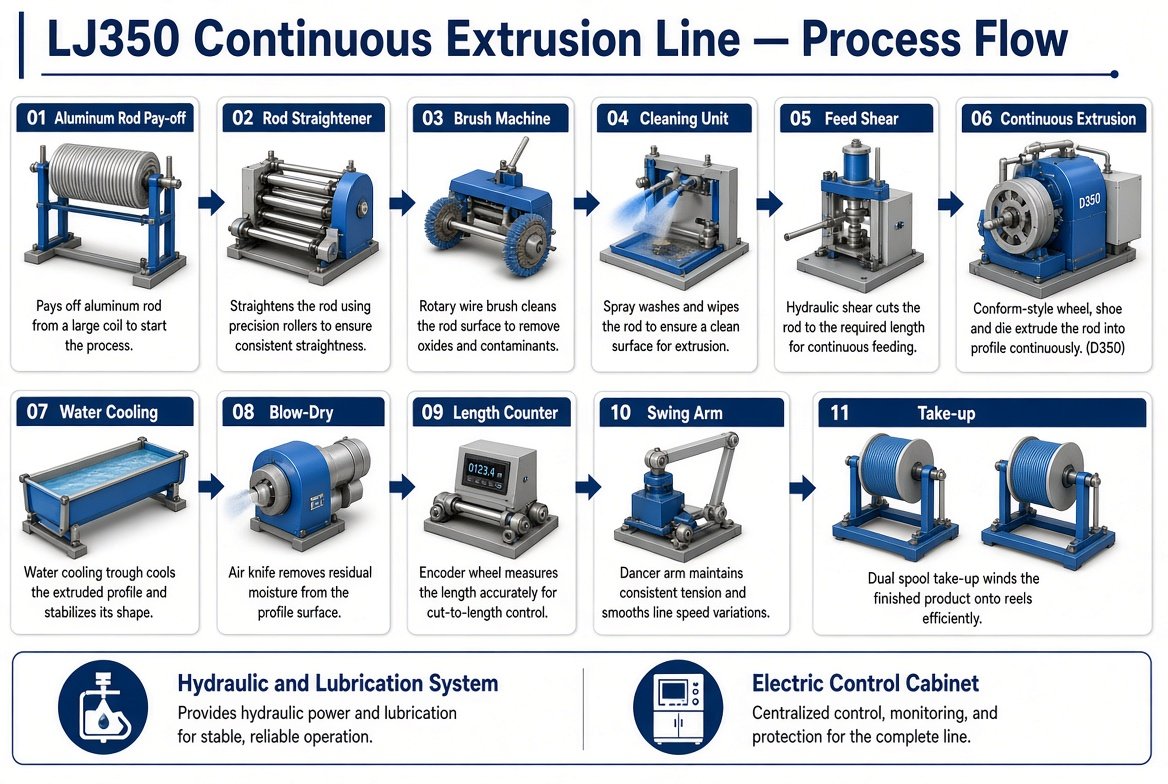
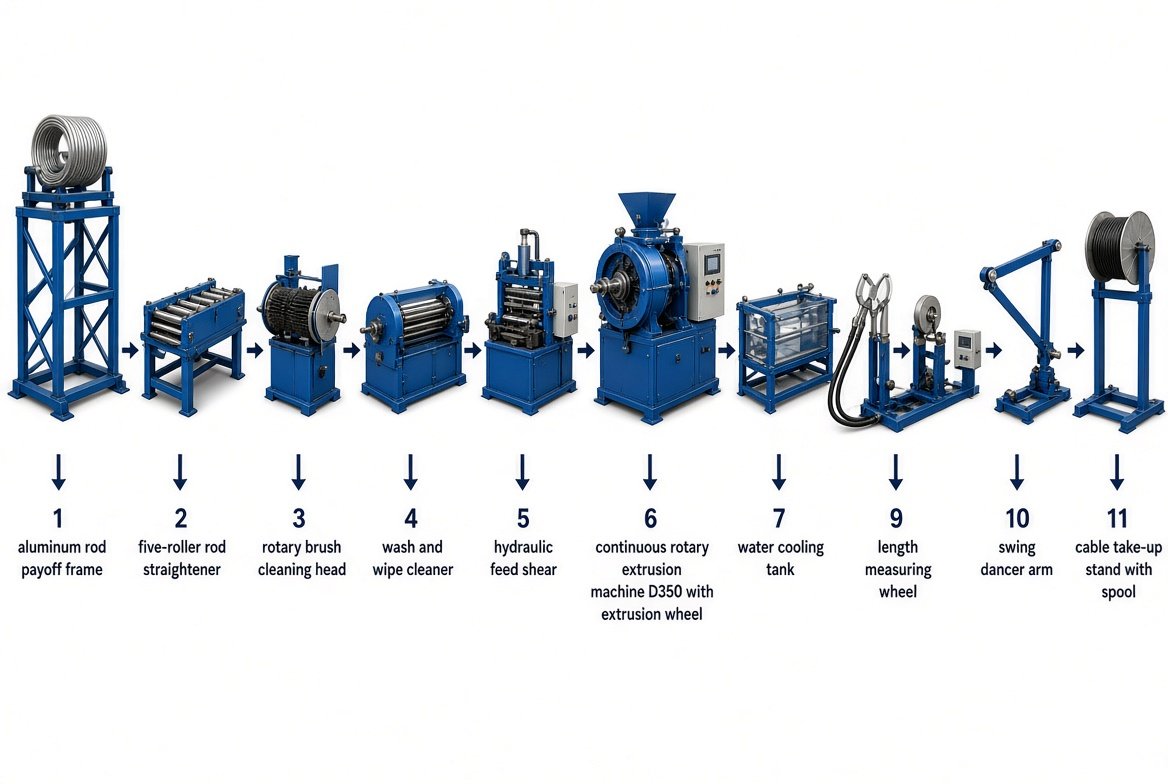
An Aluminum Material Continuous Extrusion Machine is a Conform continuous rotary extrusion line that feeds aluminum rod into a grooved rotating wheel, plasticizes the metal by friction against a stationary shoe, and forces it through a die to produce continuous busbar, flat wire, tube or cable sheath.

Unlike a conventional hydraulic press, there is no billet furnace, no butt scrap and no length limitation. The product exits soft and can be coiled, cut or corrugated in-line. In cable manufacturing the two dominant applications are EC-grade solid conductors / busbars and seamless aluminum sheaths for MV/HV/EHV power cables.

How does Conform aluminum extrusion work compared with a hydraulic press?

Conform is continuous and friction-heated. A hydraulic press is batch, furnace-heated and limited by billet length.

Aluminum rod (normally Ø9.5 mm or Ø12–15 mm EC or alloy rod) is coined into the wheel groove. Friction between the rotating wheel, the rod and the stationary shoe raises the metal temperature to the plastic range (typically 300–500 °C for aluminum, lower than copper). The abutment redirects the plastic metal into the die. Flash that escapes the groove is the leak (normally ≤3–5 %).

For cable sheathing, multiple rods (2× or 4×) feed multi-groove wheels. The metal flows into a welding chamber and forms a seamless tube around the cable core that is running through the die. The tube is then cooled and corrugated in-line. Traditional longitudinal welded sheaths have a seam; Conform sheaths do not.

RouteFeedHeat sourceLengthTypical productYieldCable use
Hydraulic pressBilletFurnace 400–500 °CBillet-limitedTube, profileButt scrapOlder sheath, large profiles
Conform CRERod Ø9.5–15 mmFrictionEndlessBusbar, tube, sheath≥95 %Busbar + seamless sheath
Welded stripAluminum stripWeldingContinuousCorrugated sheathSeam presentLower-voltage / cost-sensitive

Which wheel size and configuration match busbar, conductor and cable sheath?

Wheel diameter and groove count are selected from product section or sheath diameter and required kg/h.

ApplicationWheel classFeed rodProduct rangeTypical output
Small flat wire / tube300–350 mmØ9.5 mm5–600 mm² or small tube180–360 kg/h
Busbar / solid conductor350–400 mmØ15 mm or 2×9.575–2,000 mm²450–900 kg/h
Cable sheath (small–medium)350–400 mm (2-groove)2×9.5 / 2×12Sheath OD 6–50 mm, wall 0.6–3 mmLine speed up to 60 m/min
Cable sheath (HV/EHV)500 mm class (4-groove)4×15 mmSheath OD 60–180 mm, wall 1.5–5 mm700–1,200 kg/h

BWE Conklad and Chinese Conform machines (SLB / SSLB / LBF series) cover the sheathing range. Four-channel designs improve symmetry and wall-thickness uniformity on large-diameter HV sheaths (roundness typically ≥99 %, thickness deviation ±5 %).

What process parameters and standards apply to aluminum continuous extrusion?

Feedstock is normally EC-grade aluminum rod (AA1350 or equivalent, ≥99.7 % Al) meeting GB/T 3954 or ASTM B233. For sheathing, the rod must be clean and free of oil or wax.

Typical process values:

  • Wheel speed: 6–20 r/min (aluminum runs faster than copper on the same frame).
  • Product temperature: controlled by cooling after the die; excessive heat damages cable insulation during sheathing.
  • Leak / flash: ≤3–5 %.
  • Dimensional tolerance: ±0.05 mm class on busbar; wall-thickness control critical on sheaths.
  • Conductivity: depends on feedstock; EC-grade busbar targets high IACS.

Cable sheaths must satisfy the metallic-sheath clauses of IEC 60502 (MV), IEC 60840 (30–150 kV) or IEC 62067 (EHV). Corrugation pitch and depth are set by mechanical and short-circuit requirements. Seamless Conform sheaths eliminate the longitudinal weld that exists in strip-welded designs.

What fails when rod quality, wheel condition or die design is wrong?

Failure modeTypical causePrevention
High leak (>5 %)Worn wheel–shoe gap, oval rodRe-machine wheel; control rod ovality
Uneven sheath wallAsymmetric die or multi-groove imbalanceFour-channel design; die optimization
Insulation damage during sheathingExcessive heat at dieWater-cooled die jacket; synchronized line speed
Surface scoringDirty rod or worn abutmentRod cleaning; regular tool inspection
Low conductivity on busbarContaminated feedstockUse certified EC rod; avoid dirty scrap
Corrugation defectsIncorrect pitch/depth settingMatch corrugation unit to sheath OD and wall

2024–2026 practice favors multi-groove / four-channel designs for large HV sheaths, integrated cooling and corrugation, and PLC control of wheel speed and line synchronization.

Key takeaways

  • An Aluminum Material Continuous Extrusion Machine is a Conform CRE line that converts Ø9.5–15 mm rod into endless busbar, tube or seamless cable sheath.
  • It eliminates billet furnaces, butt scrap and longitudinal welds; first-pass yield is typically ≥95 %.
  • Wheel sizes 300–550 mm cover small conductors to 180 mm OD HV sheaths; multi-groove designs improve large-sheath uniformity.
  • Cable sheaths must meet IEC 60502 / 60840 / 62067 metallic-sheath requirements.
  • Critical controls are rod cleanliness, wheel–shoe condition, die cooling (for sheathing) and corrugation parameters.

Send product type (busbar / sheath), section or sheath OD, wall thickness and required kg/h or line speed.

Laisser un commentaire

Votre adresse e-mail ne sera pas publiée. Les champs obligatoires sont indiqués avec *