
Cable Machinery & Equipment, Product Knowledge Base

What are the different types of Copper Tape?

What are the different types of Copper Tape

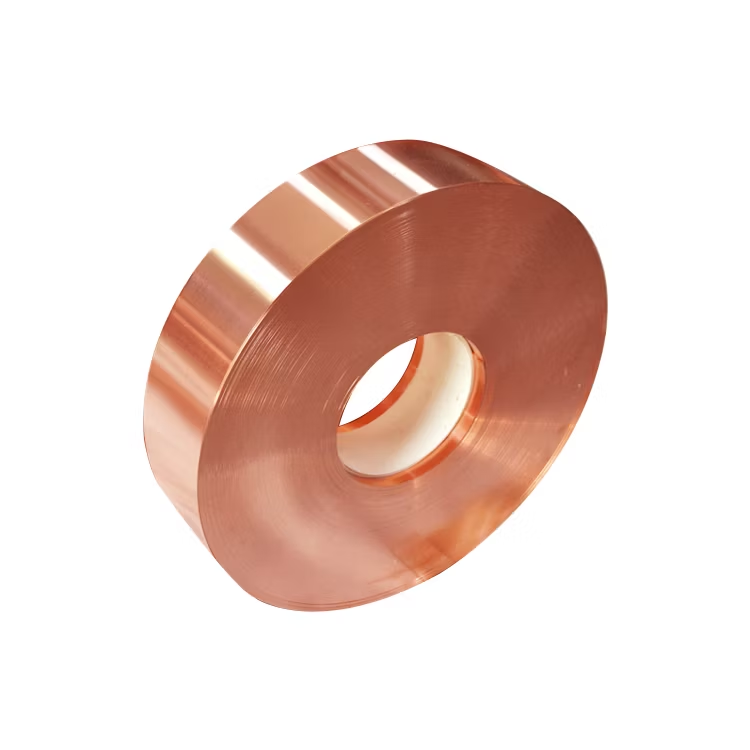
Copper tape (also called copper foil tape or copper shielding tape) is a high-performance, adhesive-backed thin copper strip engineered for electrical conductivity, electromagnetic compatibility, and mechanical protection. In wire and cable production, electronics manufacturing, and critical infrastructure projects, it delivers reliable EMI/RFI shielding, grounding, fault-current paths, and long-term signal integrity.

Whether you are a cable manufacturer specifying shields for MV power cables, an electronics engineer designing enclosures, or a procurement specialist sourcing materials for Middle East infrastructure (NEOM, Aramco, data centers), selecting the correct type of copper tape directly impacts performance, compliance, and total cost of ownership.

What Is Copper Tape?

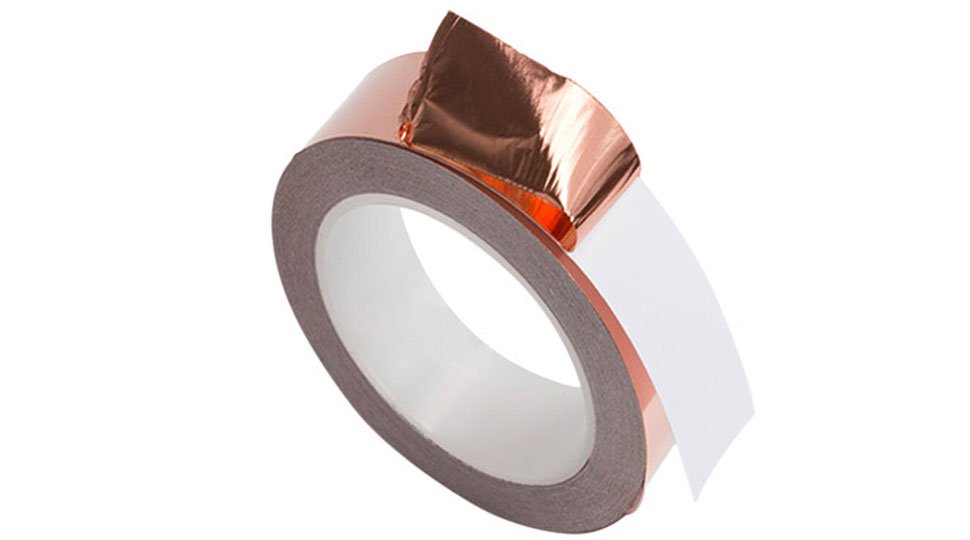
Copper tape consists of high-purity copper foil (typically ≥99.95% Cu) laminated with pressure-sensitive acrylic adhesive. The foil provides exceptional conductivity and shielding effectiveness while the adhesive ensures secure, conformable bonding to metals, plastics, and composite surfaces. Rolls are available in multiple widths and lengths and can be precision-cut or die-cut for production efficiency.

Two primary categories exist—conductive and non-conductive—determined by whether the adhesive itself carries current. Specialized variants (tin-plated, thicker cable-shield grades, flame-retardant, embossed) address specific environmental, mechanical, or regulatory demands.

How Does Copper Tape Work?

Copper tape functions as both a conductor and a shield. When grounded, it creates a low-impedance Faraday cage that reflects or absorbs electromagnetic and radio-frequency interference. Effectiveness depends on:

  • Continuous electrical contact with the target surface
  • Proper overlap during application (typically 50%+ for helical cable shields)
  • Adhesive conductivity (z-axis performance)
  • Foil thickness and purity

In cable manufacturing, copper tape is helically wrapped or longitudinally applied during stranding, insulation, or jacketing stages to produce shielded power, control, and instrumentation cables that meet IEC, UL, and project-specific standards.

Types of Copper Tape – Detailed Comparison

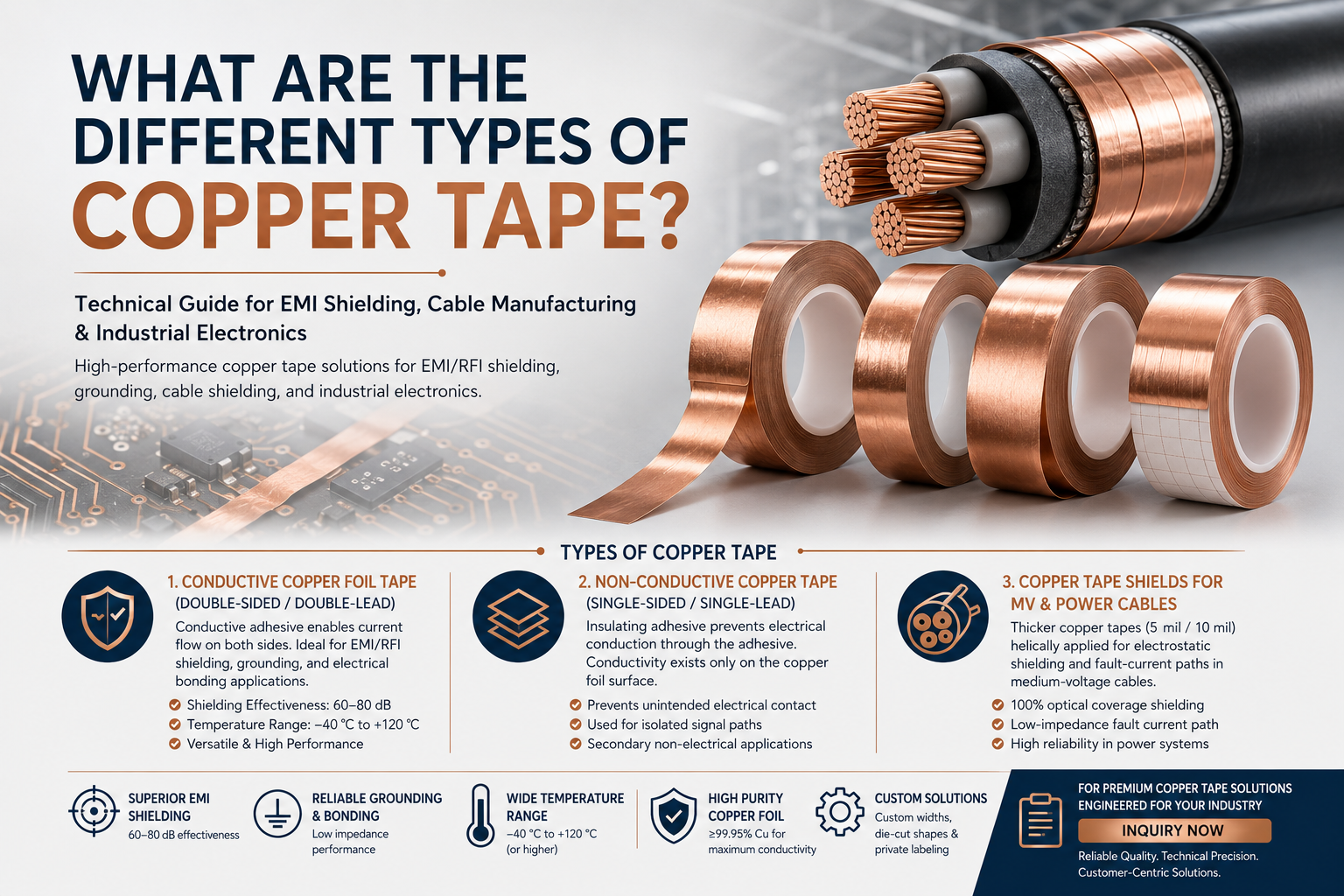
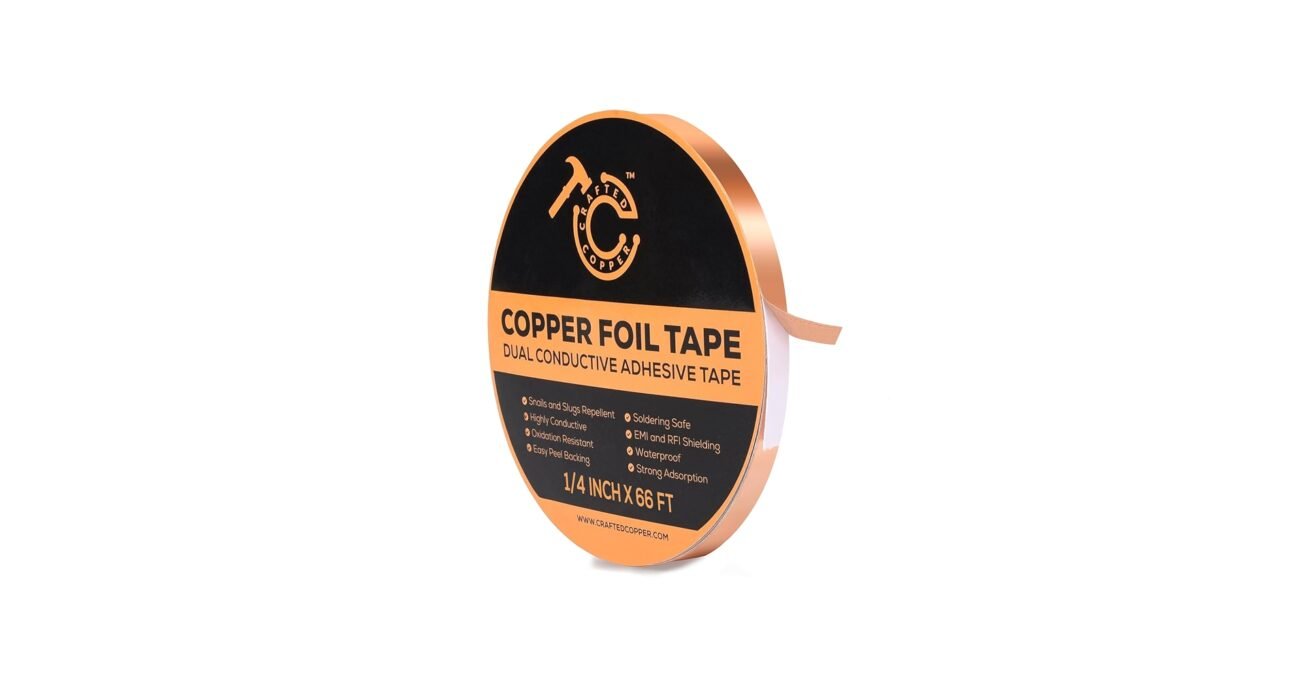
1. Conductive Copper Foil Tape (Double-Sided / Double-Lead)

The adhesive contains conductive particles (usually copper or silver-filled acrylic), enabling current flow on both the foil surface and through the adhesive layer. This is the most versatile type for electrical interconnection and shielding.

Typical specifications:

  • Copper backing: 1.4 mil (0.036 mm)
  • Total thickness: 2.6 mil (0.066 mm)
  • Shielding effectiveness: 60–80 dB (30 MHz–1 GHz)
  • Temperature range: –40 °C to +120 °C
  • Width range: 6 mm – 100 mm+ (custom die-cutting supported)
  • Adhesion: High-tack acrylic to steel, aluminum, and engineering plastics

Key industrial applications:

  • EMI/RFI shielding of enclosures, cable assemblies, and PCB compartments
  • Grounding and electrical bonding in equipment and shielded rooms
  • Repair of damaged PCB traces or low-profile interconnections
  • Cable shield layers requiring continuous conductivity

Tin-plated (tinned) conductive copper tape — A premium variant with a thin tin coating. It offers superior solderability, oxidation resistance, and performance in high-hum humidity or temperature-cycling environments. Preferred for long-service-life installations and applications requiring soldering.

2. Non-Conductive Copper Tape (Single-Sided / Single-Lead)

The adhesive is insulating, so conductivity exists only on the exposed copper surface. This prevents unintended electrical contact while still providing the benefits of a copper foil layer.

Primary uses in professional settings:

  • Applications requiring isolated signal paths or where adhesive conductivity must be avoided
  • Certain multilayer shielding constructions
  • Secondary non-electrical uses (gardening barriers, decorative metallic finishes)

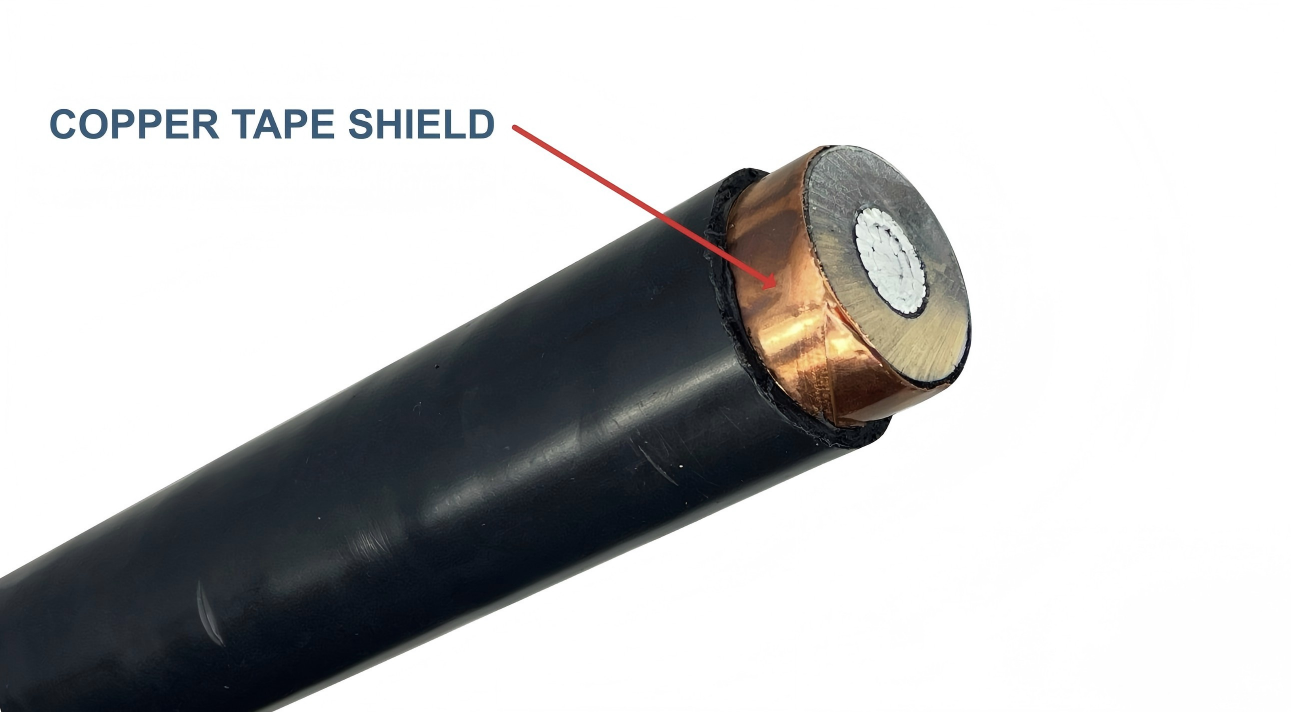
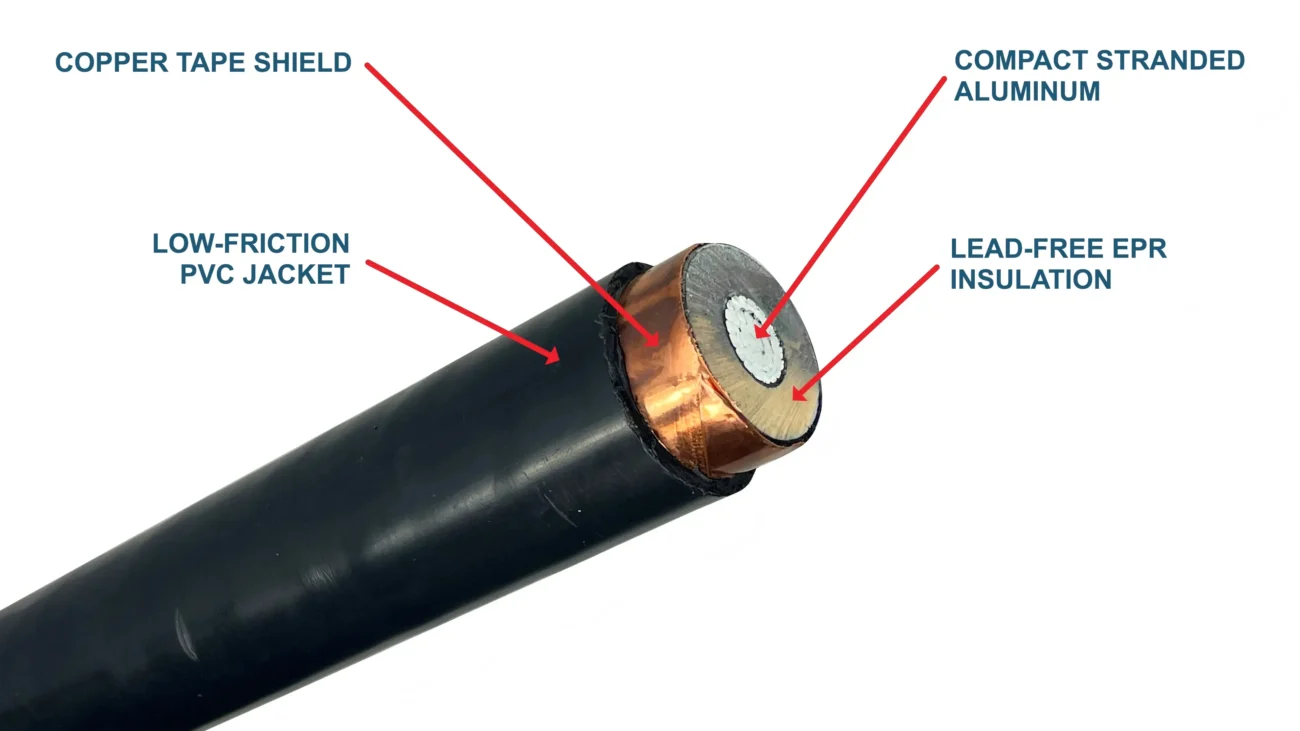
3. Copper Tape Shields for Medium-Voltage & Power Cables

Specially engineered thicker copper tapes (typically 5 mil / 0.127 mm standard; 10 mil heavy-duty) are helically applied over semi-conductive insulation screens in MV-105, MV-90, and similar cables.

Functions:

  • 100% optical coverage electrostatic shielding
  • Low-impedance path for charging and fault currents
  • Enhanced cable reliability in power distribution, renewables, and industrial projects

Selection guidance: 5-mil tape balances flexibility and pull-in performance; 10-mil provides higher fault-current capacity where mechanical robustness is critical. These tapes integrate seamlessly with drum-twister, central-stranding, and armoring lines used in modern cable production.

Technical Specifications & Performance Data

ParameterStandard ConductiveTin-Plated ConductiveMV Cable Shield (5 mil)
Copper Purity≥99.95%≥99.95% + tinAnnealed copper
Foil Thickness1.4 mil1.4–2.0 mil5 mil (0.127 mm)
Total Thickness2.6 mil~2.8–3.0 mil~5–6 mil
Shielding Effectiveness60–80 dB60–80 dBHigh (Faraday)
Typical Temperature Range–40 to +120 °CSuperior humidity resistanceCable-rated
Key AdvantageVersatile EMI shieldingSolderability & durabilityFault current path

Copper tape price factors: Width, length, thickness, tin-plating, conductive adhesive, certifications (UL, RoHS, REACH), and order volume. Standard industrial rolls range from approximately $8–$45 depending on specification; bulk and custom die-cut programs deliver the best value for production environments.

Copper Tape Applications in Cable Manufacturing & Electronics

  • EMI/RFI Shielding — Enclosures, cable harnesses, transformer windings, and control panels.
  • Grounding & Bonding — Equipment chassis, shielded rooms, and connector backshells.
  • Cable Production — Helical or longitudinal shields on power, instrumentation, and data cables.
  • PCB & Electronics Repair — Low-profile trace repair and prototype interconnections.
  • Specialty — Flame-retardant grades for building wire; embossed tapes for complex geometries.

Copper shielding paint alternative: Aerosol-applied conductive coating for seamless coverage on plastic housings where tape application is impractical.

How to Choose the Right Copper Tape

  1. Confirm required conductivity (both sides or foil only).
  2. Evaluate environmental conditions (humidity, temperature, UV, chemicals) → tin-plated recommended for harsh duty.
  3. Match thickness to mechanical and electrical demands (2.6 mil general; 5 mil+ for MV cable shields).
  4. Verify compliance and certifications for the target market/project.
  5. Consider production efficiency (custom widths, die-cut shapes, liner options).

FAQ – Common Technical Questions

What is copper tape used for?

EMI/RFI shielding, grounding, electrical bonding, PCB repair, and electrostatic/fault-current shielding in medium-voltage power and control cables.

What is the difference between conductive and non-conductive copper tape?

Conductive tape has electrically conductive adhesive allowing current on both sides. Non-conductive tape insulates on the adhesive side; only the copper surface conducts.

What copper tape thickness is standard for cable shielding?

5 mil (0.127 mm) is the most common for MV-105 cables. Thicker 10-mil versions are used where higher fault-current ratings are required.

Does copper tape need to be grounded for effective shielding?

Yes. Proper grounding completes the Faraday cage and ensures maximum shielding performance.

Is tin-plated copper tape necessary?

It is highly recommended for soldering applications, high-humidity environments, or installations requiring long-term oxidation resistance.

What influences copper tape price?

Dimensions, tin-plating, adhesive type, certifications, and volume. Custom programs for cable manufacturers offer optimized total cost.

Why Source from a Reliable Industrial Partner

Consistent foil purity, stable adhesive performance, and full traceability are non-negotiable for cable producers and EPC contractors. We supply technically specified copper tapes engineered for integration with modern cable production equipment and global infrastructure standards.

For premium conductive copper foil tape, tin-plated variants, or custom MV cable shield tapes matched to your production line and project specifications — Inquiry Now. Our technical team provides datasheets, samples, die-cut solutions, and competitive quotations for long-term supply partnerships. Reliable quality. Technical precision. Customer-centric solutions.

Leave a Reply

Your email address will not be published. Required fields are marked *