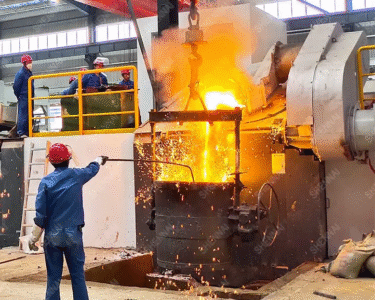
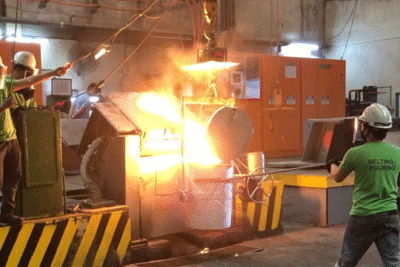
Copper melting furnaces form the core process step for producing high-conductivity copper used in power cables, control cables, XLPE insulated conductors, medium- and high-voltage cables, and continuous cast rod (CCR) lines. Pure copper melts at 1083–1085 °C. Electrical applications demand oxygen-controlled melts (typically <200–350 ppm O for wire rod, <10–50 ppm for oxygen-free grades) to achieve ≥99.90–99.99 % Cu and ≥100–101 % IACS conductivity.

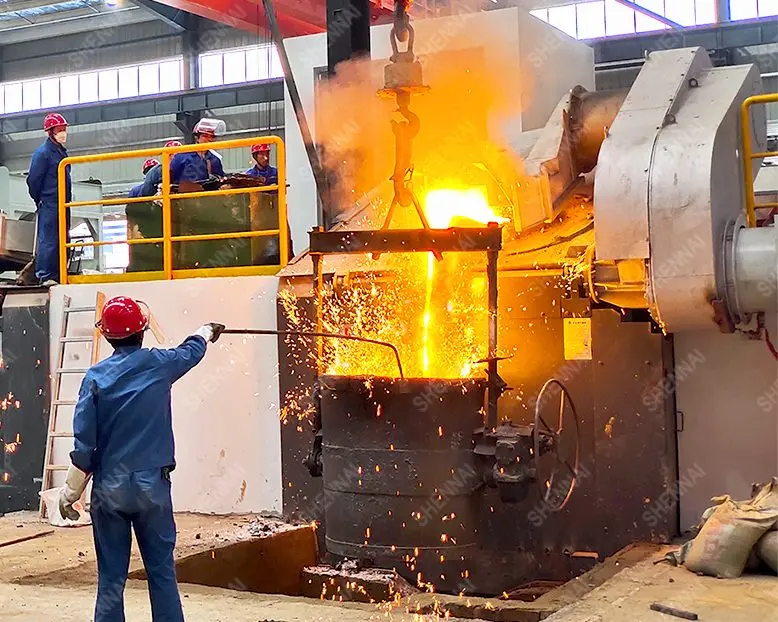
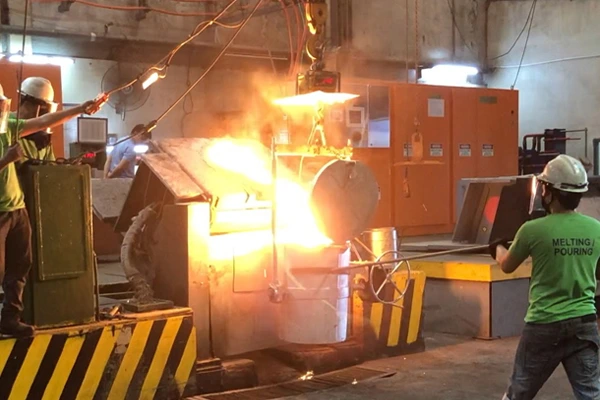
Modern industrial solutions centre on medium-frequency coreless induction furnaces. These systems deliver clean, controllable melting with electromagnetic stirring, low metal loss, and direct compatibility with downstream continuous casting and rolling for cable-grade rod.
Why Medium-Frequency Induction Furnaces Dominate Electrical Copper Production
Induction heating generates eddy currents directly inside the copper charge. No combustion gases contact the melt, eliminating hydrogen pickup and reducing oxidation. Typical electrical efficiency reaches 90–97 %. Specific energy consumption for pure copper ranges from 380–520 kWh/t depending on capacity and charge form.
Key process advantages for cable manufacturers and copper rod producers:
- Precise temperature control (±3–8 °C) supports consistent casting temperatures of 1100–1200 °C.
- Natural electromagnetic stirring homogenises chemistry and temperature, critical for low-oxygen Cu-ETP (C11000) and oxygen-free Cu-OF / Cu-OFE grades.
- Metal loss typically 0.3–1.0 % versus 1.5–4.0 % in gas-fired systems.
- Rapid cold-start and cycle times enable flexible batch or semi-continuous operation feeding CCR lines.
Technical Comparison: Induction vs Alternative Furnace Technologies
| Paramètre | Medium-Frequency Induction | Gas-Fired Crucible / Shaft | Electric Arc (limited Cu use) |
|---|
| Electrical / Thermal Efficiency | 90–97 % | 40–60 % | ~60 % |
| Specific Energy (Cu) | 380–520 kWh/t | 800–1300 kWh/t equivalent | Higher electrode + power |
| Metal Loss | 0.3–1.0 % | 1.5–4.0 % | Variable |
| Oxidation / H₂ Pickup | Very low (inert cover possible) | Plus haut | Modéré |
| Temperature Accuracy | ±3–8 °C | ±15–30 °C | Lower |
| Typical Cycle (500 kg) | 45–90 min | 3–5 h | Not preferred for pure Cu |
| Emissions | Zero combustion | NOx, CO₂, SOx | Dust + electrodes |
| Suitability for OF / Cable Cu | Excellent | Limited without refining | Rarely used |
Capacity & Performance Ranges
| Capacity Class | Rated Capacity | Power Range | Frequency | Melting Rate (Pure Cu) | Specific Energy | Lining Life (heats) |
|---|
| Laboratory / Small | 5–100 kg | 15–75 kW | 2–8 kHz | 10–50 kg/h | 420–520 kWh/t | 80–200 |
| Workshop / Medium | 100–1 000 kg | 75–750 kW | 0.5–2.5 kHz | 50–350 kg/h | 400–480 kWh/t | 150–350 |
| Industrial | 1–5 t | 750–3 500 kW | 0.15–1 kHz | 350–3 500 kg/h | 380–430 kWh/t | 150–400 |
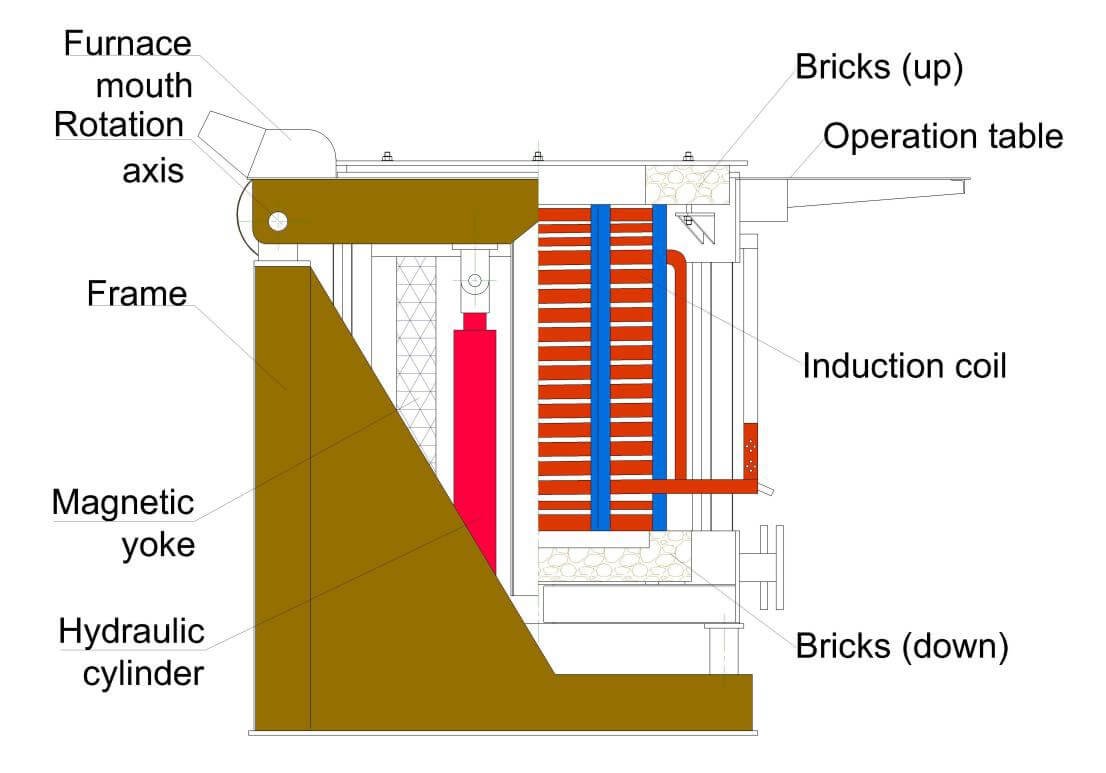
Input voltages range from 3×380/415 V up to 6–10 kV for larger units. Power factor is maintained ≥0.95 with automatic correction. Water-cooled copper induction coils and multi-layer refractory linings (high-purity alumina, magnesia or chrome-magnesia) provide thermal insulation and chemical resistance to molten copper at 1 100–1 300 °C.
Technological Process Overview
Scrap Copper Melting & Refining Route
Red copper scrap is charged via automated or semi-automatic charging system → enters the melting furnace (shaft, tilting or reverberatory) → controlled melting under optimized atmosphere → slag removal and refining (fluxing, deoxidation) → precise hydraulic tilting with laser-guided flow control → high-purity molten copper transferred directly to CCR line, ingot casting machine, or cathode casting turntable.
Advanced regenerative burners and high-temperature refractory linings minimize oxidation, maximize thermal efficiency, and ensure consistent melt chemistry. Waste heat recovery systems further improve overall plant energy balance.
Principaux avantages techniques et opérationnels
Multiple Flexible Furnace Configurations
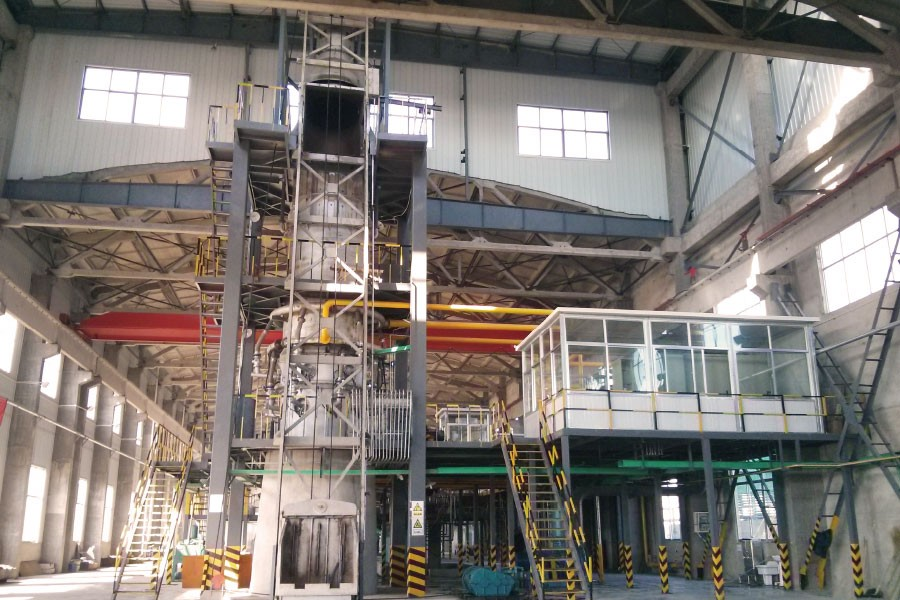
- Shaft-type Furnaces: Continuous high-output melting (10–40 t/h). Excellent thermal efficiency through counter-current heat exchange between rising hot gases and descending charge. Ideal for large-scale cable scrap recycling plants feeding CCR lines. Typical natural-gas consumption 30–40 Nm³/t.
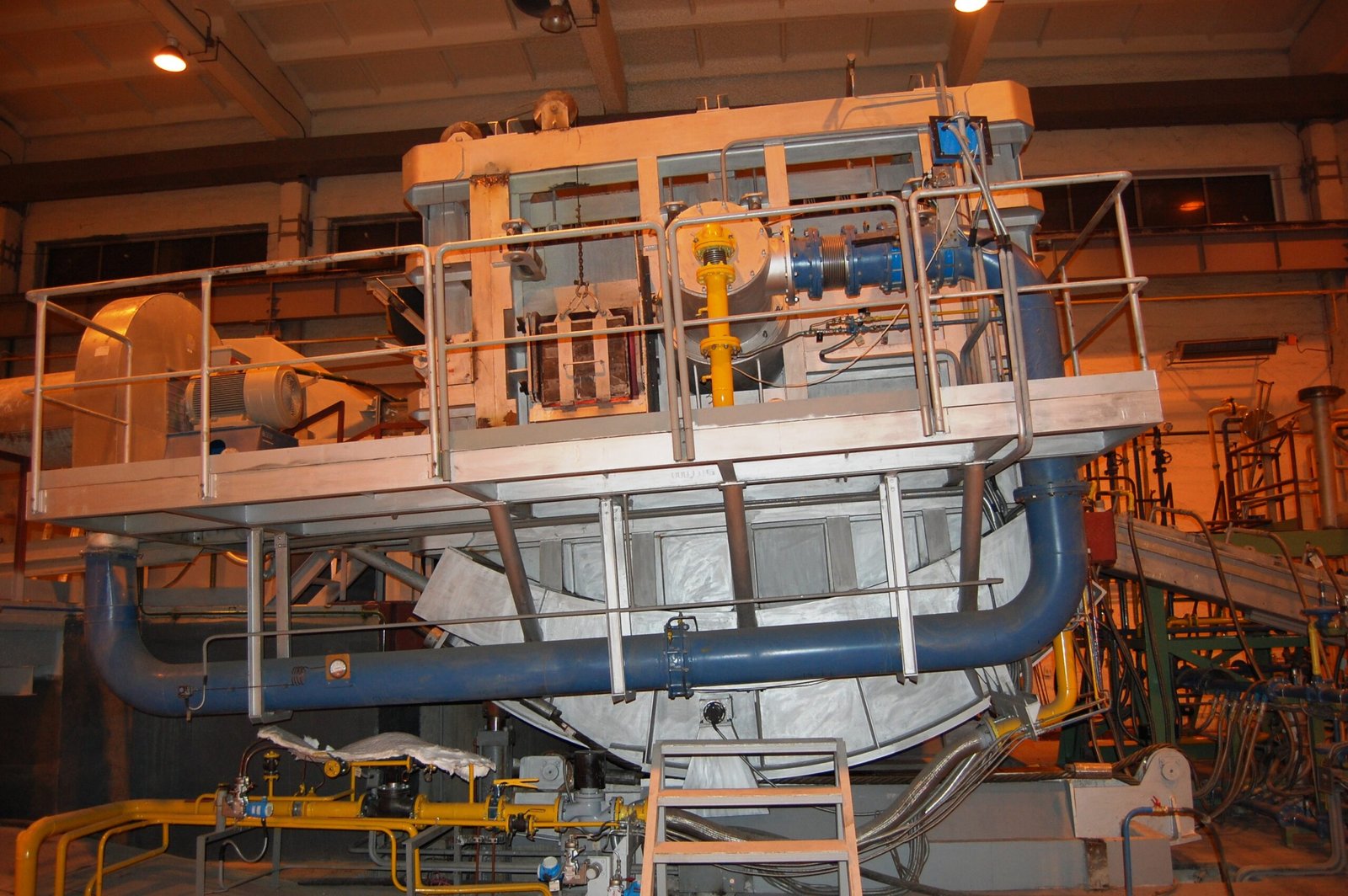
- Round Tilting Furnaces: Batch operation with easy charging and precise tilting for controlled pouring. Suitable for capacities from 1–80 tons.
- Tilting Scrap Copper Melting Furnaces: Designed for convenient slag removal and refining. Handles 25–150 ton batches with ≥90% copper scrap (including minor lower-grade material). Hydraulic tilting angle up to ≤70° ensures controlled outflow. Typical melting cycle 3–4 hours per batch.
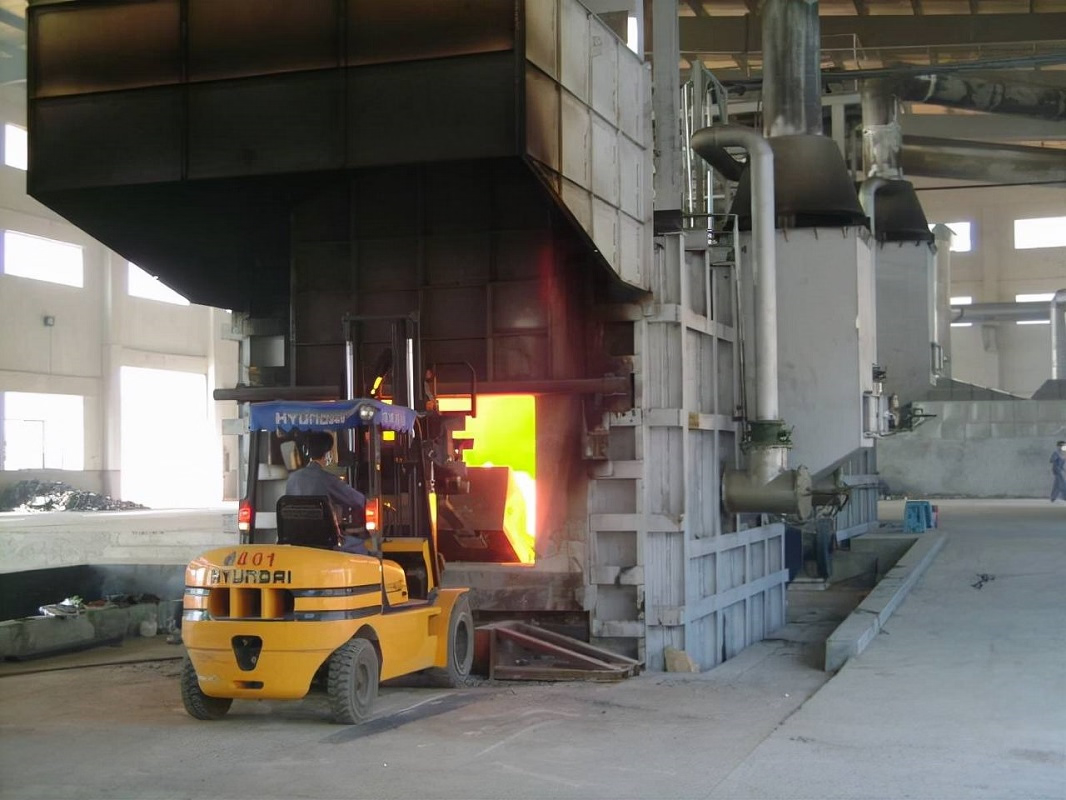
- Fours à réverbère: Large-scale refining and holding capacity (25–150 tons). Excellent for maintaining molten copper quality and integrating with downstream processes.
Regenerative Combustion System
Supports natural gas, LPG, heavy oil, diesel, or coal gas with high-efficiency regenerative burners. These systems recover 70–85% of waste heat, reducing fuel consumption by up to 30–50% compared with conventional burners. Lower operating costs and reduced emissions align perfectly with sustainability targets.
Premium Refractory Lining & Construction
High-grade refractory materials selected for long service life under continuous high-temperature operation and thermal cycling typical in Middle East plants.
Intelligent HMI + PLC Control System
Centralized monitoring, automatic data logging, real-time process visualization, carbon monoxide tracking, and touch-screen operation. Reduces operator dependency, improves safety, and supports predictive maintenance.
Hydraulic Tilting & Precision Flow Control
Laser-guided pouring ensures stable, controlled molten copper flow, minimizing turbulence and oxidation while delivering consistent quality to downstream casting equipment.
Seamless Plant Integration
Designed to integrate directly with our Copper Rod Continuous Casting and Rolling Lines, ingot casting machines, or cathode production systems — creating complete, high-efficiency secondary copper production plants.
These features translate into high metal recovery rates (typically 95%+ with proper operation), excellent melt cleanliness, reduced dross formation, and reliable 24/7 performance.

Spécifications techniques
| Furnace Type | Material (Copper Content) | Energy Source | Capacity / Tonnage | Primary Function & Product Output |
|---|
| Scrap Copper Shaft Type | ≥92% red copper scrap | Natural gas / LPG | 10–40 T/h | High-output melting; pairs with refining furnace for rod/ingot/cathode |
| Round Tilting Furnace | ≥92% red copper scrap | Natural gas / LPG / heavy oil / diesel / coal gas | 1–80 T | Batch melting & refining for rod, ingot, cathode |
| Tilting Scrap Copper Melting Furnace | ≥90% red copper scrap (with minor ≤85%) | Natural gas / LPG / heavy oil / diesel / coal gas | 25–150 T | Tilting design for easy slag removal and refining |
| Reverberatory Furnace | ≥90% red copper scrap (with minor ≤85%) | Natural gas / LPG / heavy oil / diesel / coal gas | 25–150 T | Large-scale refining and holding for rod/ingot |
Custom capacities, hybrid configurations, and waste heat recovery packages are available to match specific production requirements and local energy infrastructure.

Process Requirements for Electrical-Grade Copper
Copper for power and control cables must meet strict purity and oxygen limits. Cu-ETP (electrolytic tough pitch) typically contains 0.02–0.04 % oxygen and delivers ~100 % IACS. Oxygen-free grades (Cu-OF, Cu-OFE) require inert-gas or charcoal cover and sealed systems to keep oxygen below 10–50 ppm. Melting practice therefore includes:
- Pre-dried, sorted charge (cathode, high-grade scrap ≥92 % Cu preferred).
- Protective cover (charcoal or argon/nitrogen) to limit oxidation.
- Precise superheat control before transfer to continuous casting or holding furnaces.
- Optional electromagnetic stirring and sampling for chemistry verification.
Failure modes to avoid include excessive oxygen (causes porosity and reduced conductivity), hydrogen absorption (steam embrittlement risk in reducing atmospheres), and refractory contamination that introduces iron or other impurities lowering IACS values.
Integration with Cable Manufacturing Lines
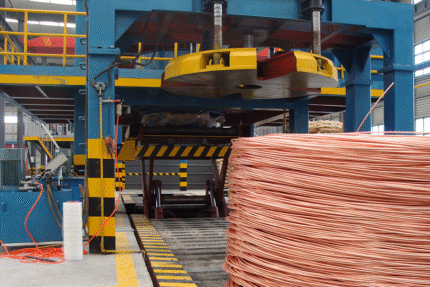
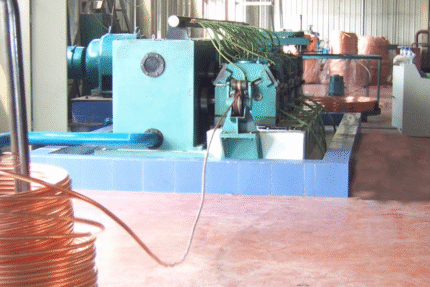
Industrial copper melting furnaces are routinely paired with continuous casting and rolling (CCR) systems to produce 8–20 mm oxygen-controlled rod for subsequent drawing into cable conductors. Shaft-type or large tilting induction units supply molten copper at controlled temperature and oxygen level directly to the casting machine. Regenerative or induction holding furnaces maintain bath quality during continuous operation.
Typical downstream targets for cable rod:
- Oxygen content 200–350 ppm (ETP) or <50 ppm (OF).
- Conductivity ≥100 % IACS.
- Surface quality free of oxide inclusions that would cause drawing breaks.
Selection Guidelines for Reliable Long-Term Operation
- Match power density (250–600 kW/t) to desired melt rate and charge form.
- Select frequency according to capacity: higher frequencies for small batches, lower frequencies for deep penetration in large melts.
- Specify hydraulic tilting for capacities above ~100 kg to ensure safe, controlled pouring.
- Choose refractory grade according to alloy family and oxygen-control requirements (magnesia preferred for pure copper).
- Include closed-loop water cooling, earth-leakage monitoring, and PLC/HMI with recipe storage for repeatable quality.
- Verify lining life and change-out time; modern split-coil designs can reduce relining from days to hours.
These systems support both primary cathode melting and secondary scrap recycling while maintaining the metallurgical quality required by IEC, GB, UL and ASTM standards for electrical conductors.
Key technical takeaways
- Medium-frequency induction delivers the highest combination of energy efficiency, melt purity and process control for electrical copper.
- Specific energy of 380–520 kWh/t and metal loss <1 % provide measurable operating-cost advantages.
- Precise oxygen and temperature management is non-negotiable for cable-grade rod conductivity and drawability.
- Scalable platforms from 5 kg laboratory units to 5-tonne industrial furnaces cover the full range of cable manufacturing needs.
For detailed technical proposals, capacity calculations, energy-consumption estimates tailored to your rod or cable line, or custom configurations meeting specific oxygen and purity targets, Inquiry Now.
Fours de fusion pour cuivre
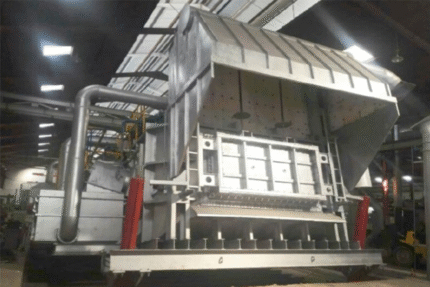
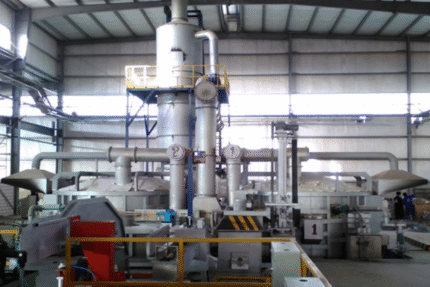
High-efficiency Scrap Copper Melting Furnace Series for melting red copper scrap (≥90% Cu) into high-purity molten copper. Shaft, tilting and reverberatory configurations with 10–150 T capacity, ideal for CCR copper rod production lines
SKU du produit:
MF-COPPER-SERIES
Marque de produit:
Câble fiable
Devise:
USD
Prix du produit:
Contactez-nous pour un devis
Produit en stock:
En stock
Note de l’éditeur/éditrice :4.9 






Avis
Il n’y a pas encore d’avis.