Kablo Makineleri ve Ekipmanları, Ürün Bilgi Bankası, Teknik Kılavuzlar ve Bilgiler

RBD Makinesinin Kullanım Amacı Nedir?

RBD Makinesinin Kullanım Amacı Nedir?

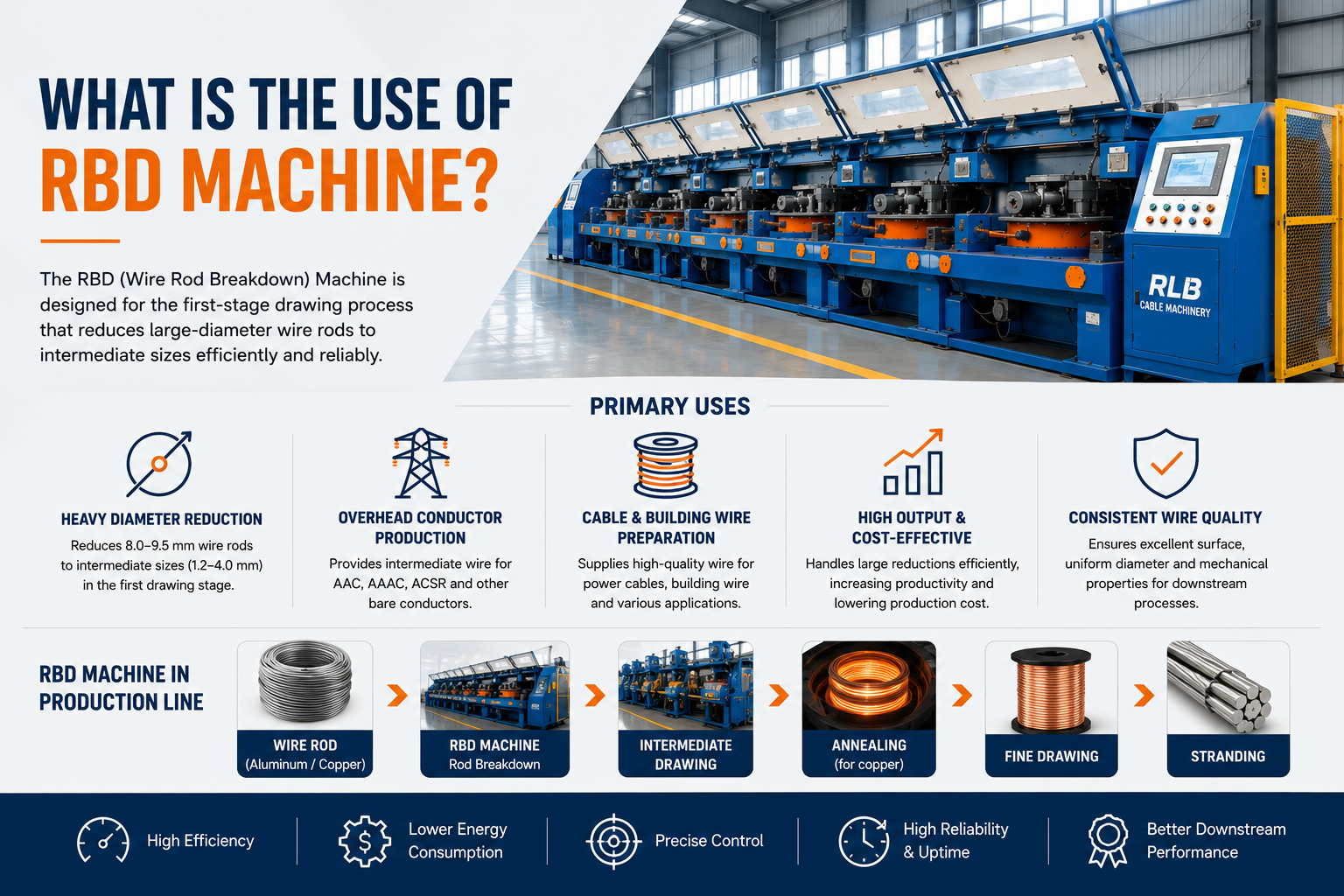
In modern wire and cable production, the Wire Rod Breakdown (RBD) Machine — also known as the Rod Breakdown Drawing Machine — plays a foundational role in transforming raw wire rods into high-quality conductors. It is the critical first-stage equipment that performs heavy diameter reduction, preparing the material for subsequent drawing, annealing, and stranding processes.

Understanding the specific uses and benefits of the RBD machine is essential for cable manufacturers aiming to achieve high productivity, superior wire quality, and cost-efficient production of copper and aluminum conductors.

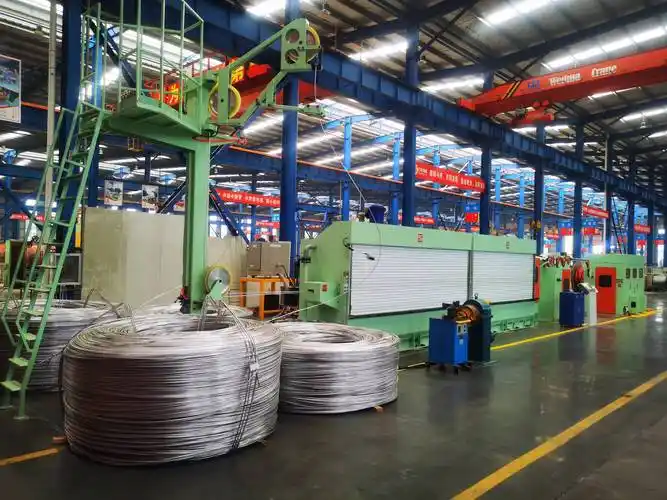
Wire Rod Breakdown (RBD) Drawing Machine — the essential first reduction stage in professional conductor manufacturing lines.

What is the RBD Machine?

RBD stands for Wire Rod Breakdown (or Rod Breakdown Drawing Machine). It is a heavy-duty wire drawing machine designed to reduce large-diameter wire rods — typically 8.0 mm copper rod or 9.5 mm / 7.6 mm aluminum rod — down to intermediate wire sizes (commonly in the 1.2 mm to 4.0 mm range).

This machine performs the majority of the diameter reduction in a single production stage, making it indispensable in efficient conductor manufacturing workflows.

Primary Uses of the RBD Machine in Cable and Conductor Production

The RBD machine serves several key purposes in the wire and cable industry:

1. Heavy Diameter Reduction from Rod to Intermediate Wire It is the first major drawing stage after rod production (from CCR lines for aluminum or continuous casting for copper). The machine reduces the rod diameter significantly while maintaining material integrity, preparing the wire for finer drawing stages.

2. Production of Wires for Overhead Conductors RBD output is used to manufacture:

  • AAC (Tamamen Alüminyum İletken)
  • AAAC (Tamamen Alüminyum Alaşımlı İletken)
  • ACSR (Alüminyum İletken Çelik Takviyeli)
  • Other bare overhead conductors for power transmission and distribution

3. Preparation for Power Cable and Building Wire The intermediate wires produced are further processed into conductors for low- and medium-voltage power cables, building wire, and various insulated cables.

4. High-Volume, Cost-Effective Wire Production By handling large reductions efficiently, the RBD machine enables manufacturers to process high volumes of material with lower energy consumption per ton compared to using only intermediate drawing machines.

5. Foundation for Consistent Conductor Quality Properly executed rod breakdown directly influences surface quality, ovality, tensile properties, and drawability — all critical for high-performance stranded conductors.

Detailed Benefits and Advantages of Using an RBD Machine

  • High Reduction Efficiency — Achieves major diameter reduction in fewer passes, improving overall line productivity.
  • Superior Wire Quality — Produces intermediate wire with excellent surface finish, tight dimensional tolerances, and consistent mechanical properties.
  • Optimized Production Flow — Serves as the bridge between rod production and downstream processes (intermediate drawing, annealing, stranding).
  • Energy and Cost Savings — Modern designs with individual motor drives reduce power consumption and maintenance costs.
  • Flexibility — Suitable for both copper and aluminum rod processing with appropriate configuration.
  • Improved Downstream Performance — High-quality intermediate wire reduces breaks and improves efficiency in fine wire drawing and high-speed stranding machines.

How the RBD Machine Integrates into Complete Production Lines

In a professional cable plant, the RBD machine typically operates as part of an integrated system:

  • Upstream: Aluminum rod from CCR (Continuous Casting and Rolling) line or copper rod from rod mill
  • RBD Machine: Heavy reduction to intermediate sizes
  • Downstream: Intermediate wire drawing machines → Online or batch annealing (especially for copper) → Fine wire drawing → Stranding machines (rigid, tubular, or planetary)

This seamless integration ensures maximum yield, consistent quality, and efficient material flow from rod to finished conductor.

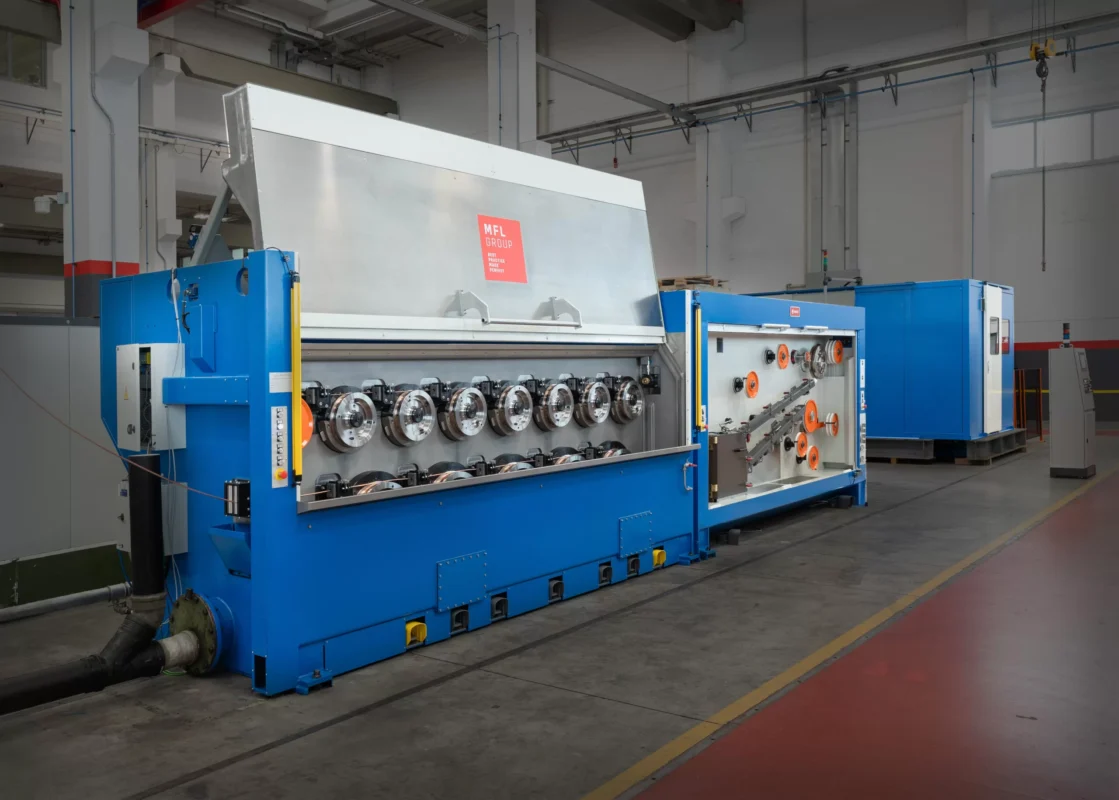
Modern RBD machine installation in a professional conductor manufacturing facility — designed for high efficiency and precise control.

Key Features of Advanced RBD Machines

Modern RBD machines (especially individual motor-driven models) offer:

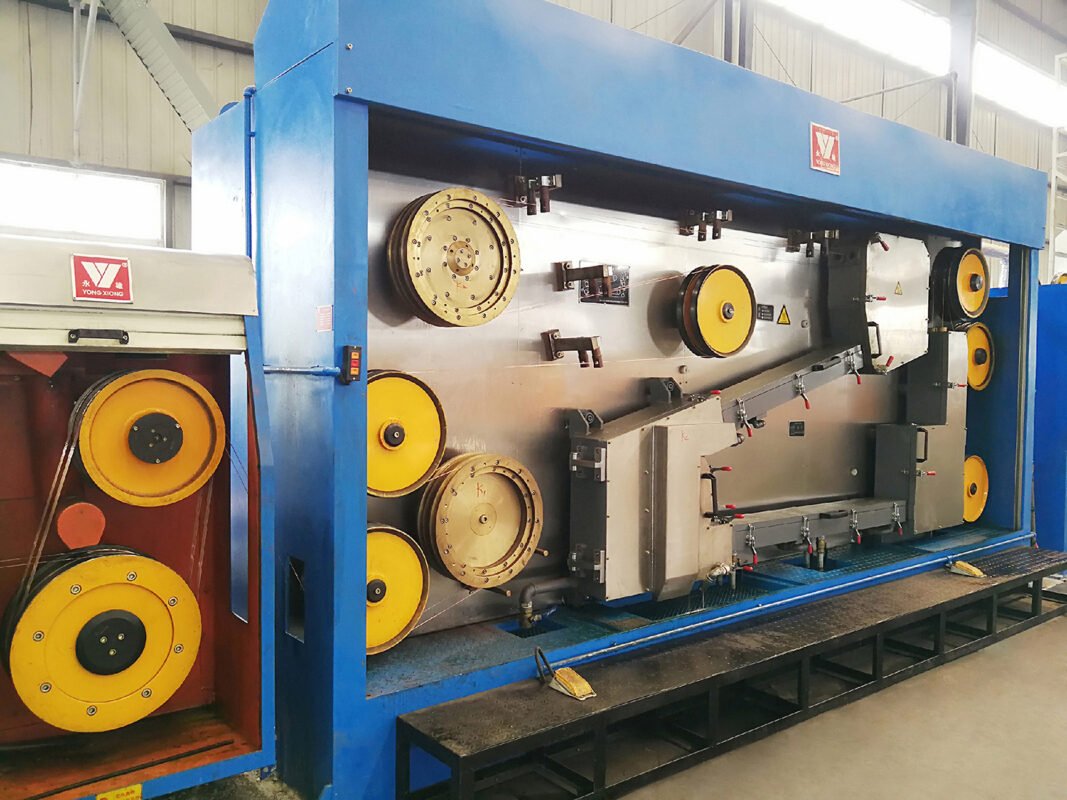
  • Independent servo motor control for each drawing capstan
  • Precise speed and tension regulation per pass
  • Advanced lubrication and cooling systems
  • Options for online annealing (copper)
  • High line speeds with excellent uptime
  • User-friendly controls and diagnostics

These features enable manufacturers to achieve higher output, better wire quality, and greater production flexibility.

Impact on Final Conductor Performance

The quality of wire produced by the RBD machine directly affects:

  • Electrical conductivity and resistance of the final conductor
  • Mechanical strength and flexibility
  • Surface quality (critical for insulation adhesion and corona performance)
  • Overall reliability and lifespan of power cables and overhead lines

Investing in a high-performance RBD machine is therefore a strategic decision for any manufacturer targeting premium conductor products.

Why Professional RBD Solutions Matter

For cable manufacturers focused on reliable quality and long-term competitiveness, choosing the right RBD machine — with proper technical support, customization options, and integration capability — delivers measurable improvements in productivity, wire quality, and overall production economics.

Şimdi bilgi isteyin to discuss Wire Rod Breakdown (RBD) machines, complete wire drawing lines, or tailored solutions for your copper and aluminum conductor production requirements. RLB Cable Machinery provides reliable, high-performance equipment backed by professional expertise and long-term partnership.

Frequently Asked Questions (FAQs)

What is the main use of an RBD machine?

The primary use is to perform heavy diameter reduction from large wire rods (8–9.5 mm) to intermediate wire sizes as the first stage in conductor manufacturing.

Can one RBD machine handle both copper and aluminum?

Yes, many modern machines are designed for both materials, though process parameters differ.

Why is the RBD stage important for conductor quality?

It handles the largest reduction and sets the foundation for surface quality, mechanical properties, and drawability of all subsequent wires.

How does an RBD machine improve production efficiency?

By achieving major reductions efficiently in one machine, it reduces the load on downstream equipment and increases overall line throughput.

Bir yanıt yazın

E-posta adresiniz yayınlanmayacak. Gerekli alanlar * ile işaretlenmişlerdir