Ürün Bilgi Bankası, Teknik Kılavuzlar ve Bilgiler

What Type of Cable is Used in High Voltage Transmission Lines?

What Type of Cable is Used in High Voltage Transmission Lines

High voltage transmission lines form the backbone of modern power grids, carrying electricity over long distances from generation plants to distribution networks. In Saudi Arabia and across the GCC, rapid expansion under Vision 2030 — including renewable energy integration, industrial growth, and grid modernization — demands cables that deliver güvenilir kalite, high mechanical strength, excellent electrical performance, and long-term durability in extreme desert and coastal environments.

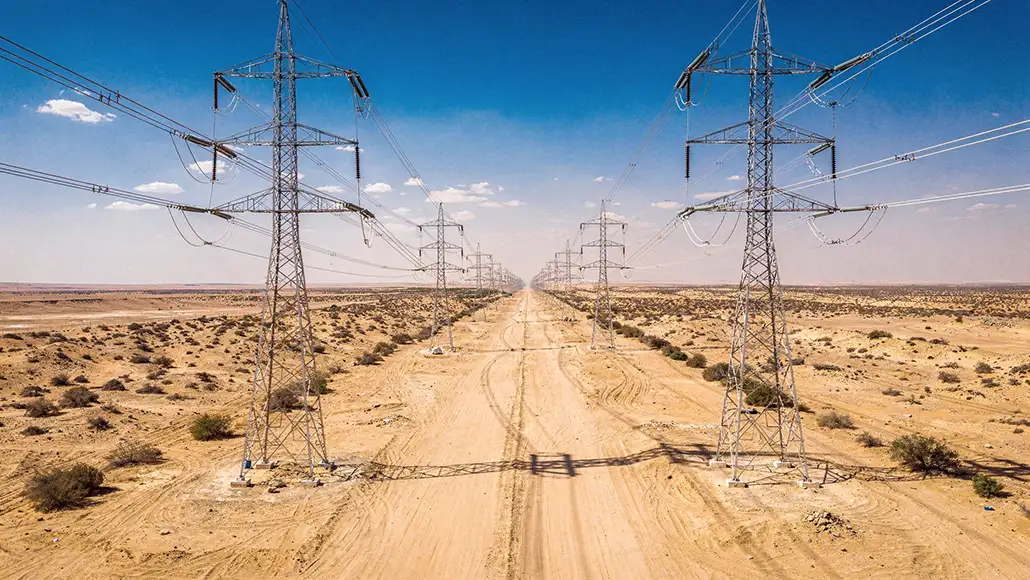
The type of cable used depends primarily on whether the line is overhead veya underground. Overhead lines dominate long-distance transmission due to lower cost and easier maintenance, while underground cables are preferred in urban areas, environmentally sensitive zones, or where aesthetics and land use are critical.

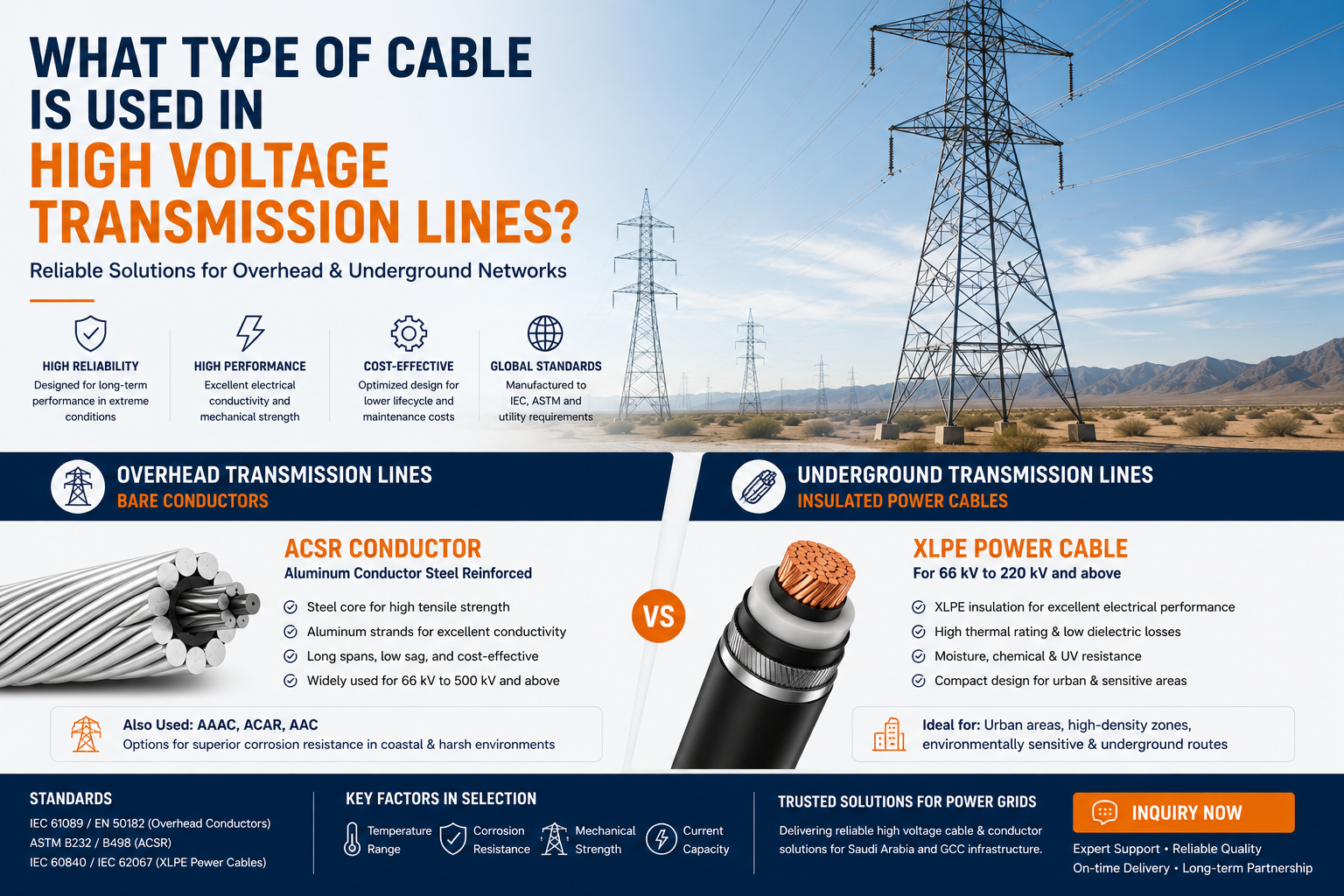
This detailed technical guide examines the most common high voltage cables — with a focus on ACSR conductors for overhead and XLPE power cables for underground applications — including specifications, standards, and practical selection criteria for regional projects.

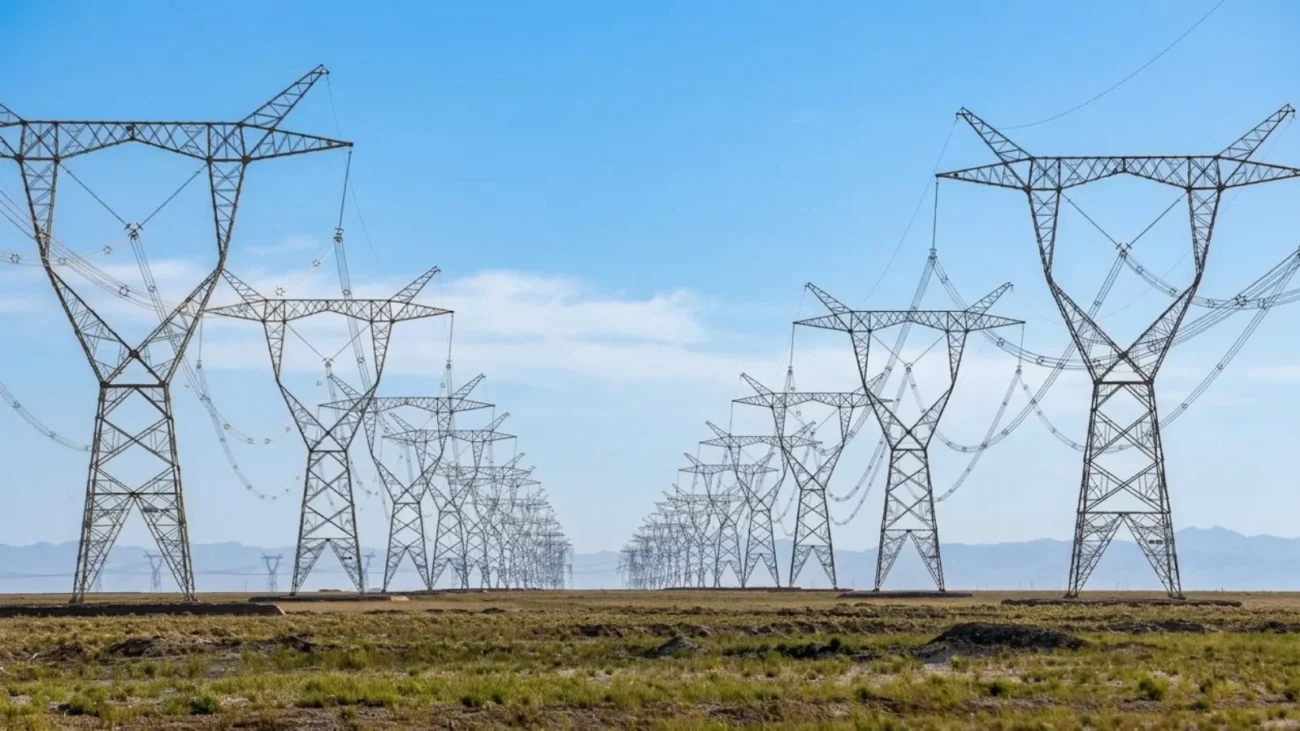
Overhead High Voltage Transmission Cables: The Industry Standard

For overhead high voltage transmission lines (typically 66 kV to 500 kV and above), bare conductors are used. These are supported by transmission towers and rely on air for insulation.

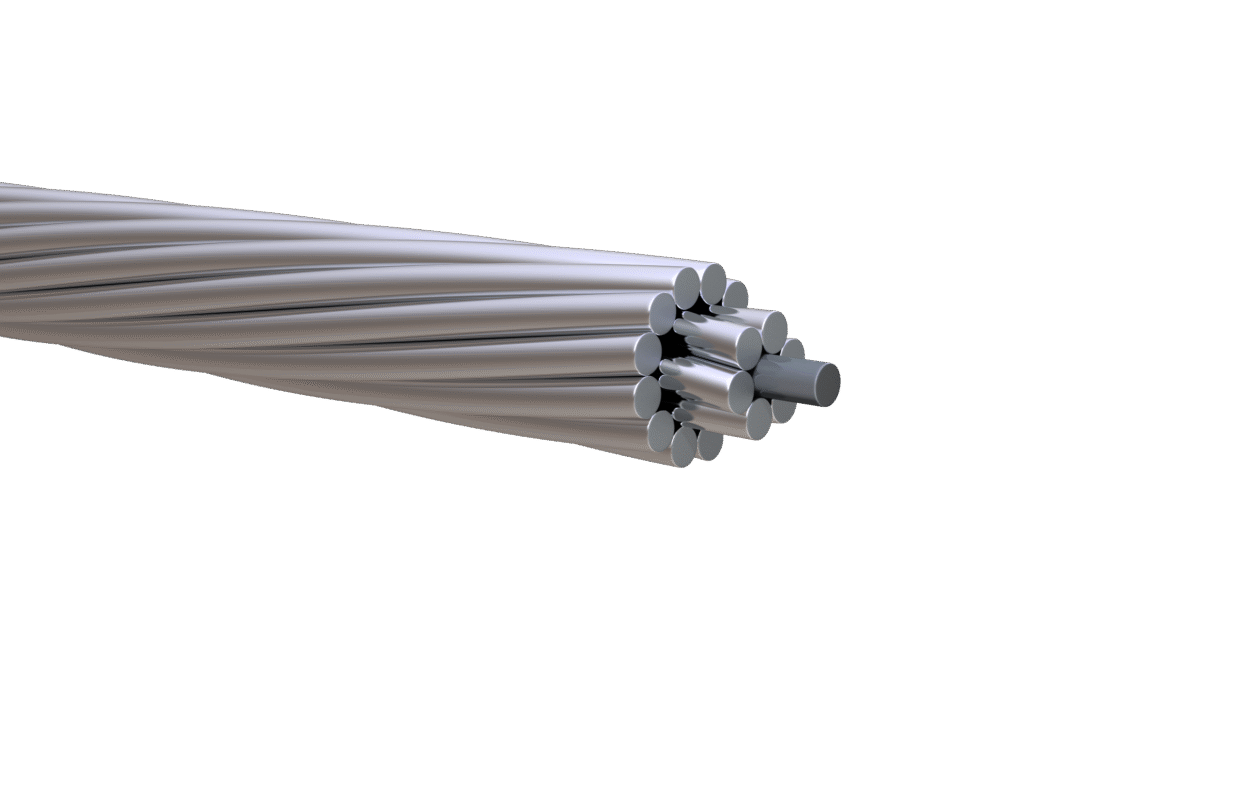
The Most Widely Used Type: ACSR (Aluminum Conductor Steel Reinforced)

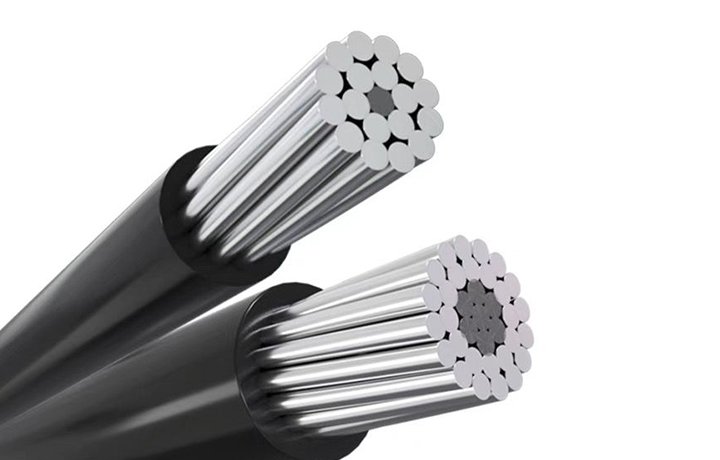
ACSR is the predominant choice worldwide and across Saudi Arabia and GCC utilities for high voltage and extra-high voltage lines. It consists of a central galvanized steel core surrounded by one or more layers of high-purity aluminum (1350-H19) strands.

Key Advantages of ACSR for High Voltage Transmission:

  • Excellent tensile strength from the steel core, enabling long spans and reduced sag under heavy wind or ice loading.
  • High conductivity from the aluminum layers.
  • Cost-effective balance of performance and economy.
  • Proven reliability in extreme temperatures and desert conditions.

Common Alternatives:

  • AAAC (All Aluminum Alloy Conductor): Higher strength-to-weight ratio than AAC, superior corrosion resistance — ideal for coastal GCC areas.
  • ACAR (Aluminum Conductor Alloy Reinforced): Good balance for EHV lines where corrosion is a concern.
  • AAC (All Aluminum Conductor): Used for shorter spans or lower mechanical stress requirements.

In Saudi Arabia and GCC coastal projects, ACSR/AW (Aluminum-Clad Steel Core) versions are often specified for 5–10× better corrosion resistance than standard galvanized steel cores, meeting requirements from SEC, DEWA, and other utilities.

Underground High Voltage Transmission Cables

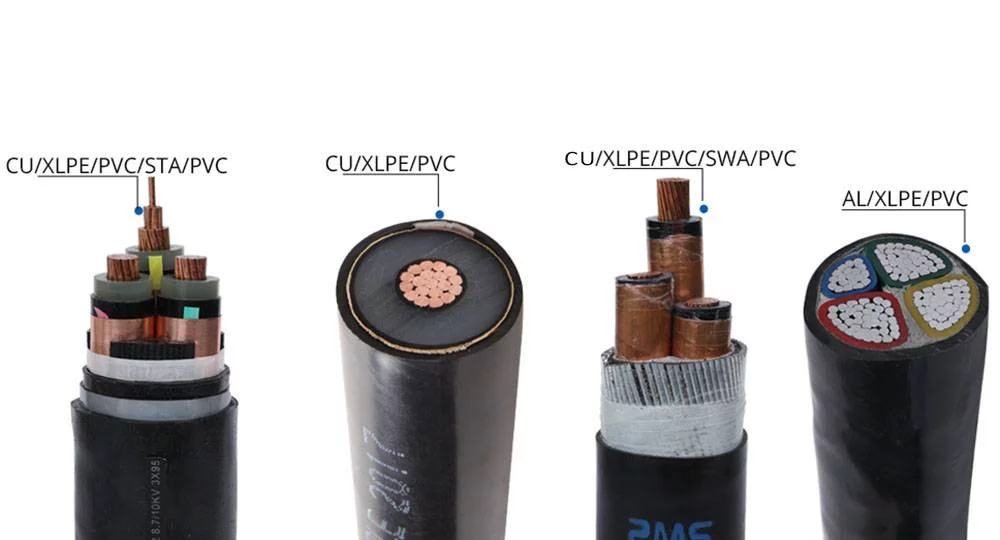
When overhead lines are impractical (urban areas, protected zones, or high population density), XLPE-insulated power cables are the standard solution for high voltage underground transmission (66 kV to 220 kV+).

Typical Construction of HV XLPE Power Cable:

  • Conductor: Copper or Aluminum (compacted or segmental Milliken for larger sizes)
  • Conductor Screen: Semi-conductive XLPE
  • Insulation: Cross-linked Polyethylene (XLPE) — excellent dielectric properties and thermal stability
  • Insulation Screen: Semi-conductive XLPE
  • Metallic Screen: Copper tape, wire, or lead sheath (for fault current carrying and moisture barrier)
  • Outer Sheath: PE or PVC (often with anti-termite or flame-retardant properties)

Advantages of XLPE HV Cables:

  • Superior electrical performance with low dielectric losses.
  • High operating temperature (90°C continuous, 250°C short-circuit).
  • Excellent resistance to moisture, chemicals, and mechanical damage when properly installed.
  • Compact design suitable for duct or direct burial installation.

High Voltage Cable Specifications & Standards

Common Standards:

  • IEC 61089 / EN 50182 (Overhead conductors)
  • ASTM B232 / B498 (ACSR)
  • IEC 60840 / IEC 62067 (HV XLPE cables 30–150 kV and above)

Typical ACSR Conductor Specifications (Examples):

Conductor CodeAluminum Area (mm²)Steel Area (mm²)Overall Diameter (mm)Rated Strength (kN)Approx. Weight (kg/km)Current Capacity* (A)
Drake4036528.11401,628~900–1,000
Tern4315527.01241,530~950
Rail4836229.61491,720~1,050

*Current capacity depends on ambient temperature, wind, and solar radiation (typical desert conditions in KSA allow higher ratings).

Key Parameters for High Voltage Cable Selection:

  • Voltage class and insulation level
  • Current carrying capacity (ampacity)
  • Short-circuit withstand
  • Mechanical strength and sag/tension characteristics
  • Corrosion resistance (critical for GCC coastal and industrial areas)
  • Environmental factors (temperature, sandstorms, UV)

High Voltage Cable Product Content: Our Reliable Solutions

As an experienced supplier of high voltage power cables and conductors to the Saudi and GCC market, we offer:

Overhead Conductors:

  • Full range of ACSR, ACSR/AW, AAAC, and ACAR conductors manufactured to IEC, ASTM, and customer specifications.
  • Customized stranding, grease-filled options for corrosion protection, and anti-vibration designs.

Underground HV XLPE Cables:

  • 66 kV to 220 kV single-core and three-core XLPE cables with copper or aluminum conductors.
  • Options for lead sheath, corrugated aluminum sheath, or HDPE outer sheath.
  • Factory-tested to the highest standards with full traceability.

Why Choose Our High Voltage Cable Solutions?

  • Güvenilir Kalite: 100% routine and type testing, strict process control, and proven performance in regional projects.
  • Özelleştirilmiş Hizmet: Tailored designs for Saudi desert conditions, coastal corrosion protection, and specific utility requirements (SEC, etc.).
  • Technical Solutions: Engineering support for conductor selection, sag-tension calculations, and cable system design.
  • Uzun Vadeli Ortaklık: Full lifecycle support including logistics, installation supervision, and after-sales service.

We understand the unique challenges of high voltage transmission in the Kingdom — extreme heat, sand abrasion, and the need for maximum reliability on critical infrastructure projects.

Making the Right Choice for High Voltage Transmission

For most long-distance high voltage transmission lines in Saudi Arabia and the GCC, ACSR conductors remain the trusted, cost-effective choice due to their strength, conductivity, and proven track record. In urban or constrained environments, XLPE high voltage power cables deliver safe, reliable underground performance.

Selecting the correct cable type, size, and construction is critical to project success, grid stability, and long-term operational costs.

Ready to specify or source high voltage cables for your next transmission project?

Contact our technical team today. Within 48 hours we will provide detailed specifications, ampacity calculations, corrosion protection recommendations, and competitive proposals tailored to your voltage class and site conditions.

Şimdi bilgi isteyin — Partner with a reliable, experienced supplier committed to delivering high-performance high voltage cable solutions for Saudi Arabia and the GCC.

Bir yanıt yazın

E-posta adresiniz yayınlanmayacak. Gerekli alanlar * ile işaretlenmişlerdir