Kategorilendirilmemiş

What is Copper Extrusion?

What is copper extrusion-doingcable

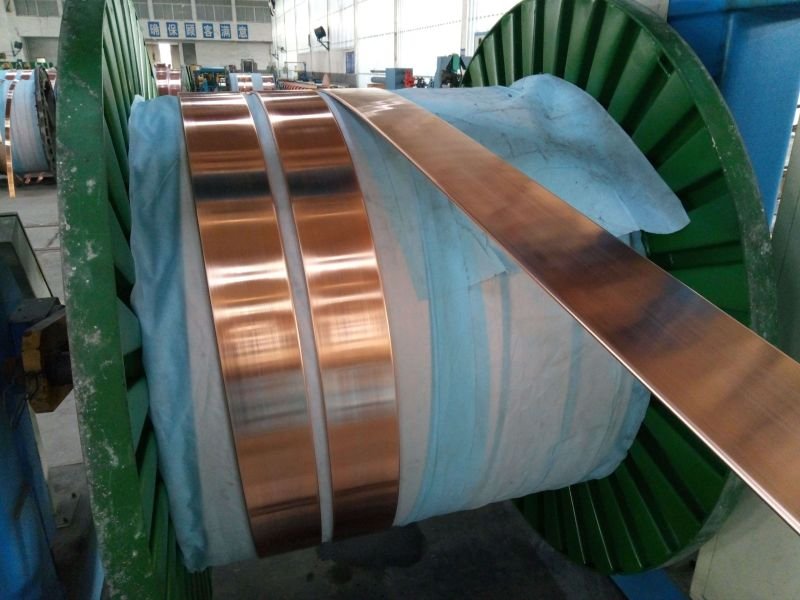
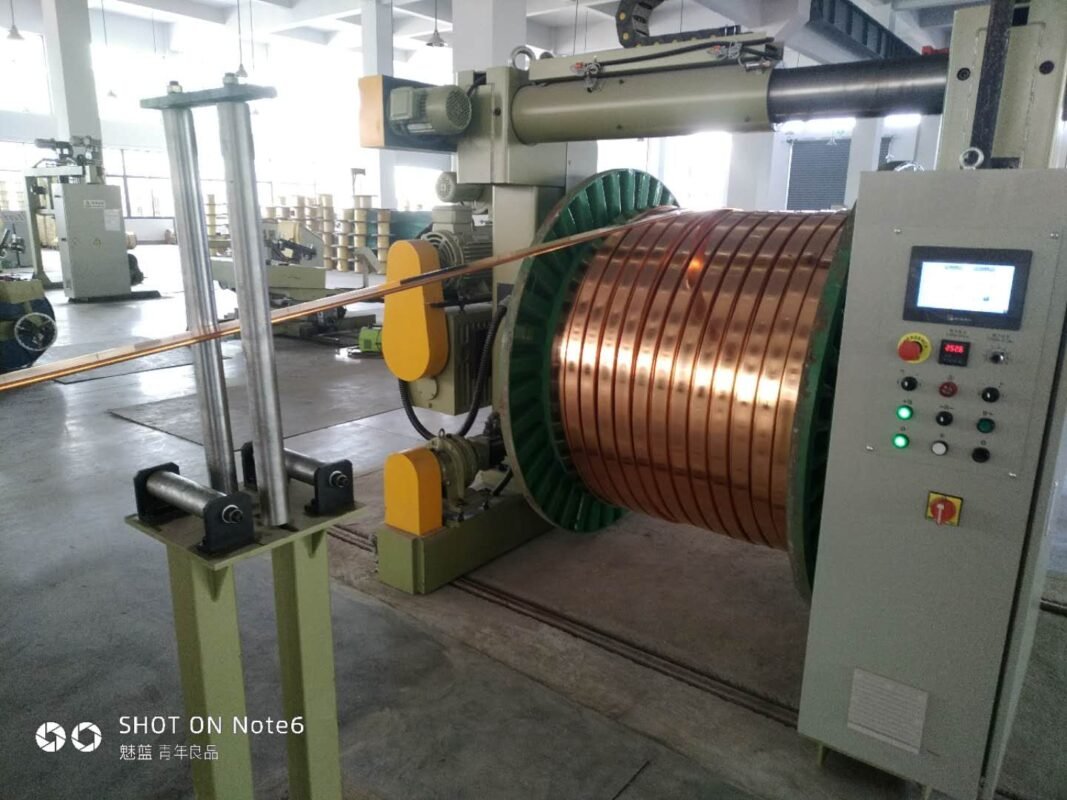
Copper extrusion, in a cable and busbar plant, is the Conform / continuous rotary extrusion process that converts oxygen-free copper rod (typically Ø12.5–30 mm, upcast OF or CCR ETP) into endless flat wire, busbar, round rod, commutator section or cladding stock without a billet furnace. Friction against the rotating wheel groove and the stationary shoe plasticizes the rod; a die at the abutment forms the section. First-pass yield is commonly ≥95 %. Product is soft, high-conductivity, and can be coiled or cut. Busbar is accepted to ASTM B187/B187M; conductivity on clean OF feedstock is typically ≥100 % IACS.

This is not a 1,250 T aluminum profile press and not a PVC sheathing extruder.

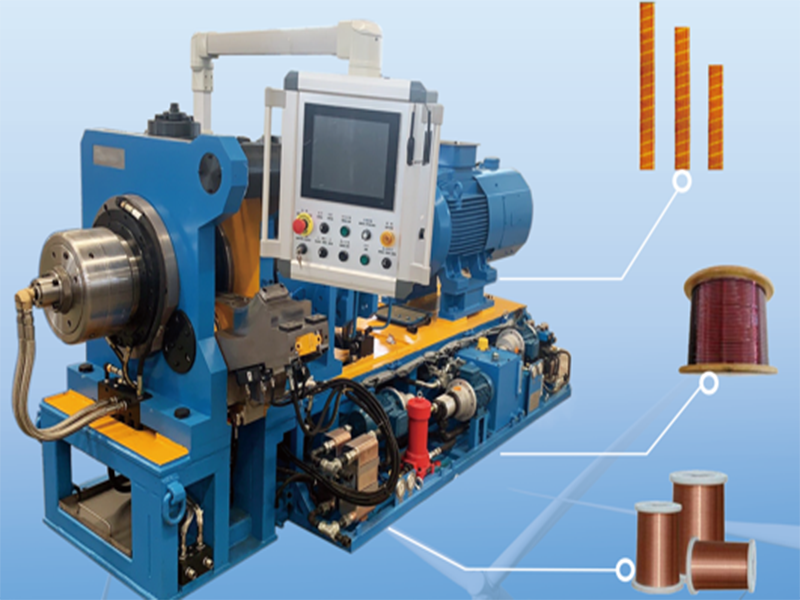
Typical Conform frames (copper)

Model classWheel ØMotorFeed rodSectionMax widthOutput
300Ø300 mm90–110 kWØ12.5 mm5–200 mm²~40–50 mm450–800 kg/h
350Ø350 mm160–200 kWØ12.5–16 mm15–1,000 mm²~100 mm700–950 kg/h
400Ø400 mm250–315 kWØ16–20 mm75–2,000 mm²~170 mm1,200–1,500 kg/h
500Ø500 mm355 kWØ25 mm300–3,200 mm²~260 mm~1,800 kg/h
550 / 600Ø550–580 mm450 kWØ22–28 mm400–2,400+ mm²~220–315 mm800–2,500 kg/h
630 / 700Ø630–700 mm600 kWØ28–30 mm600–6,400 mm²~320–400 mm1,500–4,000 kg/h

BWE Conform 400 cards list up to 2,400 mm² / 160 mm width / 1,800 kg/h; Conform 550 up to 3,200 mm² / 260 mm / 4,000 kg/h. Leak (flash) on well-set wheels is typically ≤3–5 %. Dimensional tolerance on many production cards is ±0.05 mm. Wheel speed on copper is about 6.5–13 r/min, slower than aluminum on the same frame.

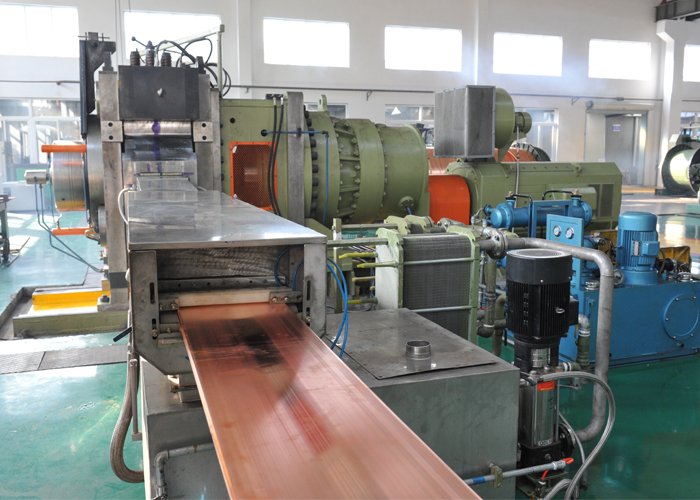
Line: rod pay-off → straighten / coin into the groove → Conform wheel + shoe + die → cooling → flying shear or coiler. Die change switches flat wire, busbar, round or profile. Send section (mm²), width, OF vs ETP, coiled vs cut length. Şimdi bilgi isteyin

What Is Copper Extrusion?

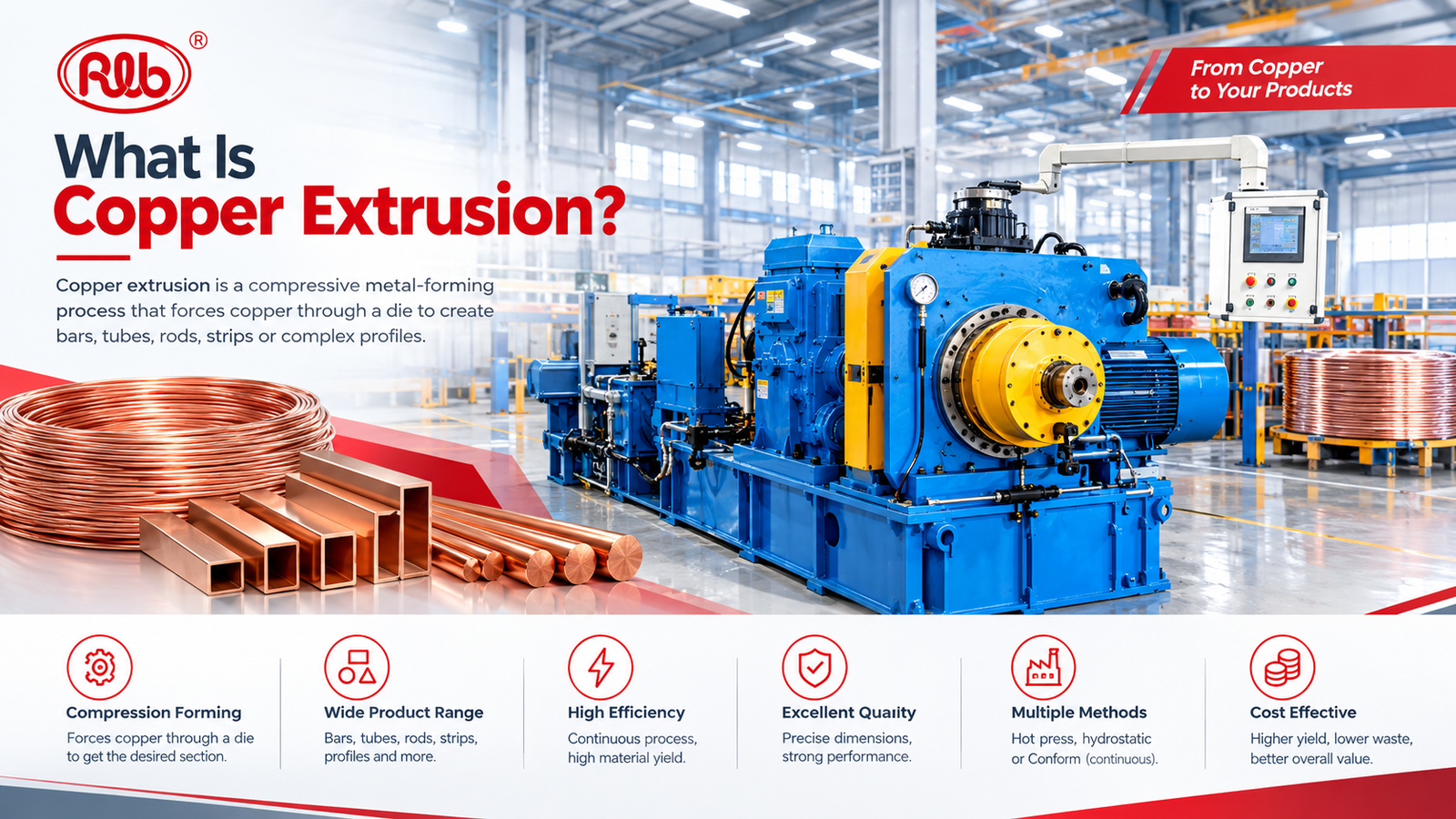
Copper extrusion is the solid-state forming of copper through a die under high hydrostatic pressure so that rod or billet becomes a longer, smaller or shaped conductor — busbar, flat wire, tube, sheath or profile — with conductivity and dimensions fixed by the feedstock grade and the die.

Three industrial routes exist. Hot press extrusion pushes a 700–900 °C billet through a container (direct, indirect or hydrostatic). Cold / warm extrusion is used on small connectors. Conform continuous rotary extrusion feeds unheated rod into a grooved wheel; friction brings the metal to roughly 400–700 °C in the abutment, above copper recrystallization, so the exit bar is soft and can be used or lightly drawn. Cable and switchgear plants almost always mean Conform when they write “copper extrusion line.” A 1,250 T aluminum window press cannot make 6,400 mm² copper busbar.

How does Conform copper extrusion work compared with a billet press?

Conform is continuous and friction-heated. A press is batch, furnace-heated and limited by billet length.

Rod (OF upcast or ETP CCR, Ø12.5 / 16 / 20 / 25 / 30 mm) is coined into the wheel groove. The rotating wheel drags the rod under a stationary shoe. Deformation work and shoe friction raise temperature; published copper Conform studies put metal in the abutment at 600–700 °C with no external furnace. The abutment (nose) stops forward travel and turns the plastic metal 90° into the die. Flash that escapes the groove is the “leak” line item (≤3–5 % when the wheel and shoe are in spec).

Hot press extrusion starts with a sawn billet, a furnace at 600–1,000 °C (often 700–900 °C), and a ram. Direct extrusion wastes force on container friction; indirect and hydrostatic cut that friction. Hollow copper tube on a bridge die needs chamber temperature ≥600 °C and hydrostatic pressure on the order of 45–65 MPa or the longitudinal weld does not close. That is a press/tube problem, not a Conform flat-bar problem.

RouteFeedHeatLengthTypical productYieldPlant use
Hot direct/indirect pressBilletFurnace 700–900 °CBillet-limitedTube, complex profile, large sectionButt scrapTube / specialty mill
Hydrostatic pressBillet + fluidCold to warmBillet-limitedThin wall, brittle alloysBetter than directNiche tube
Conform CRERod Ø12.5–30 mmFriction 400–700 °CEndlessBusbar, flat wire, rod, cladding≥95 %Cable / busbar / EV
Roll + draw + annealRod / barMultiple furnacesCoilRectangular wireEdge trim + pickleOlder busbar route

Conform 400 vs roll-draw: no inter-anneal, no pickle, no edge trim on most rectangular bars. That is why plants replace the old route.

Which wheel size matches flat wire, busbar and large section?

Size the wheel from maximum width and mm², then from kg/h. A 300 mm wheel that makes 50 mm² magnet-adjacent flat wire will not fill a 160 mm × 15 mm switchgear bar.

ProductSection / widthWheel classFeed rod
Flat wire, commutator, small rod5–200 mm², width ≤50 mm300Ø12.5 mm
Transformer / motor bar15–1,000 mm², width ≤100 mm350Ø12.5–16 mm
Switchgear / panel bus75–2,000 mm², width ≤170 mm400Ø20 mm
Heavy LV bus, data-center300–3,200 mm², width ≤260 mm500–550Ø25 mm
Large bus / strip600–6,400 mm², width ≤320–400 mm630–700Ø28–30 mm

Flakiness (width/thickness) on many copper Conform cards is capped near 15:1. Beyond that the die does not fill the corners and ASTM B187 “commercially square” fails. Output scales with wheel and section: 300 class ~450–800 kg/h; 400 class ~1,200–1,500 kg/h; 630 class ~2,800 kg/h; large 550/700 cards 2,500–4,000 kg/h on open sections. Copper wheel RPM is lower than aluminum: more torque, more tool pressure.

Feedstock chemistry is the conductivity spec. C10100 / C10200 OF and good upcast OF rod support ≥100 % IACS. C11000 ETP is allowed by ASTM B187 for bus but oxygen and rolling defects show up as blisters if the Conform heat cycle is wrong. Do not feed dirty scrap rod and expect B187 electrical bar.

Which standards and FAT items belong on a copper extrusion PO?

Busbar and electrical rod are released to ASTM B187/B187M (composition, temper, dimensions, conductivity). Cable plants that extrude sheath or cladding add the relevant metallic-sheath clause (IEC 60840 / 62067 family for Al is more common; copper sheath is specified on the construction sheet). IEC 60228 covers stranded cable conductors — extruded busbar is not Class 2 strand.

ASTM B187 electrical coppers commonly listed: C10100 OFE, C10200 OF, C11000 ETP, and related OFS / STP grades. Temper on utility bus is often H02 half-hard; Conform exit is typically soft and is drawn or rolled a few percent if H02 is required. Dimensional tables in B187 set width and thickness tolerances; production Conform cards of ±0.05 mm are tighter than some B187 rows and should be written into the FAT, not assumed. EN 13601 is the European electrical copper bar counterpart on many switchgear sheets.

Line FAT

  • Section and corner fill on the heaviest and thinnest bars in the PO.
  • Conductivity on OF feedstock (≥100 % IACS or the PO number).
  • Surface: no groove tear, no shoe score, no blister on ETP.
  • Flash / leak % over a 30 min run.
  • Wheel and abutment temperature stable; no die wash.
  • Coiled product: no edge wave that fails B187 flatness after a 12 h hold.

Hollow tube on a press is a separate FAT (weld integrity at ≥600 °C chamber). Do not mix that protocol with a Conform flat-bar line.

What fails when rod grade, wheel gap or die ratio is wrong?

Flash, unfilled corners, ETP blisters and using a press RFQ for a Conform job are the four defects that appear in week one.

  1. Leak >5 % — wheel–shoe gap worn or rod oval. Re-machine the wheel; do not only raise RPM.
  2. Corners not square — flakiness >15:1 or die land too short. Change the section or the die, not the alloy.
  3. Blisters on C11000 — oxygen + trapped moisture. Dry the rod, or switch to OF upcast.
  4. Soft bar when H02 was ordered — Conform exit is recrystallized. Add a calibrated skin pass or specify H02 after draw.
  5. Conductivity <100 % IACS on “OF” rod — feedstock was not C10200. Test the coil, not the die.
  6. Shoe score every 400 mm — abutment worn. Consumable; plan hours, not a surprise stop.
  7. 1,800 T aluminum press bought “for copper busbar” — wrong machine, wrong heat, wrong yield.

2024–2026: EV and data-center busbar demand is pulling 400–630 mm copper Conform; BWE-class 550 frames are quoted for 3,200 mm²; tool-steel wheel life remains the opex item that separates a running line from a brochure.

Bir yanıt yazın

E-posta adresiniz yayınlanmayacak. Gerekli alanlar * ile işaretlenmişlerdir