Case Studies & Customer Success, Product Knowledge Base, Technical Guides & Knowledge

What is OPGW Cable?

What is OPGW Cable

In today’s interconnected power networks, utilities need more than just reliable electricity transmission — they require robust communication infrastructure for protection, control, SCADA systems, and data exchange. Traditional overhead ground wires (also called shield wires or earth wires) have protected transmission lines from lightning for decades. However, the demand for high-speed, reliable data transmission along power corridors has driven the adoption of a smarter solution: Optical Ground Wire(OPGW) cable.

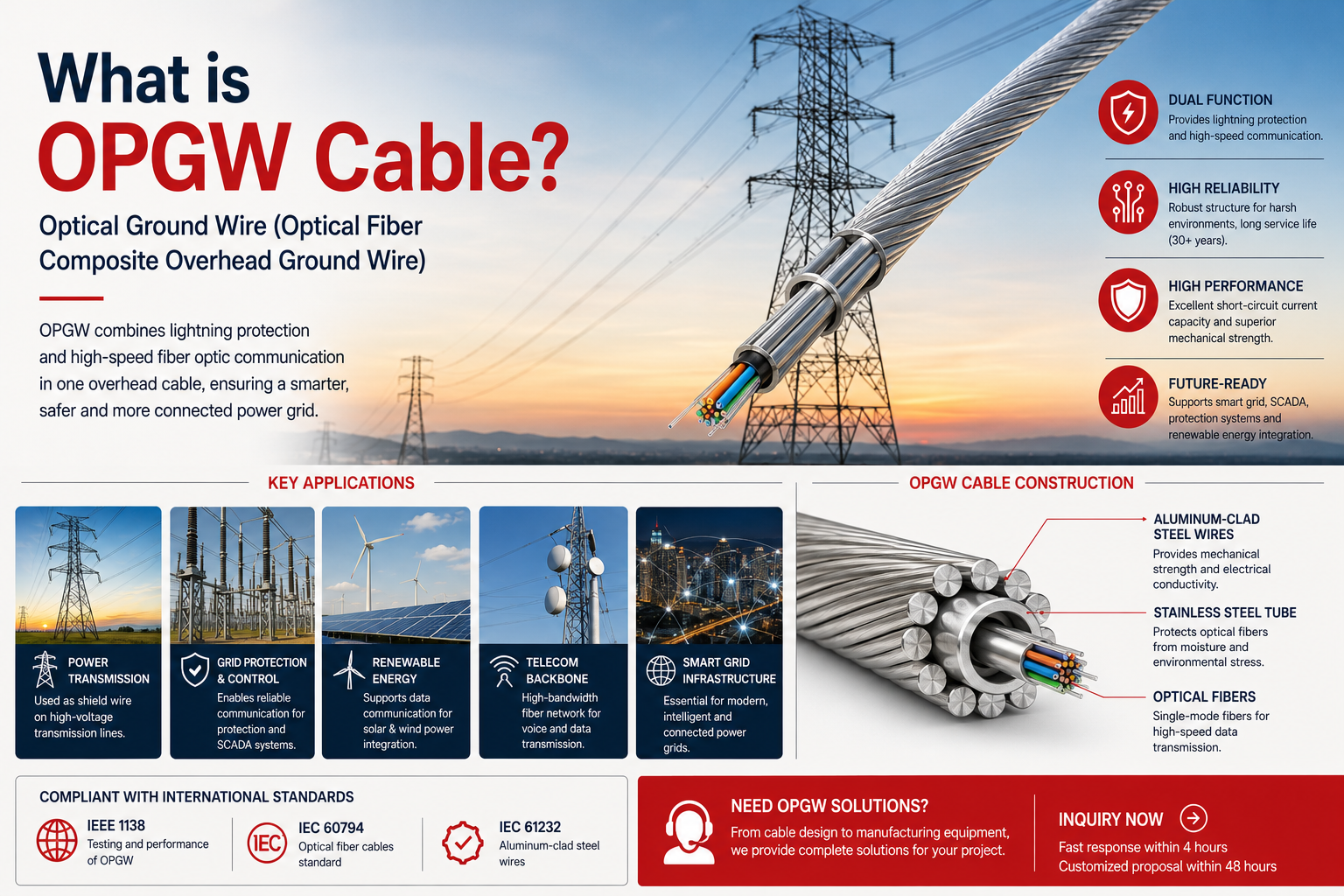
OPGW stands for Optical Ground Wire (full technical name: Optical Fiber Composite Overhead Ground Wire). It is a composite overhead cable that combines the mechanical and electrical functions of a conventional ground wire with the high-bandwidth capabilities of optical fiber. Installed at the highest position on transmission towers, OPGW protects phase conductors from lightning strikes while simultaneously providing a secure, high-capacity fiber optic communication path.

This technology has become essential for modern power grids, especially in regions undergoing rapid infrastructure development such as Saudi Arabia under Vision 2030, where smart grid initiatives, renewable energy integration, and large-scale projects like NEOM demand both reliable power delivery and advanced digital communication.

What Does OPGW Stand For and How Does It Work?

OPGW = Optical Ground Wire (Also referred to as Optical Fiber Composite Overhead Ground Wire)

Primary Functions:

  1. Lightning Protection & Grounding — Positioned at the top of transmission towers, OPGW acts as a shield wire. It intercepts lightning strikes and safely conducts fault currents to ground, protecting the more expensive phase conductors below.
  2. High-Speed Data Transmission — Optical fibers housed inside the cable enable real-time communication for:
    • Power system protection and control (relay signaling)
    • SCADA and grid monitoring
    • Voice and data communication for utilities
    • Leasing dark fiber to telecom operators

Because the optical fibers are protected inside a robust metallic structure, OPGW can operate reliably for 30+ years in harsh outdoor environments, including high temperatures, sandstorms, and strong winds common in the Middle East.

Construction and Main Types of OPGW Cables

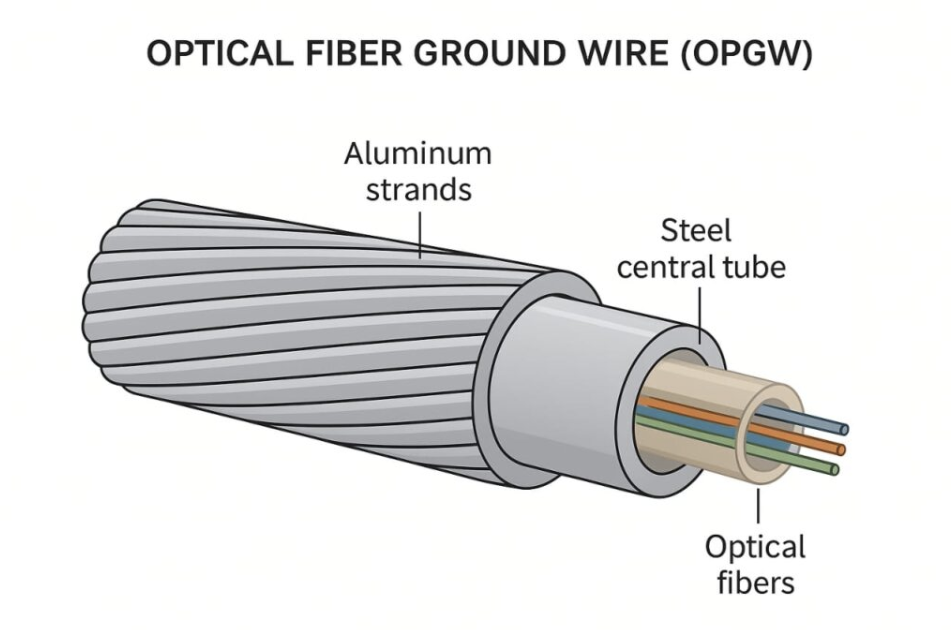
OPGW cables are engineered for extreme mechanical, electrical, and environmental stresses. Typical construction includes:

  • Central Stainless Steel Tube (or aluminum tube): Contains 12–96 optical fibers (usually single-mode G.652 or G.655) in a loose-tube design filled with gel for protection.
  • Aluminum-Clad Steel (ACS) Wires or Aluminum Alloy Wires: Stranded around the central tube to provide mechanical strength, conductivity, and lightning current carrying capacity.
  • Optional Outer Aluminum or Alloy Layer: Improves conductivity and corrosion resistance.

Common Structural Designs:

  • Central Tube Type (most common): Fibers in one central stainless steel tube.
  • Stranded Tube Type (multi-tube): Several stainless steel tubes stranded together for higher fiber count.
  • Aluminum Tube Type: Central aluminum tube offering better conductivity in some designs.

The outer diameter typically ranges from 9 mm to 18 mm depending on fiber count and mechanical requirements. Breaking strength, short-circuit current capacity, and fiber attenuation are critical design parameters.

Key Advantages of OPGW Compared to Traditional Solutions

AdvantageDescriptionBenefit for Utilities & Grid Operators
Dual FunctionalityLightning protection + fiber optic communication in one cableSaves tower space, reduces installation cost
High ReliabilityFibers protected inside robust metallic tubeLong service life (30+ years), low maintenance
Superior Lightning PerformanceExcellent short-circuit current capacity and shieldingBetter protection than many traditional ground wires
Low Sag & High StrengthOptimized design allows longer spans with controlled sagFewer towers needed, lower project cost
High BandwidthSupports terabit-level data transmissionFuture-proof for smart grid, 5G backhaul, IoT
Cost-Effective Long TermEliminates need for separate ADSS or underground fiber cablesSignificant lifecycle cost savings
SecurityFibers inside grounded metallic structureMore secure than exposed ADSS cables

OPGW vs ADSS: ADSS (All-Dielectric Self-Supporting) cables are non-metallic and installed below the phase conductors. OPGW is metallic, installed at the top, and provides both grounding and communication.

OPGW in Saudi Arabia & the GCC: Growing Importance

Saudi Arabia and other GCC countries are investing heavily in grid modernization, renewable energy (solar and wind), and smart infrastructure under Vision 2030. These developments create strong demand for OPGW because:

  • Large transmission projects (380 kV, 132 kV networks) require reliable protection and communication.
  • Renewable energy plants need fast, reliable data links for grid integration and control.
  • Smart grid and digital substation initiatives rely on high-speed fiber for protection schemes.
  • Saudi Electricity Company (SEC) has published specific technical specifications for OPGW (e.g., 10-SDMS-03), confirming its strategic importance.

OPGW is particularly suitable for the region’s harsh environment when designed with appropriate aluminum-clad steel wires, corrosion-resistant materials, and high short-circuit current capacity.

Manufacturing OPGW Cables: Equipment and Materials Expertise

Producing high-quality OPGW cables requires specialized equipment and strict process control. Key manufacturing stages include:

  • Optical Fiber Loose Tube Production — Precision extrusion lines for stainless steel or PBT tubes.
  • Central Tube Stranding — High-precision stranding machines to assemble fibers into the central tube.
  • Wire Stranding & Armoring — Drum twister or planetary stranders for aluminum-clad steel (ACS) wires and outer layers. This is where equipment such as high-speed drum twisters, central tube stranders, and armoring lines become critical.
  • Sheathing & Jacketing (if required) — Extrusion lines for additional protective layers.
  • Testing — Tension, torsion, crush, temperature cycling, and optical performance tests per IEEE 1138 and IEC standards.

As a specialist in wire and cable production equipment, we support manufacturers with complete solutions for OPGW production lines, including stranding machines, drum twisters, take-up & pay-off systems, and auxiliary equipment optimized for aluminum-clad steel and composite cable structures.

Installation, Accessories, and Maintenance

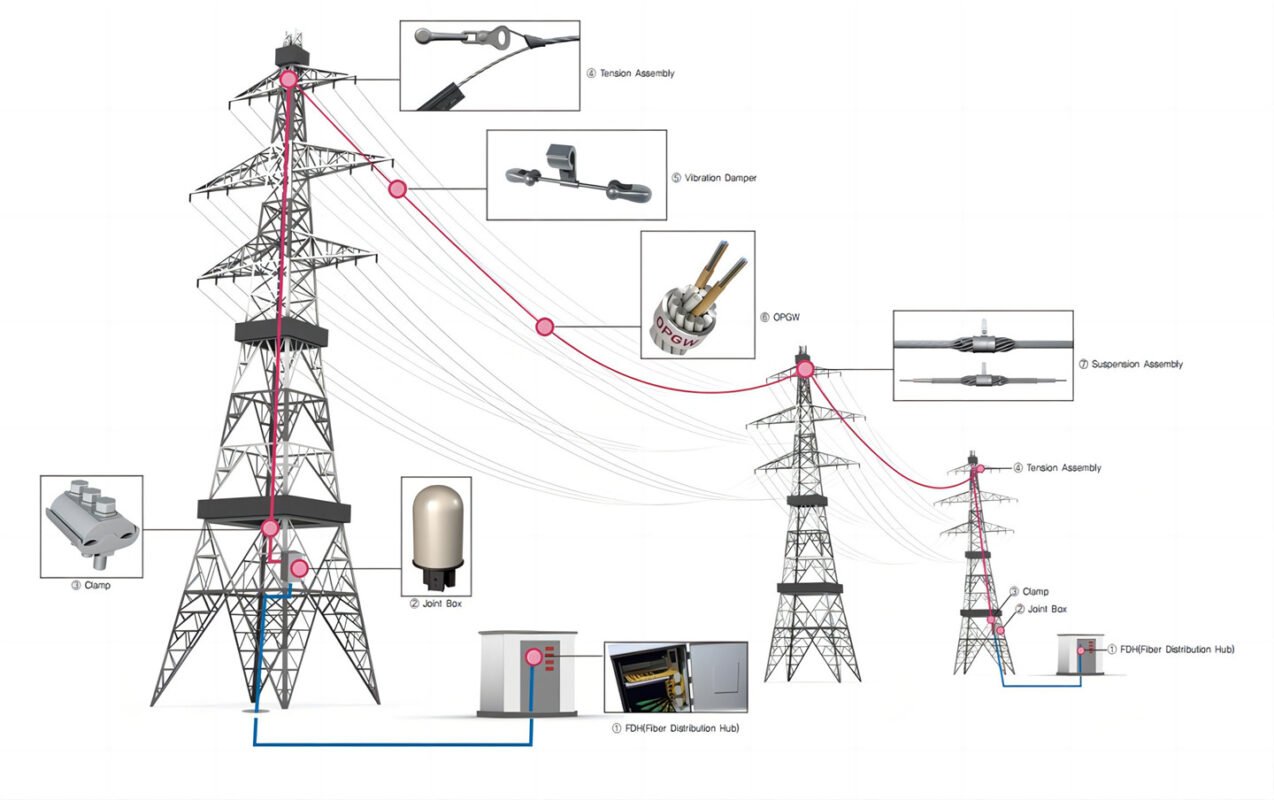
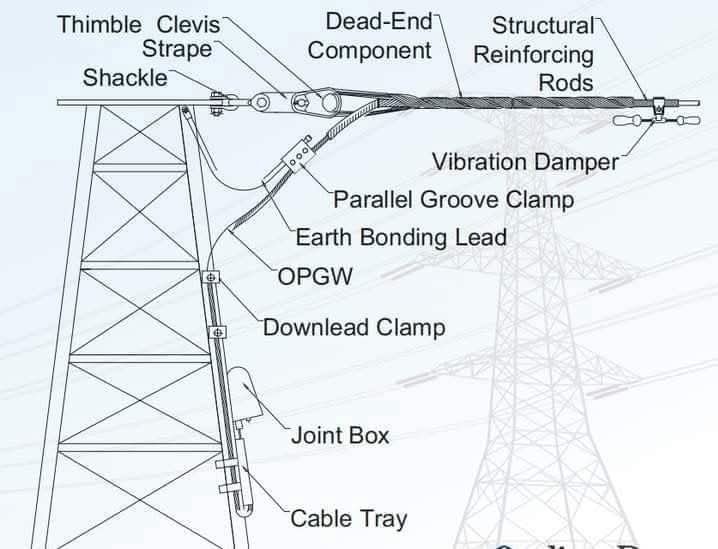
OPGW installation requires specialized accessories:

  • Tension assemblies (dead-ends)
  • Suspension clamps
  • Vibration dampers (Stockbridge type)
  • Joint boxes / splice closures
  • Downlead clamps and earthing connections

Proper installation, tensioning, and regular inspection (especially after severe weather) are essential to maintain both electrical and optical performance over decades.

OPGW – Essential Infrastructure for the Smart Grid Era

OPGW cable represents one of the most intelligent solutions in modern power transmission infrastructure. By combining reliable lightning protection with high-capacity fiber optic communication in a single, robust overhead cable, it delivers significant technical, economic, and operational advantages.

For utilities and cable manufacturers in Saudi Arabia and the GCC, OPGW is becoming increasingly important as grids modernize, renewable energy penetration grows, and digital communication demands rise. High-quality OPGW production requires advanced stranding, armoring, and process control equipment — areas where we provide proven, reliable solutions tailored to regional requirements.

Inquiry Now

Whether you are planning a new transmission project, upgrading an existing line, or looking to manufacture OPGW cables locally, contact our technical team for detailed specifications, equipment recommendations, or production line solutions. We respond within 4 hours and provide customized proposals within 48 hours.

Build reliable, future-ready power and communication infrastructure with proven OPGW technology and equipment.

Leave a Reply

Your email address will not be published. Required fields are marked *