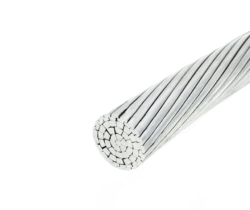
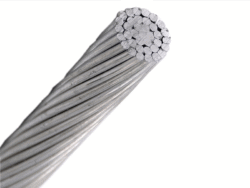
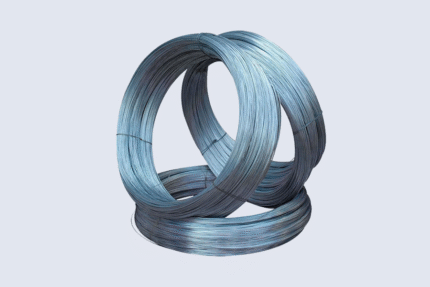
Conducteur tout aluminium (CTA) is a concentric-lay-stranded bare overhead conductor manufactured exclusively from hard-drawn EC-grade aluminum 1350-H19 wires. It delivers the highest electrical conductivity among conventional bare aluminum conductors (minimum 61% IACS), lowest weight per unit conducting cross-section, and excellent corrosion performance in non-polluted or moderately coastal environments. AAC is the preferred solution for short-span urban and suburban distribution networks where maximum ampacity and minimal I²R losses are required and mechanical loading remains moderate.
Why Do Utilities Still Specify AAC When Higher-Strength Options Exist?
AAC remains the baseline choice for many distribution projects because pure aluminum 1350-H19 offers the lowest DC resistance of any standard aluminum conductor family. At 20 °C the volume resistivity is approximately 0.0283 Ω·mm²/m, corresponding to 61% IACS. This translates directly into lower line losses and higher continuous current-carrying capacity for a given aluminum cross-section compared with AAAC or the aluminum portion of ACSR.
Because the entire cross-section is current-carrying aluminum, effective conductivity is higher than steel-cored constructions of equal outer diameter. The homogeneous aluminum construction also eliminates galvanic corrosion risks associated with steel cores, making AAC particularly suitable for coastal or industrial atmospheres where salt or chemical deposits are present but ice and wind loads stay within moderate limits.
AAC vs AAAC vs ACSR – Technical Comparison for Engineering Selection
The three dominant bare overhead conductor families differ primarily in material composition, resulting strength-to-weight ratio, and conductivity.
| Paramètre | AAC (1350-H19) | AAAC (6201-T81 / 1120) | ACSR (Al + Steel Core) |
|---|
| Conductivité (% IACS) | 61 | 52.5 – 54 | 40 – 55 (overall) |
| Ultimate Tensile Strength (MPa) | 160 – 200 | 295 – 325 | 250 – 400 (depends on steel) |
| Strength-to-Weight Ratio | Lowest | Haut | Highest |
| Continuous Operating Temp (°C) | 75 – 80 | 90 – 100 | 75 – 100 |
| résistance à la corrosion | Excellent (homogeneous) | Excellent | Moderate (steel core risk) |
| Typical Span Capability | Short | Medium | Long |
| Primary Application | Urban distribution | Coastal / medium span | Transmission / long span |
Construction and Material Requirements of AAC
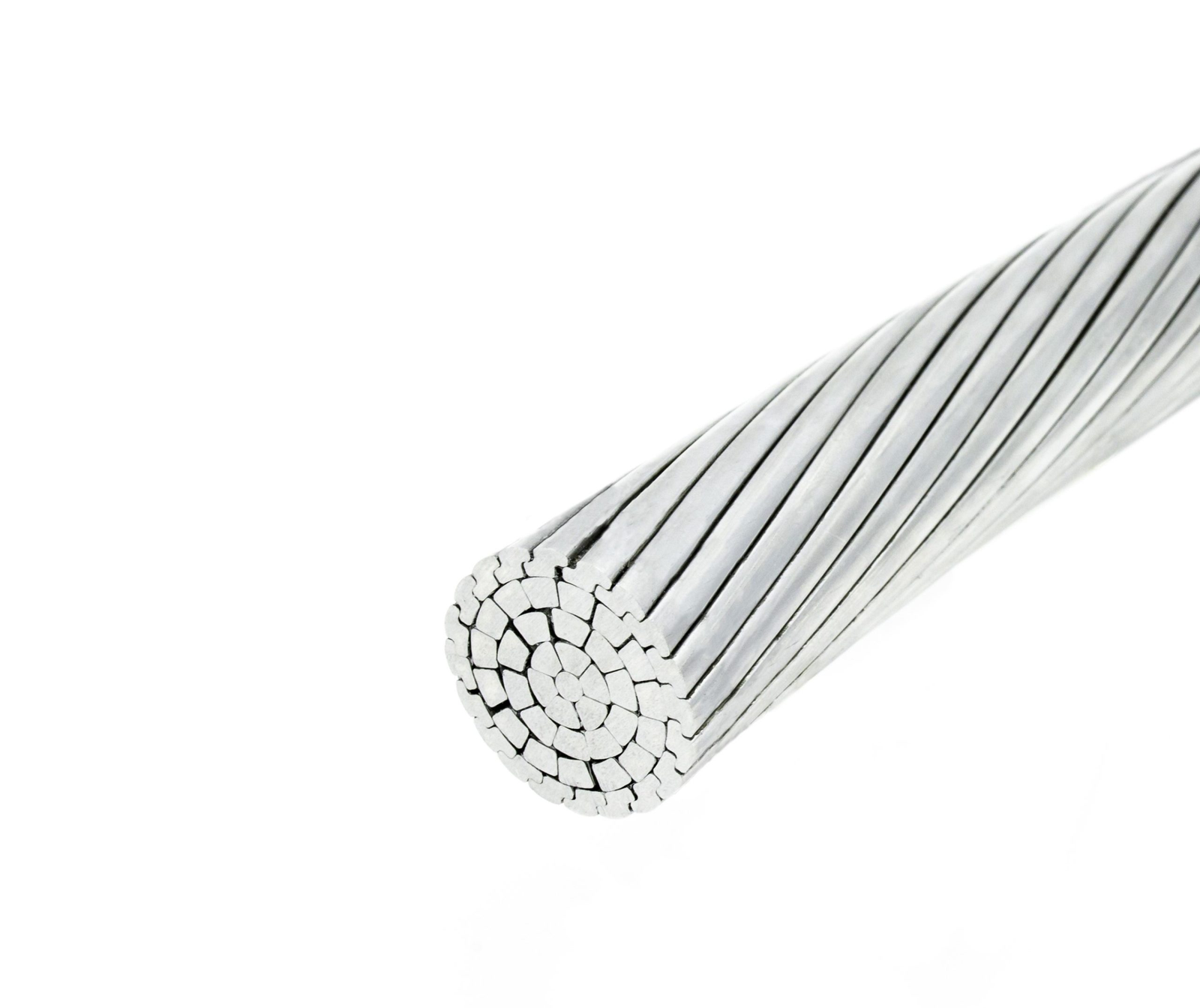
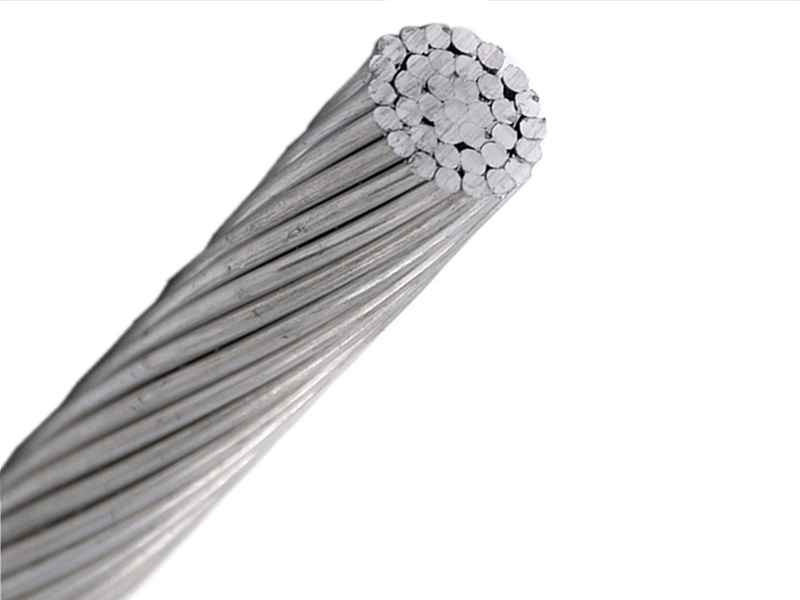
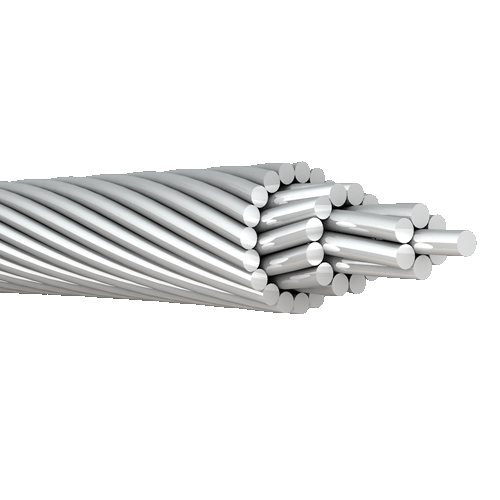
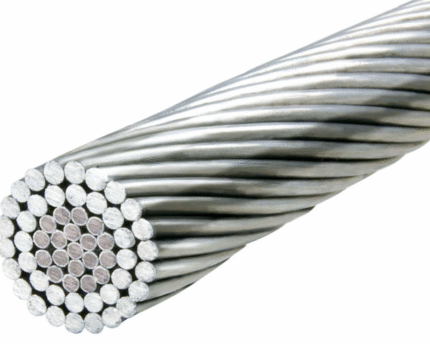
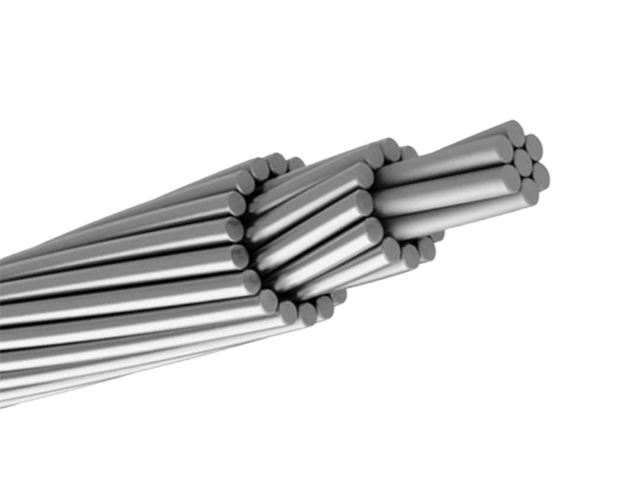
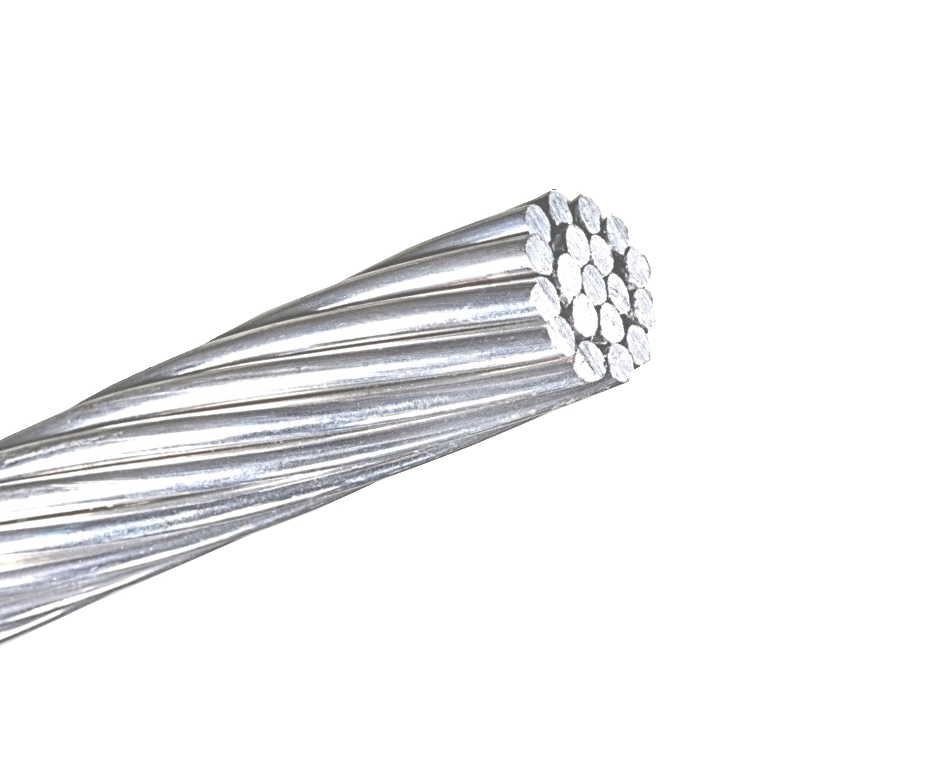
AAC consists of one or more concentric layers of hard-drawn aluminum 1350-H19 wires laid helically around a central wire. Common strandings are 7, 19, 37, 61 and 91 wires. Lay direction of the outer layer is normally right-hand for Class AA (bare overhead) conductors. The aluminum must meet the minimum tensile strength and elongation requirements of ASTM B230 or IEC 889 (hard-drawn aluminum). Density is 2.703 g/cm³ and the coefficient of linear expansion is 23 × 10⁻⁶ /°C.
Typical Technical Parameters (IEC 61089 Series Examples)
| Code / Nominal Area (mm²) | No. of Wires | Wire Ø (mm) | Overall Ø (mm) | Linear Mass (kg/km) | Résistance nominale (kN) | DC Resistance 20 °C (Ω/km) |
|---|
| 10 | 7 | 1.35 | 4.05 | 27.4 | 1.95 | 2.8633 |
| 25 | 7 | 2.13 | 6.40 | 68.4 | 4.50 | 1.1453 |
| 63 | 7 | 3.39 | 10.20 | 172.3 | 10.39 | 0.4545 |
| 100 | 19 | 2.59 | 12.90 | 274.8 | 17.00 | 0.2877 |
| 200 | 19 | 3.66 | 18.30 | 549.7 | 32.00 | 0.1439 |
| 400 | 37 | 3.72 | 26.00 | ≈1 100 | ≈64 | ≈0.072 |
Values are nominal; actual production data must be verified against the project standard (IEC 61089, ASTM B231, BS EN 50182, etc.). Ampacity is environment-dependent and must be calculated according to IEEE 738 or IEC 61597 using local ambient temperature, wind speed, solar radiation and emissivity.

Principaux avantages
- Highest Conductivity — Pure 1350-H19 aluminum delivers maximum current-carrying capacity and lowest line losses of any standard bare overhead conductor.
- Lightweight Design — Significantly lighter than ACSR or AAAC, reducing tower/pole loading, foundation costs, and installation effort.
- Excellent Corrosion Resistance — Absence of a steel core eliminates galvanic corrosion risks, making AAC ideal for coastal, industrial, and high-pollution environments.
- Optimized Sag Performance — Favorable thermal expansion characteristics ensure reliable operation under varying temperatures and loads.
- Solution rentable — Economical choice for medium to large-span distribution and transmission lines where high tensile strength is not the primary requirement.
- Superior Electrical Efficiency — Highest conductivity-to-weight ratio, improving overall system efficiency and reducing energy losses.
Construction
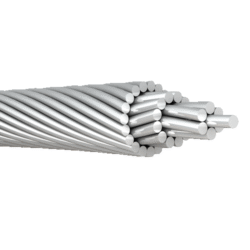
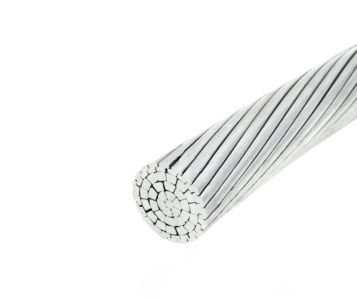
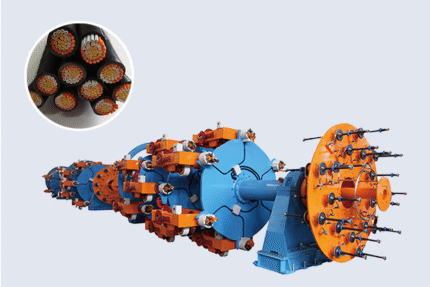
AAC conductors consist of bare, concentrically stranded 1350-H19 aluminum wires. The design features a straight central wire surrounded by one or more layers of helically laid wires. This construction ensures excellent flexibility, mechanical stability during installation, and uniform electrical properties along the entire length.

Principales applications
All Aluminum Conductors are widely used in:
- Medium-voltage and high-voltage overhead distribution networks in urban and rural areas
- Coastal and high-corrosion environments where steel-core conductors would be vulnerable
- Long-span crossings where weight reduction provides significant structural and economic benefits
- Urban transmission and sub-transmission lines with moderate mechanical loading
- Grid modernization projects prioritizing high conductivity and long-term corrosion performance
These characteristics make AAC particularly suitable for distribution and selected transmission projects in the Saudi Kingdom and GCC region, including coastal networks and urban grid upgrades under Vision 2030.
Applicable International Standards (2024–2026 Status)
- ASTM B231 / B231M – Concentric-lay-stranded aluminum 1350 conductors (North America)
- IEC 61089 – Round-wire concentric-lay overhead electrical stranded conductors (global)
- BS 215-1 / BS EN 50182 – Aluminum conductors for overhead lines
- AS 1531 – Australian standard
- GB/T 1179 – Chinese national standard
All standards require hard-drawn 1350-grade aluminum with minimum conductivity of 61 % IACS and define dimensional, mechanical and electrical tolerances.
Technical Specifications (ASTM B231 – Representative Sizes)
A full range from small distribution sizes to large transmission conductors is available.
Representative AAC Conductor Sizes (ASTM B231)
| Code Word | Size (kcmil / mm²) | No. of Wires | Wire Diameter (in / mm) | Mass (lb/1000ft / kg/km) | Rated Strength (kips / kN) |
|---|
| Bluebonnet | 3,500 / 1,773 | 127 | 0.1660 / 4.22 | 3,345 / 4,977 | 58.7 / 261 |
| Trillium | 3,000 / 1,520 | 127 | 0.1537 / 3.90 | 2,840 / 4,226 | 50.3 / 223 |
| Lupine | 2,500 / 1,267 | 91 | 0.1657 / 4.21 | 2,365 / 3,519 | 41.9 / 186 |
| Cowsip | 2,000 / 1,013 | 91 | 0.1482 / 3.77 | 1,873 / 2,787 | 34.2 / 153 |
| Jessamine | 1,750 / 886.7 | 61 | 0.1694 / 4.30 | 1,641 / 2,442 | 29.7 / 132 |
| Poppy | 1/0 / 53.5 | 7 | 0.1228 / 3.12 | 98.9 / 147.2 | 1.99 / 8.84 |
(A full range from small distribution sizes to large transmission conductors is available.)
Applicable International Standards (2024–2026 Status)
- ASTM B231 / B231M – Concentric-lay-stranded aluminum 1350 conductors (North America)
- IEC 61089 – Round-wire concentric-lay overhead electrical stranded conductors (global)
- BS 215-1 / BS EN 50182 – Aluminum conductors for overhead lines
- AS 1531 – Australian standard
- GB/T 1179 – Chinese national standard
All standards require hard-drawn 1350-grade aluminum with minimum conductivity of 61 % IACS and define dimensional, mechanical and electrical tolerances.
Practical Considerations and Failure Prevention
- Sag and Tension Control – Because of lower modulus and higher coefficient of expansion, AAC develops greater sag than AAAC or ACSR under the same temperature rise. Accurate sag-tension charts calculated with the final modulus after creep must be used.
- Creep – Hard-drawn aluminum exhibits measurable permanent elongation under sustained tension. Initial stringing tension should account for long-term creep (typically 5–10 years).
- Vibration – AAC is susceptible to aeolian vibration on longer spans. Stockbridge dampers or spiral vibration dampers are recommended when span length and tension produce resonance.
- Fittings – Compression or bolted connectors must be designed for pure aluminum; bimetallic fittings are unnecessary but galvanic isolation is still required if mixed with copper.
- Temperature Limit – Continuous operation above 80 °C accelerates annealing and reduces residual strength. Emergency ratings up to 100 °C are sometimes permitted for limited duration.
Proper installation tension, correct damper placement and regular inspection for strand damage remain the primary methods of ensuring long service life.
Key Technical Takeaways
- AAC provides the highest conductivity (61 % IACS) and lowest mass of the three classic overhead conductor families.
- It is the optimal technical and economic choice for short-span urban and coastal distribution where mechanical loads are moderate.
- Selection must always be based on project-specific span, loading, ambient conditions and the governing standard (ASTM B231 or IEC 61089).
- When higher strength or longer spans are required, AAAC or ACSR should be evaluated; when maximum corrosion resistance without steel is needed, AAC remains preferred.
For project-specific sizing, ampacity calculation, custom stranding or long-term supply agreements, technical datasheets and engineering support are available.
Demande d'informations
All Aluminum Conductor (AAC) – Doing Reliable Cable Material
All Aluminum Conductor (AAC) | High-conductivity 1350-H19 bare overhead conductor for distribution networks. Excellent corrosion resistance, lightweight design, ASTM B231 / IEC 61089 compliant. Reliable quality, customized service. Inquiry Now for competitive pricing and technical support.
SKU du produit:
Conducteur tout aluminium (CTA)
Marque de produit:
Machines RLB
Devise:
USD
Prix du produit:
Contactez-nous pour un devis
Produit en stock:
En stock
Note de l’éditeur/éditrice :5 








Avis
Il n’y a pas encore d’avis.