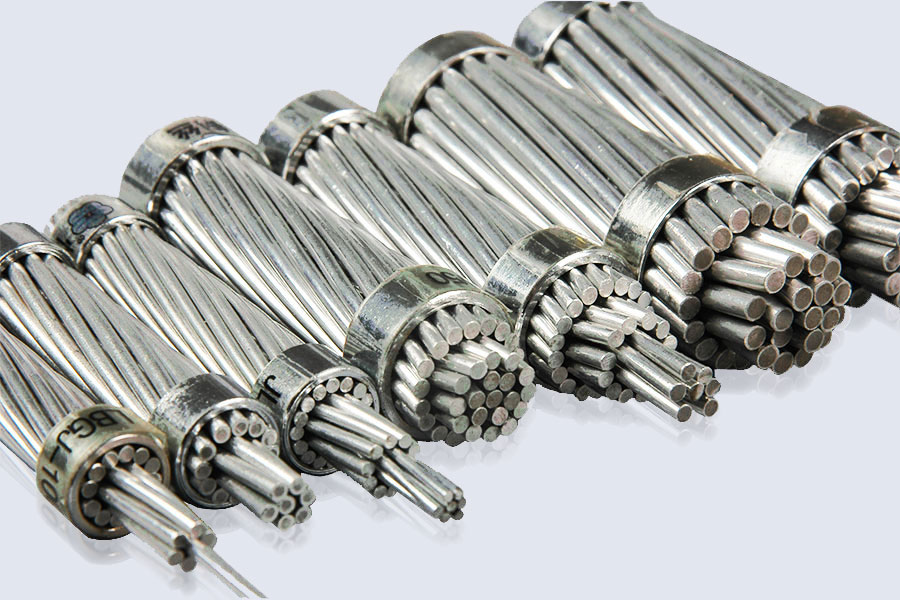
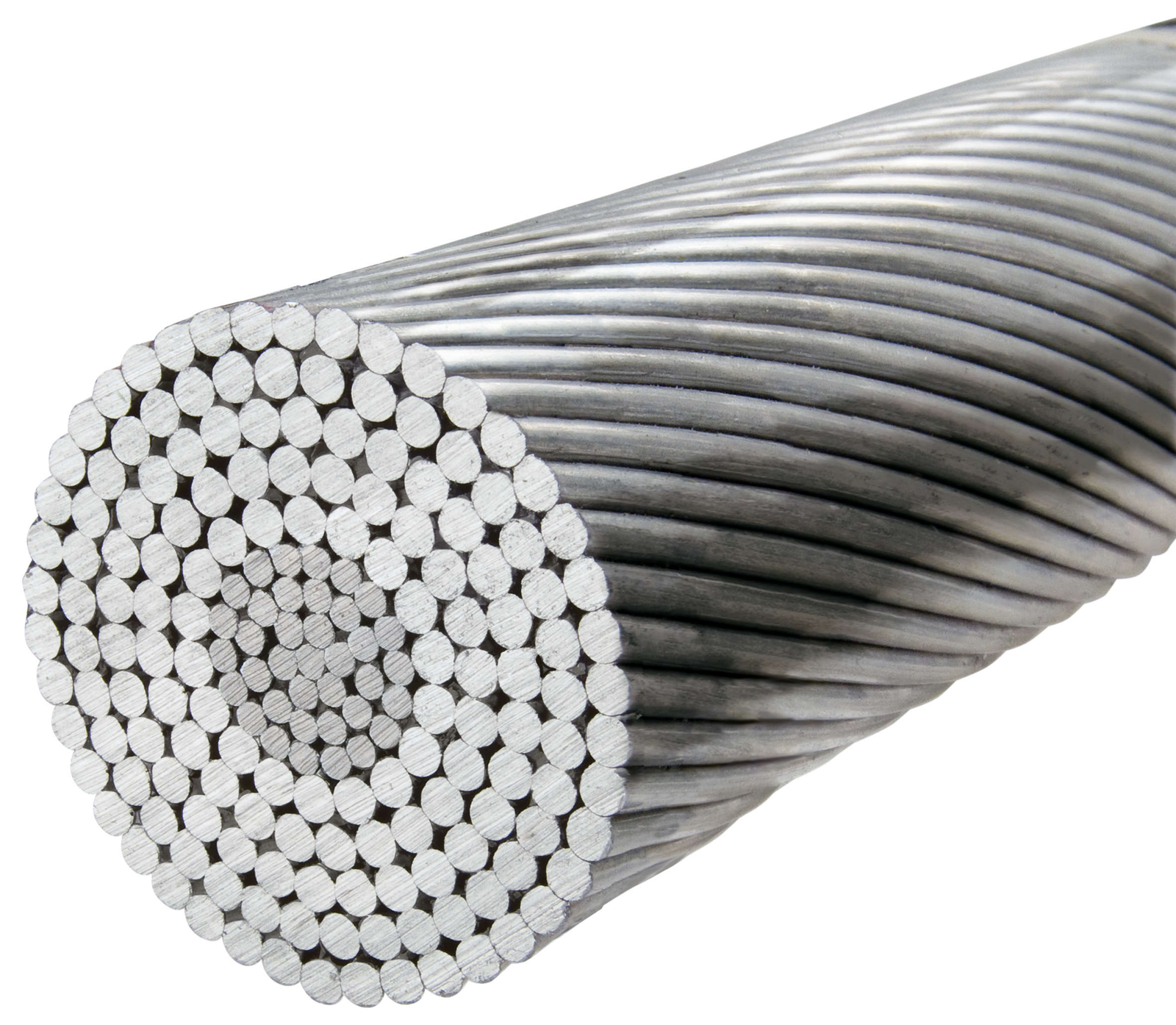
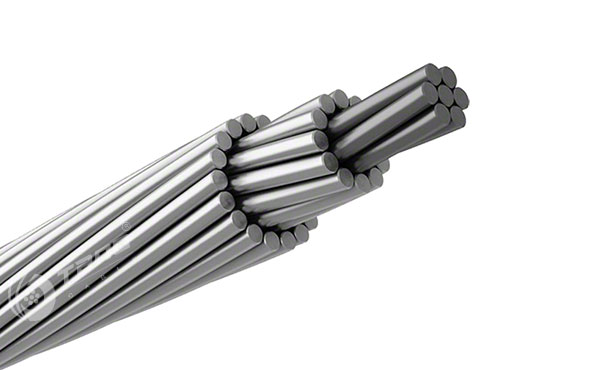
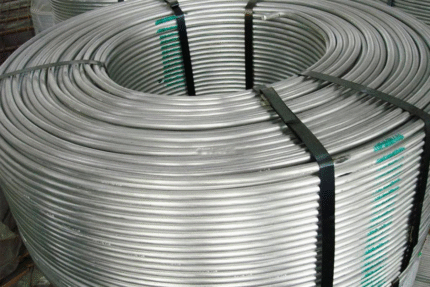
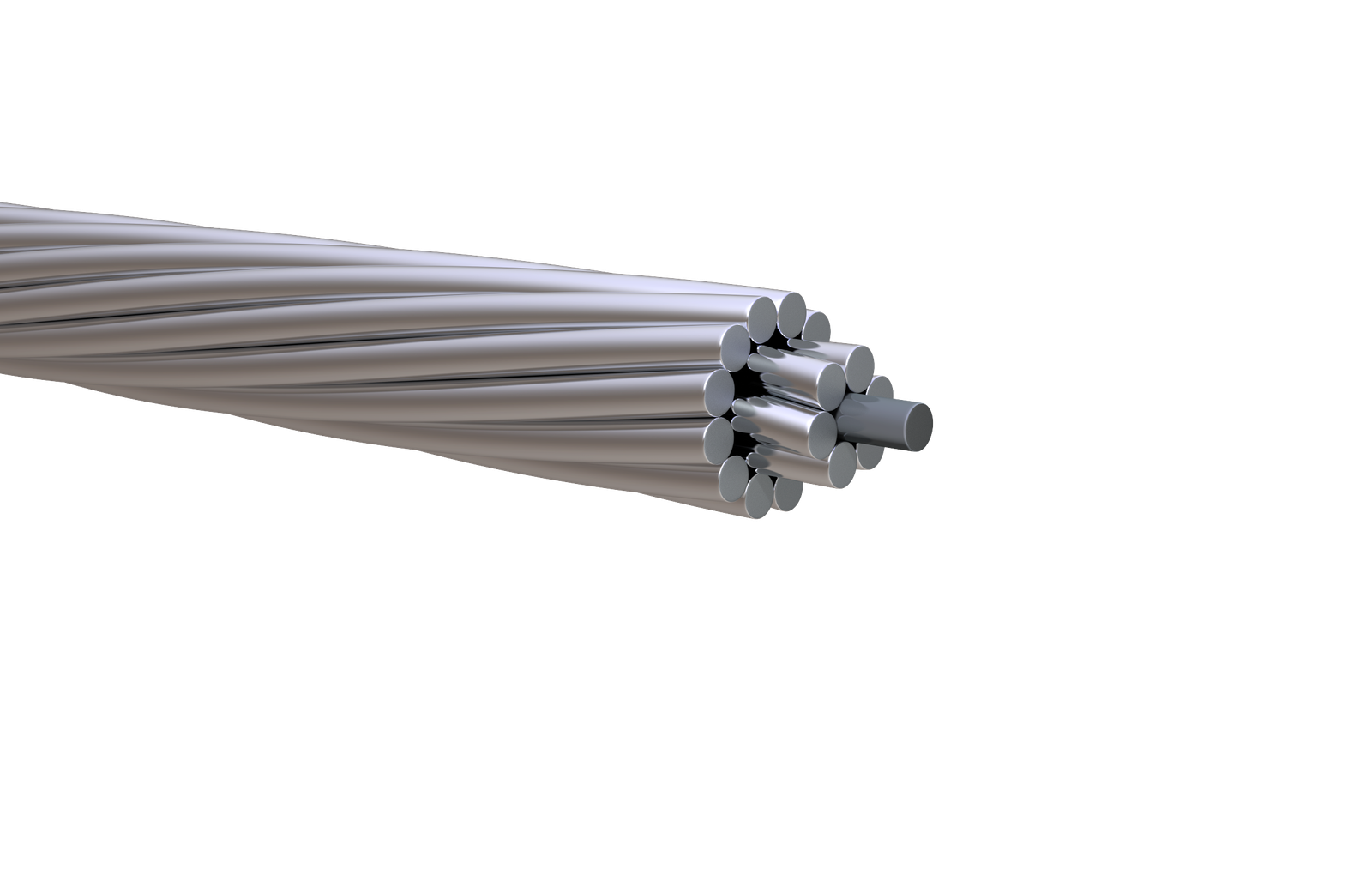
Aluminum Conductor Steel Reinforced (ACSR) remains one of the most widely deployed bare overhead conductors in global power transmission and distribution networks. It features one or more layers of high-conductivity 1350-H19 aluminum strands helically stranded around a high-strength galvanized steel (or aluminum-clad steel) core. The aluminum provides excellent electrical conductivity and corrosion resistance, while the steel core delivers superior mechanical strength and tensile capacity, enabling longer spans, reduced sag, and reliable performance under heavy mechanical loads.
This proven concentric-lay stranded design offers an optimal balance of conductivity, strength-to-weight ratio, and cost-effectiveness, making ACSR the preferred solution for high-voltage transmission lines, long-span crossings, and demanding environmental conditions.

What Is ACSR and Why Does It Dominate Overhead Lines?
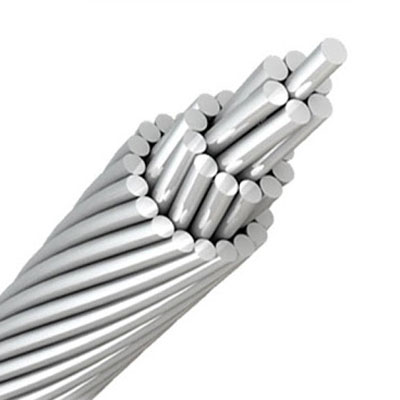
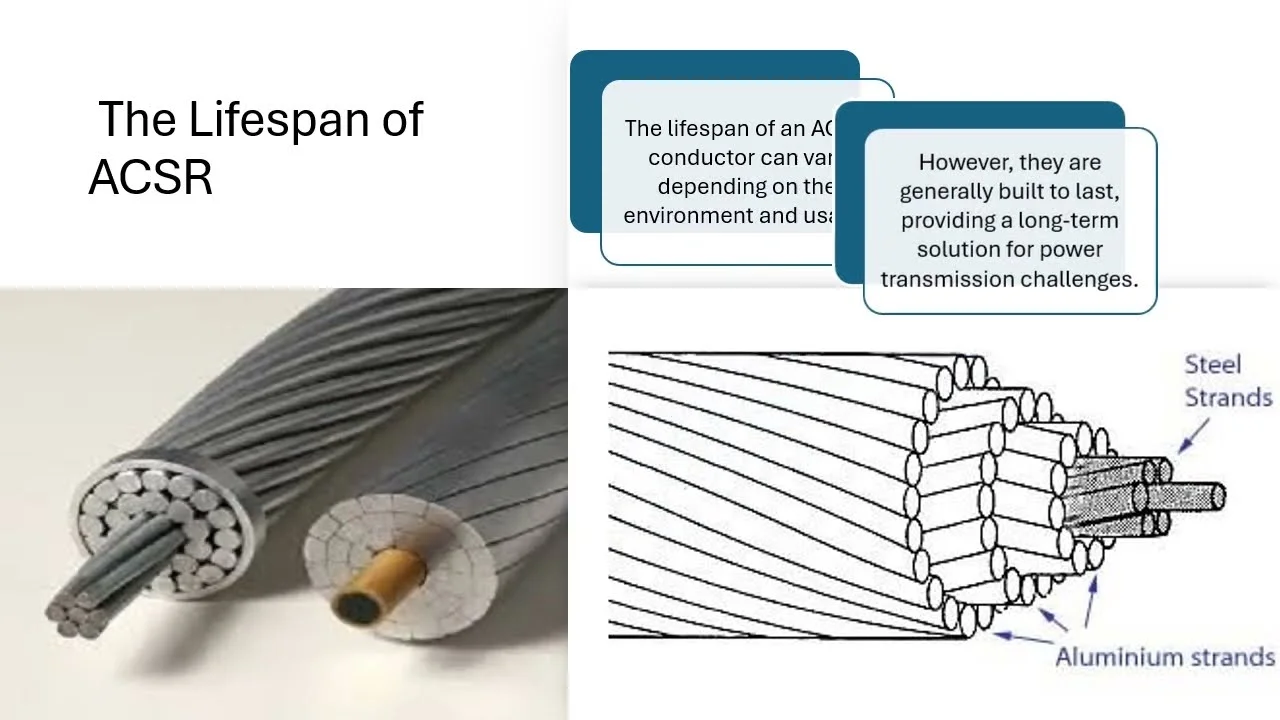
ACSR consists of one or more layers of hard-drawn aluminum wires concentrically stranded over a central core of galvanized steel (or aluminum-clad steel) wires. The aluminum carries the electrical current (minimum conductivity 61.0–61.2 % IACS), while the steel core provides 40–60 % of the total tensile strength depending on the aluminum-to-steel area ratio. Continuous operating temperature for standard 1350-H19 ACSR is limited to 75 °C to avoid annealing of the aluminum; short-circuit or emergency ratings can be higher under controlled conditions.

This construction satisfies the mechanical and electrical requirements of transmission lines from 33 kV to 500 kV+ and is manufactured to ASTM B232/B232M-24, IEC 61089, BS 215-2, DIN 48204, and equivalent national standards (including the 2025 revision of IS 398 Part 2).
Construction Principle and Material Properties
The steel core is usually Class A, B or C zinc-coated (or Zn-5 % Al-MM / Galfan, or aluminum-clad). Common strandings include:
- 6/1 – single steel wire + 6 aluminum wires (distribution, short spans)
- 26/7 or 30/7 – 7-wire steel core + two layers of aluminum (general transmission)
- 54/7 or 54/19 – larger cores for long spans and heavy ice loading
Each successive layer is stranded in the opposite direction (right-hand outer lay in North American practice) to prevent twisting during stringing. The coefficient of linear expansion is typically 18.0–19.8 × 10⁻⁶ /°C and the final modulus of elasticity ranges from 67–80 GPa according to aluminum/steel ratio.
Key material data (standard ACSR):
- Aluminum wires: 1350-H19, tensile strength ≥ 160–200 MPa depending on diameter
- Steel core: regular, high-strength (HS), extra-high-strength (EHS) or ultra-high-strength grades
- Zinc coating: Class A (standard), Class C (heavy) for corrosive environments
Main Applications in Power Infrastructure
ACSR conductors are extensively deployed in:
- Lignes de transport aériennes à haute et très haute tension
- Medium-voltage distribution networks in urban and rural areas
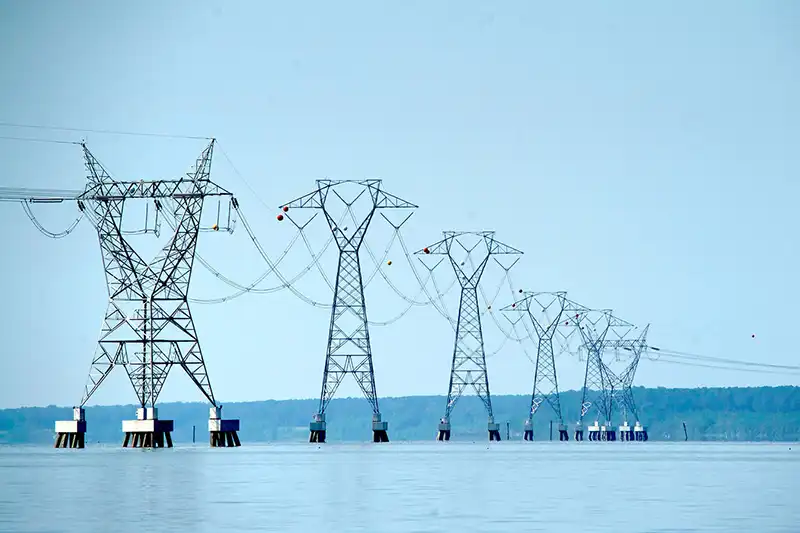
- Long-span crossings, river crossings, and heavy ice/wind load zones
- Capacity upgrades of existing power grids
- Coastal, industrial, and polluted environments where mechanical robustness is essential
Common ACSR conductor names such as ACSR Rabbit conductor, Drake, Hawk, Osprey, and Merlin are widely recognized across global projects for their proven performance in distribution and transmission applications. These characteristics align perfectly with large-scale transmission and grid modernization initiatives in the Saudi Kingdom and GCC region, supporting Vision 2030 infrastructure expansion and reliable power delivery in challenging desert and coastal conditions.
Construction
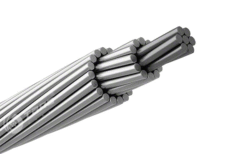
ACSR features a classic concentric-lay stranded design:
- Outer aluminum strands: 1350-H19 grade aluminum for high conductivity (minimum 61% IACS) and good corrosion resistance.
- Inner steel core: One or more layers of high-strength galvanized steel wires (or aluminum-clad steel for enhanced corrosion protection) providing mechanical reinforcement and tensile strength.
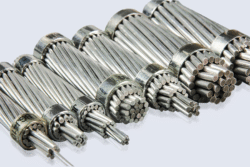
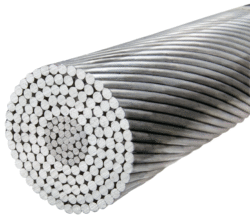
Common stranding configurations include 6/1, 18/1, 26/7, 54/7, 54/19, and larger designs, allowing precise optimization of conductivity versus mechanical performance for each project.
Principaux avantages
- High Tensile Strength & Sag Control — The steel core enables significantly longer spans, reduced sag under load and temperature, and superior performance in heavy ice/wind conditions compared to all-aluminum conductors.
- Excellente conductivité électrique — Optimized aluminum content delivers low resistance and efficient power transmission with proven long-term reliability.
- Proven Field Performance — Decades of successful operation in extreme weather, dynamic loading, and diverse environments worldwide.
- Solution rentable — Balanced use of aluminum and steel provides outstanding value for most overhead line projects without sacrificing strength or conductivity.
- Versatile Design Options —Available in a wide range of ACSR conductor sizes and steel/aluminum ratios to meet specific project requirements
Applicable Standards and Recent Updates (2024–2026)
- ASTM B232/B232M-24 (published March 2024): defines nine coated-steel variants (GA, GC, MA, HS, MS, GA4/5, MA4/5, AZ). Aluminum must meet B230; steel cores meet B498, B606, B802, B957, etc.
- CEI 61089: aluminum grades A1 (≈61 % IACS), A2/A3 alloys; steel grades S1A/B, S2A/B, S3A.
- IS 398 (Part 2):2025 (fourth revision): Indian specification for galvanized-steel-reinforced aluminum conductors.
- National equivalents: BS 215-2, DIN 48204, GB/T 1179, AS/NZS 3607.
All production must include type tests (tensile, resistance, zinc coating mass, lay ratio, diameter tolerance ±1 %). Rated strength is calculated from the aluminum and steel components and must not fall below 98 % of the specified value after stranding.
Technical Specifications (ASTM B232 – Representative Sizes)

The table below shows typical configurations. Full product range covers small distribution sizes (e.g., Swan, Turkey) to large transmission conductors (e.g., Bluebird, Thrasher, and beyond).
Representative ACSR Sizes (ASTM B232)
| Code Word | Al/St Stranding | Conductor Diameter (inch) | Weight (lb/1000 ft) | Utilisation typique |
|---|
| Drake | 26/7 | 1.108 | 1,093 | Transmission lines |
| Hawk | 26/7 | 0.858 | 655 | Medium-voltage distribution |
| Osprey | 18/1 | 0.879 | 603 | Distribution networks |
| Merlin | 18/1 | 0.684 | 365 | Rural electrification |
| Dove | 26/7 | 0.927 | 765 | Transmission lines |
| Parakeet | 24/7 | 0.914 | 716 | Medium-voltage lines |
(Custom sizes, steel core types, and stranding ratios available upon request.)
Technical Parameter Table (Selected IEC 61089)
| Nominal Area (Al/St) mm² | Stranding | Approx. OD mm | Mass kg/km | Rated Strength kN | DC Resistance Ω/km (20 °C) |
|---|
| 16/2.7 | 6/1 | 6.3 | 74 | 9.0 | 1.803 |
| 50/8 | 6/1 | 11.1 | 230 | 26.6 | 0.576 |
| 120/19 | 26/7 | 16.5 | 547 | 66.4 | 0.241 |
| 240/40 | 26/7 | 23.0 | 1 092 | 120 | 0.121 |
| 400/64 | 54/7 | 28.6 | 1 776 | 183 | 0.072 |
| 500/64 | 54/7 | 31.9 | 2 084 | 213 | 0.058 |
Failure Modes and Prevention
Primary degradation mechanisms observed in service:
- Steel-core corrosion (especially under incomplete zinc coating or in coastal/industrial atmospheres) → use ACSR/AW or heavier Class C coating.
- Aeolian vibration fatigue at suspension clamps → install vibration dampers or specify self-damping designs for spans > 400 m.
- Aluminum annealing from sustained temperatures > 75 °C → enforce thermal rating limits and monitor line loading.
- Improper compression joints or inadequate wire brushing → follow manufacturer jointing procedures and verify with resistance measurements.
Proper stringing tension, correct clamp hardware, and periodic inspection of zinc coating integrity extend service life beyond 40–50 years under normal conditions.
Key Takeaways for Procurement and Engineering
ACSR remains the most reliable, widely available, and cost-effective solution for new overhead transmission lines that require high mechanical strength and controlled sag. Selection must start from mechanical loading and span, then match aluminum area to ampacity, and finally choose coating and core grade according to environment. Compliance with the latest ASTM B232/B232M-24 or IEC 61089 ensures interchangeability and long-term performance data.
For project-specific sizing, sag-tension calculations, or custom stranding (including ACSR/AW, greased, or high-strength variants), request detailed technical data sheets and type-test reports.
Demande d'informations for ACSR conductors manufactured to your exact voltage, span, and environmental requirements. Our engineering team provides full technical support, sample lengths, and complete test documentation for long-term supply contracts.







Avis
Il n’y a pas encore d’avis.