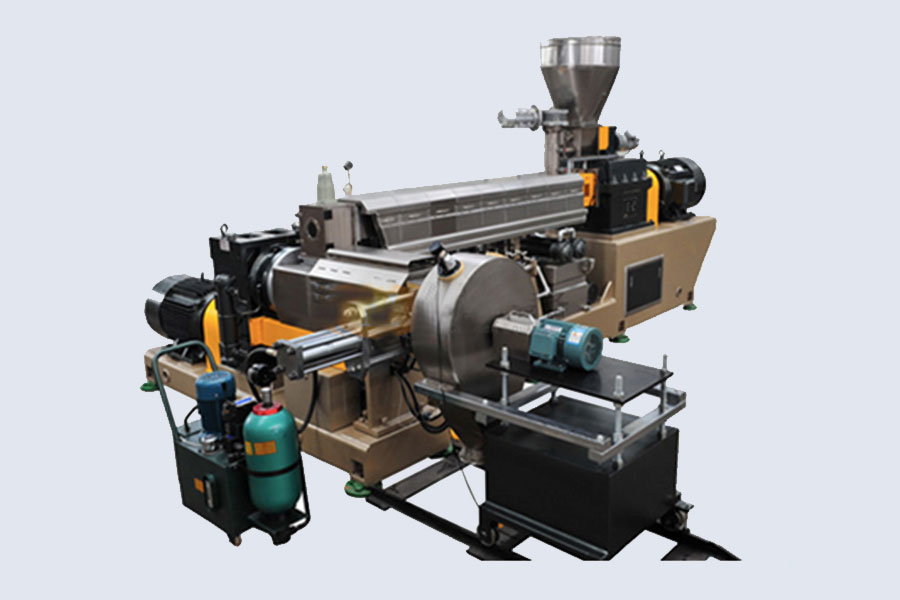
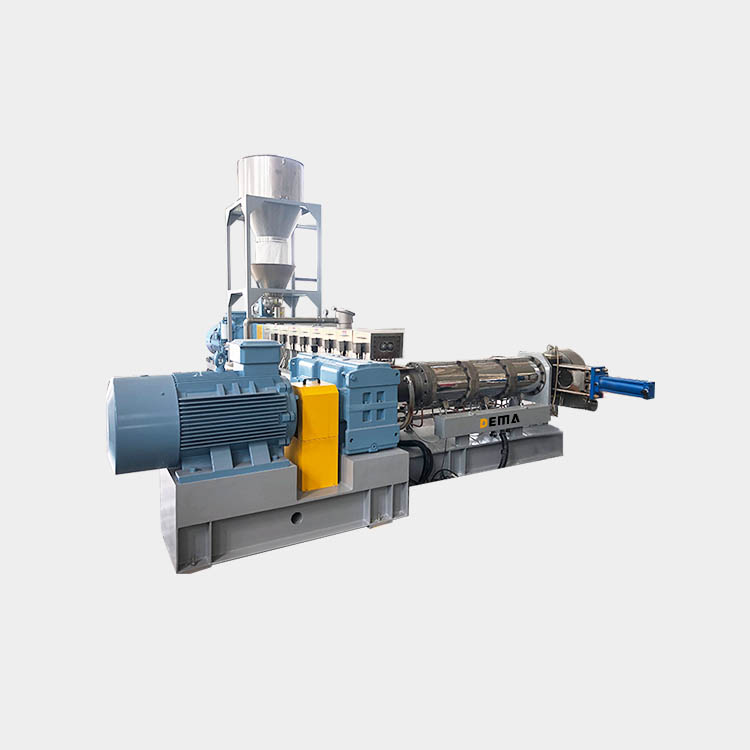
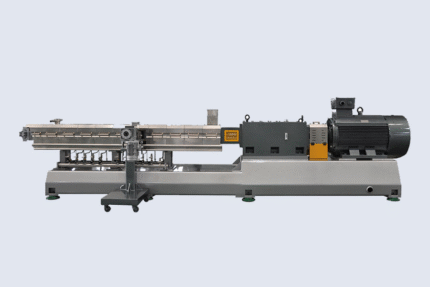
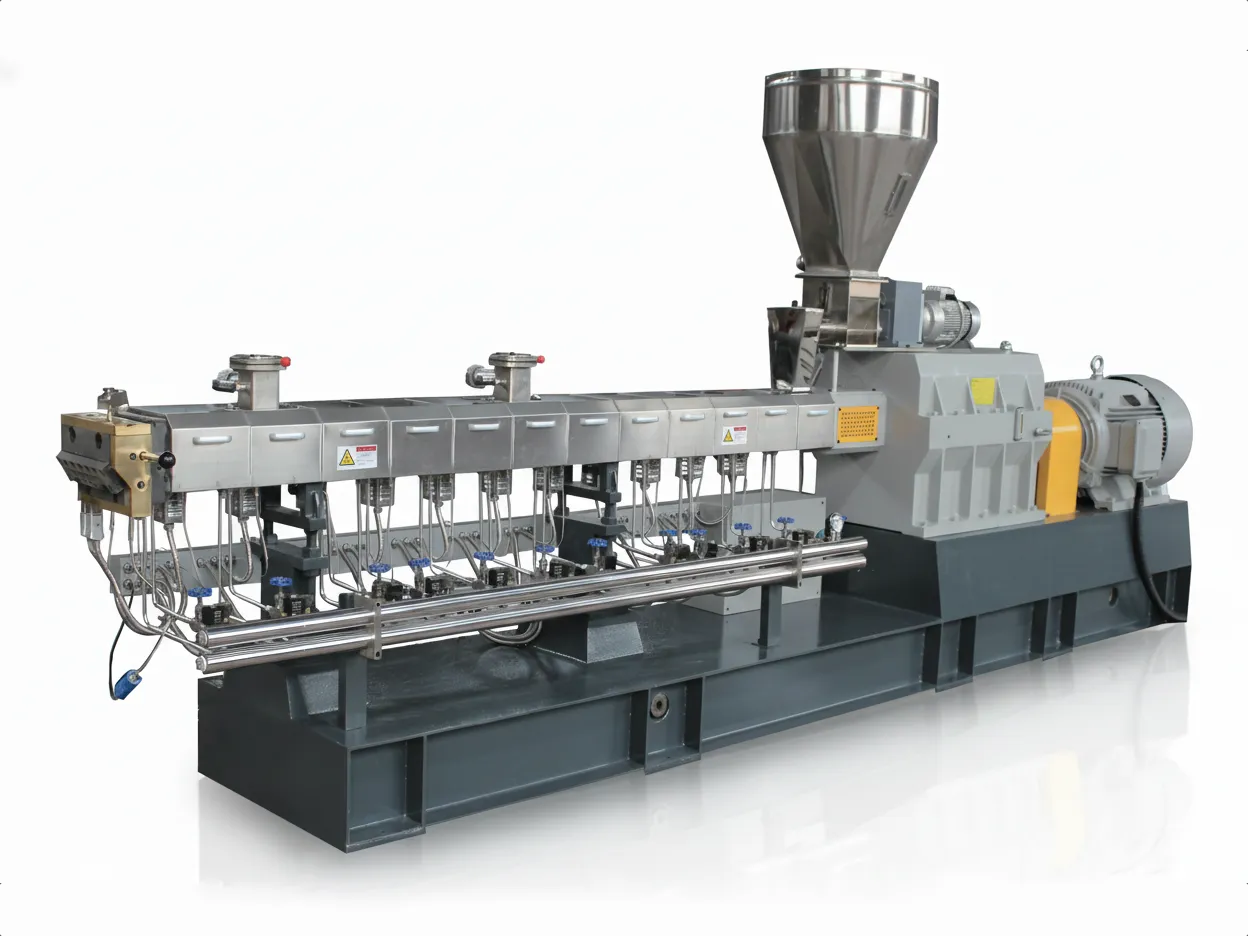
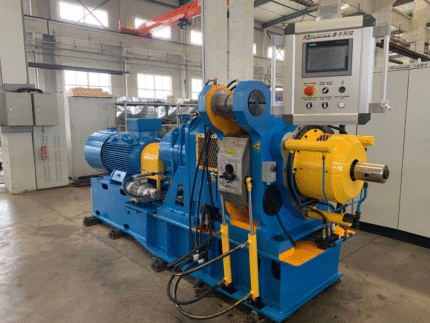
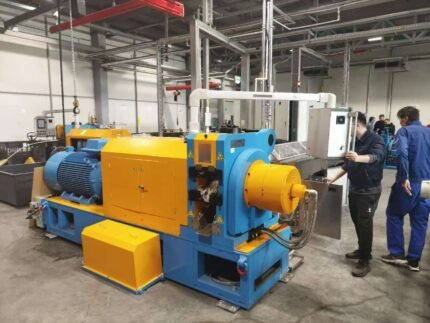
In today’s high-performance polymer processing industry, manufacturers require versatile and reliable compounding systems that deliver superior dispersion, excellent devolatilization, and gentle handling of heat-sensitive or shear-sensitive materials. The Extrudeuse de compundage à double vis et simple vis en deux étapes (also known as the tandem twin/single screw pelletizing line) meets these demands with an innovative design that pairs a high-speed co-rotating parallel twin-screw extruder (first stage) for intensive mixing and compounding with a low-speed single-screw extruder (second stage) for stable pressure build-up, gentle cooling, and premium pellet quality.
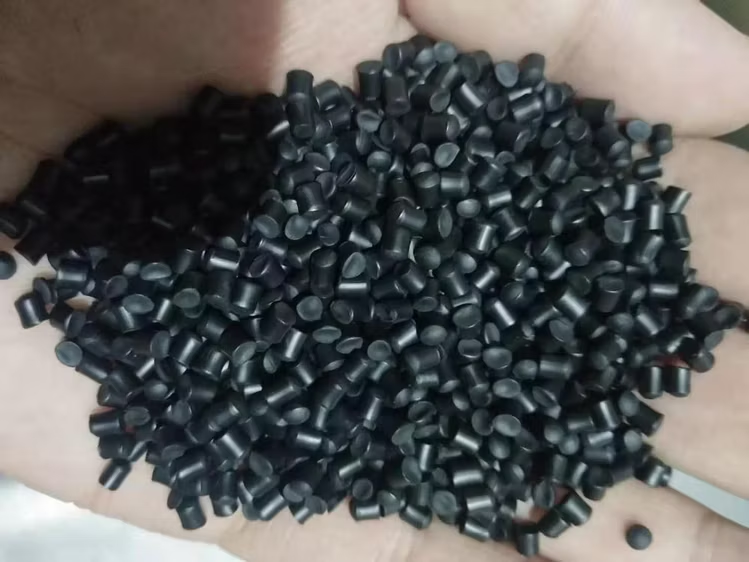
This advanced cable compound pelletizing line is the preferred choice for producing PVC insulation and sheathing compounds, transparent compounds, cross-linked PE (XLPE) compounds, PE shielding compounds, filled and modified plastics, glass fiber and carbon fiber reinforced materials, color and functional masterbatches, plastic alloys, and powder coatings.
Core Technology & Engineering Advantages of This Twin Screw Compounding Extruder
- Modular Building-Block Twin-Screw Section: L/D ratio (36–40), barrel configuration, screw elements, venting locations, and feeding points can be freely optimized according to your exact material and process requirements.
- Gentle Single-Screw Second Stage: Lower screw speed (65–85 rpm) ensures low shear, minimal heat generation, and stable melt pressure — ideal for PVC and other temperature-sensitive compounds.
- Fully Automated Feeding & Dosing: Gravimetric weighing for granules, powders, and liquids guarantees precise recipe control and consistent product quality.
- Système de contrôle avancé: MMI + PLC with recipe storage, real-time parameter adjustment, data logging, and one-touch operation — reducing operator error and improving repeatability.
- Flexible Pelletizing & Packaging Options: Water-ring cutting, eccentric water-mist cutting, underwater pelletizing, plus bin collection, big-bag, or fully automatic weighing & bagging systems.
- High Output with Energy Efficiency: Proven performance across a wide range of capacities while maintaining excellent melt quality and low specific energy consumption.
The two-stage configuration ensures outstanding dispersion, minimal fiber breakage (for GF/CF), excellent devolatilization, and stable pellet quality — critical for meeting stringent cable industry standards.

Technical Specifications (RLB Two-Stage Twin & Single Screw Compounding Extruder)
| Modèle | Twin Screw Dia. (mm) | Twin Screw Speed (rpm) | Twin L/D | Twin Motor Power (kW) | Débit (kg/h) | Single Screw Dia. (mm) | Single Screw Speed (rpm) | Single L/D | Single Motor Power (kW) |
|---|
| RLB-65/150 | 61.5 | 400/500 | 36–40 | 55–75 | 350–500 | 150 | 65/85 | 7–10 | 37–45 |
| RLB-75/180 | 71 | 400/500 | 36–40 | 90–110 | 600–800 | 180 | 65/85 | 7–10 | 45–55 |
| RLB-85/200 | 81 | 400/500 | 36–40 | 200–250 | 1000–1500 | 200 | 65/85 | 7–10 | 75–90 |
| RLB-95/220 | 91 | 400/500 | 36–40 | 400–550 | 1500–3500 | 220 | 65/85 | 7–10 | 90–110 |
| RLB-110/300 | 108 | 400/500 | 36–40 | 710–800 | 3000–4500 | 300 | 65/85 | 7–10 | 185–200 |
Notes: Custom configurations, higher-capacity models, and specialized screw geometries are available upon request. Output depends on formulation, additives, and pelletizing method.
Why the Two-Stage (Tandem) Design Excels for Cable & High-Performance Compounds
The first-stage twin-screw extruder provides intensive shear and mixing for excellent filler dispersion, additive distribution, and devolatilization. The second-stage single-screw extruder then gently builds pressure and cools the melt with minimal additional shear — protecting temperature-sensitive materials and preserving fiber length in reinforced compounds. This separation of functions results in higher quality pellets, lower energy consumption, and greater process stability than conventional single-stage systems.
Applications principales
Cable & Wire Compounds
PVC insulation and sheathing compounds, transparent compounds, cross-linked PE (XLPE), and PE shielding compounds for power, building, and specialty cables.
Filled & Reinforced Plastics
Glass fiber (GF) and carbon fiber (CF) reinforced PP, PA, ABS and other engineering plastics; talc, CaCO₃ and other mineral-filled materials.
Masterbatches
Color masterbatches, functional additives, flame-retardant masterbatches, and high-concentration additive masterbatches.
Plastic Alloys & Reactive Extrusion
Engineering plastic blends, reactive processing, and advanced devolatilization applications.
Powder Coatings & Specialty Compounds
High-quality powder coating resins and other specialty polymer compounds requiring precise control and gentle handling.
Conçu pour la fiabilité, l'efficacité et un partenariat à long terme
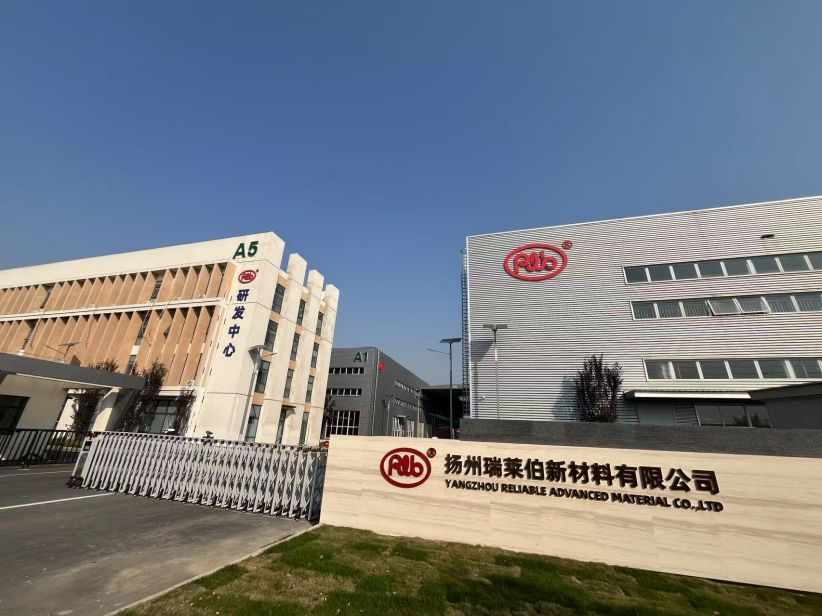
Manufactured by RLB (Jiangsu Reliable Industry Co., Ltd.) — a trusted specialist in cable and polymer processing machinery with decades of expertise — every component of this Two-Stage Twin & Single Screw Compounding Extruder is built for 24/7 continuous operation with minimal maintenance.
Compared with conventional single-screw or twin-screw-only systems, the RLB tandem design offers:
- Superior dispersion and devolatilization performance
- Gentle handling with minimal thermal degradation of heat-sensitive materials
- Higher throughput combined with lower specific energy consumption
- Rapid recipe changeovers and consistently high pellet quality
- Excellent suitability for both standard PVC compounds and premium LSZH/XLPE materials used in high-voltage cables
This cable compound pelletizing line provides the technical reliability, customized configurations, and long-term technical partnership that modern compound manufacturers and cable producers demand.

Built for Global Standards & Turnkey Solutions
RLB delivers complete turnkey compounding solutions including engineering design, equipment supply, installation supervision, commissioning, operator training, and ongoing technical support. Custom configurations are available to match your specific formulations, capacity targets, and factory layout requirements.
Ready to elevate your compounding efficiency and compound quality?
Demande d'informations for a detailed technical quotation, custom configuration options, layout design recommendations, or factory visit arrangement. Our engineering team provides full turnkey solutions, installation support, operator training, and long-term technical partnership tailored to your production goals.
Foire aux questions
What is the main advantage of a Two Stage (Twin & Single) Compounding Extruder versus a conventional twin-screw extruder?
The two-stage design separates intensive mixing (twin-screw) from gentle pressure build-up and cooling (single-screw). This results in better dispersion, reduced thermal degradation, lower fiber breakage in reinforced compounds, and more stable pellet quality — especially important for heat-sensitive cable compounds like PVC and XLPE.
Which materials benefit most from this Two-Stage Twin & Single Screw Compounding Extruder?
Heat- and shear-sensitive materials such as PVC cable compounds, XLPE, LSZH/HFFR compounds, carbon black masterbatches, and glass or carbon fiber reinforced plastics perform exceptionally well due to the gentle second-stage processing.
What pelletizing methods are supported?
The line supports water-ring pelletizing, eccentric water-mist cutting, and underwater pelletizing, with flexible downstream packaging options including automatic weighing and bagging systems.
How does the modular twin-screw design improve flexibility?
The building-block barrel and screw elements allow rapid reconfiguration of L/D ratio, feeding ports, and venting locations to optimize the process for different formulations without major hardware changes.
Can the line be integrated with existing compounding or cable production equipment?
Yes. RLB specializes in turnkey solutions and can configure feeding systems, control interfaces, and downstream equipment for seamless integration with your existing lines.










Avis
Il n’y a pas encore d’avis.