Electrical and industrial fuses provide deterministic, maintenance-free overcurrent protection by melting a calibrated element under fault conditions, limiting let-through energy (I²t) and peak current to safeguard cables, motors, transformers, and power semiconductors. Proper selection according to IEC 60269 and UL 248 series standards ensures interrupting ratings of 50–200 kA or higher, full-range or partial-range characteristics matched to the load, and long-term system reliability in industrial environments operating up to 1000 V AC or 1500 V DC.
Main Types of Industrial & Medium-Voltage Fuses
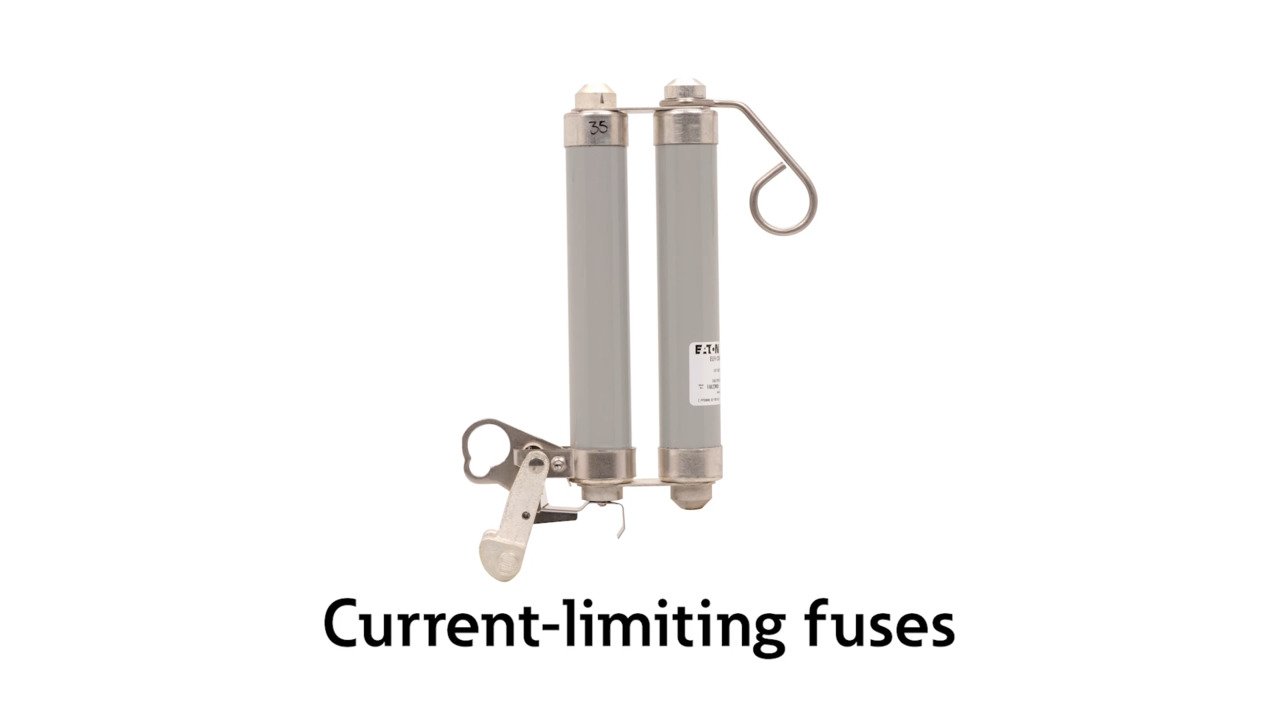
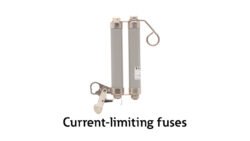
- Current-Limiting Fuses (IEC 60282-1) The preferred choice for indoor and underground cable systems, transformers, and switchgear. These fuses melt at multiple points along the element, creating a series of arcs that rapidly increase resistance and force current zero within the first half-cycle. Available as Back-up (partial-range), General-Purpose, and Full-Range types.
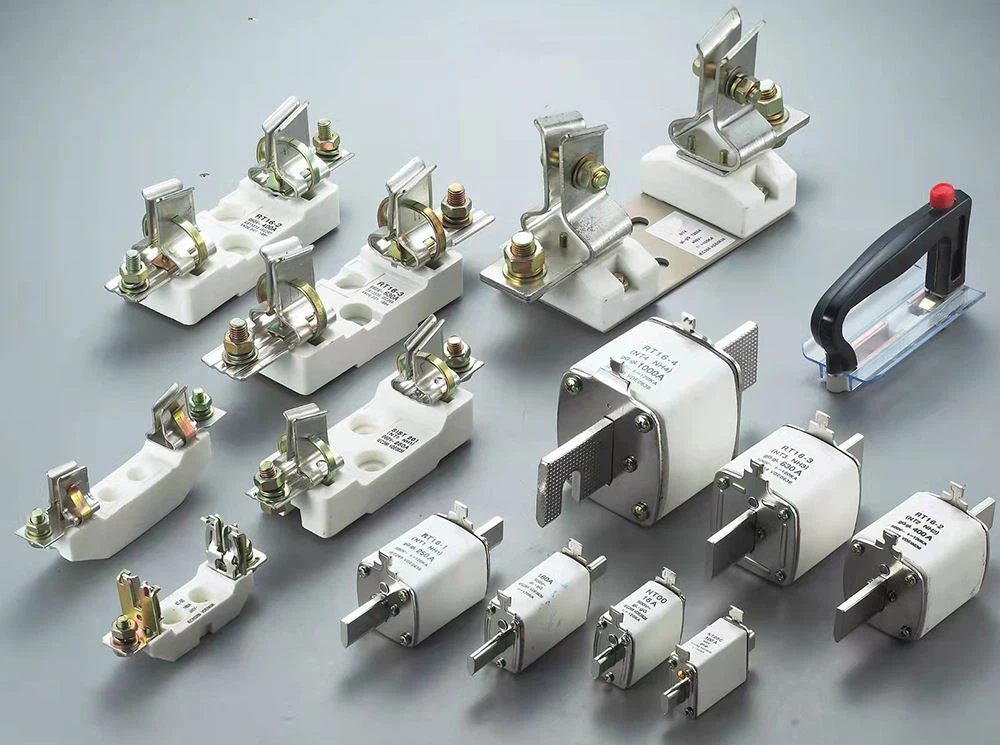
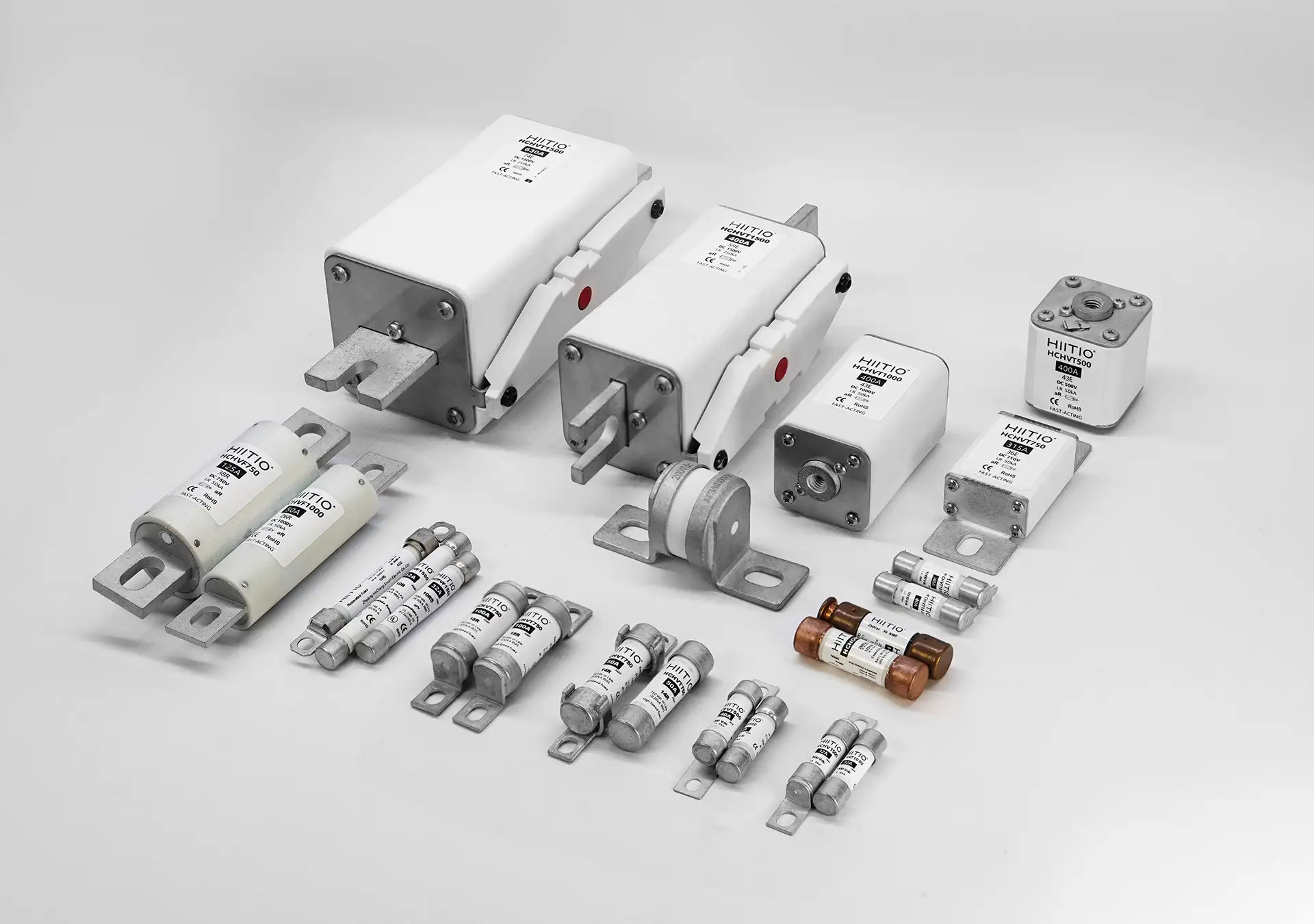
- HRC (High Rupturing Capacity) Cartridge Fuses Ceramic-body DIN/NH-style fuses widely used in low- and medium-voltage industrial panels. Feature high breaking capacity, low power dissipation, and standardized dimensions (NH00–NH3). Ideal for cable protection, motor circuits, and distribution boards.
- Expulsion (Power) Fuses Primarily outdoor devices that use gas generation and pressure to extinguish the arc. Commonly applied on overhead lines and distribution transformers. Lower cost but produce exhaust gases during operation.
- Specialized Variants
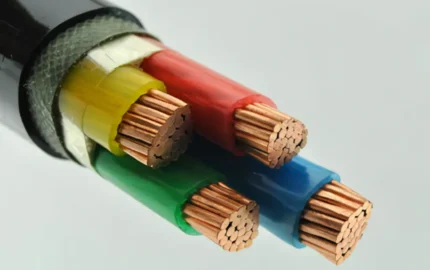
- Cable limiters / cable protectors (crimped or bolted to conductors for service entrance and feeder protection)
- Motor-circuit fuses (IEC 60644)
- Capacitor protection fuses (IEC 60549)
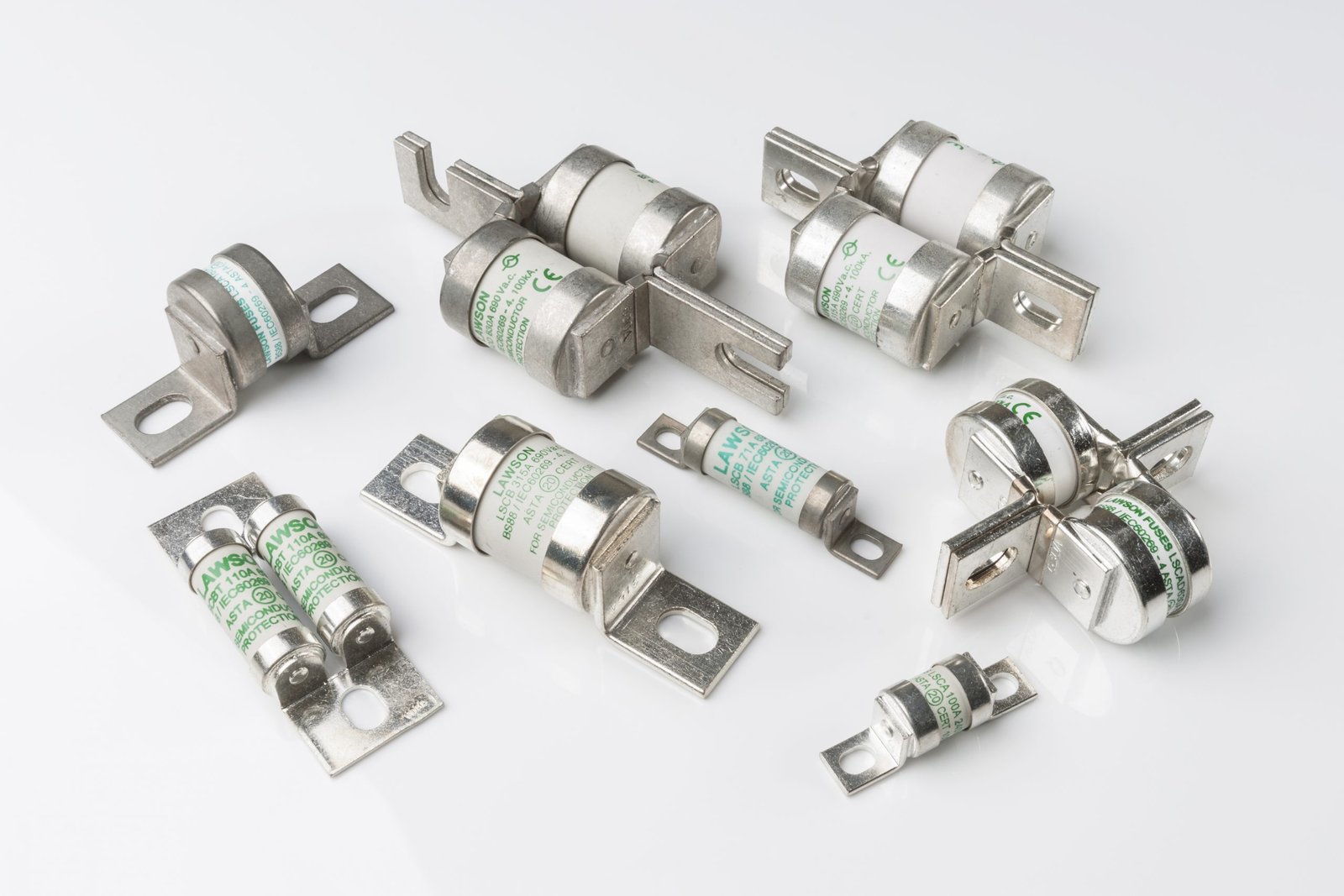
- Semiconductor / ultra-rapid fuses for power electronics
What Are the Primary Types of Electrical and Industrial Fuses and How Do They Differ in Function?
Industrial fuses are classified by construction, operating characteristic, and application duty. The dominant families are NH (knife-blade) cartridge fuses under IEC 60269-2, cylindrical cartridge fuses, and UL Class fuses (J, R/RK1/RK5, CC, L, T, G). High-rupturing-capacity (HRC) designs fill the ceramic body with quartz sand to quench the arc rapidly and achieve interrupting capacities of 80–120 kA at 400–690 V AC. Semiconductor (high-speed) fuses of class aR/gR limit I²t to values low enough to protect IGBTs, diodes, and thyristors.
Key functional distinctions appear in time-current behavior:
- gG/gL (IEC) or dual-element time-delay (UL Class RK1/RK5, J) tolerate motor starting currents (typically 5–8 × In for several seconds) while clearing both overloads and short circuits.
- aM (IEC) provides only short-circuit protection and requires separate overload devices.
- aR/gR (IEC 60269-4) or fast-acting Class T/J variants clear faults in less than 1–10 ms with minimal let-through energy.

How Do IEC 60269 and UL 248 Standards Define Performance Requirements for Industrial Fuses?
IEC 60269-1:2024 establishes general requirements for enclosed current-limiting fuse-links with minimum breaking capacity of 6 kA for AC ≤ 1000 V and DC ≤ 1500 V. Part 2 covers industrial fuse-links (systems A–K, including NH sizes 000–4), Part 4 addresses semiconductor protection, and recent amendments (2024–2025) refine power dissipation and dimension tolerances. UL 248 (aligned with CSA C22.2 No. 248) defines North American classes with mandatory interrupting ratings up to 200–300 kA and rejection features that prevent substitution of lower-rated fuses.
Key Technical Characteristics
| Parameter | Typical Range / Performance |
|---|
| Rated Voltage | LV: up to 1000 V; MV: 3.6–40.5 kV |
| Rated Current | 1 A – 2000 A+ (depending on type) |
| Breaking Capacity | 50 kA – 200 kA |
| Time-Current Curve | Fast-acting, time-delay, or dual-element |
| Standards | IEC 60282-1, UL 248 series, DIN 43625, IEEE C37.xx |
| Construction | Silver/copper elements, quartz sand filler, ceramic or glass body |
| Mounting | DIN rail, bolt-in, cutout, striker-pin versions |
Comparison of Major Fuse Classes (IEC vs UL)
| Characteristic | IEC gG / NH | IEC aM | IEC aR / gR (Semiconductor) | UL Class J | UL Class RK1 / RK5 | UL Class CC |
|---|
| Voltage rating | 400 / 500 / 690 V AC | 500 / 690 V AC | 690–1500 V AC/DC | 600 V AC | 250 / 600 V AC | 600 V AC |
| Current range | 2–1250 A (up to 1600 A) | 6–630 A | 16–1000 A+ | 1–600 A | 0–600 A | 0.1–30 A |
| Typical interrupting rating | 80–120 kA | 50–120 kA | 50–200 kA | 200 kA | 200 kA | 200 kA |
| Protection range | Full-range (overload + SC) | Partial-range (SC only) | Ultra-fast SC | Full-range / current-limiting | Time-delay full-range | Fast or time-delay |
| Primary application | Cable & general industrial | Motor circuits | IGBT, rectifier, drive | Feeders, space-constrained | Motor & industrial panels | Control circuits |
| Key standard reference | IEC 60269-2 | IEC 60269-2 | IEC 60269-4:2024/2025 | UL 248-8 | UL 248-12 | UL 248-4 |

What Technical Parameters Must Be Verified When Selecting an Industrial Fuse?
Selection begins with system voltage (fuse Un ≥ maximum system voltage, typically with 10–20 % margin for DC), continuous current (In selected so that operating current ≤ 0.8–1.0 × In after ambient derating), and prospective short-circuit current (fuse breaking capacity ≥ available fault current). Additional mandatory checks include:
- I²t let-through (pre-arcing and total clearing) must remain below the withstand of the protected device.
- Time-current characteristic must coordinate with upstream and downstream devices for selective protection.
- Power dissipation and temperature rise must stay within fuse-holder limits.
- Ambient temperature derating: typical factors reduce continuous rating by 0.5–1 % per °C above 40 °C.
- Frequency (normally 45–62 Hz) and, for DC, declared time constant (tc).
Typical Technical Parameters for Common NH Industrial Fuse Sizes (gG, 500–690 V)
| NH Size | Rated Current Range | Typical Breaking Capacity | Pre-arcing I²t Example (100 A) | Power Loss at In (approx.) | Body Length (approx.) |
|---|
| 000 / 00 | 2–160 A | 80–120 kA | 1 000–4 000 A²s | 3–8 W | 78.5 mm |
| 1 | 40–250 A | 120 kA | 5 000–15 000 A²s | 8–15 W | 135 mm |
| 2 | 125–400 A | 120 kA | 20 000–80 000 A²s | 15–25 W | 150 mm |
| 3 | 315–630 A | 120 kA | 100 000–400 000 A²s | 25–45 W | 150–210 mm |
| 4 | 630–1250 A | 80–120 kA | >500 000 A²s | 40–70 W | Larger |
Selection Guidance
Correct fuse selection considers:
- System voltage and available fault current
- Cable size and insulation type (PVC, XLPE)
- Load characteristics (continuous, motor starting, cyclic)
- Required discrimination with upstream/downstream devices
- Environmental conditions (indoor/outdoor, temperature, altitude)
Our engineering team provides detailed application support, including time-current curve coordination and I²t calculations, to ensure optimal protection without nuisance operation.
Inquiry Now for detailed technical datasheets, selection tables matched to your cable cross-sections, customized ratings, or complete protection proposals. We deliver reliable quality products backed by experienced technical solutions and long-term partnership support for cable manufacturers, utilities, and industrial end-users.









Reviews
There are no reviews yet.