Uncategorized

What is a Copper Melting Furnace?

What is a Copper Melting Furnace-doingcable

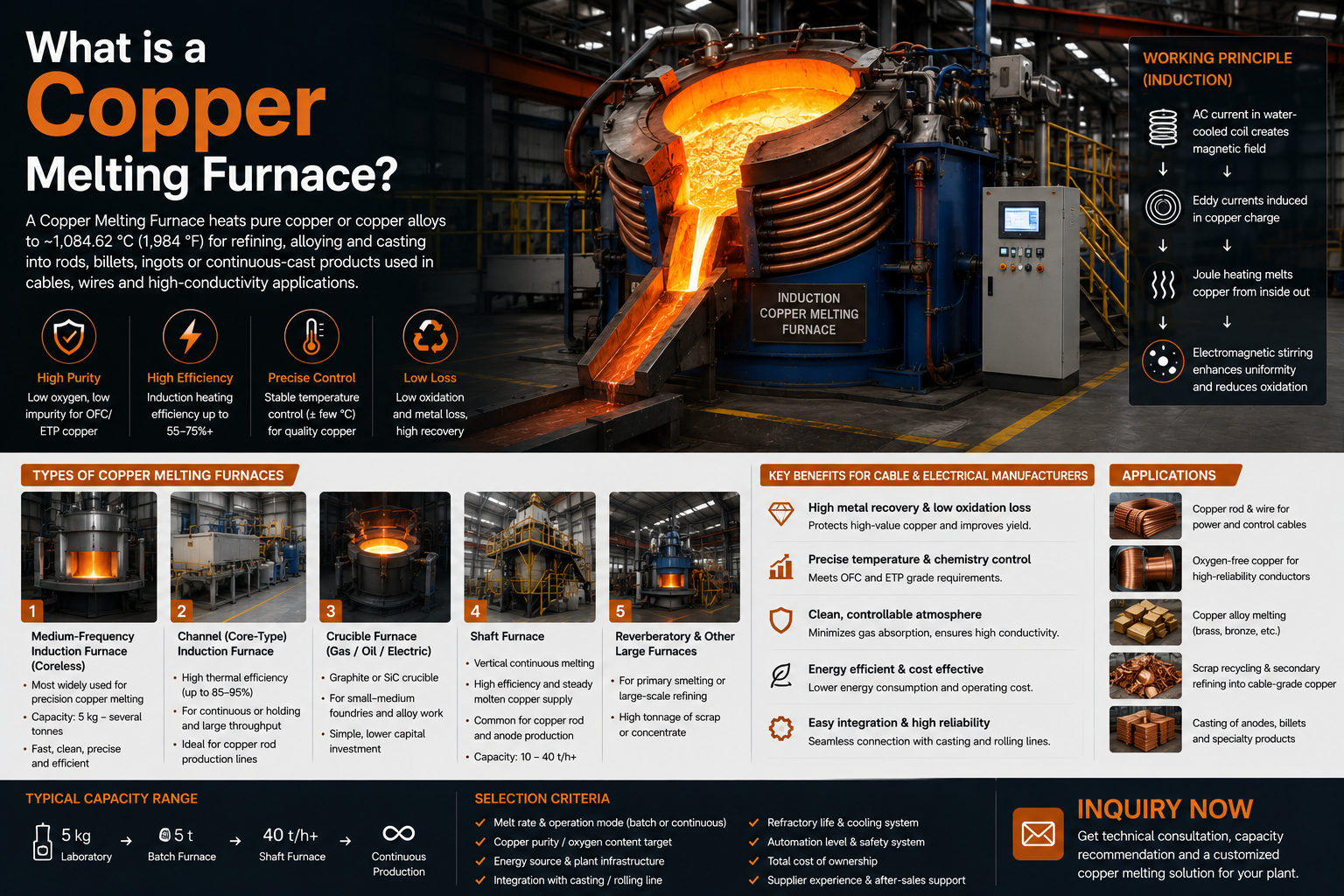
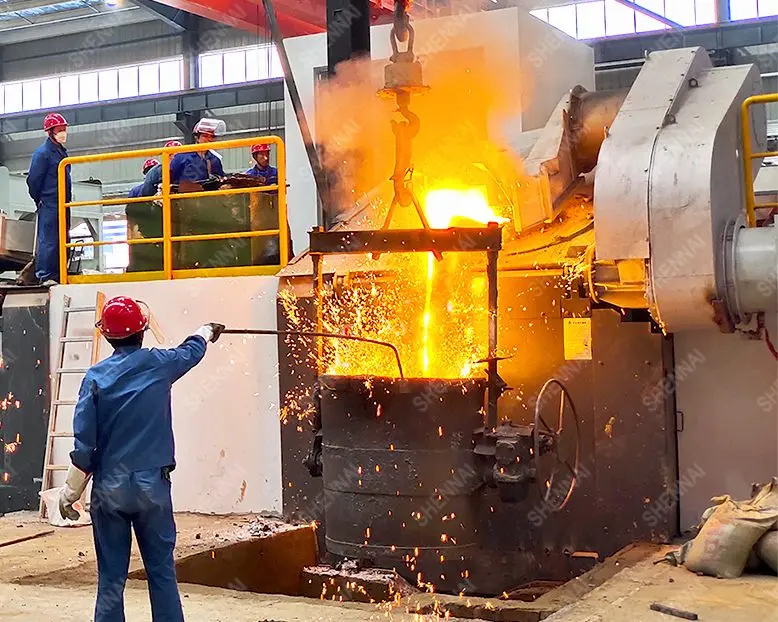
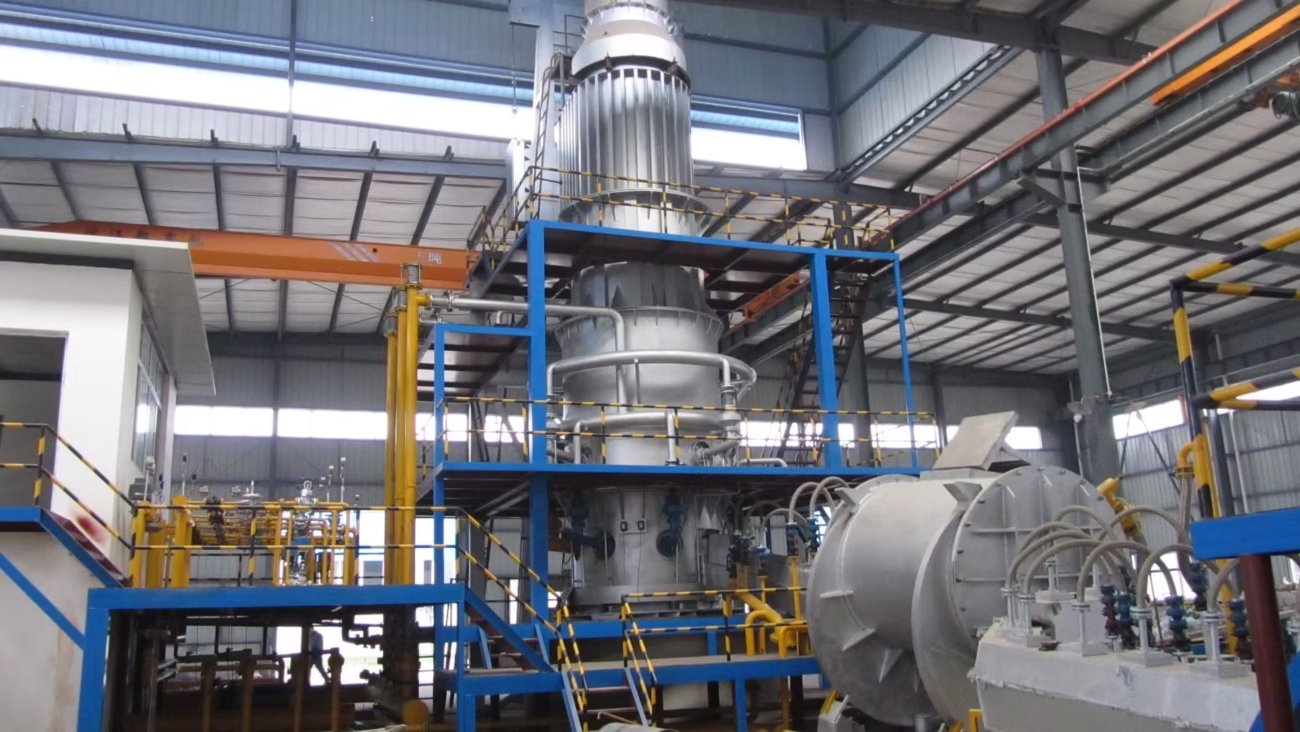
A copper melting furnace is an industrial electrothermal or fuel-fired system engineered to heat solid copper (cathodes, scrap, or alloys) to its melting point of 1083 °C and maintain a controlled molten bath typically at 1130–1250 °C for subsequent casting, continuous rod production, or alloying. In modern cable and conductor manufacturing, these furnaces supply high-purity molten copper (oxygen content often controlled below 10–200 ppm depending on grade) that is continuously cast into wire rod or billets used for power cables, control cables, XLPE insulated conductors, and medium-/high-voltage applications.

Medium-frequency induction furnaces dominate secondary copper and cable-rod production because they deliver direct internal heating via electromagnetic induction, electromagnetic stirring for homogeneity, low metal loss, and precise temperature control (±3–8 °C). Other configurations include shaft furnaces for high-throughput cathode melting feeding continuous casting & rolling (CCR) lines, channel induction furnaces for refining, crucible resistance or gas-fired units for smaller batches, and large-scale smelting furnaces (flash, ISASMELT, bottom-blown) for primary concentrate processing.

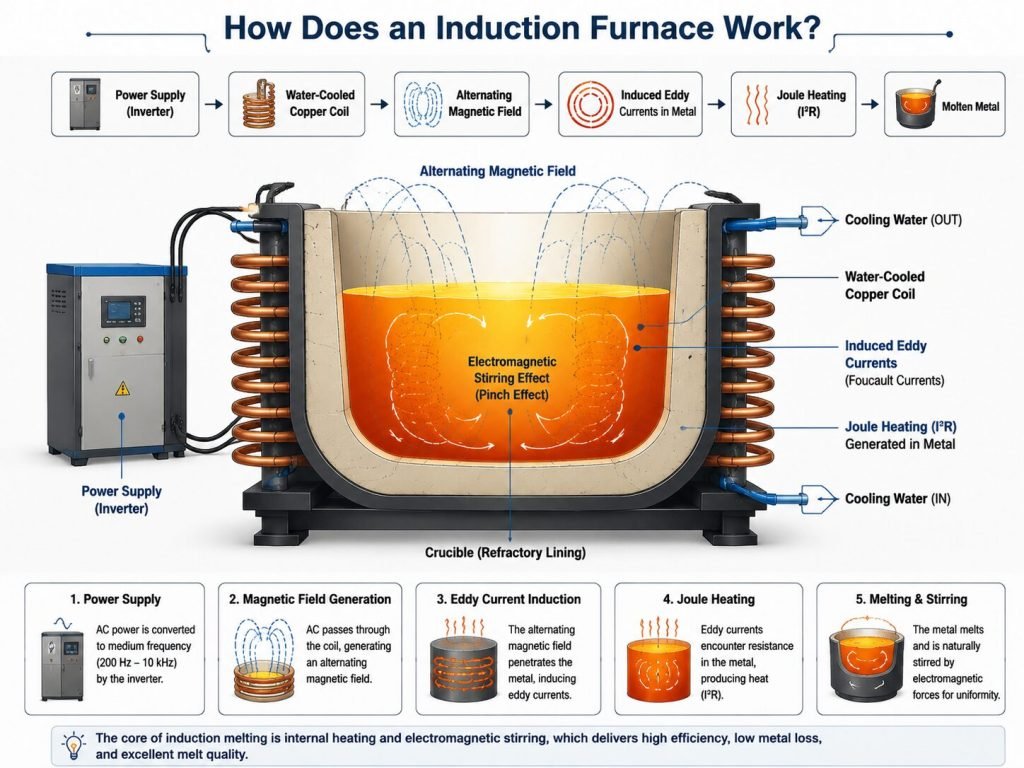
How Does a Medium-Frequency Induction Copper Melting Furnace Work?

An alternating current (typically 150–3000 Hz, optimized for copper’s low resistivity of ~1.7 μΩ·cm) passes through a water-cooled copper induction coil surrounding a refractory-lined crucible. The resulting alternating magnetic field induces eddy currents inside the copper charge. Joule heating (I²R) melts the metal from the inside out. Electromagnetic forces simultaneously stir the melt, promoting temperature uniformity and alloy homogeneity while minimizing oxidation when protective covers (charcoal or inert gas) are applied. IGBT-based power supplies achieve conversion efficiencies ≥95 % and power factors ≥0.95, delivering specific energy consumption of approximately 300–450 kWh per ton of copper under optimized conditions.

What Are the Main Types of Copper Melting Furnaces and Their Technical Comparison?

The selection depends on production volume, purity requirement, energy cost, and integration with downstream continuous casting or cable-rod lines.

Furnace TypeHeating PrincipleTypical CapacityMelting Rate (Cu)Specific EnergyMax Temp / ControlBest Application in Cable IndustryKey Limitations
Medium-frequency coreless inductionElectromagnetic induction + eddy currents50 kg – 5 t50–3500 kg/h300–450 kWh/t1250–1350 °C / ±3–8 °CHigh-purity ETP / OF copper for wire rod & conductorsHigher capital cost; lining life 150–400 heats
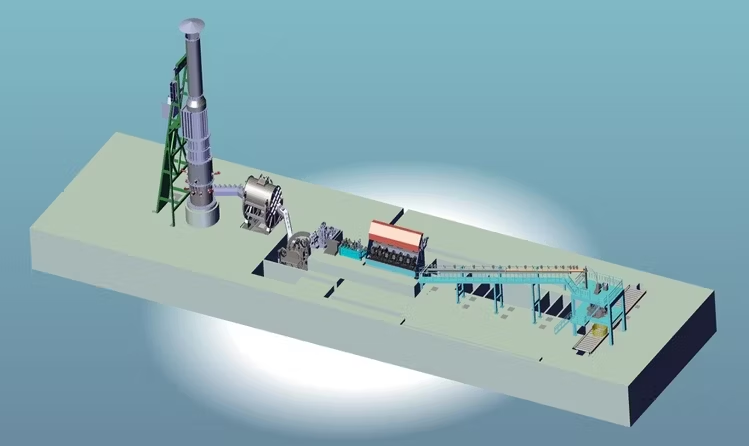
Shaft furnace (gas/oil)Counter-current combustion10–40 t/h14–16 t/h typical30–40 Nm³ NG/t~1200 °CContinuous cathode melting feeding CCR linesRequires fuel supply; higher oxidation risk
Channel inductionInduction via channel inductor0.6–30 t0.4–7 t/hLower for holdingPrecise holdingRefining + holding for continuous castingLess flexible for frequent alloy changes
Crucible (resistance / gas)External resistance or flame15–1000 kgSlower (hours)HigherUp to 1350 °CSmall-batch alloys, brass/bronze for fittingsLower efficiency; higher metal loss
Electric arc / primary smeltingArc or flash/oxygen bathLarge industrialHigh throughputVariesVery highPrimary concentrate to blister copperNot typical for secondary cable copper

Induction units show clear advantages in energy efficiency, metal recovery (>98 %), and oxygen control critical for electrical conductivity (≥100–101 % IACS).

Technical Parameters and Performance Data for Industrial Copper Melting

Typical medium-frequency induction furnace specifications used in cable conductor production:

ParameterSmall / Lab (5–100 kg)Medium (100–1000 kg)Large / Industrial (1–5 t)
Rated Power15–75 kW75–750 kW750–3500 kW
Operating Frequency2000–8000 Hz500–2500 Hz150–1000 Hz
Melting Rate (pure Cu)10–50 kg/h50–350 kg/h350–3500 kg/h
Specific Energy Consumption420–520 kWh/t400–480 kWh/t380–430 kWh/t
Temperature Accuracy±8 °C±5 °C±3 °C
Lining Life80–200 heats150–350 heats150–400 heats
Power Factor≥0.93≥0.95≥0.95–0.96
Electrical Efficiency90–93 %93–95 %94–97 %

Melting point of pure copper is 1083 °C; pouring temperature for continuous casting is normally held at 1130–1200 °C. Oxygen-free copper (Cu-OF / Cu-OFE) production requires sealed or inert atmospheres and high-purity magnesia or alumina-magnesia linings.

Selection Logic and Application Guidelines for Cable Manufacturers

For power-cable and control-cable conductor production, prioritize:

  • Medium-frequency induction or shaft furnaces feeding continuous casting & rolling (CCR) or upward continuous casting lines.
  • Capability to process electrolytic tough pitch (Cu-ETP / C11000) and oxygen-free grades while maintaining conductivity.
  • Integration with online oxygen control, charcoal cover or inert gas blanketing, and automatic tilting/pouring systems.
  • Capacity matched to downstream rod output (typically 5–40 t/h for modern CCR lines).
  • Energy monitoring and refractory life tracking to minimize cost per ton of finished conductor.

Failure modes to avoid include excessive oxidation (raising oxygen above 200–400 ppm and lowering conductivity), refractory contamination, incomplete stirring leading to segregation, and thermal shock that shortens lining life. Proper charge preparation (clean cathodes or sorted scrap ≥92 % Cu), controlled atmosphere, and regular lining inspection prevent these issues.

Standards, Energy Trends and Industry Context (2024–2026)

Copper melting equipment for electrical applications must support grades meeting IEC, ASTM B49 / B224, and GB/T standards for conductivity and oxygen content. Primary smelting energy and carbon limits continue to tighten (Chinese national standards set progressive kWhce/t and CO₂/t thresholds). Electrification via induction and oxy-fuel upgrades of existing furnaces reduce specific energy and emissions while supporting the rising demand for copper driven by power grids, renewables, and data-center cabling.

Key Practical Notes and Reliability Considerations

Reliable long-term operation depends on water-cooled coil integrity, closed-loop cooling with flow interlocks, accurate power-frequency tracking (especially critical for high-conductivity copper), and high-purity refractories resistant to copper slag corrosion up to 1450 °C. Modern IGBT systems with PLC + HMI provide data logging for process traceability—essential for cable manufacturers requiring consistent conductor quality over multi-year supply contracts.

Summary of Core Technical Points Copper melting furnaces convert solid copper into controlled molten metal for high-conductivity conductors used in power and control cables. Medium-frequency induction technology currently offers the optimal balance of energy efficiency (300–450 kWh/t), temperature precision, metal recovery, and melt quality for secondary and cable-rod production. Shaft furnaces remain preferred for high-volume continuous cathode melting. Correct furnace selection, atmosphere control, and refractory management directly determine the electrical performance and long-term reliability of the finished cable products.

For engineered copper melting solutions matched to your cable conductor production volume, purity targets, and continuous casting integration requirements,

Inquiry Now.

Leave a Reply

Your email address will not be published. Required fields are marked *