Product Knowledge Base, Technical Guides & Knowledge

What Is Annealed Tinned Copper Wire?

What Is Annealed Tinned Copper Wire

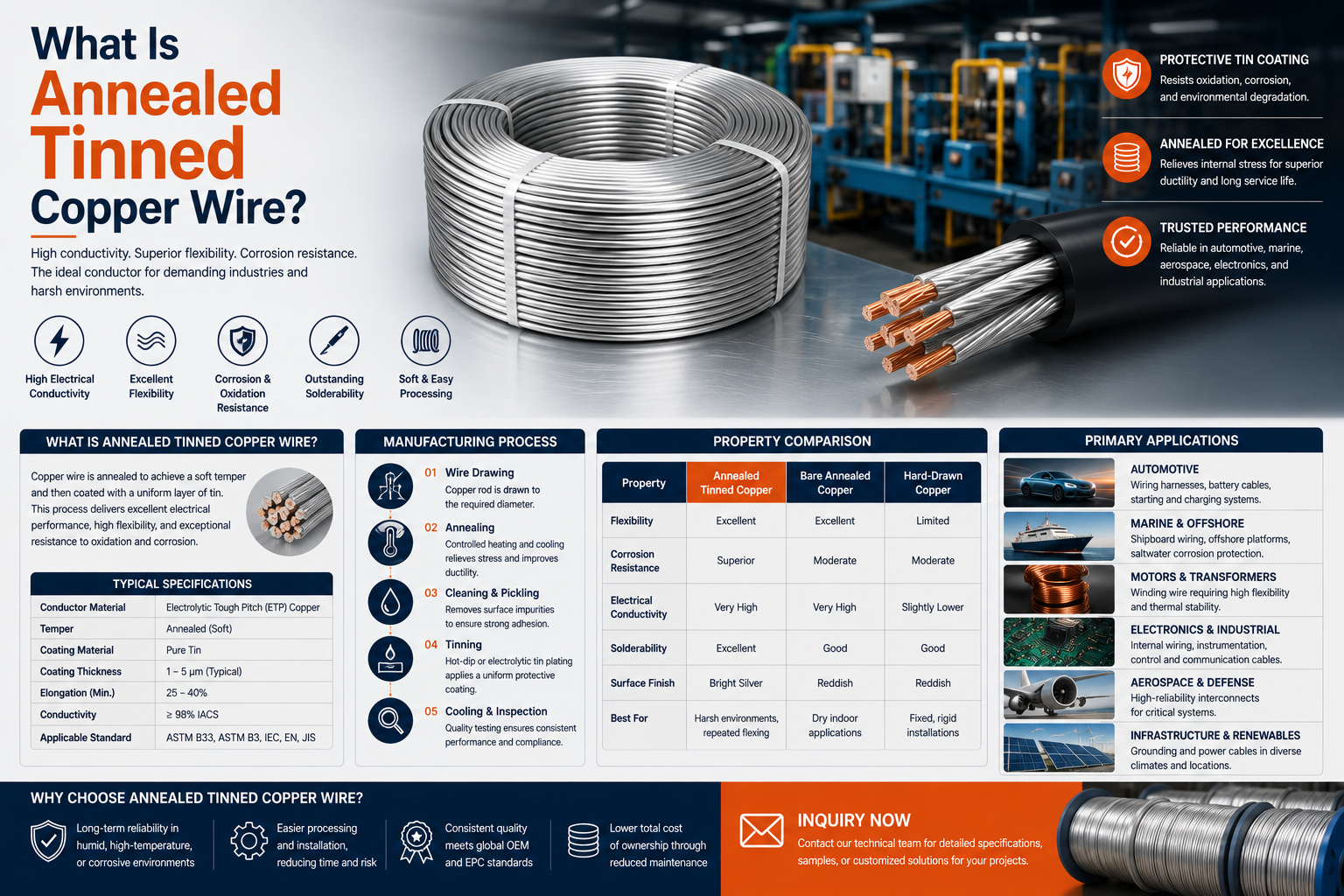
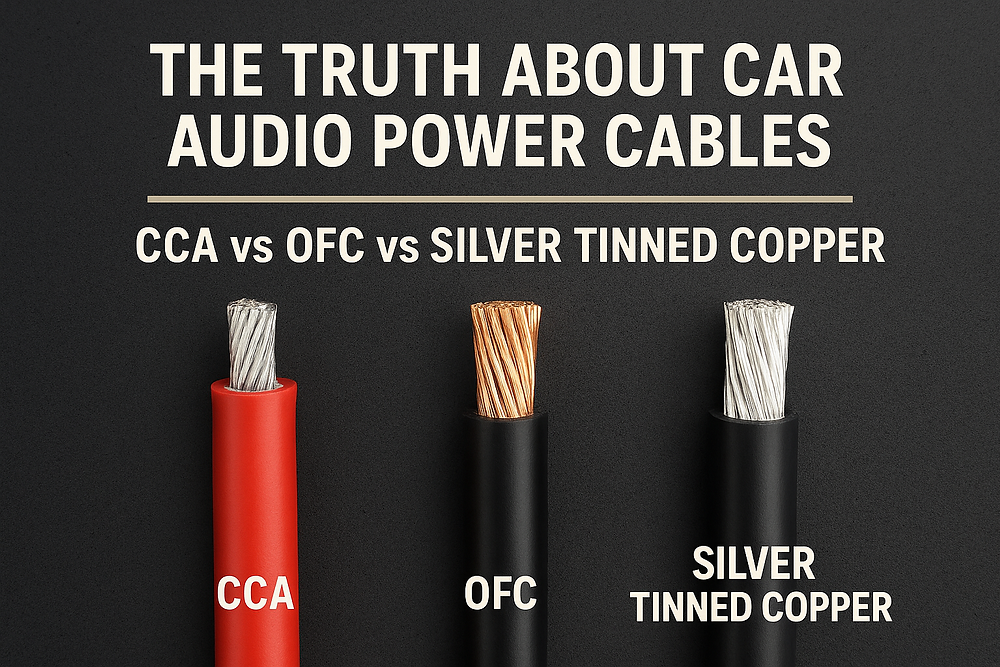
In modern cable manufacturing, conductor selection directly impacts product reliability, installation efficiency, service life, and total cost of ownership. Annealed tinned copper wire has emerged as a preferred material for applications demanding both mechanical flexibility and long-term environmental durability.

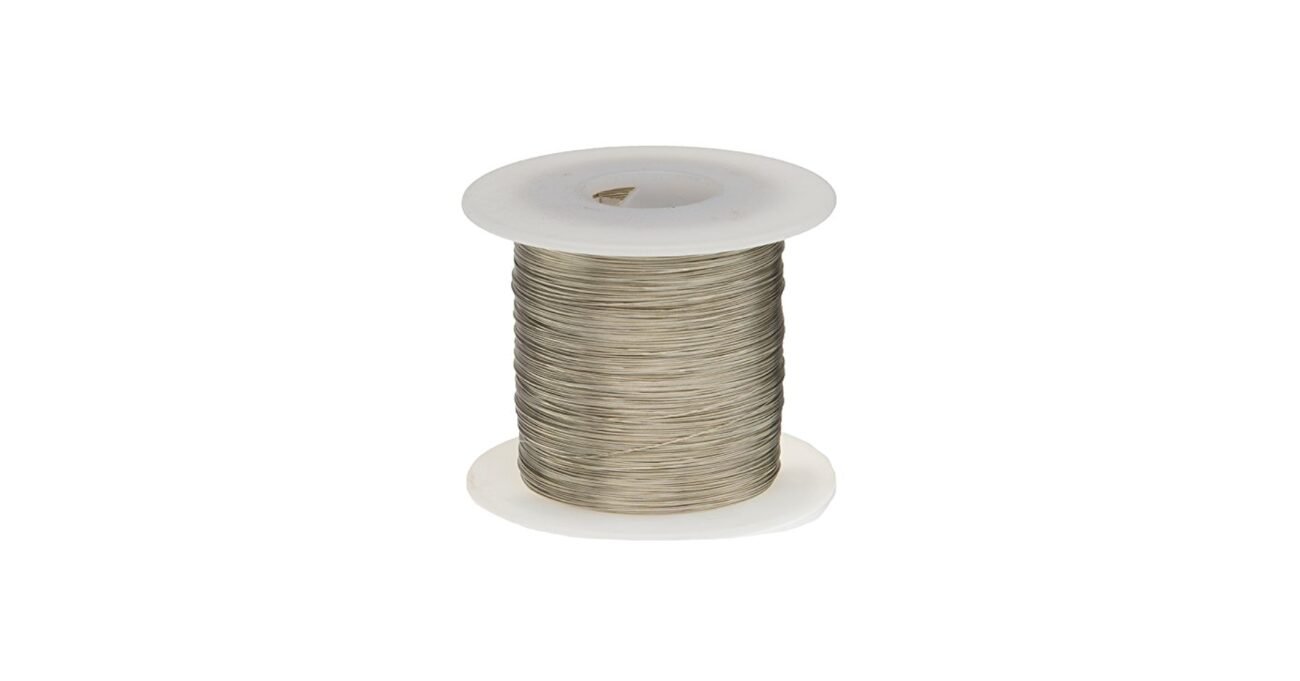
This wire starts as high-purity electrolytic copper, is drawn to precise diameters, annealed to achieve a soft temper, and then coated with a uniform layer of pure tin. The result is a conductor that delivers excellent electrical performance while resisting oxidation, corrosion, and degradation in challenging conditions — from humid coastal installations and high-temperature engine compartments to vibration-prone automotive harnesses and precision electronics.

What is Annealing and Why Does It Matter for Copper Wire?

Annealing is a controlled heat-treatment process performed after wire drawing. The copper is heated to approximately 400–550°C (depending on equipment and desired properties) in a protective atmosphere (often inert gas or vacuum for bright annealing) and then cooled at a precise rate.

Key metallurgical effects:

  • Relieves internal stresses created during cold drawing
  • Recrystallizes the grain structure, restoring ductility and malleability
  • Slightly improves electrical conductivity by reducing lattice defects
  • Produces a soft temper wire that can be bent, stranded, or wound repeatedly without cracking or work-hardening

Typical mechanical properties of annealed copper wire (soft temper):

  • Elongation: 25–40% or higher
  • Reduced tensile strength compared with hard-drawn wire (easier handling)
  • Excellent fatigue resistance under repeated flexing

Without annealing, hard-drawn copper becomes brittle and difficult to process into complex cable constructions or install in tight conduits and harnesses.

What is Tinning and How Does the Protective Coating Enhance Performance?

Tinning applies a thin, uniform layer of high-purity tin (typically 1–5 μm or per customer/specification requirements) over the copper surface via hot-dip or electrolytic plating processes.

Primary benefits of the tin coating:

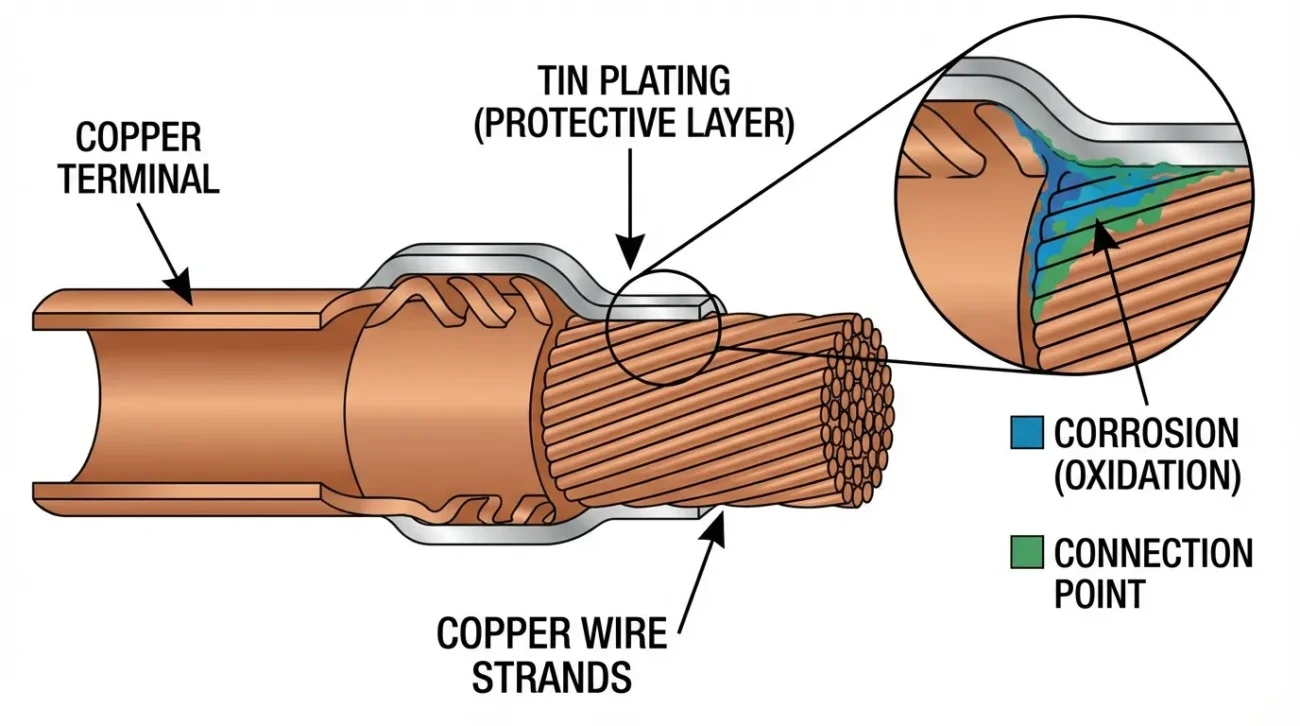
  • Superior resistance to oxidation and atmospheric corrosion (critical in humid, marine, or chemically aggressive environments)
  • Prevents formation of copper oxides that increase contact resistance over time
  • Excellent solderability — tin readily accepts solder without aggressive fluxes
  • Improved performance at elevated temperatures and in high-humidity or salt-spray conditions
  • Maintains bright, clean appearance and consistent surface quality

The tin layer does not meaningfully reduce bulk electrical conductivity while dramatically extending service life in real-world conditions.

The Synergistic Advantage of Annealed Tinned Copper Wire

When annealing and tinning are combined, the wire delivers an optimal balance:

  • Mechanical: Soft, highly flexible, easy to strand, braid, or wind into tight coils
  • Electrical: High conductivity with refined grain structure
  • Environmental: Long-term protection against oxidation and corrosion
  • Processing: Excellent for high-speed stranding, braiding, and automated harness assembly
  • Reliability: Reduced risk of field failures in demanding installations

This combination makes annealed tinned copper wire the material of choice where both installation ease and decades of maintenance-free performance are required.

Manufacturing Process of Annealed Tinned Copper Wire

Modern production typically follows a continuous or semi-continuous flow for consistency and efficiency:

  1. Wire Drawing — High-purity copper rod is drawn through successive dies to the target diameter (common range: 0.05 mm fine wire to 3+ mm for power applications).
  2. Annealing — Continuous annealing furnaces with precise temperature control and protective atmosphere produce uniform softness and bright surface.
  3. Cleaning / Pickling — Surface preparation removes oxides and contaminants.
  4. Tinning — Hot-dip or electrolytic tin plating ensures uniform, adherent coating without pinholes or excessive thickness variation.
  5. Cooling, Drying & Quality Inspection — Controlled cooling, adhesion testing, dimensional checks, conductivity measurement, and visual/microscopic inspection.
  6. Take-up — Precision spooling or coiling for downstream stranding or insulation processes.

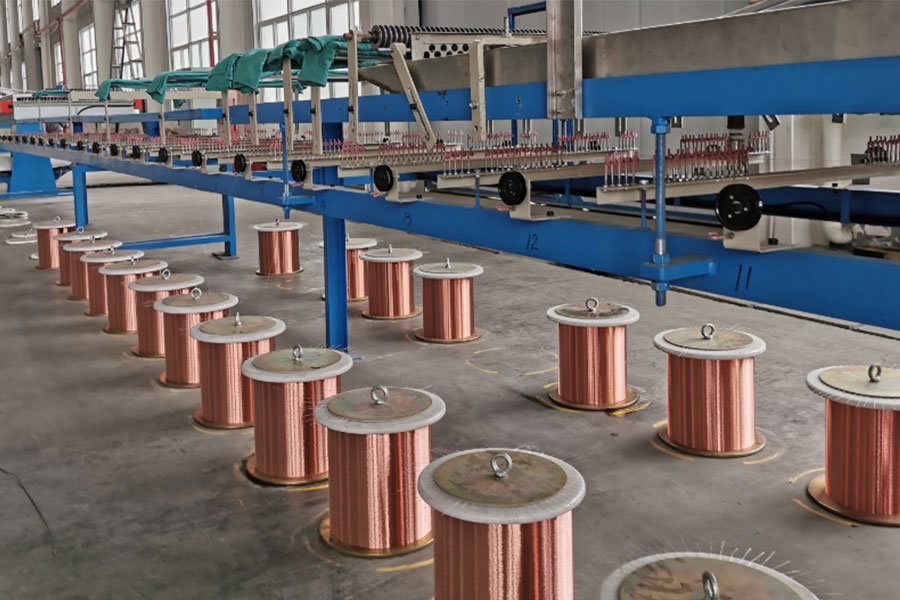
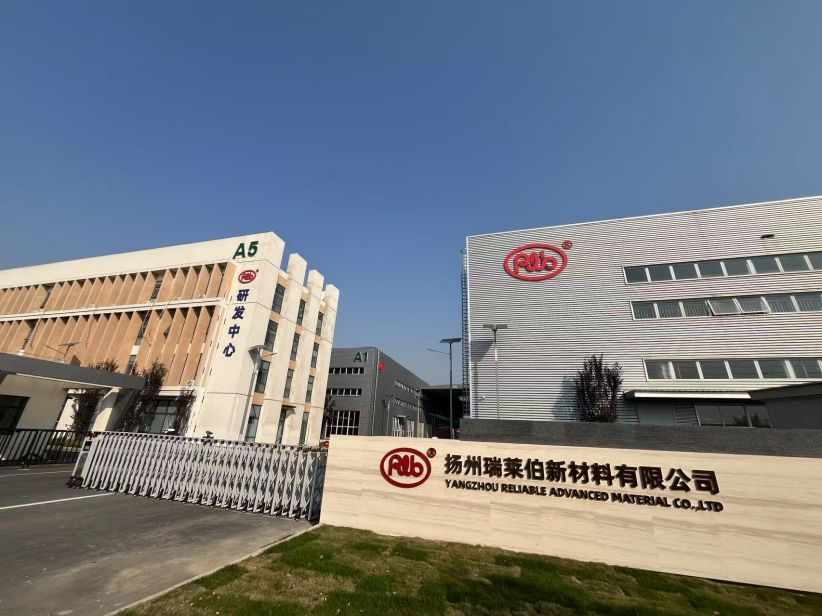
Advanced production lines (such as the continuous annealing-tinning systems used in high-end cable factories) incorporate real-time process control, automatic tension regulation, and in-line quality monitoring to deliver wire that consistently meets or exceeds international standards.

Key Technical Properties & Typical Specifications

  • Conductor Material: Electrolytic Tough Pitch (ETP) or Oxygen-Free Copper (OFC), high purity
  • Temper: Soft / Annealed (fully annealed)
  • Coating: Pure tin, uniform coverage
  • Electrical Conductivity: ≥ 58–100% IACS (International Annealed Copper Standard), depending on exact composition and temper
  • Elongation: Typically ≥ 25–40%
  • Tensile Strength: Lower than hard-drawn (facilitates processing)
  • Coating Thickness / Weight: Per ASTM B33 or customer specification (commonly measured in g/kg or μm)
  • Surface: Bright, smooth, free from defects
  • Solderability: Excellent

Comparison: Annealed Tinned Copper Wire vs Alternatives

PropertyAnnealed Tinned Copper WireBare Annealed Copper WireHard-Drawn (Non-Annealed) Copper Wire
Temper / HardnessSoft, highly ductileSoft, highly ductileHard, higher strength
Flexibility & BendabilityExcellentExcellentLimited, prone to cracking
Electrical ConductivityVery high (refined grain)Very highSlightly lower
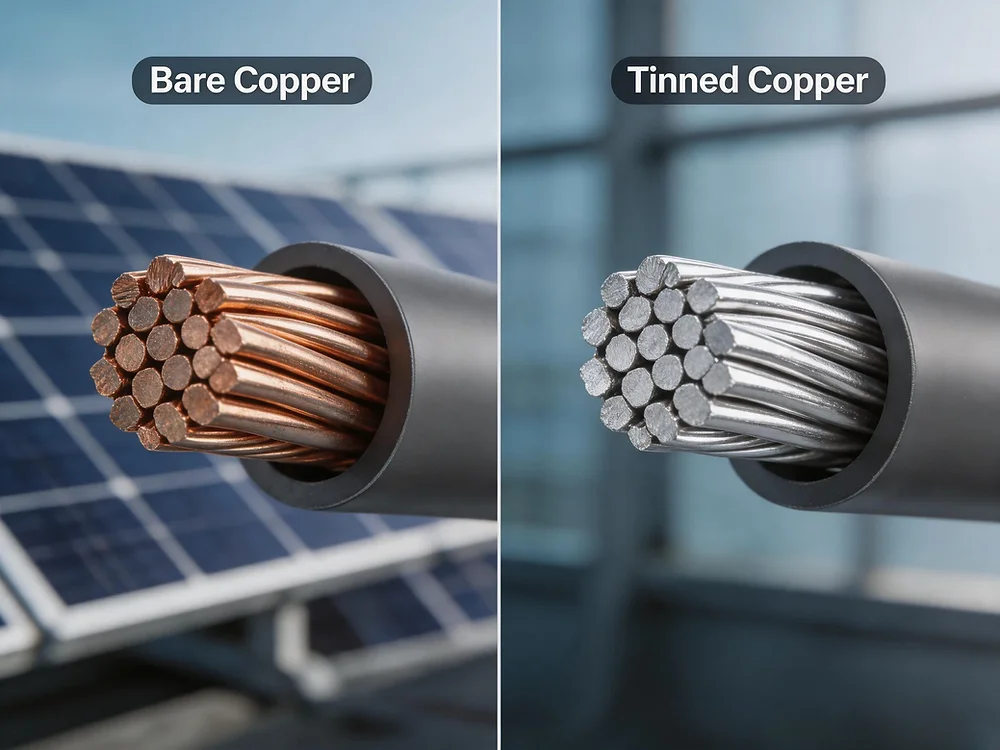
Corrosion / Oxidation ResistanceSuperior (tin coating)ModerateModerate
SolderabilityExcellentGoodGood
Typical ApplicationsAutomotive, marine, electronics, motors, harsh environmentsDry indoor wiring, groundingOverhead lines, fixed rigid installations
Long-term Reliability in Humid/High-TempExcellentGood (but oxidizes over time)Good (but brittle)
Processing Ease (Stranding/Winding)ExcellentExcellentMore difficult

Relevant International Standards

  • ASTM B33 — Standard Specification for Tinned Soft or Annealed Copper Wire for Electrical Purposes (primary reference)
  • ASTM B3 — Soft or Annealed Copper Wire
  • ASTM B8 — Concentric-Lay-Stranded Copper Conductors
  • IEC / EN / JIS equivalents for global projects
  • Additional requirements often include coating adhesion, resistivity, and dimensional tolerances

Compliance with these standards ensures interoperability, safety, and acceptance in international infrastructure, energy, and transportation projects.

Primary Applications

Automotive & Transportation Battery cables, starting/charging circuits, wiring harnesses — withstands vibration, heat, and moisture while maintaining flexibility during assembly.

Marine & Offshore Shipboard cables, offshore platform wiring — superior resistance to saltwater corrosion and humidity.

Aerospace & Defense High-reliability interconnects where weight, flexibility, and long-term performance are critical.

Electronics & Industrial Controls Internal wiring, PCB jumpers, precision coils, instrumentation cables — excellent solderability and stable contact resistance.

Motors, Transformers & Generators Winding wire — easy forming into tight coils without damage; maintains performance under thermal cycling.

Telecommunications & Data Centers Grounding and power distribution conductors in controlled or semi-harsh environments.

Renewable Energy & Infrastructure Cables for solar, wind, and grid projects in diverse climates, including coastal and high-temperature regions.

Why Specifiers and Cable Manufacturers Choose Annealed Tinned Copper Wire

  • Reduced field failures and warranty claims through superior long-term corrosion protection
  • Faster, lower-risk installation and harness assembly due to excellent flexibility
  • Consistent quality and processability on high-speed stranding and braiding equipment
  • Compliance with global standards required for EPC, utility, and OEM projects (especially valuable for Middle East infrastructure, NEOM, Aramco, and export markets)
  • Optimized total cost of ownership — longer service life offsets any modest premium versus bare copper

Supporting Your Production: Advanced Wire Processing Equipment

Producing consistent, high-specification annealed tinned copper wire at scale requires precision machinery. Modern continuous annealing-tinning lines deliver uniform softness, bright surfaces, and defect-free tin coatings at high throughput — exactly the capability needed to serve demanding B2B customers worldwide.

Whether you are expanding capacity, upgrading existing lines, or developing new cable products, equipment engineered for precise temperature control, atmosphere management, and uniform plating is essential to achieving repeatable quality that meets ASTM B33 and customer-specific requirements.

Frequently Asked Questions (FAQs)

What does “annealed tinned copper wire” mean?

It refers to copper wire that has been heat-treated (annealed) to achieve a soft, ductile temper and then coated with a thin layer of pure tin for corrosion protection.

Is annealed tinned copper wire more conductive than bare copper?

Bulk conductivity is very similar or slightly higher due to the refined grain structure from annealing. The tin coating primarily protects long-term surface performance rather than altering bulk conductivity significantly.

When should I choose tinned over bare annealed copper wire?

Specify tinned wire for any application exposed to moisture, humidity, salt, chemicals, elevated temperatures, or where long-term solderability and stable contact resistance are required.

What standards govern annealed tinned copper wire?

ASTM B33 is the primary North American standard. Equivalent IEC, EN, and JIS standards apply in other regions. Always confirm specific diameter, coating weight, and mechanical requirements with your supplier.

Can annealed tinned copper wire be used for high-temperature applications?

Yes — the tin coating provides better performance at elevated temperatures compared with bare copper, although the maximum continuous operating temperature is still governed by the insulation material in the finished cable.

Conclusion

Annealed tinned copper wire represents the optimal combination of processing ease, electrical performance, and environmental durability. For cable manufacturers and OEMs serving global markets — particularly infrastructure, automotive, marine, and industrial sectors — it delivers the reliability and consistency that end customers demand.

By partnering with suppliers who understand both material science and precision manufacturing equipment, you can ensure your conductors meet the highest standards of quality and performance.

Ready to optimize your cable products or production capabilities?

For technical specifications, custom diameter/coating requirements, or advanced annealing and tinning line solutions tailored to your manufacturing goals, Inquiry Now.

Leave a Reply

Your email address will not be published. Required fields are marked *