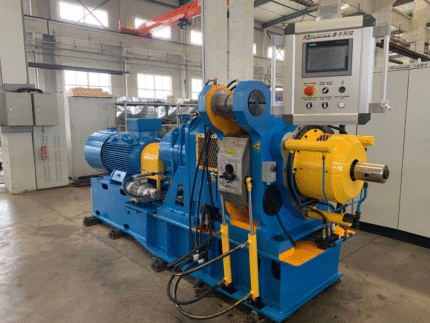
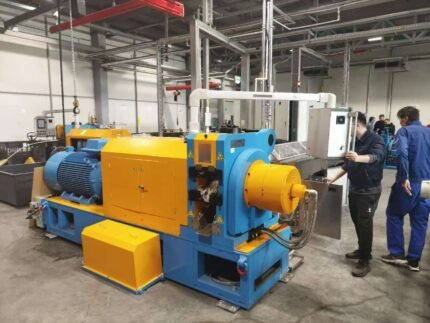
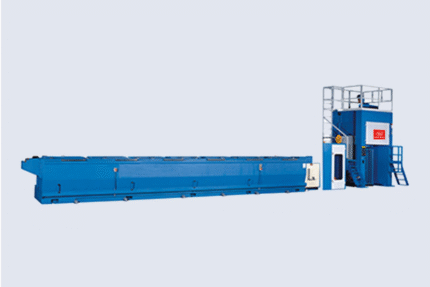
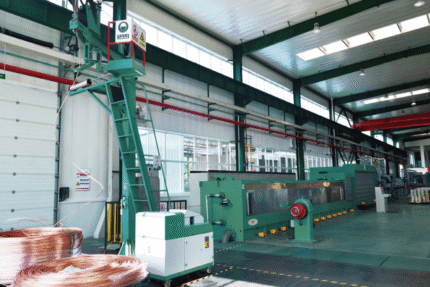
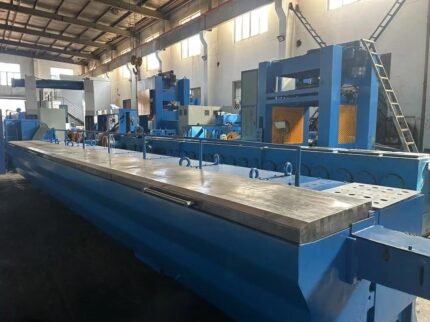
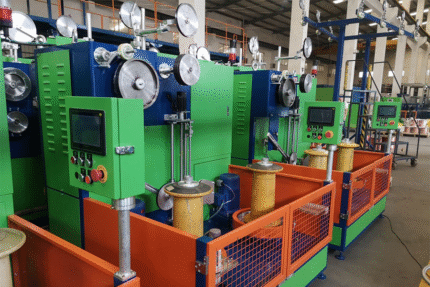
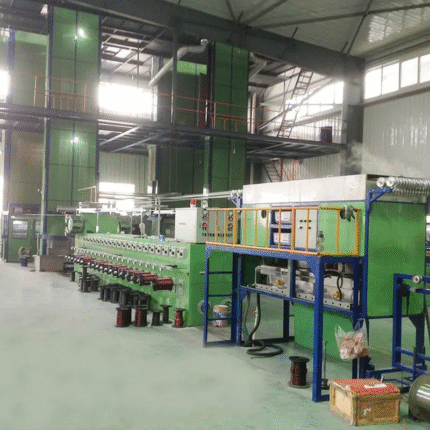
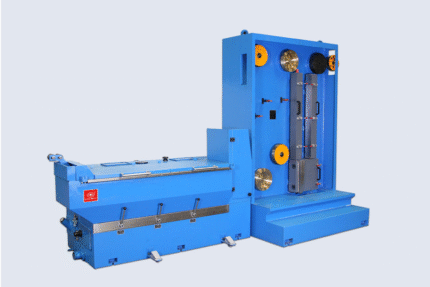
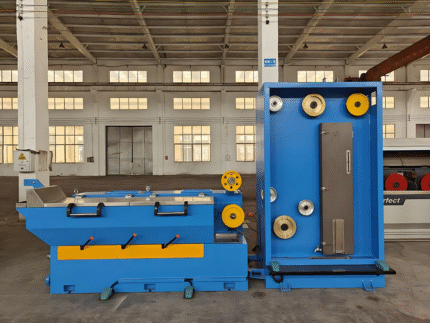
In the production of high-performance fine copper wires for electronics, automotive harnesses, and specialty cables, precise annealing followed by uniform hot-dip tinning is essential for achieving excellent solderability, corrosion resistance, and long-term conductivity. The RLB Copper Wire Annealing and Tinning Machine (Model RLE-40H) is a compact, high-efficiency multi-wire line specifically engineered for softening and tin-coating ultra-fine copper wires ranging from 0.1 mm to 0.4 mm in a single continuous process.
With the capacity to process up to 40 wires simultaneously at speeds reaching 5 m/s, this machine delivers consistent, bright tin coatings while significantly reducing labor and energy costs compared to traditional batch annealing and tinning methods.
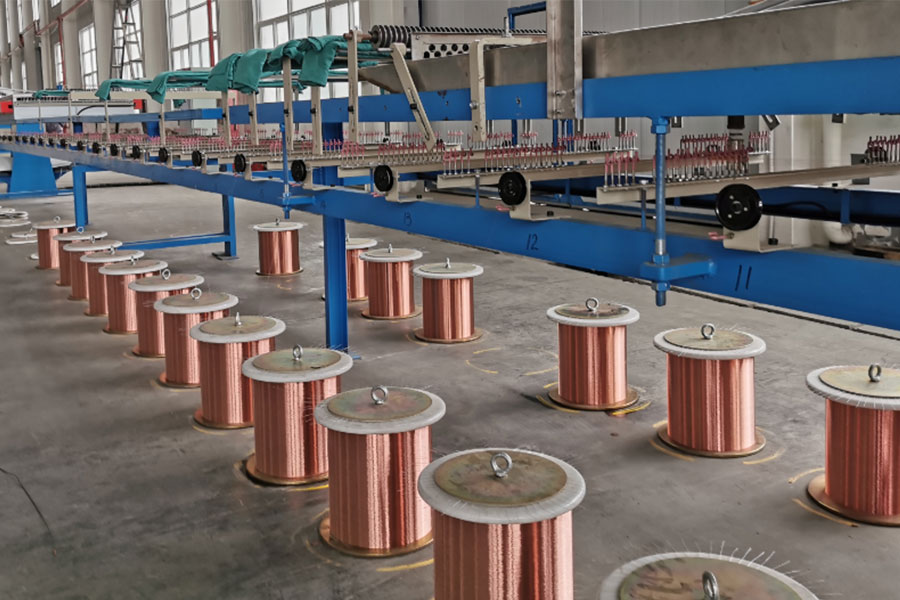
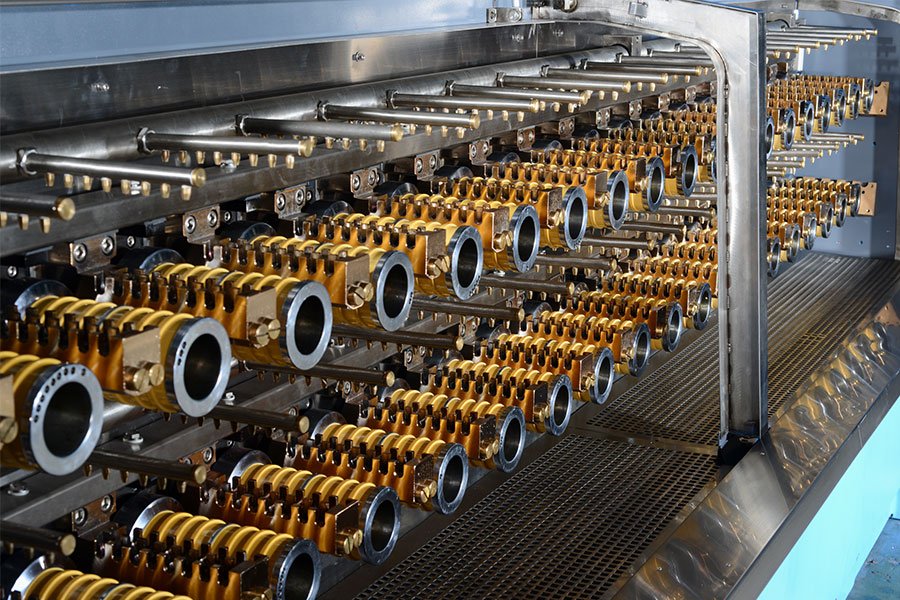
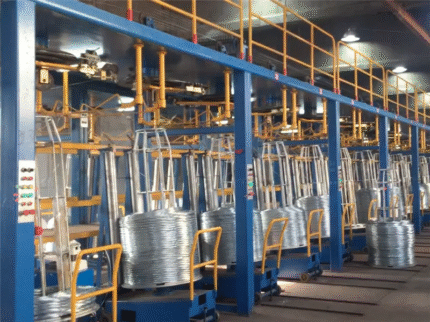
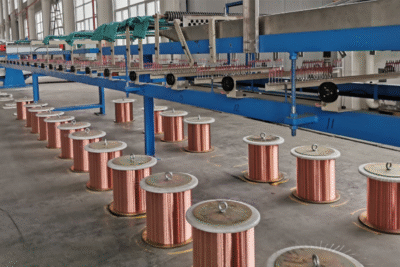
Designed for high-volume production of fine electronic wires, automotive harnesses, and specialty cables, the RLE-40H integrates electrical tubular annealing with a high-capacity molten tin bath (max. 300 kg) in one seamless pass. It replaces traditional batch annealing and separate tinning processes, significantly reducing labor, energy consumption, and material waste while ensuring consistent coating thickness and superior surface quality.
What process sequence and temperature controls ensure uniform annealing and tin coating on copper wire?
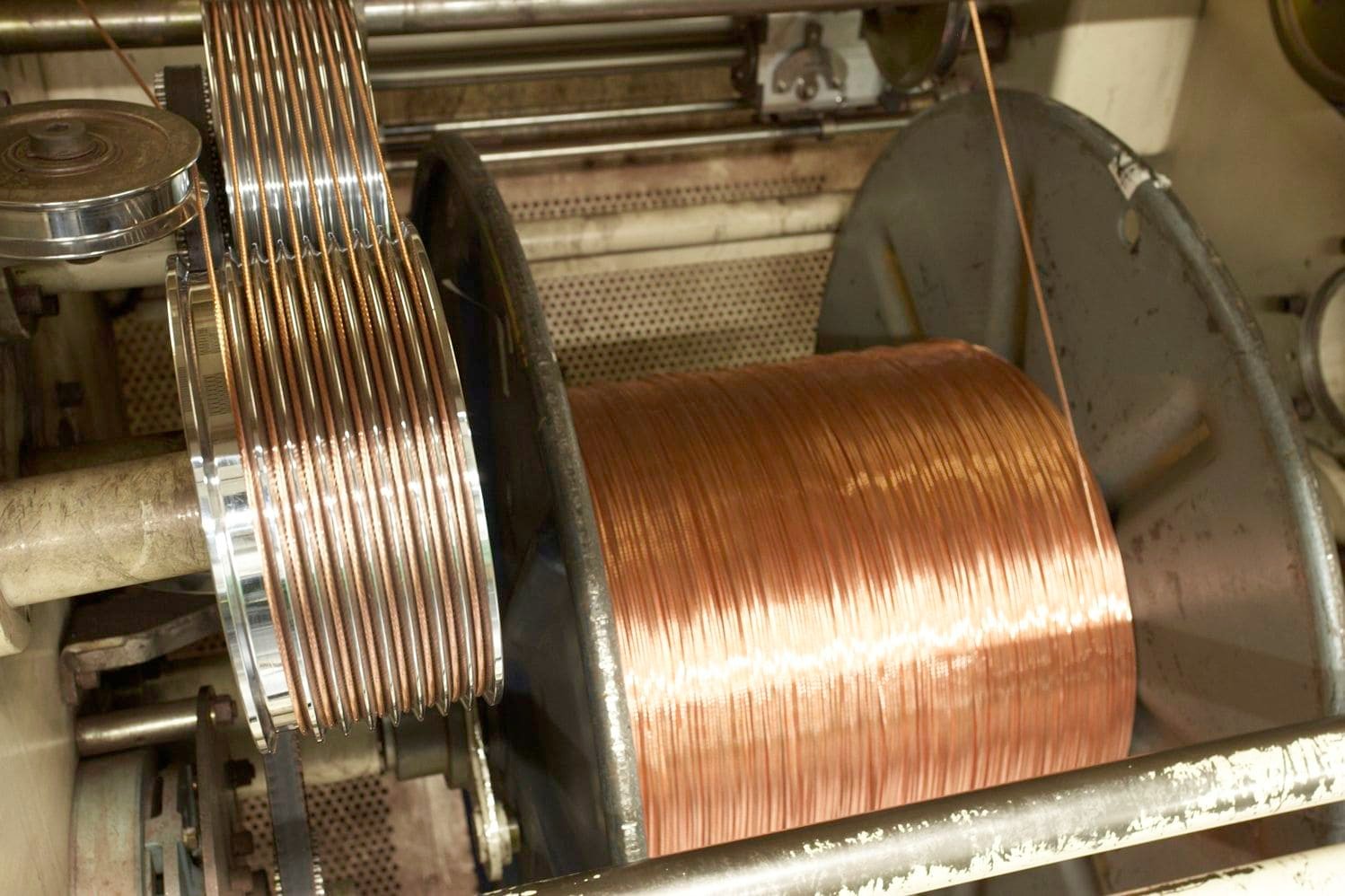
Continuous tube-type annealing followed by hot-dip tinning restores ductility after cold drawing and deposits a protective tin layer. Hard copper wire is paid off under constant tension, passes through multi-zone tubular annealing furnaces (typically 5–9 m long, 400–800 °C, commonly 500–700 °C), is protected by water seal, steam or nitrogen to prevent oxidation, dried, immersed in a molten tin bath (250–270 °C or controlled higher), wiped by precision dies or air knives to set coating thickness (10–60 μm), cooled, and taken up on torque-motor or servo spools.
The annealing step recrystallizes the copper microstructure, reducing residual stress and raising elongation while restoring conductivity. Water-seal or vapor protection at the furnace exit eliminates black-wire defects caused by intermittent oxygen exposure. Dual tin pots allow simultaneous production of different coating thicknesses or product grades on the same line.
How do continuous multi-wire annealing-tinning lines compare with separate batch annealing plus offline tinning?
| Parameter | Continuous Multi-Wire Annealing + Tinning | Separate Batch Annealing + Offline Tinning |
|---|
| Throughput | 20–60 wires simultaneously, ≤300 m/min | Single or few wires, lower overall output |
| Coating uniformity | ± controlled 10–60 μm via dies/air knife | Variable, higher risk of bare spots |
| Oxidation risk | Low (water seal / N₂ / steam protection) | Higher during intermediate handling |
| Floor space & labor | Compact integrated line, lower labor | Multiple machines, higher handling |
| Energy efficiency | Multi-zone electric heating, optimized | Separate furnaces, higher total consumption |
| Typical power | 49–85 kW | Higher combined |
Continuous lines reduce intermediate oxidation, improve coating adhesion through immediate tinning of the activated surface, and deliver consistent mechanical and electrical properties required by ASTM B33 continuity-of-coating tests (hydrochloric acid–sodium polysulfide method).
Which technical parameters define a high-performance copper wire annealing and tinning machine for cable production?
Representative specifications drawn from current industrial equipment
| Parameter | Typical Range | Notes |
|---|
| Wire diameter | 0.08–0.32 mm (up to 0.05–0.65 mm) | Fine-wire models reach 0.016 mm |
| Number of production heads | 20 / 40 / 60 | Parallel processing |
| Max. line speed | 300 m/min | Adjusted by diameter |
| Annealing furnace length | 5–9 m (common 6–7.5 m) | Multi-zone control |
| Annealing temperature | 400–800 °C (typical 500–700 °C) | Water seal / N₂ / steam protection |
| Tinning method | Single or dual hot-dip pot + die wipe | Tin purity ≥99 % |
| Coating thickness | 10–60 μm | Precision control |
| Take-up | Torque motor / servo, PT10–PT25 or 630 | Constant tension |
| Total installed power | 49–85 kW | Heating dominant |
| Machine length | ≈20–25 m | Compact footprint |
These parameters support high-volume production of soft tinned copper wire for stranding into flexible conductors.
Advanced Design & Process Advantages
- Integrated Continuous Annealing + Hot-Dip Tinning: Wires first undergo precise electrical heating in a multi-zone tubular annealing furnace for uniform softening, then immediately enter a stable molten tin bath. Advanced wiping dies and dual-tank design (optional) guarantee smooth, adherent tin layers with minimal thickness variation (typically 1–5 μm).
- High-Speed Multi-Wire Capability: Simultaneous processing of 40 wires maximizes throughput for fine-gauge applications, achieving industry-leading productivity without compromising quality.
- Precise Temperature & Coating Control: Real-time electrical heating with PID control maintains optimal annealing and tin-bath temperatures (250–300 °C), preventing oxidation and ensuring bright, uniform tin coating with excellent solderability.
- Robust & Flexible Bobbin Handling: Compatible with pay-off bobbins 300–630 mm and take-up spools PT-4 to PT-15, supporting fast changeovers and high-volume runs.
- Energy-Efficient & Low-Maintenance Design: Electrical heating offers superior energy savings and easy temperature adjustment compared to gas-fired systems. Heavy-duty construction and proven RLB engineering ensure reliable 24/7 operation with minimal downtime.
- Compact Footprint: Space-saving layout ideal for modern cable plants seeking maximum output in limited floor area.
The result is defect-free, bright tin-plated copper wire that meets stringent IEC, RoHS, and automotive standards for electronics, telecommunications, and high-reliability wiring harnesses.
Technical Specifications (RLE-40H)
| Parameter | Specification |
|---|
| Inlet Wire Diameter | 0.1 – 0.4 mm |
| Max. Number of Wires | 40 |
| Pay-Off Bobbin Size | 300 – 630 mm |
| Take-Up Bobbin Size | PT-4 – PT-15 |
| Molten Tin Storage Capacity | Max. 300 kg |
| Maximum Line Speed | 5 m/s (300 m/min) |
| Heating Method | Electrical Heating (multi-zone tubular) |
| Annealing Method | Continuous tubular annealing |
| Tinning Method | Hot-dip with precision wiping |
Custom configurations for different wire counts, higher speeds, or specialty alloys available upon request.
What standards and 2024–2026 performance data govern tinned annealed copper wire quality?
ASTM B33 remains the primary specification for tinned soft or annealed copper wire for electrical purposes. It requires commercially pure tin (other elements exclusive of copper ≤1 %), continuous coating verified by the hydrochloric acid–sodium polysulfide test, and defined elongation and resistivity limits. Related documents cover nominal diameters (ASTM B258) and resistivity measurement (ASTM B193).
Industry data confirm that properly controlled continuous lines achieve coating uniformity within the 10–60 μm window, elongation values suitable for subsequent stranding, and surface brightness free of dross or bare spots when bath temperature, immersion time, and wipe pressure are maintained. Steam or nitrogen protection eliminates the black-wire defect previously common on intermittent stops.
What practical failure modes occur on annealing-tinning lines and how are they prevented?
- Black or oxidized wire segments: caused by oxygen ingress during furnace dwell or stoppages; prevented by continuous water-seal, steam, or nitrogen atmospheres and interlocked speed control.
- Uneven or insufficient tin coating: results from incorrect bath temperature, dirty dies, or fluctuating tension; controlled by dual-pot designs, automatic temperature regulation, and precision die wiping.
- Wire breaks or diameter variation: arise from improper annealing temperature (too low leaves residual hardness; too high causes grain growth or fusion) or tension spikes; multi-zone furnaces and closed-loop torque take-up eliminate these.
- Reduced solderability after storage: caused by excessive intermetallic growth or surface oxidation; minimized by controlled coating thickness and proper packaging of finished spools.
Routine bath analysis for tin purity, regular die inspection, and real-time temperature logging keep scrap rates low and coating continuity high.
Key Takeaways for Reliable Long-Term Production of Tinned Copper Wire
A well-engineered continuous copper wire annealing and tinning machine integrates multi-zone tube annealing under protective atmosphere with precision hot-dip tinning to deliver soft, oxidation-resistant, solderable conductors at high throughput. Lines processing 40–60 wires at up to 300 m/min with 10–60 μm coatings meet ASTM B33 requirements and support cable, automotive, and electronic applications. Water-seal or nitrogen protection, dual tin pots, and closed-loop tension control are the current engineering solutions that minimize oxidation defects and ensure consistent coating quality.
Inquiry Now for detailed technical proposals, layout drawings, and customized configurations matching your wire-diameter range, head count, and coating specifications.
Copper Wire Annealing and Tinning Machine - Doing cable
High-speed continuous copper wire annealing and tinning machine: 20–60 heads, 0.08–0.32 mm, 300 m/min, precision 10–60 μm hot-dip tin, ASTM B33. Inquiry Now for custom specs.
Product SKU:
RLB RLE-40H
Product Brand:
RLB Machinery
Product Currency:
USD
Product Price:
Contact for factory price
Product In-Stock:
InStock






Reviews
There are no reviews yet.