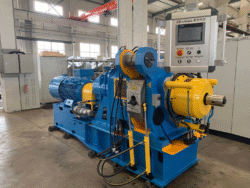
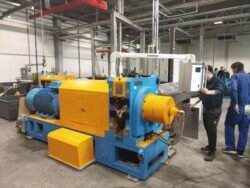
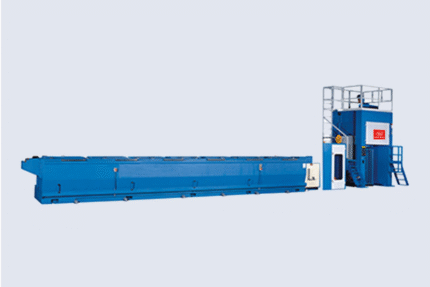
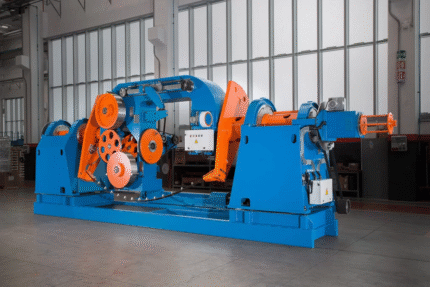
The Aluminum Material Continuous Extrusion Machine (Conform process) converts pure aluminum or aluminum alloy rod feedstock (typically Φ9.5–15/20 mm) directly into finished tubes, flat wires, busbars, multiport tubes, sector conductors, and custom profiles in a single continuous operation. Friction between the rotating grooved extrusion wheel and the aluminum rod generates the necessary heat and pressure for plastic deformation, eliminating external billet preheating and intermediate annealing in most cases. Material utilization reaches 95–99 %, flash is limited to 1–3 %, product length is theoretically unlimited, and the output is normally soft temper suitable for direct take-up.

How Continuous Rotary Extrusion (Conform Process) Delivers Superior Results
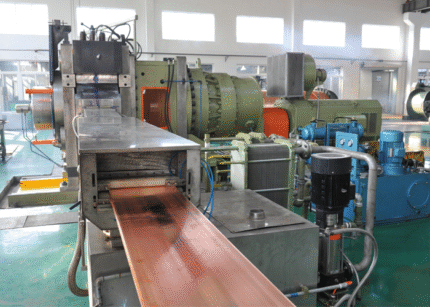
Aluminum rod is paid off, straightened, cleaned (brushing or ultrasonic washing is common for aluminum to remove oxide), and fed into the circumferential groove of the rotating extrusion wheel. A coining roll and stationary shoe compact the material. Frictional shear raises the temperature into the plastic range; the abutment blocks further rotation and forces the aluminum into the die chamber, where it is extruded through a precision die. Online cooling, anti-oxidation treatment, metering, and dual take-up complete the line. The process supports both solid sections and hollow tubes (including multiport micro-channel tubes for heat exchangers) by changing the die and mandrel arrangement.
Key process advantages versus traditional batch or hydraulic extrusion:
- No preheating or post-extrusion annealing required for most soft aluminum products
- Superior microstructural uniformity and electrical conductivity
- Significantly lower energy consumption and higher material yield
- Compact footprint (up to 60 % smaller than conventional lines)
- Consistent dimensional accuracy and surface quality at high speeds

Energy-Efficient & Eco-Friendly Design
No preheating or annealing stage; integrated hydraulic system with zero oil leakage; constant-tension take-up and automatic caterpillar tractor reduce labor to a single operator. New-generation models achieve approximately 20 % energy savings per ton, up to 80 % higher production output and 60 % space savings compared with traditional hydraulic extrusion lines.
Premium Components & Smart Features
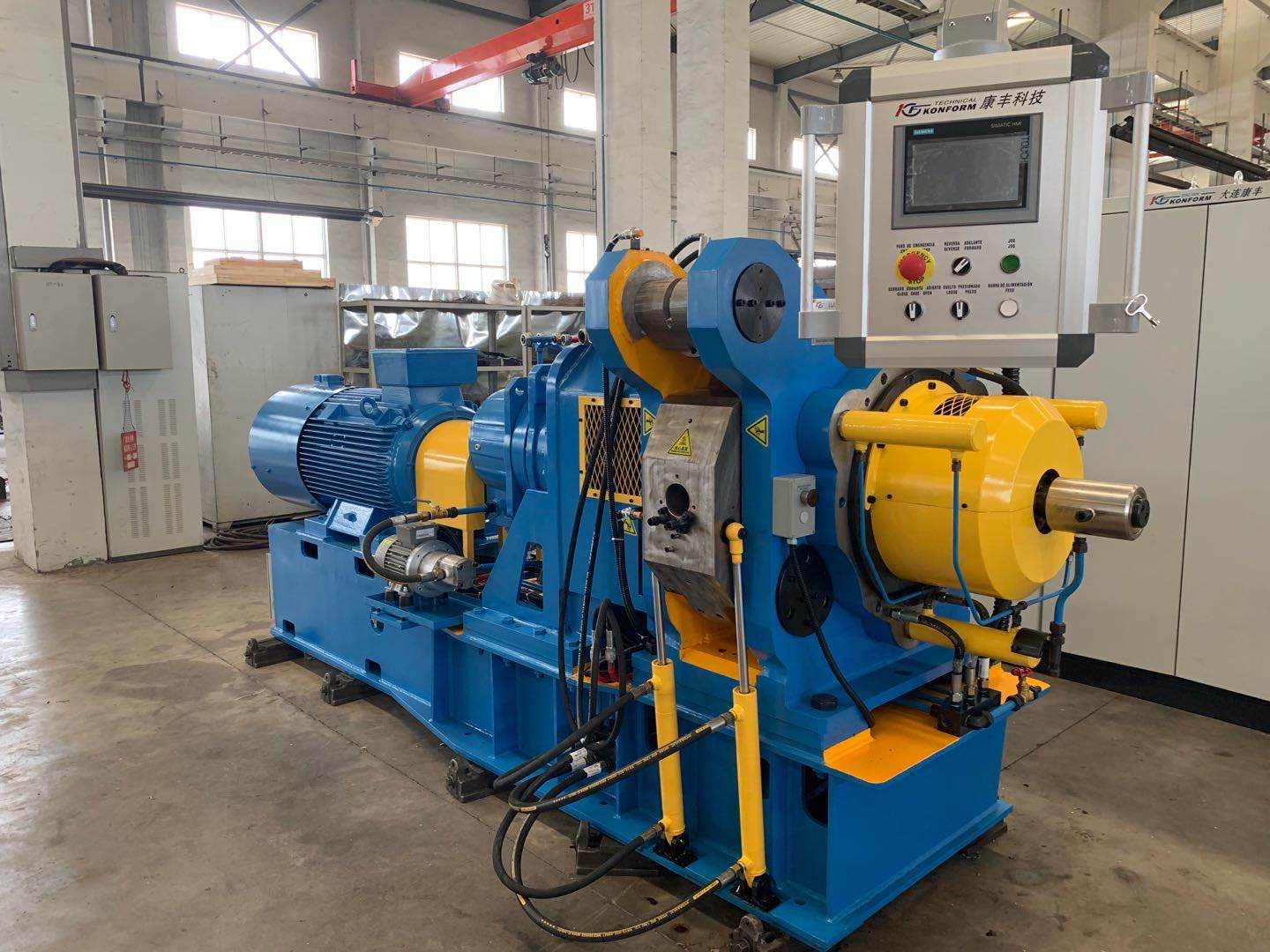
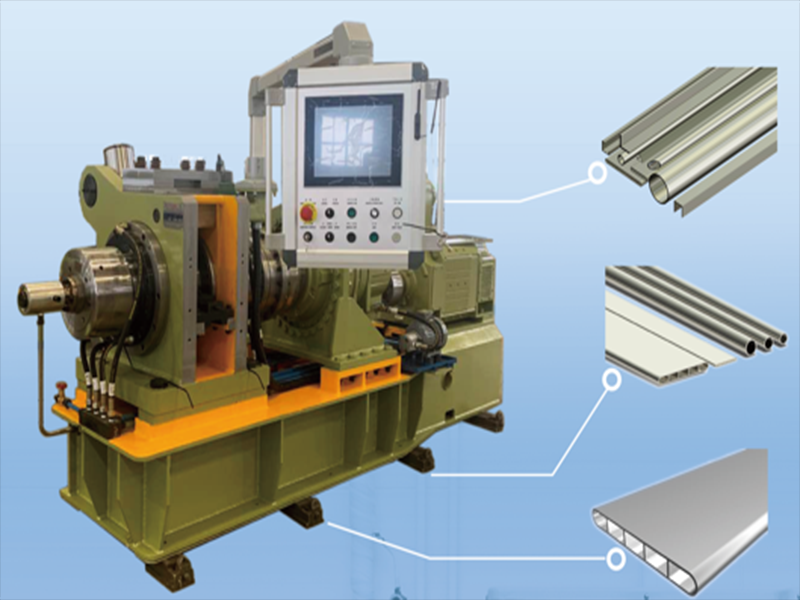
Mechanical locking of extrusion tooling ensures stable extrusion conditions. Upgraded high-quality Chinese gearbox, Siemens/ABB electrical controls, aviation plugs for rapid connection, and industrial cloud data system provide full production traceability and remote support capability.
Key Technical Advantages
- Material utilization 95–99 % with flash typically 1–3 %.
- Energy consumption substantially lower than conventional billet extrusion because friction supplies the primary heat.
- Unlimited continuous length — critical for long busbars, refrigeration tubes, and joint-free conductors.
- Soft temper product ready for coiling or further forming without separate annealing.
- High dimensional accuracy and surface quality when feedstock cleanliness and cooling are controlled.
- Flexible die change enables rapid switch between round tubes, flat tubes, multiport tubes, flat wire, busbars, and shaped conductors.
- Suitable for pure aluminum (L0–L6 series) and common alloys such as 3003, 6061, 6063, and 6101.
Representative Technical Specifications
| Model Series | Extrusion Wheel Ø (mm) | Main Motor (kW) | Feed Rod Ø (mm) | Typical Products | Section / Size Range | Average Output (kg/h) |
|---|
| LLJ / LJ / BO-LJ 300 | 290–300 | 90–110 | 9.5 / 12 | Flat wire, round/flat tube | 5–200 mm² / Φ6–20 mm | 140–280 |
| LLJ / LJ 300H / 300B | 300–310 | 110–132 | 9.5 / 12 | Flat wire, multiport tube | 5–200 mm² / width ≤40 mm | 190–280 |
| LLJ / LJ / RLB 350 | 340–350 | 160–200 | 12–15 / 2×9.5 | Busbar, strip, sector conductor | 10–600 mm² / width ≤80 mm | 260–500 |
| LLJ / RLB 400 | 400 | 250 | 15–20 | Large busbar, profiles | 75–2 000 mm² / width ≤170 mm | 450–900 |
Data compiled from current industrial models (Konform LLJ series, Aibang LJ series, and equivalent platforms). Actual capacity depends on alloy, section complexity, wheel speed (typically 16–22.5 rpm for aluminum), and cooling efficiency.
Advanced Engineering Features & Process Benefits
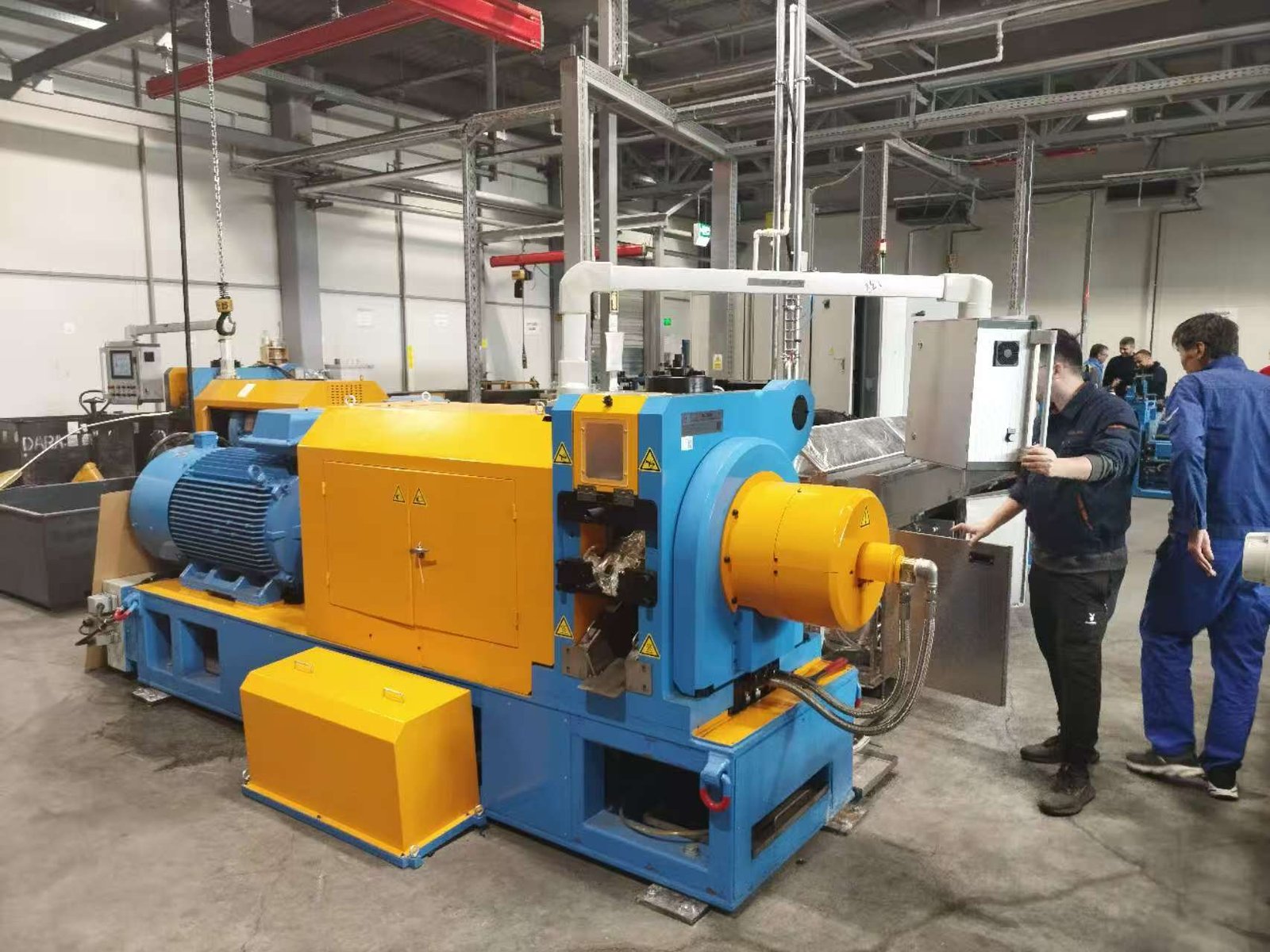
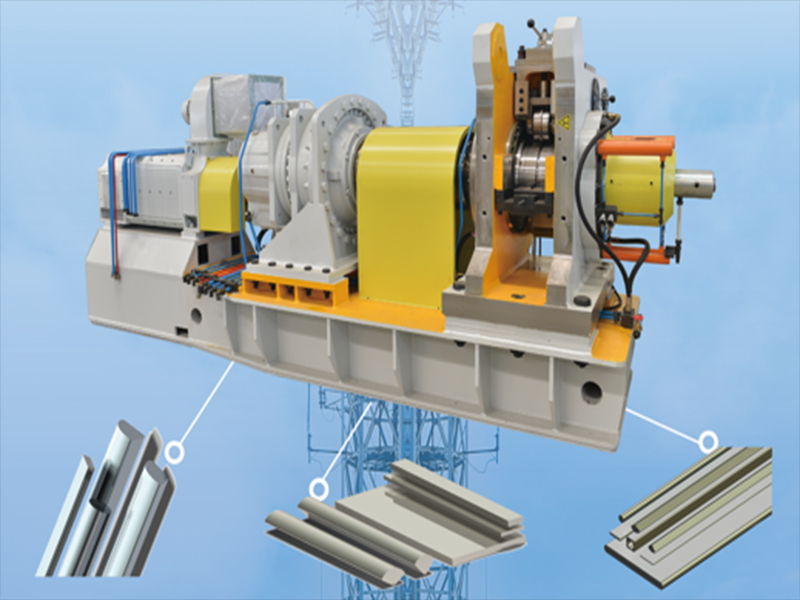
Lengthened Extrusion Belt & Heat-Treated Wheel Extended dwell time ensures full compaction and dense, homogeneous grain structure. Special heat treatment dramatically extends wheel service life, reducing maintenance frequency and unplanned downtime.
Single-Wheel Single-Groove Lateral Extrusion Delivers stable high-speed operation with precise dimensional control and minimal waste. Ideal for continuous, high-volume production environments.
Soft Product Output & Flexible Take-Up Extruded material exits in soft temper, ready for direct bobbin winding without annealing. Optional integrated online cutting saw provides precise length control for busbar or profile applications.
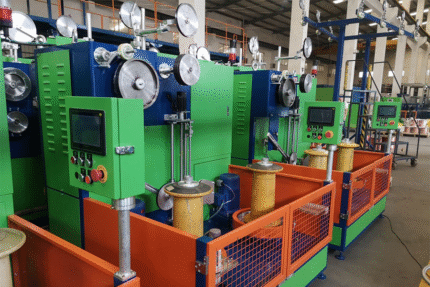
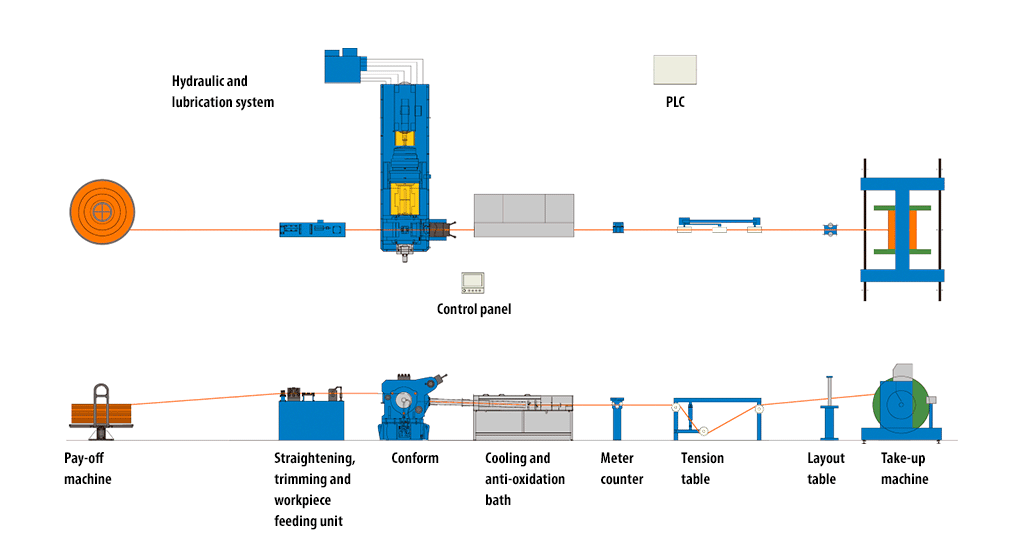
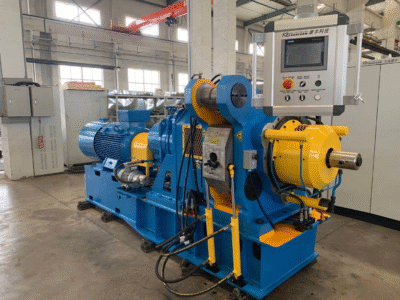
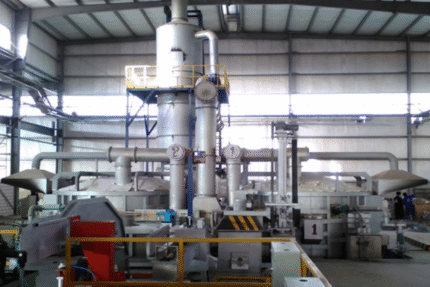
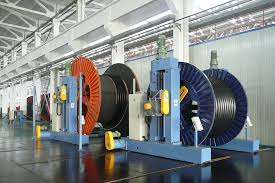
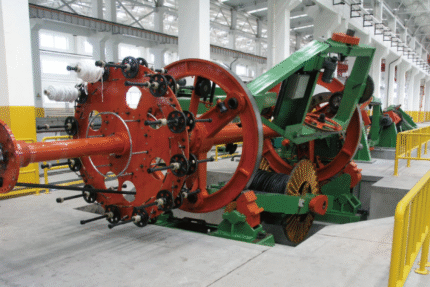
Compact & Intelligent Full-Line Layout Complete production line includes: automatic short-rod feeding system, continuous extrusion main machine, oxidation-preventive cooling system, traction device (caterpillar), cut-to-length equipment and constant-tension receiving system. All modules connect via automatic conveying for seamless, stable operation. Centralized PLC + HMI touchscreen with remote diagnostics module enables real-time monitoring, parameter adjustment and predictive maintenance.
Material Requirements and Process Notes
Feedstock is normally pure aluminum or soft aluminum alloy rod with yield strength ≤90 MPa and diameter tolerance ±0.2 mm. Oxide removal (brushing or ultrasonic cleaning) is essential for surface quality and die life. Cooling water capacity and controlled exit temperature determine final hardness and dimensional stability. Mechanical shoe locking, integrated hydraulic lubrication, PLC + HMI control, and optional online eddy-current flaw detection improve consistency and reduce operator dependency.
Comparison vs Conventional Billet Extrusion
| Parameter | Continuous Extrusion (Conform) | Conventional Billet Extrusion |
|---|
| Material utilization | 95–99 % (flash 1–3 %) | 70–85 % (butt + trim losses) |
| Preheating requirement | None (friction heat) | Required billet heating |
| Product length | Unlimited | Limited by billet length |
| Temper of output | Soft, ready for take-up | Often requires annealing |
| Process steps | Single continuous pass | Multiple (heat → extrude → anneal → draw) |
| Energy intensity | Significantly lower | Higher |
Custom configurations and higher-capacity models available upon request.
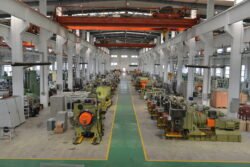
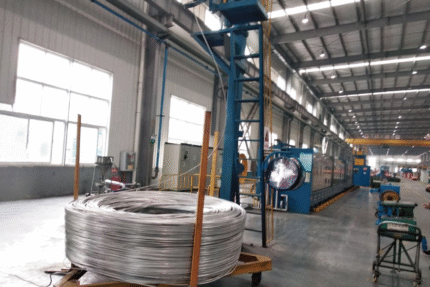
Layout of the Continuous Extrusion Production Line for Aluminum Busbar
The overall layout is compact and space-saving (up to 60 % smaller than traditional lines). It covers the complete process from raw material feeding to finished product winding, including automatic short-rod feeding, oxidation-preventive cooling, constant-tension take-up, and optional online cutting. Full-process monitoring via PLC/HMI with remote module interface ensures intelligent management and minimal operator intervention.

Primary Applications
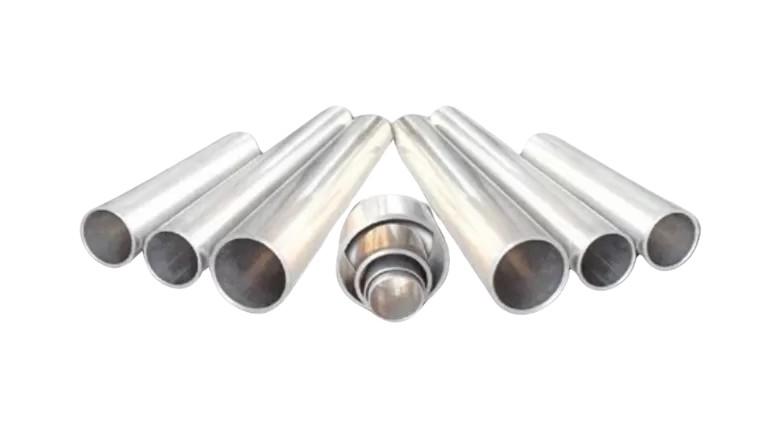
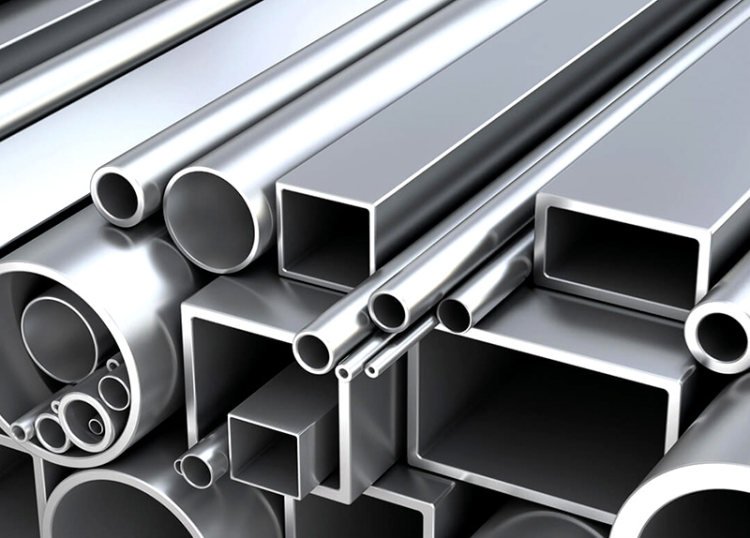
- Round Aluminum Tubes & Porous Flat Tubes (MPE/PFC) — Heat exchangers, refrigeration, HVAC and new energy thermal management systems
- Aluminum Strap Wires & Conductors — Power cables, automotive wiring harnesses, electronic components
- Aluminum Busbars & Profiles — Switchgear, transformers, power distribution panels, data center infrastructure
- Shaped Conductors — New energy vehicles (EV/HEV inverters, motors), solar inverters, high-current systems
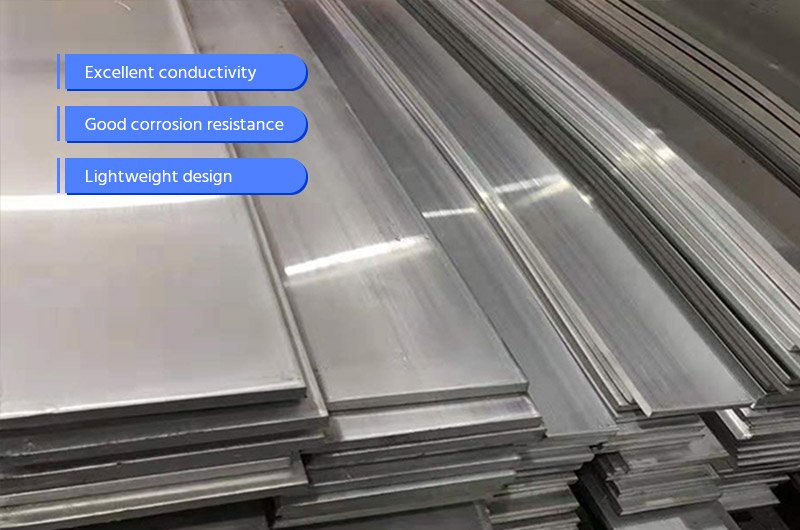
- High-Quality Aluminum Sheathing — Special cables requiring excellent conductivity and corrosion resistance

Practical Considerations for Reliable Long-Term Operation
Maintain consistent rod cleanliness and diameter tolerance. Control wheel speed and cooling to avoid surface defects or excessive flash. Regular inspection of the groove, abutment, and die chamber is required. Modern lines support data monitoring of temperature, torque, and production metrics, supporting predictive maintenance and stable long-term supply agreements.

Key Takeaways
Aluminum continuous extrusion machines deliver high material yield, reduced energy use, unlimited product length, and soft-temper output directly suitable for coiling or further processing. Models from 300 mm to 400 mm wheel diameter cover tubes (round and multiport), flat wires, busbars, and complex profiles at outputs from approximately 140 kg/h to over 900 kg/h. The technology is established for refrigeration, automotive heat-exchange, power distribution, and cable conductor production.
For detailed technical proposals, capacity matching to specific alloys and sections, die design, or complete turnkey line configuration, Inquiry Now.
Aluminum Continuous Extrusion Machine
Aluminum Continuous Extrusion Machine (Conform-type) transforms Φ9.5–15 mm aluminum rods into soft tubes, busbars, conductors & profiles in one step. Up to 20% energy savings, ≤5% leakage, compact layout. Global installation & 24/7 support. Inquiry Now for custom quotation.
Product SKU:
Aluminum Continuous Extrusion Machine1
Product Brand:
RLB Machinery
Product Currency:
USD
Product Price:
Contact for factory price
Product In-Stock:
InStock









Reviews
There are no reviews yet.