Cable Machinery & Equipment, Process Optimization, Product Knowledge Base, Technical Guides & Knowledge

Aluminium Melting Furnace Process

Aluminium Melting Furnace Process

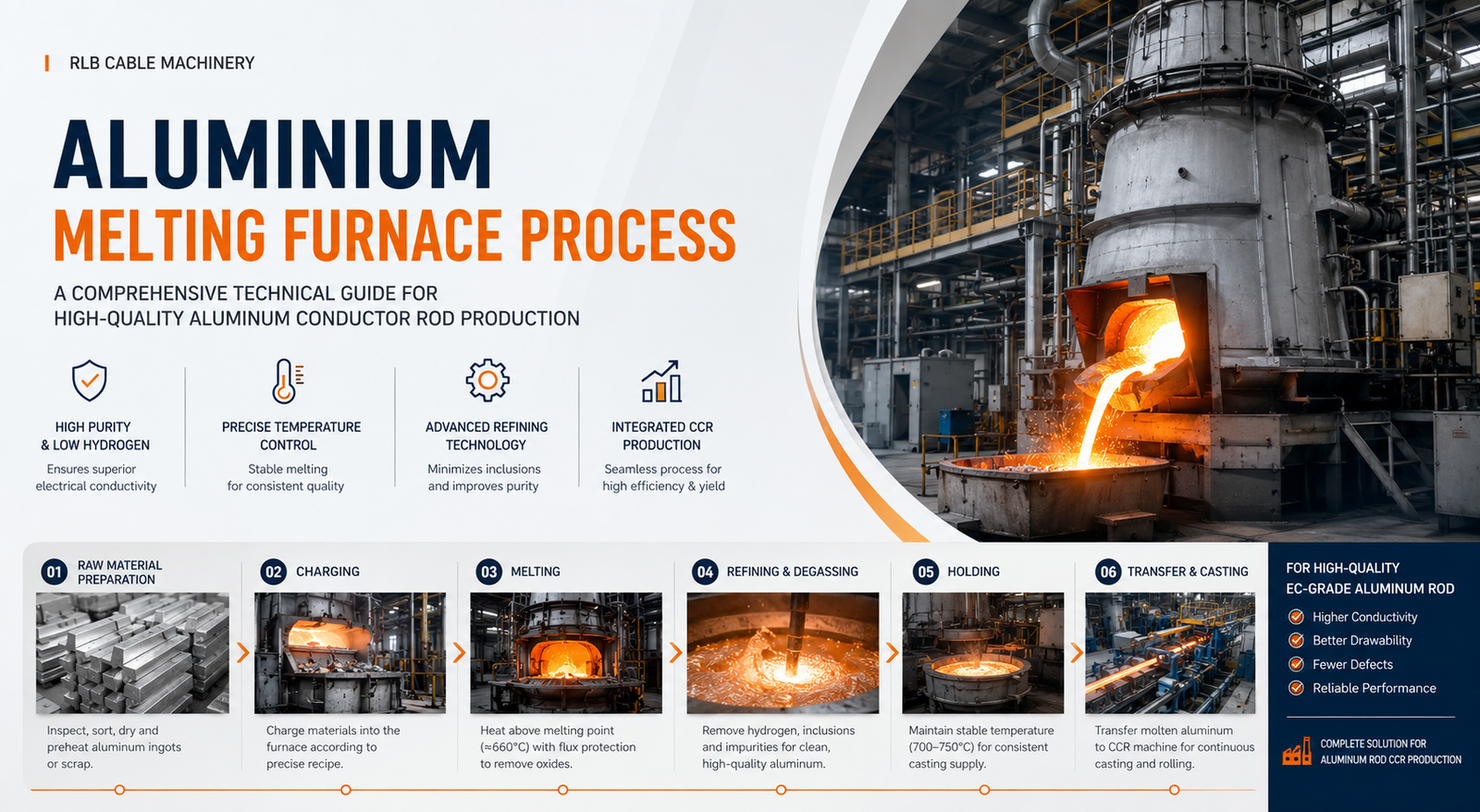
The production of high-conductivity EC-grade aluminum rods — the foundation of AAC, AAAC, ACSR, and other overhead conductors — begins with a precisely controlled aluminium melting furnace process. In modern cable manufacturing, the quality of the molten metal directly influences rod surface finish, drawability, electrical conductivity, and the long-term performance of finished power cables.

A well-engineered melting process minimizes hydrogen, oxides, and inclusions while maintaining stable temperature and chemistry. When integrated with continuous casting and rolling (CCR) lines, it enables cable manufacturers to achieve high yield, consistent quality, and competitive production costs.

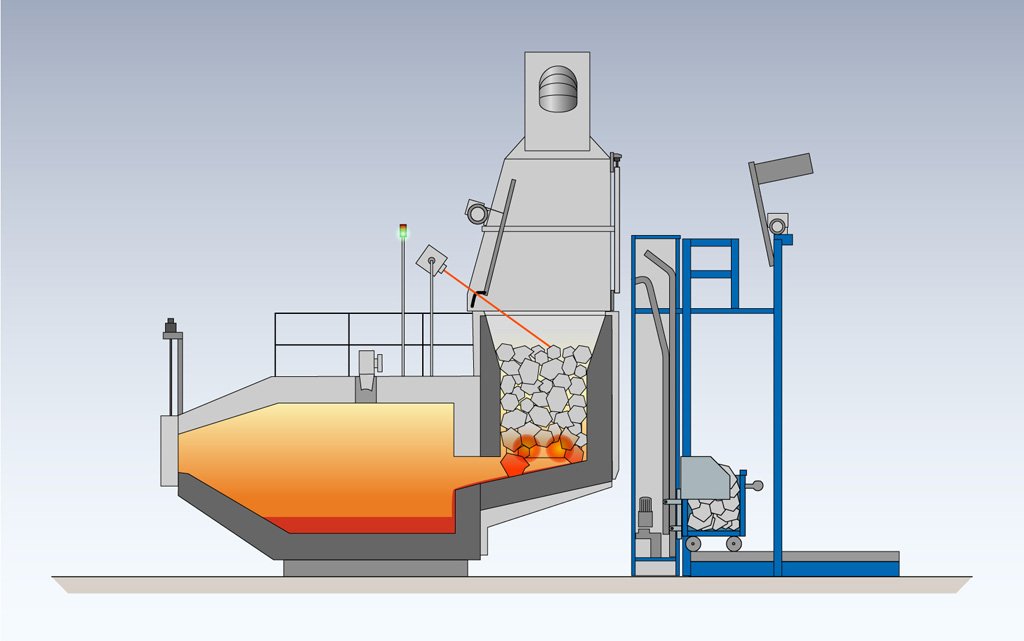
Shaft melting furnace — energy-efficient design widely used in high-output aluminum rod CCR production lines.

Why the Aluminium Melting Furnace Process Is Critical for Cable Quality

Aluminum conductor rod must deliver ≥61% IACS conductivity with minimal defects. Poor melting practices cause:

  • Excessive hydrogen leading to porosity and wire breaks during drawing
  • Oxide inclusions that reduce mechanical properties
  • Temperature fluctuations affecting cast bar quality and rolling performance

Modern melting technology, combined with proper refining, allows manufacturers to produce rod that meets stringent international standards while supporting the growing demand for renewable energy infrastructure and grid modernization.

Types of Aluminium Melting Furnaces for Rod Production

Different furnace technologies suit varying production scales, raw material mixes, and energy priorities:

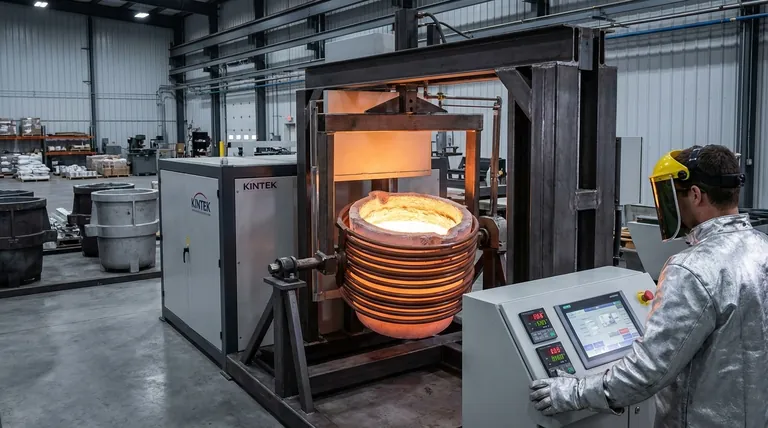
Induction Melting Furnaces

Electromagnetic induction provides rapid, clean melting with excellent temperature uniformity. Ideal for high-purity EC aluminum and alloy rods. Precise control and low metal loss make them popular in quality-focused plants.

Reverberatory Furnaces

Heat radiates from the roof and sidewalls onto a large molten bath. Suitable for high-volume melting of ingot and scrap. Flexible operation and relatively straightforward maintenance.

Shaft (Tower) Furnaces

Highly efficient design where incoming charge is preheated by exhaust gases. Achieves significantly higher thermal efficiency (often 40–50% better) and is favored for continuous, large-scale rod production.

Rotary Furnaces

Rotating drum provides excellent mixing and is particularly effective for melting contaminated or low-grade scrap with good metal recovery rates.

Crucible Furnaces

Smaller capacity units used for alloy preparation or lower-volume/specialty production.

Induction melting furnace — preferred for clean, precise melting in high-quality aluminum conductor rod lines.

Detailed Step-by-Step Aluminium Melting Furnace Process

A professional melting operation for aluminum rod production typically follows these stages:

1. Raw Material Preparation

Aluminum ingots, sow, or sorted scrap are inspected, dried, and preheated. Moisture removal is critical to prevent hydrogen pickup and explosive reactions.

2. Charging

Material is charged into the furnace according to a precise recipe. Proper charging sequence minimizes oxidation and ensures uniform melting.

3. Melting Phase

The charge is heated above the melting point (≈660°C). Fluxes are often added to protect the melt and remove surface oxides. Temperature is ramped and held according to furnace type and charge size.

4. Refining and Degassing

This is one of the most critical steps for cable-grade metal:

  • Inert gas (argon or nitrogen) degassing removes dissolved hydrogen.
  • Fluxing agents capture inclusions and oxides.
  • Regular sampling verifies chemistry and cleanliness.
  • Target hydrogen levels are typically kept below 0.15–0.20 ml/100g for high-quality rod.

5. Holding

Clean molten aluminum is held at a stable temperature (usually 700–750°C) in a holding furnace to ensure consistent supply to the casting machine.

6. Transfer and Casting

Molten metal flows through heated launders to the continuous casting machine. In CCR lines, it forms a continuous cast bar that is immediately rolled into rod coils.

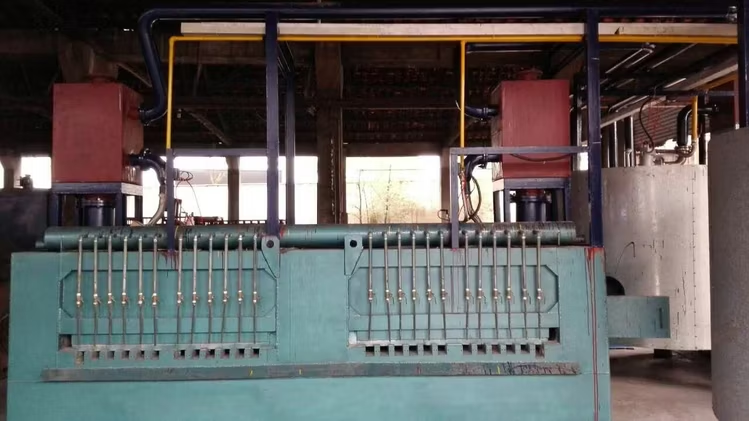
Aluminum rod CCR production line — melting furnace feeds directly into continuous casting for efficient, high-quality conductor rod output.

Key Quality Control Parameters in the Melting Process

Professional manufacturers monitor:

  • Hydrogen content — Critical for porosity-free rod.
  • Inclusion levels — Controlled through effective fluxing and filtration.
  • Temperature stability — Directly affects cast bar microstructure and rolling performance.
  • Alloy chemistry — Precise control for EC-grade or heat-treatable alloys.
  • Dross formation — Minimized through proper fluxing and furnace atmosphere management.

Advantages of Modern Aluminium Melting Furnaces

  • Higher energy efficiency (especially shaft designs)
  • Reduced metal loss and dross
  • Superior temperature and chemistry control
  • Better compatibility with automated CCR lines
  • Lower environmental impact through improved combustion and emission control
  • Support for both primary ingot and recycled scrap

Integration with Complete Aluminum Rod CCR Lines

Leading cable equipment suppliers offer fully integrated solutions that combine melting furnaces, holding furnaces, degassing systems, and high-speed continuous casting and rolling lines. This seamless integration maximizes yield, minimizes handling, and ensures consistent rod quality from melt to finished coil.

RLB Cable Machinery provides reliable melting furnace solutions and complete CCR rod production lines tailored to the demanding requirements of electrical conductor manufacturing.

Why Choose Professional Melting Furnace Solutions

Selecting the right melting technology and partner directly impacts your rod quality, production efficiency, and long-term operating costs. Reliable equipment, proper process control, and technical support are essential for meeting the performance expectations of modern power transmission and distribution projects.

Inquiry Now to discuss aluminium melting furnace options, complete CCR aluminum rod production lines, or customized solutions for your cable manufacturing facility. Our team delivers professional consultation focused on reliable quality, technical performance, and long-term cooperation.

Frequently Asked Questions (FAQs)

What is the most energy-efficient furnace type for aluminum rod production?

Shaft (tower) furnaces generally offer the highest thermal efficiency due to charge preheating by exhaust gases.

Why is degassing so important in aluminum melting for cables?

Excess hydrogen causes porosity in the cast bar, leading to wire breaks during drawing and reduced conductivity in finished conductors.

Can recycled aluminum scrap be used for EC-grade rod?

Yes, with proper sorting, pre-treatment, and refining, high-quality EC rod can be produced from clean scrap.

How does melting furnace performance affect final cable quality?

Stable melting and refining directly reduce defects in the rod, improving drawability, surface quality, and long-term electrical performance of power cables.

Leave a Reply

Your email address will not be published. Required fields are marked *