Uncategorized

What is the Process of Rolling Copper?

What is the process of rolling copper

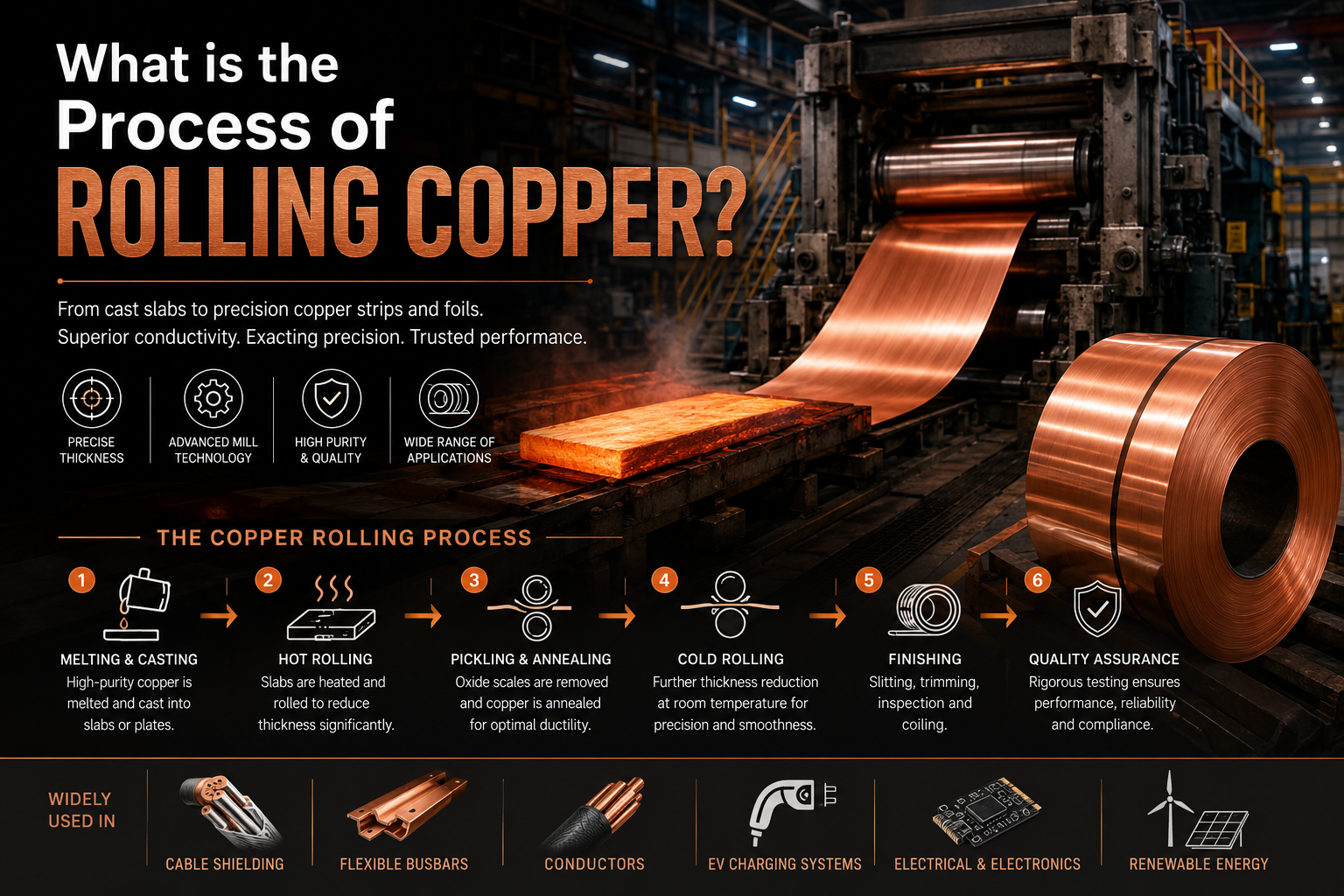
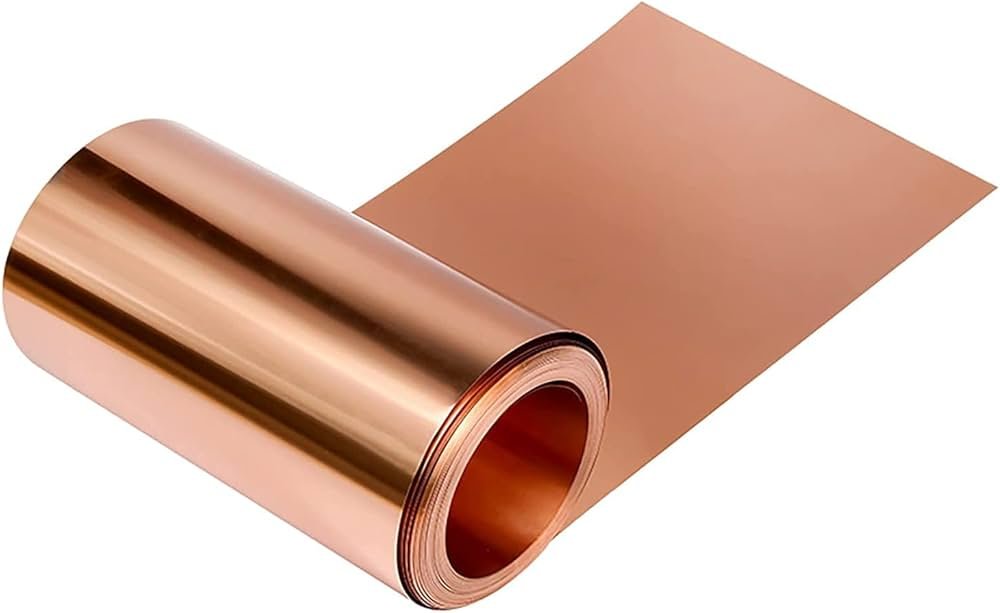
In modern industrial manufacturing, particularly for the cable and wire sector, rolling stands as the most fundamental and efficient method for producing copper and copper alloy sheets, strips, and foils. These rolled products form the backbone of critical components such as electromagnetic shielding tapes, flexible busbars, high-conductivity conductors, and precision interconnects used in power cables, data cables, EV charging systems, and instrumentation wiring.

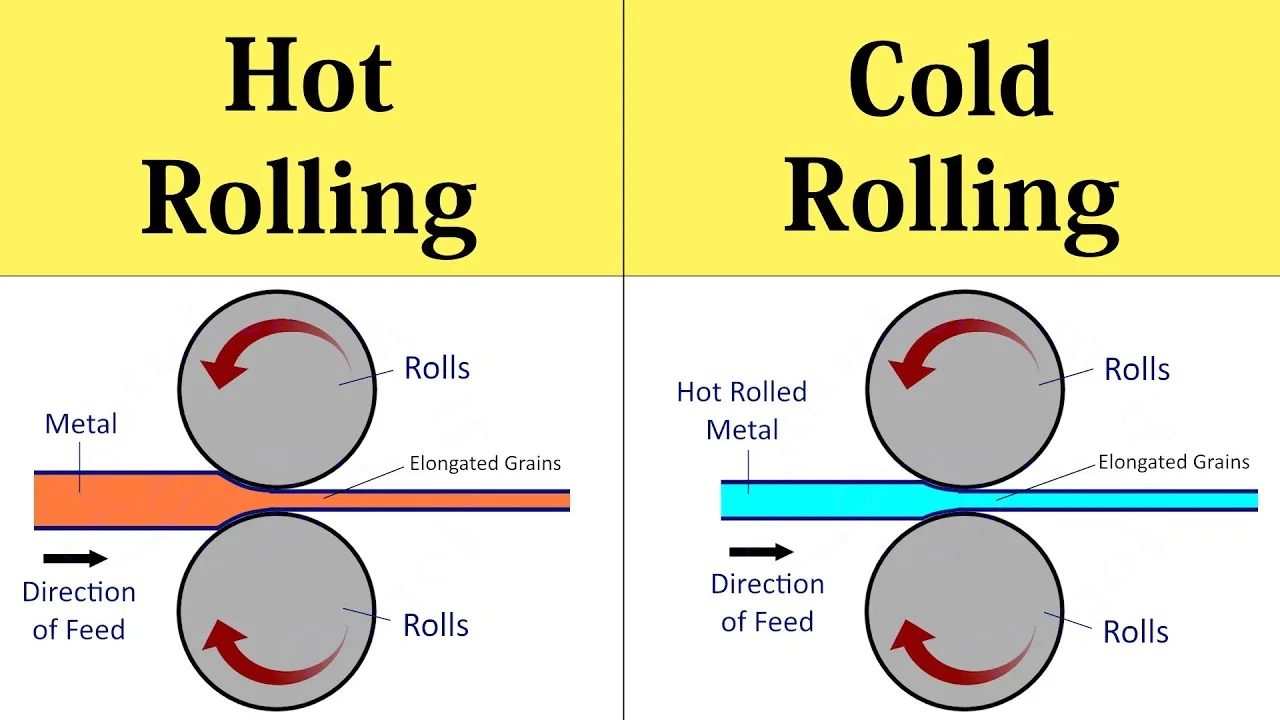
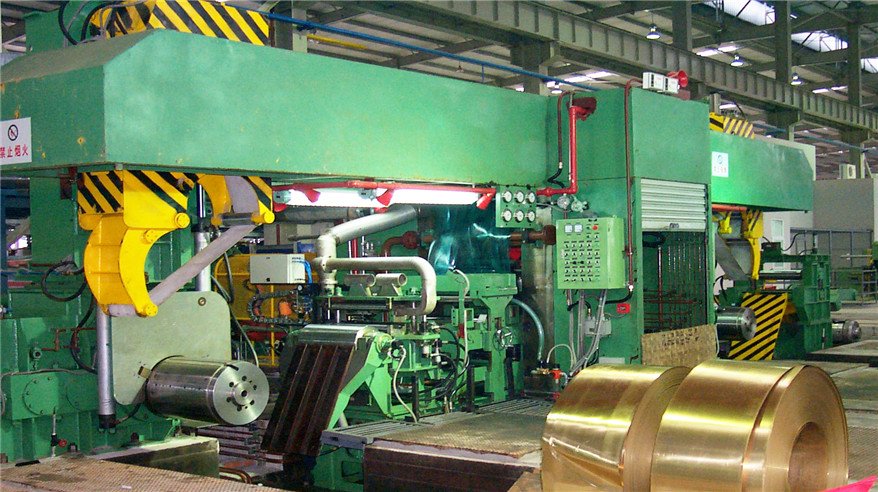
Rolling is a plastic deformation process in which copper stock is passed between two counter-rotating rolls that exert controlled pressure on each other. The opposing rotation directions and precise roll gap create uniform thickness reduction while refining the material’s microstructure. This process transforms cast copper slabs or ingots into flat products with superior dimensional accuracy, surface finish, and tailored mechanical properties — all essential for reliable long-term performance in demanding cable applications.

Step-by-Step Copper Rolling Process

The complete production route typically follows these stages, optimized for both efficiency and uncompromising quality:

  1. Raw Material Preparation & Casting High-purity electrolytic copper cathodes (≥99.95% Cu) or selected scrap are melted in induction or shaft furnaces under controlled atmospheres to minimize oxygen and impurities. The molten copper is cast into slabs or plates via continuous or direct-chill (DC) casting. This initial stage ensures the foundation for excellent electrical conductivity (targeting ≥100% IACS in annealed condition).
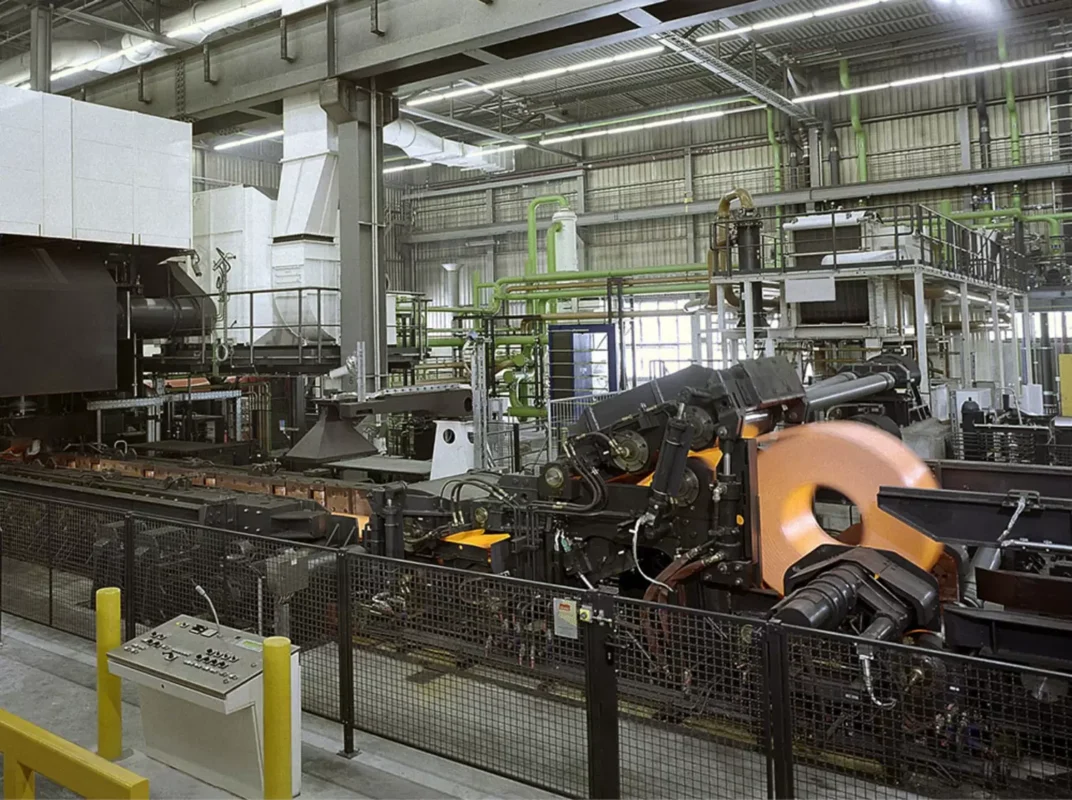
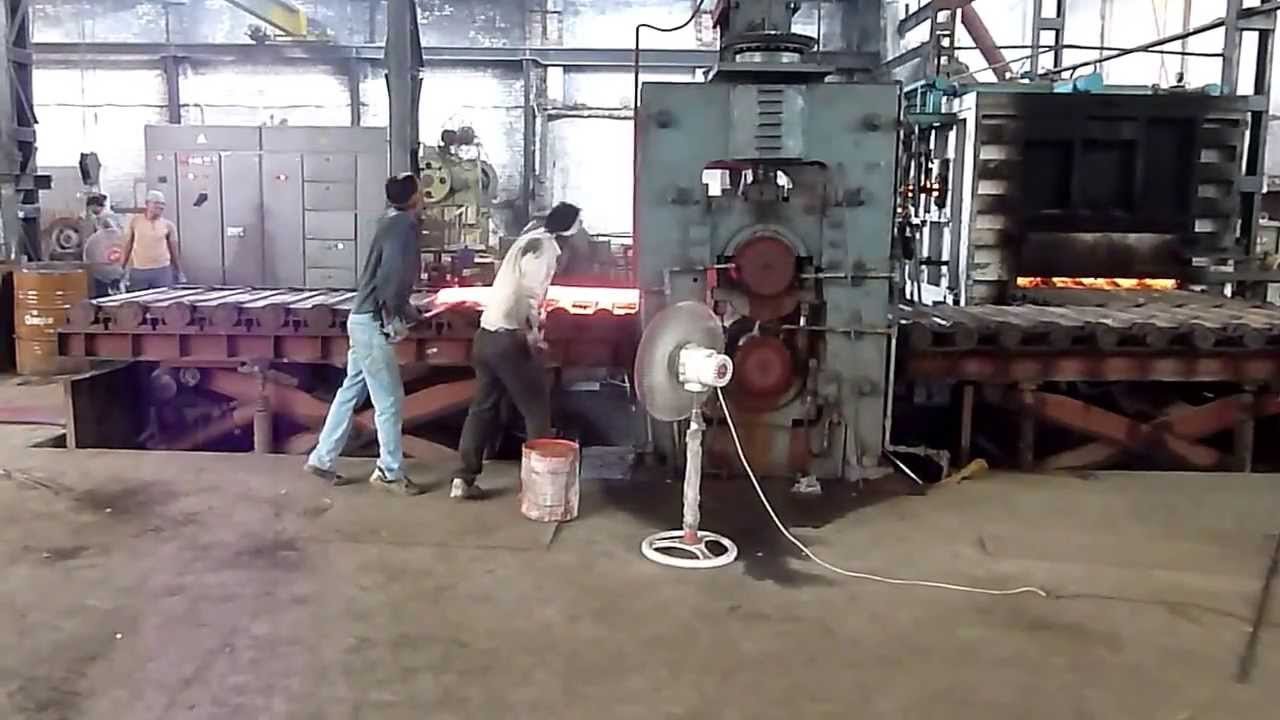
  2. Hot Rolling (Breakdown Stage) Copper slabs are heated to temperatures typically in the range of 700–950°C (alloy-dependent; pure copper often 750–900°C). At these temperatures above the recrystallization point, the material exhibits high plasticity, enabling massive thickness reductions — often from 100–200 mm down to 5–20 mm in a few passes. Key benefits: Large reductions per pass, refined grain structure, healing of casting defects, and improved homogeneity. Hot-rolled strip serves as the starting material for subsequent cold processing. Modern hot rolling lines use powerful two-high or four-high reversing mills with advanced automation for consistent temperature control and minimal oxidation.

Step-by-Step Copper Rolling Process

The complete production route typically follows these stages, optimized for both efficiency and uncompromising quality:

  1. Raw Material Preparation & Casting High-purity electrolytic copper cathodes (≥99.95% Cu) or selected scrap are melted in induction or shaft furnaces under controlled atmospheres to minimize oxygen and impurities. The molten copper is cast into slabs or plates via continuous or direct-chill (DC) casting. This initial stage ensures the foundation for excellent electrical conductivity (targeting ≥100% IACS in annealed condition).
  2. Hot Rolling (Breakdown Stage) Copper slabs are heated to temperatures typically in the range of 700–950°C (alloy-dependent; pure copper often 750–900°C). At these temperatures above the recrystallization point, the material exhibits high plasticity, enabling massive thickness reductions — often from 100–200 mm down to 5–20 mm in a few passes. Key benefits: Large reductions per pass, refined grain structure, healing of casting defects, and improved homogeneity. Hot-rolled strip serves as the starting material for subsequent cold processing. Modern hot rolling lines use powerful two-high or four-high reversing mills with advanced automation for consistent temperature control and minimal oxidation.

3. Intermediate Processing – Pickling & Annealing

Hot-rolled coils develop mill scale (oxide layer). They undergo acid pickling (typically sulfuric or hydrochloric acid baths) followed by thorough rinsing to achieve a clean, bright surface. Intermediate annealing restores ductility after heavy hot deformation, preparing the material for cold reduction.

4. Cold Rolling (Precision Finishing)

Performed at or near room temperature (sometimes with controlled lubrication and slight warming), cold rolling delivers the final gauge, exceptional surface quality, and tight tolerances. Reductions per pass are smaller (typically 10–40%), but multiple stands or reversing mills achieve final thicknesses from several millimeters down to ultra-thin foils as fine as 5–50 μm. Advanced mills — such as 6-high UC-Mills or 20-high cluster (X-Mills) — incorporate sophisticated shape control systems including work-roll bending, intermediate-roll shifting, spot cooling, and automatic flatness control. These technologies ensure superior strip shape, minimal edge cracking, and consistent mechanical properties. Result: Tighter dimensional tolerances (±0.5% or better), smoother surfaces (Ra often <0.1 μm for foils), and work-hardened tempers (soft, quarter-hard, half-hard, full-hard) tailored to specific cable requirements.

5. Finishing Operations

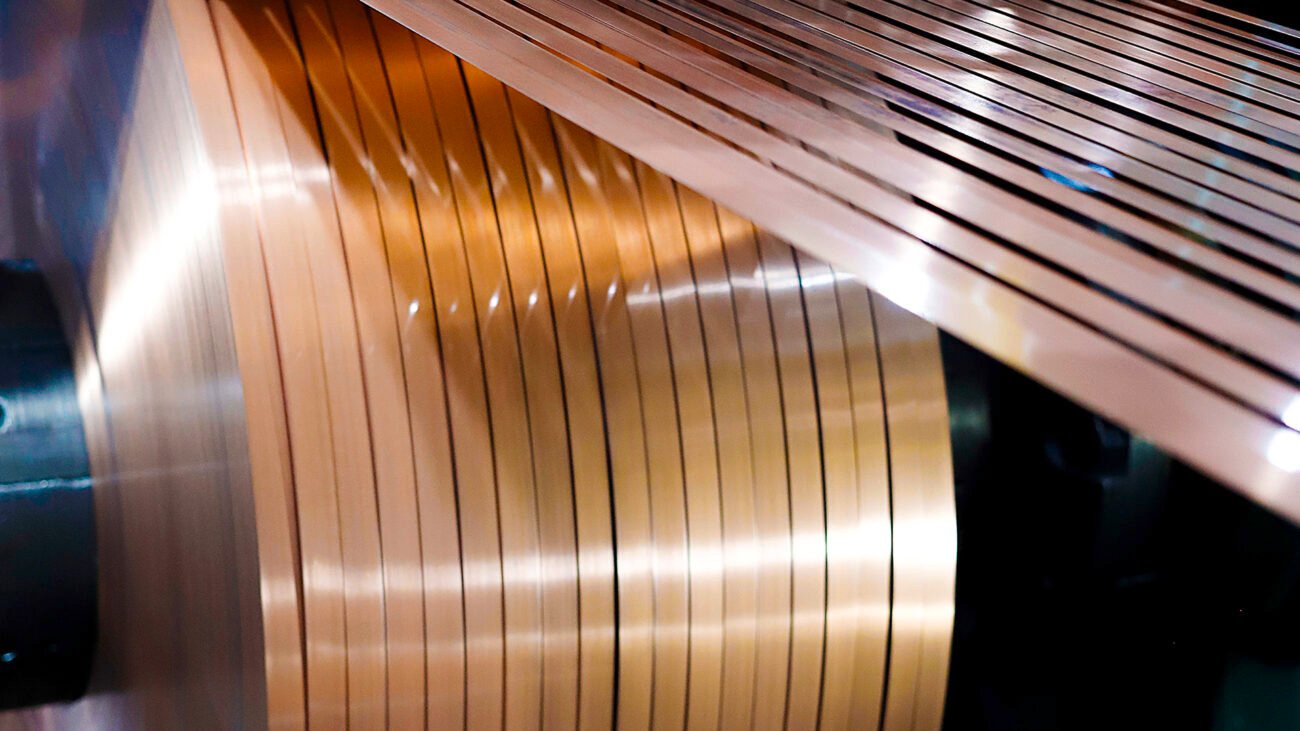
Final slitting to exact widths, edge trimming, coiling, and rigorous quality inspection (thickness gauging, flatness measurement, surface defect detection, conductivity testing, and mechanical property verification). Passivation or protective oiling may be applied for storage and transport.

Hot Rolling vs Cold Rolling Copper: Key Differences

AspectHot RollingCold Rolling
Temperature700–950°C (above recrystallization)Room temperature (or slight warm)
Reduction per PassVery high (large thickness reduction)Moderate (10–40%)
Surface FinishRougher (mill scale; Ra 0.5–1.5 μm)Excellent, smooth & bright (Ra <0.1 μm possible)
Dimensional Tolerance±2–5%Extremely tight (±0.5% or better)
Mechanical PropertiesGood ductility, lower strengthIncreased strength & hardness via strain hardening (up to 20–50% higher tensile)
Best ForInitial breakdown, large volumesFinal precision gauges, foils, high-spec strips
Typical Cable UseIntermediate feedstockShielding tapes, precision busbars, thin foils

Cold rolling introduces beneficial work hardening while modern annealing cycles allow precise control of final temper — critical for cables that require both flexibility during installation and long-term mechanical stability.

Modern Technologies Driving Quality & Reliability

Leading copper rolling facilities employ fully automated, high-speed lines with real-time process control. Features such as cobble guards, air wiping systems, and advanced cooling ensure stable operation even at high speeds. These technologies deliver the repeatable, defect-free copper strips and foils that cable manufacturers depend on for consistent shielding performance and conductivity.

Applications in the Cable Industry

Precision-rolled copper strips and foils are indispensable in:

  • EMI/RFI shielding tapes for power, instrumentation, and data cables
  • Longitudinal or helical wrapping in coaxial and specialty cables
  • Flexible busbars and interconnects in EV battery and charging cables
  • Drain wires and grounding applications
  • High-end electronics and renewable energy cabling requiring ultra-thin, high-purity copper

The uniform microstructure and surface quality achieved through controlled rolling directly translate into superior electrical performance, corrosion resistance, and mechanical reliability — reducing field failures and supporting long-term customer partnerships.

Why Partner with an Experienced Copper Processing Specialist?

Producing world-class rolled copper requires deep metallurgical knowledge, state-of-the-art equipment, and rigorous quality systems. Whether you need standard C11000 or C12200 strips, custom alloys, specific tempers, or tight-tolerance foils for next-generation cable designs, working with a technically driven supplier ensures consistent quality, reliable supply, and expert application support.

Ready to elevate your cable components with precision-rolled copper?

Our team brings extensive experience in copper processing tailored to the cable industry’s stringent requirements. We offer custom dimensions, tempers, and packaging — backed by technical consultation and long-term supply agreements.

Inquiry Now to discuss your specifications or request samples. Let’s build reliable, high-performance cable solutions together.

Leave a Reply

Your email address will not be published. Required fields are marked *