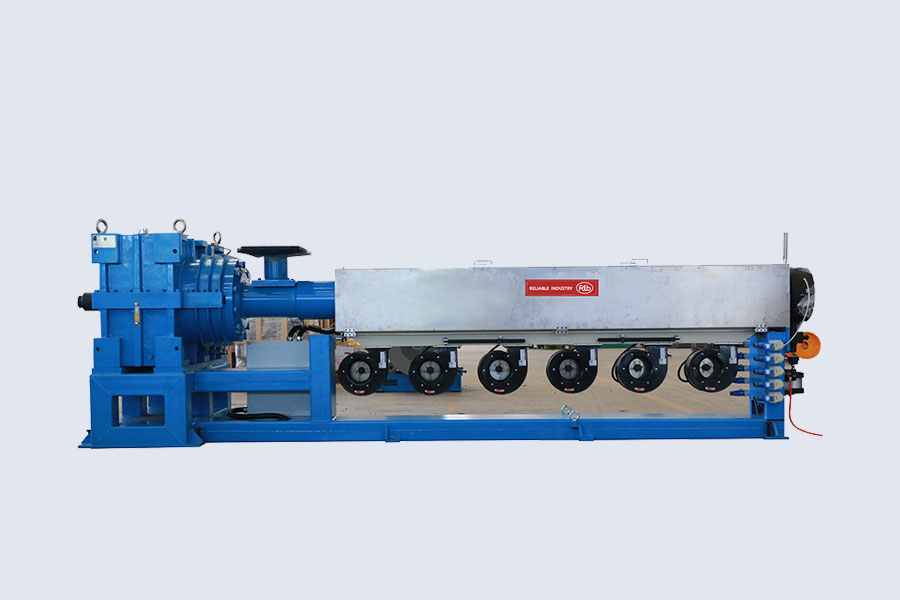
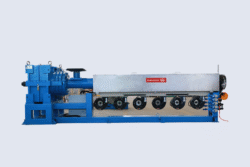
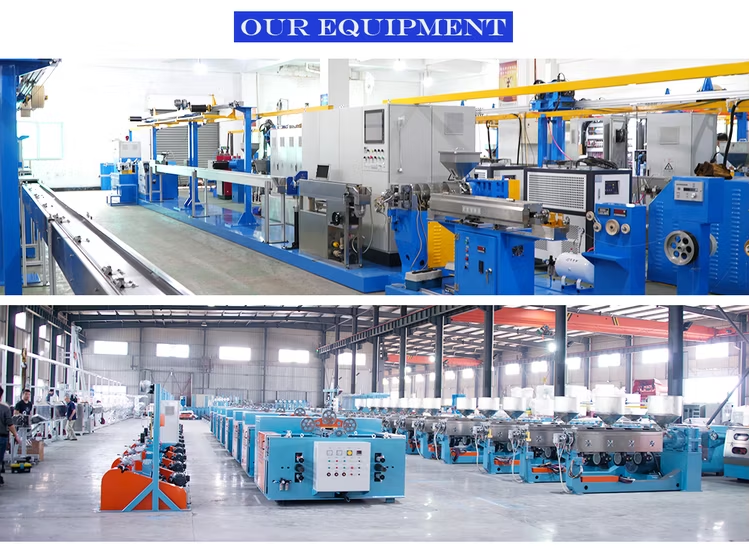
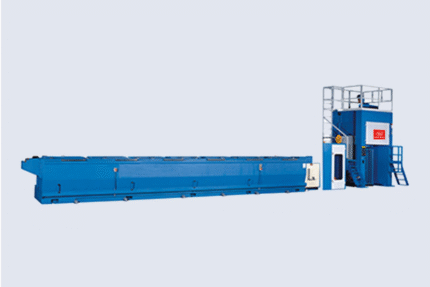
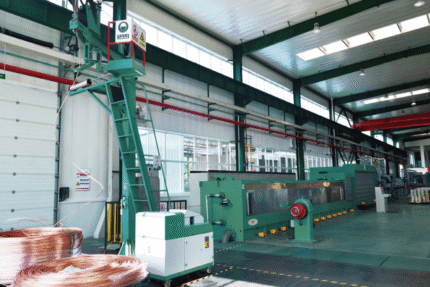
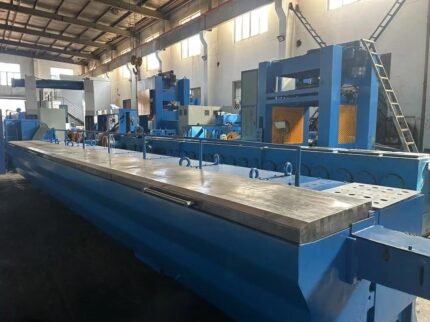
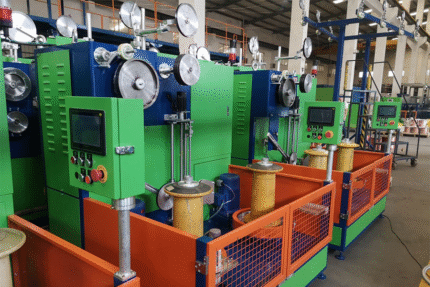
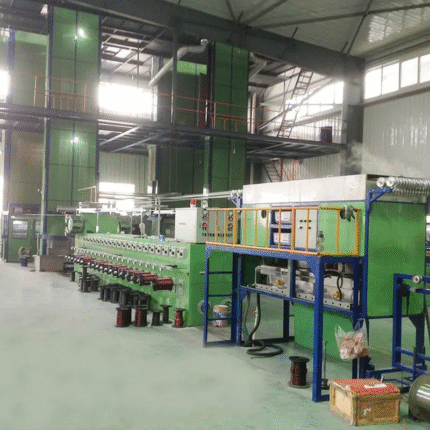
In today’s competitive global wire and cable market, insulation and sheathing quality directly determines electrical performance, mechanical durability, fire safety compliance and total cost of ownership. The RLB High Speed Insulation Extrusion Production Line (models REK-100, REK-120, REK-150, REK-180) is a robust, technology-driven solution engineered specifically for high-precision extrusion of PVC, PE, XLPE and Low Smoke Halogen-Free (LSHF/HFFR) compounds onto power cables, building wires, control cables and telephone lines.
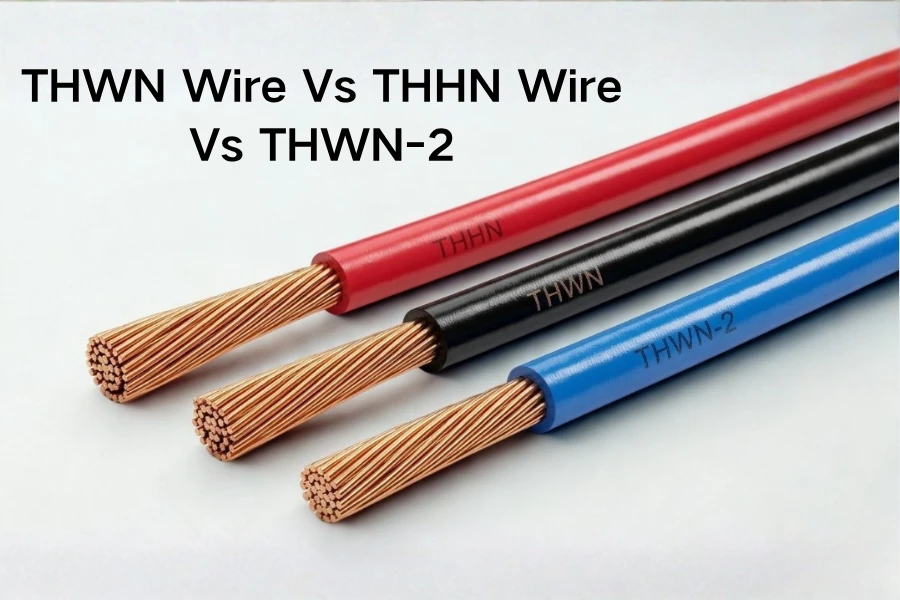
This advanced building wire extrusion line and extrusion machine for THHN cables supports conductor cross-sections from 10 mm² to 1000 mm² and finished diameters up to Φ140 mm, with maximum line speeds reaching 180 m/min. It performs both single-layer insulation and dual-layer (insulation + sheath) processes, including dedicated tandem nylon jacketing for premium THHN/THWN conductors that dominate North American, European, Canadian and Middle Eastern building-wire markets.

What Is a High Speed Insulation Extrusion Production Line and How Does It Function?
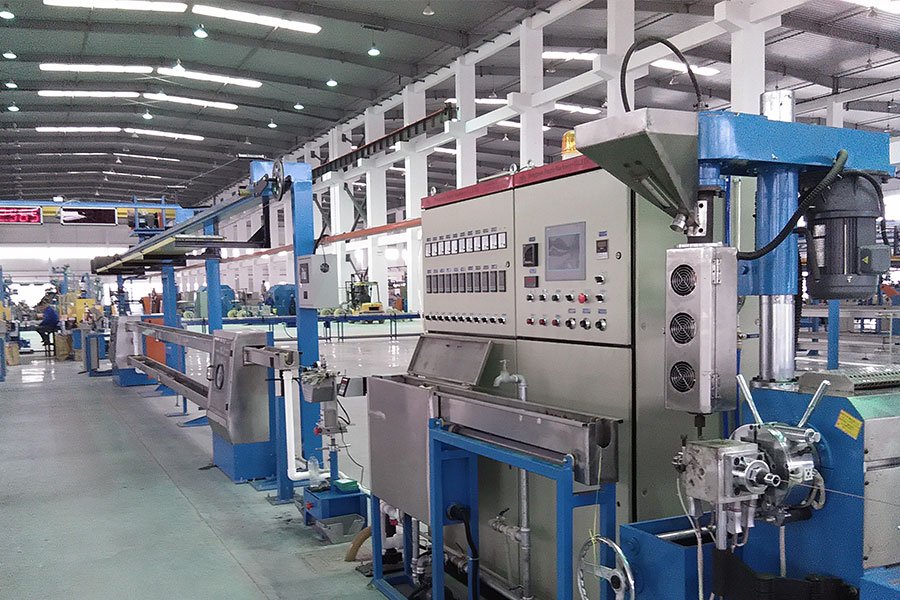
A High Speed Insulation Extrusion Production Line continuously coats conductors with insulation materials such as PVC, XLPE (silane or peroxide cross-linkable), PE or Low-Smoke Halogen-Free (LSHF/HFFR) compounds. The conductor is paid off, optionally preheated, guided through a precision cross-head where molten polymer is extruded under controlled pressure and temperature, then rapidly cooled in multi-pass troughs, diameter-monitored in closed loop, spark-tested, and taken up at synchronized speed. Advanced lines support single-layer, dual-layer (insulation + skin/stripe) or tandem processes and can incorporate nylon jacketing for THHN/THWN conductors.
Core process sequence:
- Motorized or dual-shaft pay-off with tension control
- Conductor preheater (optional, improves adhesion and reduces voids)
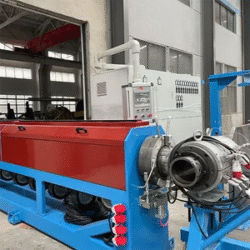
- Main extruder (screw diameters typically Φ45–Φ200 mm, L/D 25:1–26:1) with multi-zone temperature control
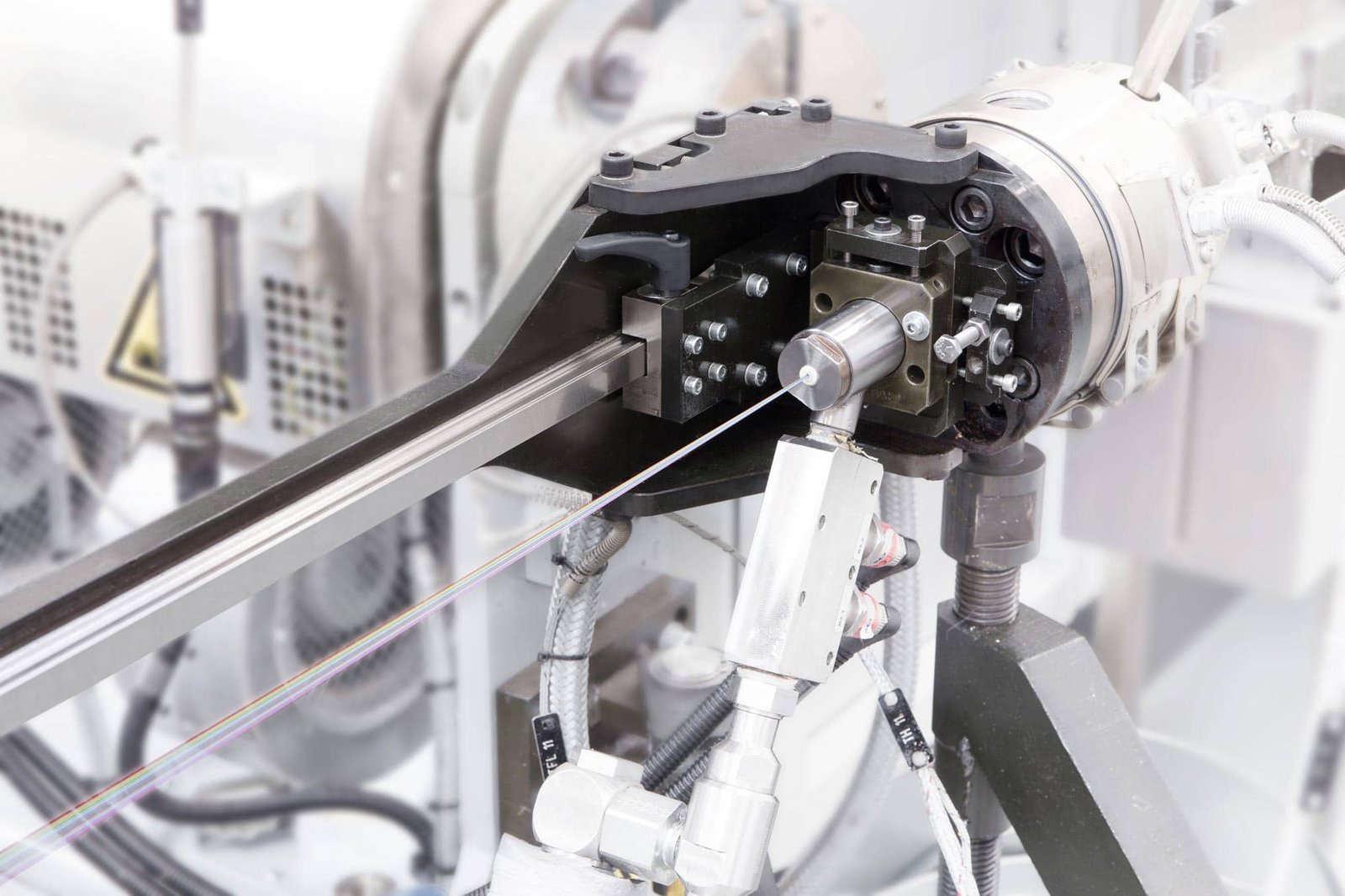
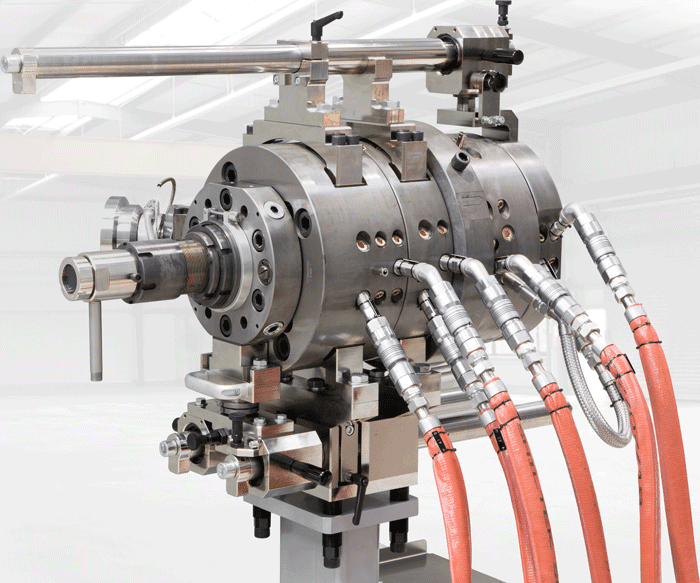
- Precision cross-head (center-fed or adjustable) for concentric application
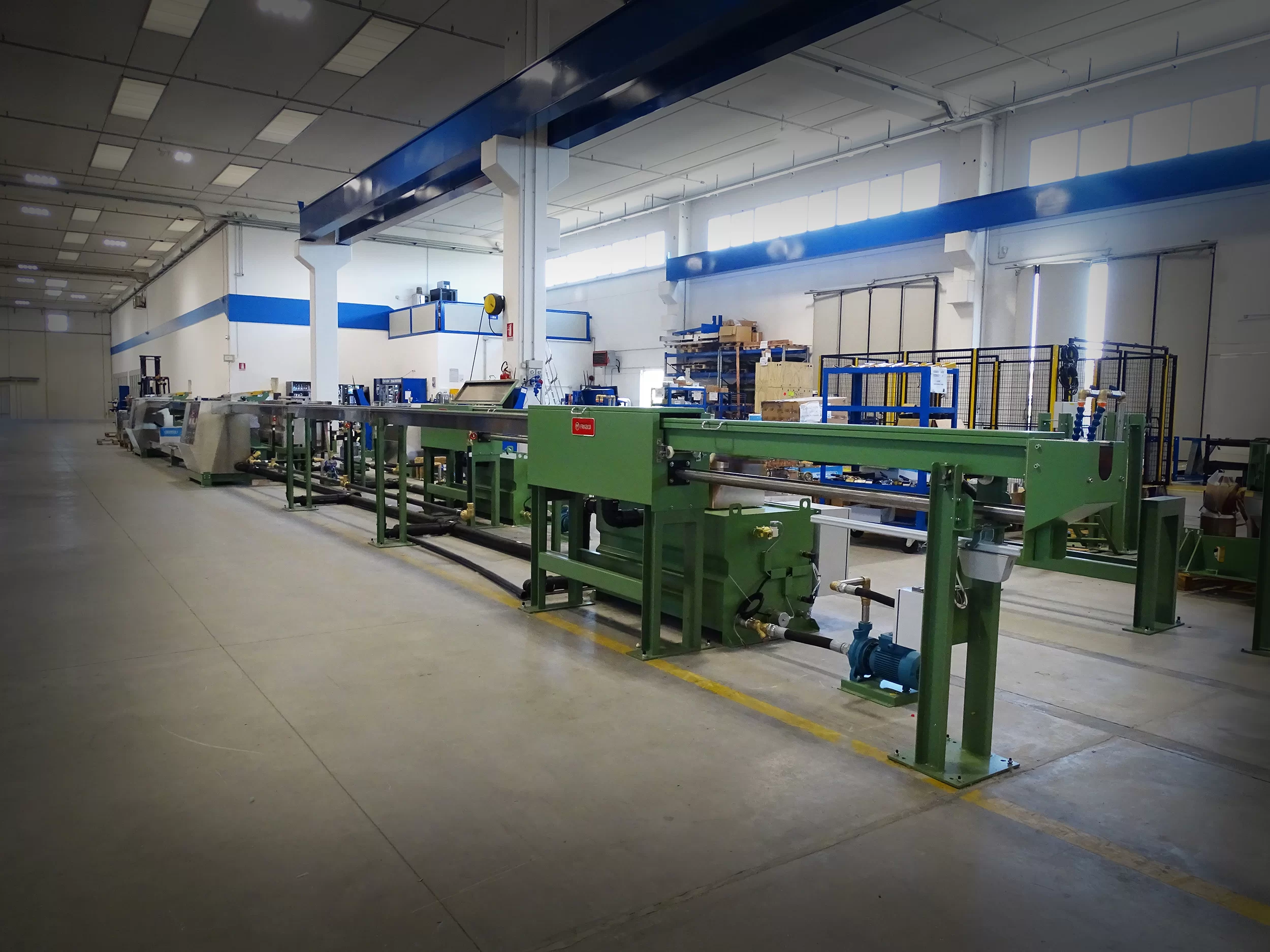
- Multi-pass water cooling trough with air wipe
- Laser diameter gauge + closed-loop feedback to extruder and haul-off
- Spark tester (typically 5–15 kV)
- Capstan or caterpillar haul-off
- Automatic dual take-up or coiling system

Technical Comparison: High-Speed vs Conventional Insulation Extrusion
| Parameter | High-Speed Insulation Extrusion Line | Conventional Extrusion Line |
|---|
| Typical max line speed | 350–1200 m/min (small sizes); 45–180 m/min (large) | 50–200 m/min |
| Wall-thickness tolerance | ±5 % or better with closed-loop control | ±8–10 % common |
| Concentricity | High (European-style cross-heads) | Moderate |
| Materials supported | PVC, XLPE, PE, LSHF/HFFR, Nylon | Mainly PVC/PE |
| Control system | PLC + laser feedback closed-loop | Often open-loop |
| Scrap rate | Low (real-time adjustment) | Higher |
| Suitable conductor range | 0.5–1000 mm² | Limited |
| Typical applications | Building wire, power, control, THHN | General low-speed production |
High-speed lines reduce unit production cost through higher throughput while maintaining dielectric integrity required for modern power and building cables.
Core Technology & Process Advantages
Flexible Material Compatibility
Optimized screw geometry and multi-zone temperature control ensure excellent melt homogeneity for PVC (cost-effective processing), XLPE (90–110°C heat resistance plus moisture/chemical protection), PE and LSHF/HFFR compounds, minimizing scorch risk and supporting consistent crosslinking when required.
Intelligent Closed-Loop Automation
Mitsubishi PLC + MMI system with real-time laser diameter feedback automatically adjusts extruder output and line speed. This closed-loop control reduces scrap, maintains tight dimensional tolerances and ensures consistent compliance with UL 83, IEC 60502 and GB standards — a key differentiator versus conventional open-loop lines.
THHN-Specific Tandem Extrusion
Dedicated configuration applies PVC insulation and Nylon (PA) outer jacket in a single continuous pass. The result is superior abrasion resistance, chemical protection and low-friction conduit performance while eliminating intermediate handling steps and improving overall productivity.
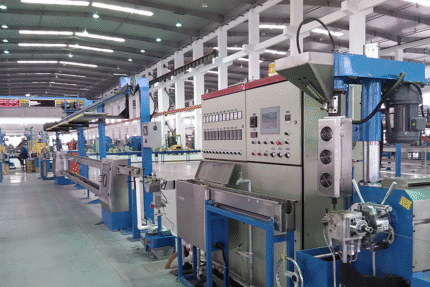
Complete Auxiliary Integration
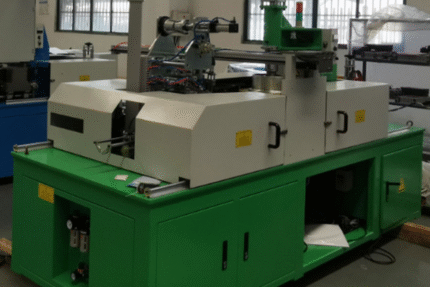
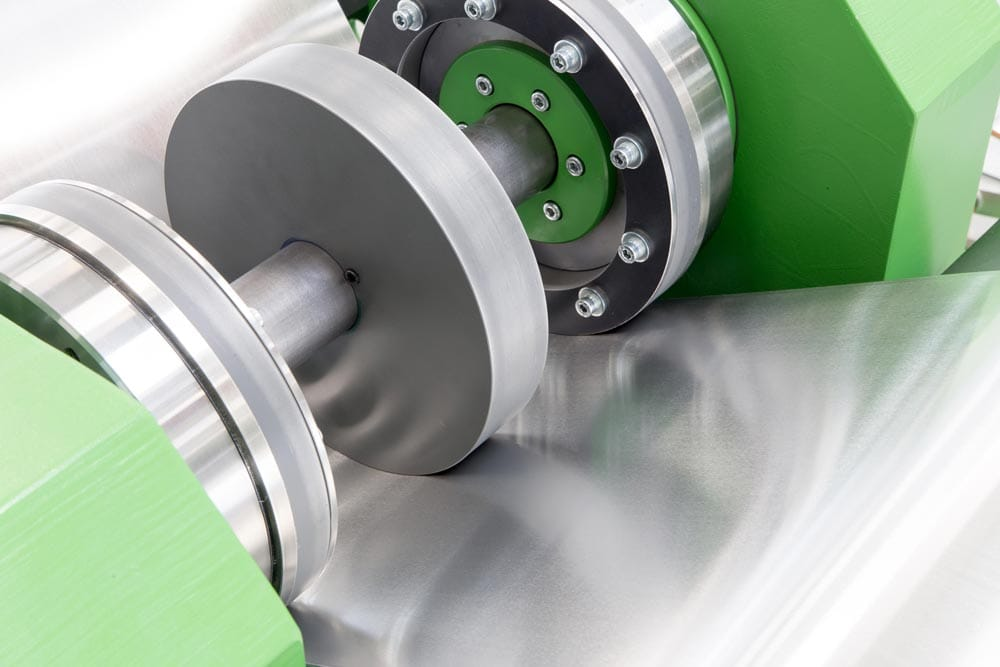
On-line aluminum strip longitudinal taping, asphalt/graphite coating, automatic feeding, granule dryers, color masterbatch metering, laser/ink printers, spark testers, diameter gauges and stamping machines create a true turnkey production system.
Configurable Layout Flexibility
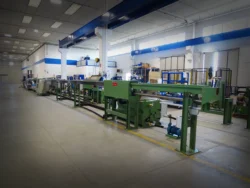
Multiple pay-off and take-up options (drum, coil or dual) minimize downtime and allow seamless integration with existing upstream drawing/stranding lines or downstream armoring and jacketing equipment.

Typical Technical Parameters of Current High-Speed Lines
| Model / Screw Config | Conductor Cross-Section | Finished OD (approx.) | Max Line Speed | Max Extrusion Output (PVC) | Typical Applications |
|---|
| 70/45 or 80/45 | 0.5–10 mm² | 1.9–7.6 mm | up to 350 m/min | 150–230 kg/h | Building wire, flexible cable |
| REK-100 / Φ100 | 10–240 mm² | up to 45 mm | 180 m/min | — | Small power & building cables |
| REK-120 / Φ120 | 25–630 mm² | up to 80 mm | 150 m/min | — | Medium power cables |
| REK-150 / Φ150 | 50–800 mm² | up to 100 mm | 60 m/min | — | Power & control cables |
| REK-180 / Φ180 | 120–1000 mm² | up to 140 mm | 45 m/min | — | Large power cables |
| Fine-wire high-speed | <0.5 mm diameter | — | 500–2000 m/min | lower | Magnet wire, automotive, data |
Screw L/D ratios of 25:1–26:1, multi-zone heating, and optimized screw geometry ensure melt homogeneity and minimize scorch risk for heat-sensitive compounds such as XLPE and LSHF.

Primary Applications in Cable Manufacturing
- Power Cables — Low-, medium- and high-voltage cables requiring XLPE or LSHF insulation and sheathing for excellent electrical performance and fire safety in infrastructure, utility and industrial projects.
- Building & Installation Wires — PVC-insulated and sheathed cables (BV, BVV, NYY) and premium THHN/THWN conductors with tandem nylon jacketing for superior abrasion resistance and fast, low-friction conduit installation.
- Control & Instrumentation Cables — Precise, concentric insulation and sheathing for reliable signal transmission in demanding industrial environments.
- Telecommunication & Data Cables — High-quality PE or LSHF compounds for LAN, telephone and data cables where low attenuation and fire performance are critical.
- Specialty Cables — Flame-retardant, fire-resistant and low-smoke halogen-free constructions meeting the most demanding international fire safety standards.

Standards, Material Performance and Process Data Support
Insulation thickness and concentricity must satisfy IEC 60502 (power cables), UL 83 (building wire) and corresponding GB standards. Typical operating temperatures: PVC 160–190 °C, PE 180–210 °C, XLPE up to 280–290 °C (process), with final cable ratings of 70–90 °C continuous for PVC and 90 °C continuous / 130 °C emergency for XLPE.
Modern lines incorporate Mitsubishi or equivalent PLC systems with real-time laser feedback that automatically adjusts extruder output and line speed, ensuring dimensional stability and reducing material waste. Spark testing verifies dielectric integrity online.
Industry data from 2024–2026 production lines confirm that closed-loop high-speed systems achieve lower scrap rates and consistent compliance compared with open-loop conventional equipment.
Practical Considerations and Failure Prevention
- Scorch and gelation of XLPE/LSHF: Maintain precise multi-zone temperature profiles and avoid excessive residence time; select screw geometry matched to compound viscosity.
- Wall-thickness variation: Closed-loop laser control and stable haul-off tension are mandatory at high speeds.
- Cooling insufficiency: Cooling trough length must scale with speed and wall thickness (approximate rule: 1 m trough per 1 mm wall thickness per 10 m/min).
- Concentricity loss: Use precision European-style or adjustable cross-heads; ensure conductor is straight and properly preheated.
- Surface defects: Proper melt homogenization, clean die and correct air-wipe settings prevent bubbles or voids.
- Line synchronization: All drives (extruder, haul-off, take-up) must operate under coordinated PLC control to avoid stretching or buckling.
Proper process control yields insulation with uniform dielectric properties, high mechanical strength and long-term reliability under thermal and electrical stress.

Key Takeaways
The High Speed Insulation Extrusion Production Line delivers high throughput (up to 350–1200 m/min depending on size), tight dimensional control (±5 % wall thickness), excellent concentricity and full compatibility with PVC, XLPE, PE and LSHF compounds required by modern power and building-cable specifications. Closed-loop automation, optimized screw design and multi-zone temperature control minimize scrap while ensuring compliance with IEC 60502, UL 83 and GB standards.
Inquiry Now for a detailed technical quotation, custom configuration options, layout design recommendations or factory visit arrangement. Our engineering team provides complete turnkey solutions, installation support, operator training and long-term technical partnership tailored to your production goals.







Reviews
There are no reviews yet.