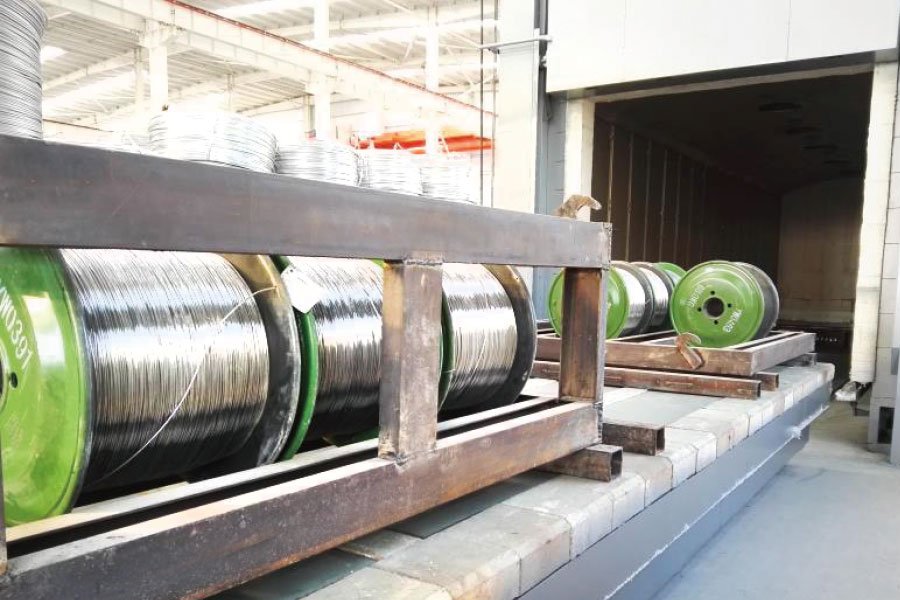
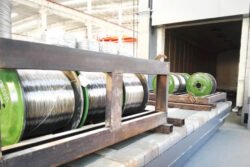
Our trolley-type Aluminium Alloy Aging Furnace is a proven energy-saving cycle furnace engineered for the artificial aging (precipitation hardening) of aluminium alloys. It is widely applied in the cable and conductor industry for aluminium alloy wire rods loaded on bobbins, as well as for aluminium alloy castings, die castings, hubs, panels, grid plates, pistons and extruded profiles.
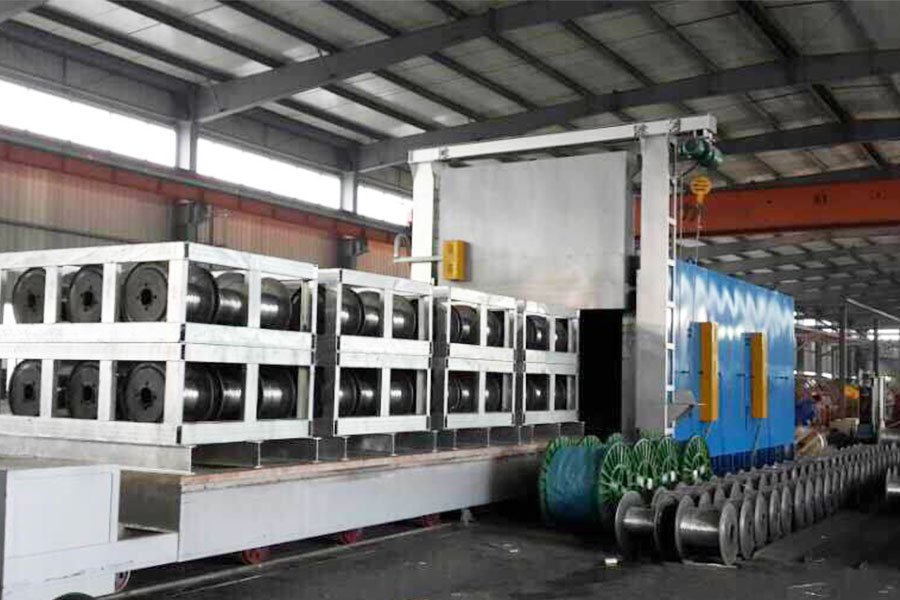
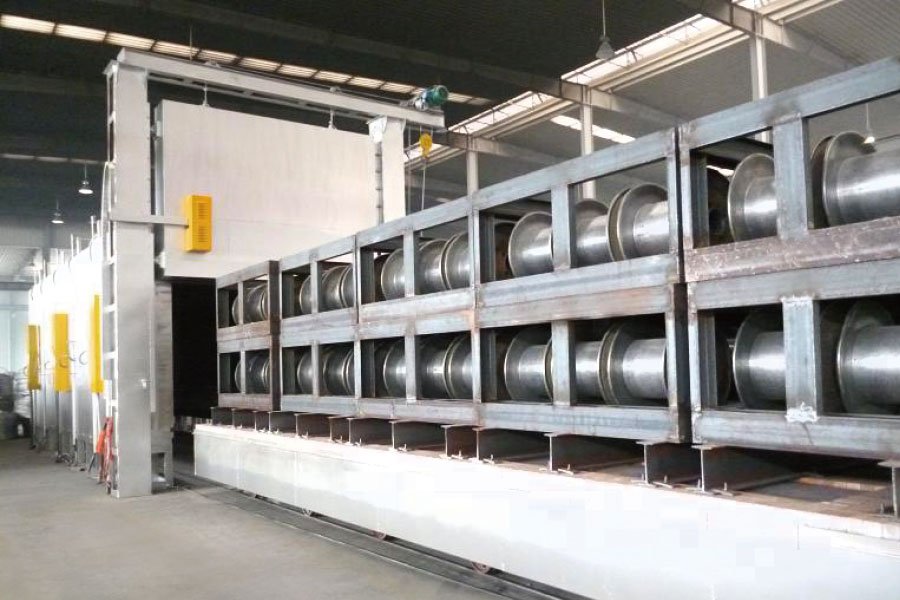
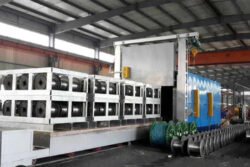
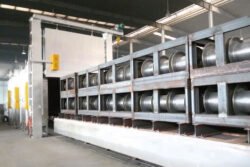
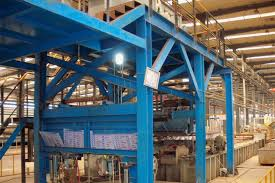
The furnace consists of a robust furnace body with sealing device, trolley and traction mechanism, furnace door with pressing device, heating elements with fixing system, high-performance thermal circulating blower with flow-guiding device, and a fully automatic temperature control system.
Key Technical Advantages
- Novel hot-air circulating system ensures excellent temperature uniformity throughout the working chamber.
- Multi-zone PID temperature control delivers high precision and repeatable process results.
- Trolley-type bottom design enables smooth, labour-saving loading and unloading of heavy bobbin loads.
- Outer shell temperature remains ≤ indoor temperature + 25°C, improving workplace safety and energy efficiency.
- Fully customisable for different bobbin sizes, load capacities and process recipes.
Technical Specifications
| Parameter | Typical Specification | Unit / Notes |
|---|
| Working Temperature Range | 150–520 | °C (aging 150–230 °C; billet preheat 450–520 °C) |
| Temperature Uniformity | ±5 (standard) / ±3 (premium) | °C (effective working zone) |
| Control Accuracy | ±1 | °C (PID) |
| Billet Diameter Range | 101–305 (4″–12″) | mm |
| Billet Length | up to 6 000–8 000 | mm (custom) |
| Heating Method | Electric resistance or natural gas / LPG jet | — |
| Number of Temperature Zones | 3–6 | Multi-zone independent control |
| Rated Power | 18–425 | kW (model dependent) |
| Rated Voltage | 380 V, 3-phase, 50 Hz | — |
| Heating Rate (20 °C → target) | 20–40 | min (depending on diameter) |
| Empty Furnace Heat-up Time | ≤1.5–2 | h |
| Outer Shell Temperature Rise | ≤ ambient +25 | °C |
| Control System | PLC + HMI touch screen, PID, recipe storage | Siemens / equivalent |
| Atmosphere / Circulation | Forced hot-air recirculation | High-volume centrifugal fans |
| Loading System | Hydraulic or motorized trolley / manipulator | Optional |
Structure and Material Description
The furnace consists of a sealed chamber with high-performance ceramic-fiber or multi-layer insulation, stainless-steel internal guides, multi-zone electric heating elements or gas burners, high-volume recirculation fans, and an automated billet loading/unloading mechanism. Temperature sensors in each zone enable real-time gradient control and soaking. The single-billet configuration eliminates temperature shadowing common in multi-billet loads, ensuring uniform precipitation of strengthening phases (Mg₂Si in 6xxx alloys) required for T6 temper. Forced convection maintains temperature uniformity critical for consistent conductivity and tensile properties in subsequent cable drawing or extrusion.
Primary Application Scenarios and Selection Guidance
Primary applications include:
- Artificial aging of aluminum alloy billets for high-conductivity cable conductors (T6 temper optimization of strength–conductivity balance);
- Pre-heating of billets prior to extrusion of aluminum sheaths or conductors for medium- and high-voltage power cables;
- Precision heat treatment of 6xxx-series alloys used in railway, submarine, and fire-resistant cable systems.
Selection Comparison Table
| Application | Recommended Temp Range | Preferred Billet Dia | Key Performance Target | Recommended Configuration |
|---|
| Cable conductor T6 aging | 150–230 °C | 101–178 mm | Conductivity ≥57 % IACS + high tensile | Electric, 3–5 zones, ±3 °C uniformity |
| Extrusion billet preheat | 450–520 °C | 152–305 mm | Uniform core-to-surface temp | Gas or electric, multi-zone jet heating |
| High-strength 6082 / 6061 billets | 170–200 °C (aging) | 178–254 mm | Peak strength without over-aging | PLC recipe control + data logging |
| Small-batch specialty alloys | Custom 120–300 °C | 101–152 mm | Fast changeover | Single-billet with manipulator |
Selection must consider alloy series (per YS/T 591), required final temper, billet mass, and production rate. Over-aging or temperature deviation beyond ±5 °C risks reduced conductivity or inconsistent mechanical properties in finished cable conductors.
Certifications and Applicable Standards
Heat-treatment processes comply with YS/T 591 (Heat treatment of wrought aluminium and aluminium alloys, latest revision), AMS 2750 temperature uniformity classes, and relevant GB/T standards for aluminum alloy thermal processing. Furnace design supports CE and ISO 9001 certification. Temperature uniformity and control accuracy are verifiable against Class II (or better) requirements for aerospace- and power-cable-grade alloys.
Installation and Operation Notes
Installation requires a level foundation, adequate exhaust ventilation (especially for gas-fired units), stable 380 V power, and compressed air for actuators. Commissioning includes empty-furnace uniformity surveys and loaded-billet thermocouple mapping. Operators must follow alloy-specific recipes stored in the PLC; deviations in soak time or temperature directly affect precipitation kinetics. Regular calibration of thermocouples and fan performance is mandatory. For gas models, flame monitoring and leak detection systems must remain active.
Frequently Asked Technical Questions (FAQ)
What temperature uniformity is required for reliable T6 aging of aluminum cable conductor billets?
Industry practice and AMS 2750 / YS/T 591 require ±5 °C or tighter (±3 °C preferred) across the billet to ensure uniform Mg₂Si precipitation, delivering consistent conductivity and tensile strength.
How does single-billet heating improve energy efficiency versus multi-billet furnaces?
Single-billet design with multi-zone jet or forced-convection heating reduces fuel or power consumption by up to 40 % and shortens cycle times, while eliminating temperature gradients caused by load shadowing.
What billet diameters and alloys are typically processed?
Standard range is 101–305 mm (4″–12″) for 6063, 6061, 6082 and related alloys used in power-cable conductors and extruded profiles.
Can the furnace support both aging and high-temperature billet preheating?
Yes. Programmable multi-zone control allows recipes from 150 °C (artificial aging) to 520 °C (extrusion preheat) on the same equipment with rapid changeover.
What are the main failure risks if temperature control is inadequate?
Insufficient uniformity or incorrect soak time can cause incomplete precipitation (low strength), over-aging (reduced conductivity), or residual stress that leads to cracking during subsequent drawing or extrusion.
Inquiry Now
We supply fully customized Single Billet Heating Aluminium Alloy Aging Furnaces with precise temperature control, multi-zone configurations, and long-term technical support. Submit your billet diameter range, target alloys, annual throughput, and preferred heating method (electric or gas) to receive a detailed technical proposal and quotation. Long-term partnership includes process recipe optimization and spare-parts availability.









Reviews
There are no reviews yet.